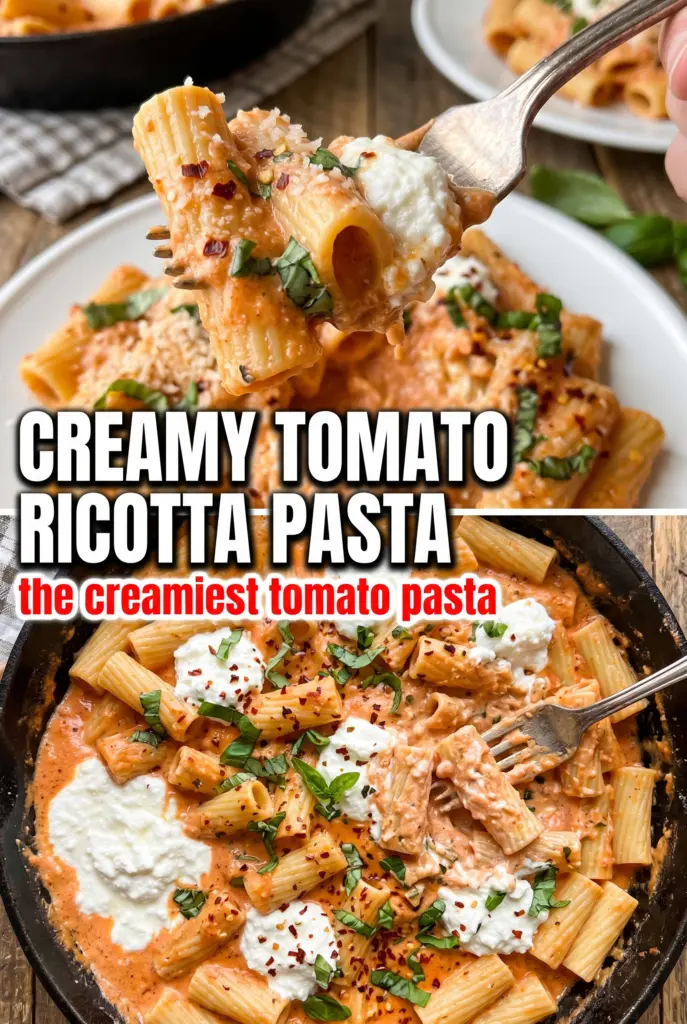
Rigatoni with tomato ricotta sauce lands somewhere between cozy red sauce pasta and a creamy weeknight skillet dinner, and that’s exactly why it earns repeat status. The sauce turns silky and blush-pink, clings to every tube, and finishes with enough richness to feel special without getting heavy.
The trick is building the tomato base first, then taking the heat down before the ricotta, cream, and parmesan go in. That keeps the sauce smooth instead of grainy and gives the dairy time to melt into the tomatoes instead of fighting them. A splash of pasta water at the end helps the sauce settle into that glossy, restaurant-style texture that coats the noodles instead of pooling underneath.
Below, I’ve included the one step people usually rush and the small ingredient choices that make the biggest difference. If you’ve ever ended up with tomato sauce that tasted flat or a creamy sauce that broke, this version gives you a cleaner, more reliable path.
The sauce turned out silky instead of grainy, and the rigatoni held onto it perfectly. I added a little pasta water at the end like you said, and it coated every bite without getting thin.
Save this creamy tomato ricotta pasta for the nights when you want a blush-pink sauce that clings to rigatoni and comes together in one skillet.
The Step That Keeps Ricotta Sauce Smooth Instead of Grainy
Ricotta can go from silky to chalky fast if it gets hit with high heat. That’s the main thing that separates a good tomato ricotta pasta from one that tastes split or sandy. Once the tomatoes have simmered and the garlic has done its work, the pan needs to come down to a gentler heat before the ricotta and cream go in.
The other mistake is stirring in the cheese too early or too aggressively. Parmesan melts in better when the sauce has already relaxed a bit, and the ricotta blends cleanly when it’s warmed through instead of shocked. If the sauce looks a little loose at first, don’t panic; it tightens as the pasta goes in and the starch from the rigatoni helps pull everything together.
What Each Ingredient Is Doing in the Sauce
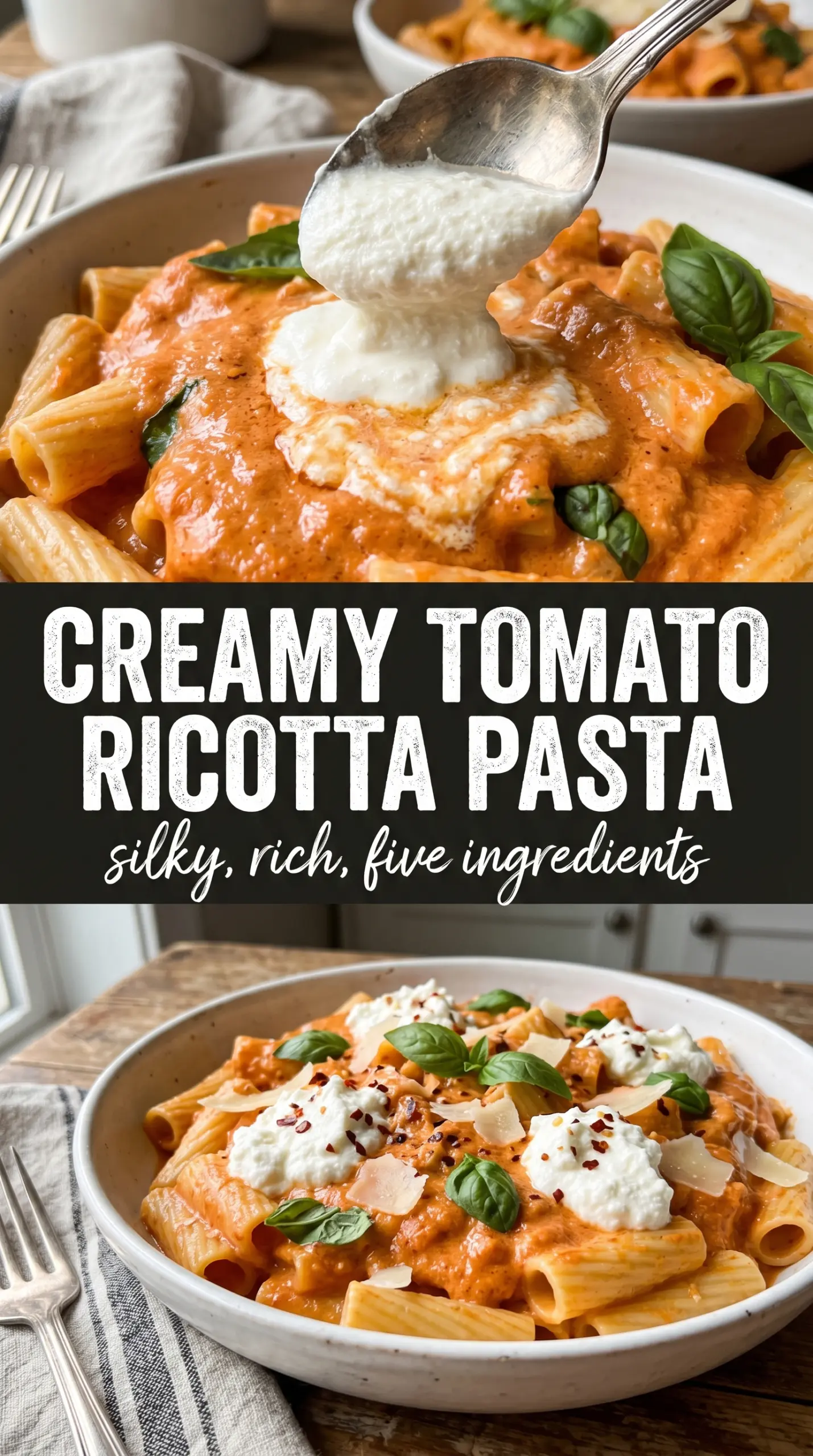
- Ricotta — This gives the sauce its soft, creamy body without turning it into a heavy Alfredo-style pasta. Whole milk ricotta matters here; low-fat versions can turn grainy and thin once they hit heat.
- Crushed tomatoes — They give you enough texture for the sauce to feel substantial while still smoothing out into that silky red cream base. If you only have diced tomatoes, blend them briefly first so the sauce doesn’t stay chunky.
- Heavy cream — This rounds out the acidity of the tomatoes and helps the ricotta stay lush. Half-and-half works in a pinch, but the sauce will be a little less rich and a touch more fragile.
- Parmesan — It brings salt, depth, and a little body to the finished sauce. Grate it fresh if you can; pre-shredded cheese often melts less cleanly.
- Rigatoni — The tubes trap the sauce inside and on the ridges, which is exactly what you want with a creamy tomato pasta. Short pasta with good surface texture works best here.
Building the Tomato Ricotta Sauce So It Stays Silky
Waking Up the Garlic
Warm the olive oil over medium heat and let the garlic and red pepper flakes cook just until fragrant, about a minute. You want the garlic pale and aromatic, not browned. If it turns golden too fast, the oil is too hot and the whole sauce will pick up a bitter edge before the tomatoes even go in.
Letting the Tomatoes Cook Down
Add the crushed tomatoes, Italian seasoning, salt, and black pepper, then let the sauce simmer until it loses that sharp canned-tomato taste. Ten minutes is enough to thicken it slightly and deepen the flavor. If it starts to sputter aggressively, lower the heat; a hard boil makes the sauce thicker on top and raw-tasting underneath.
Finishing With Dairy and Pasta Water
Stir in the ricotta, heavy cream, and parmesan over gentle heat until the sauce looks smooth and blush-pink. Toss in the drained rigatoni and loosen with a splash of reserved pasta water until the sauce coats the noodles in a glossy layer. If the sauce looks thick in the pan but clings to the pasta beautifully, you’re there; it should not be soupy.
How to Adapt This Pasta Without Losing What Makes It Work
Make It Dairy-Free
Use a plain unsweetened cashew ricotta and a dairy-free cream with a neutral flavor. The sauce will still be creamy, but it won’t have quite the same tang or richness as the original, so a little extra parmesan-style seasoning or nutritional yeast helps deepen it.
Swap the Rigatoni for Another Short Pasta
Penne, ziti, or shells all work if that’s what you have. Just stick with a shape that can hold sauce, because long noodles won’t trap the ricotta mixture as well and the dish loses some of its body.
Add Protein Without Overcrowding the Pan
Browned Italian sausage, shredded chicken, or sautéed mushrooms all fit this sauce well. Keep the add-in cooked separately and fold it in at the end so the sauce still emulsifies around the pasta instead of getting weighed down in the skillet.
Storage and Reheating
- Refrigerator: Store leftovers in an airtight container for up to 4 days. The sauce will thicken as it sits, and the pasta will keep absorbing it.
- Freezer: It can be frozen, but the ricotta-based sauce may lose a little of its silky texture when thawed. Freeze in portions for up to 2 months and expect to stir it back together after reheating.
- Reheating: Warm it gently on the stove with a splash of water or milk, stirring often. The mistake to avoid is blasting it in the microwave until the dairy separates and the pasta turns dry around the edges.
Questions I Get Asked About This Recipe
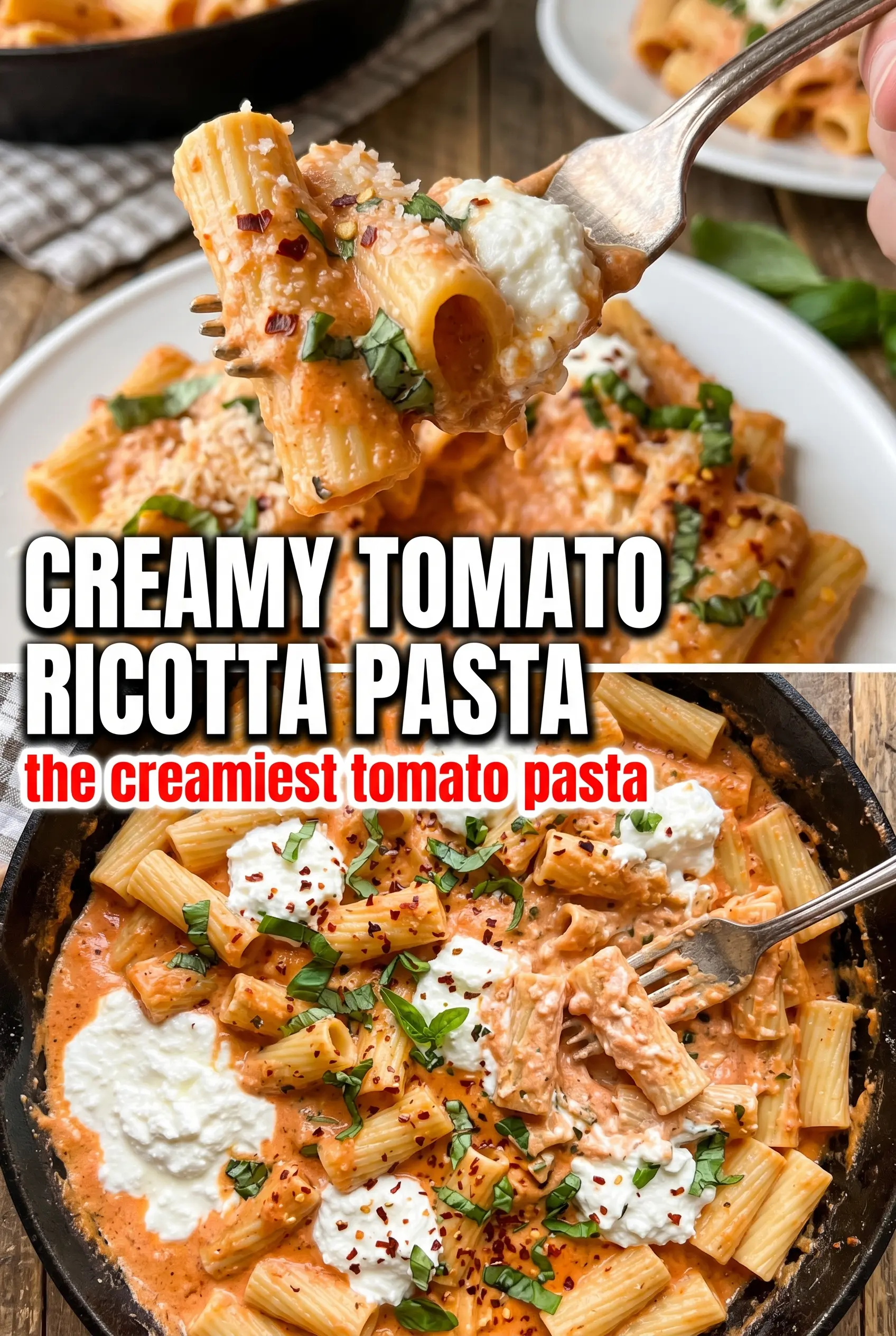
Creamy Tomato Ricotta Pasta
Ingredients
Equipment
Method
- Bring a large pot of salted water to a boil and cook rigatoni until al dente, about 1-2 minutes less than the package time. Before draining, reserve 1/2 cup pasta water, then drain and set the pasta aside.
- Heat olive oil in a large skillet over medium heat until shimmering, then add minced garlic and red pepper flakes. Cook for 1 minute, stirring constantly, until fragrant and lightly golden.
- Add crushed tomatoes, Italian seasoning, salt, and black pepper to the skillet. Simmer over medium heat for 10 minutes, stirring occasionally, until the sauce thickens slightly.
- Lower the heat to medium-low and stir in whole milk ricotta, heavy cream, and grated parmesan. Simmer for 3 more minutes, stirring until smooth and creamy with a thick, blush-pink texture.
- Add the drained rigatoni to the skillet and toss until every tube is coated in the tomato ricotta sauce. Add reserved pasta water a splash at a time as needed to reach a silky consistency, then toss again.
- Spoon the pasta into bowls and top with fresh basil and extra parmesan. Serve immediately so the sauce stays thick and clingy.