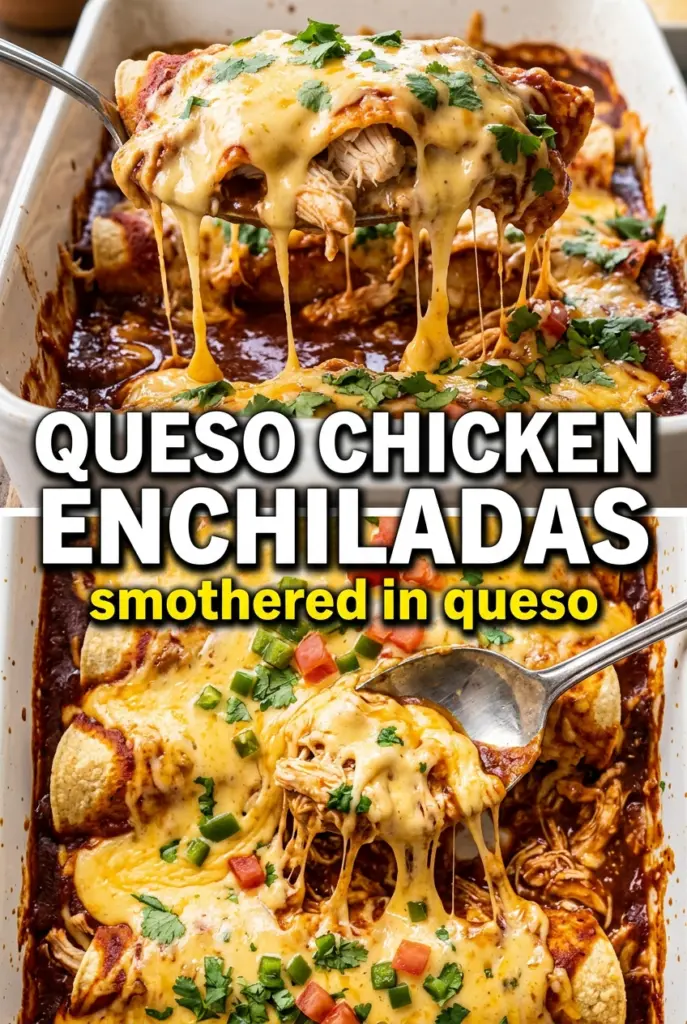
Queso chicken enchiladas come out rich, saucy, and a little bit messy in the best way, with soft tortillas wrapped around seasoned chicken and a thick queso blanket that bubbles into the corners of the pan. The sauce doesn’t just coat the top; it settles into the whole casserole, so every bite has creamy cheese, Rotel heat, and just enough tang from the green chiles to keep it from tasting heavy.
What makes this version work is the balance between the filling and the sauce. The chicken gets a little lift from diced green chiles and a bit of cheese before it goes into the tortillas, which keeps the center from tasting dry. The queso sauce stays smooth because the milk goes in before the Velveeta and the heat stays gentle. Rush that part and the sauce can turn grainy or split around the edges.
Below, I’ve laid out the small details that matter most: how to keep the tortillas from tearing, how to get the sauce silky, and what changes if you want to make the dish ahead or swap a few ingredients.
The queso stayed silky all the way through baking, and the tortillas held together without getting soggy. I added jalapeños on top and my husband said it tasted like the best part of a restaurant enchilada plate.
Love the bubbling queso and tender chicken? Save these queso chicken enchiladas for the nights when you want a creamy Tex-Mex casserole without the extra fuss.
The Reason the Sauce Stays Creamy Instead of Turning Grainy
The biggest risk in a queso enchilada bake is overheating the cheese sauce. Velveeta is forgiving, but it still behaves best when the milk is warmed first and the pan stays at a gentle simmer, not a hard boil. That little bit of control keeps the sauce smooth enough to pour and stable enough to bake without separating.
The other place people lose texture is in the filling. If the chicken is dry going in, the enchiladas taste like sauce on the outside and leftovers in the middle. Mixing the chicken with green chiles and some cheese gives the filling a little moisture and helps the tortillas roll tighter, which keeps the casserole from collapsing into the pan.
- Flour tortillas — They’re the right choice here because they soften into the sauce without cracking. Corn tortillas can work, but they need to be warmed first or they’ll split as soon as you roll them.
- Velveeta — This is what gives the sauce its smooth, clingy texture. A shredded cheese sauce can work, but it won’t have the same velvety finish or the same reliability under heat.
- Rotel tomatoes with green chiles — The tomatoes bring acidity, and the chiles keep the sauce from tasting flat. Drain nothing here; the juices help the sauce loosen into a pourable queso.
- Shredded chicken — Rotisserie chicken is the easiest shortcut, and it’s a good one. Just shred it fine so it tucks into the tortillas instead of making the rolls bulky and hard to close.
What Each Ingredient Is Actually Doing in This Enchilada Dish
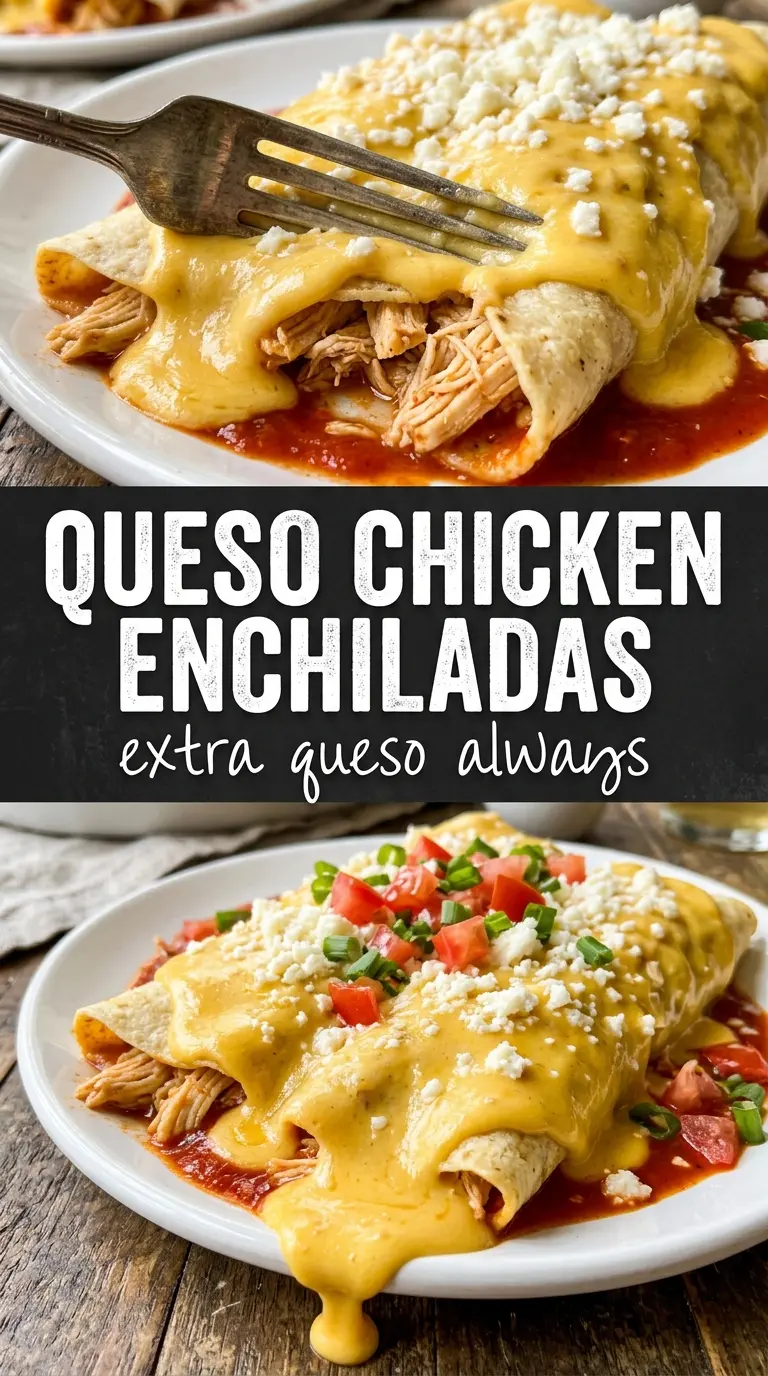
- Tortillas (the structure holder) — Dip them briefly in sauce so they stay pliable without becoming soggy. They’re the vehicle that holds everything together.
- Filling (chicken, cheese, or meat) — This is the flavor star. Layer it evenly so every bite is satisfying.
- Enchilada sauce (the binding liquid) — This moistens the tortillas and brings flavors together. Don’t skimp or the enchiladas become dry.
- Cheese (the melting finish) — Layer some inside and top with more so it melts into the sauce. Cotija or mozzarella both work well.
- Broth or liquid (the steam helper) — This keeps enchiladas moist while they bake. It’s essential for the final texture.
- Seasonings and spices (cumin, chili powder, garlic) — Build flavor depth. Layer seasonings so no single one overpowers.
- Baking time and temperature (350°F, 25-35 minutes) — This melts the cheese and heats everything through without drying the filling.
- Fresh garnish (cilantro, sour cream, green onion) — These add color, freshness, and final flavor. Add right before serving.
How to Build the Enchiladas So They Hold Together in the Oven
Mixing the Filling First
Start by combining the chicken with the diced green chiles and a little cheese before you even touch the tortillas. That small step gives the filling some richness and helps the chicken cling together instead of spilling out when you roll. If the mixture looks dry and crumbly, add a spoonful of the queso sauce later when you’re assembling. The filling should feel compact, not loose.
Rolling Without Tearing the Tortillas
Fill each tortilla with a modest line of chicken, then roll it tightly and place it seam-side down in the dish. Overstuffed tortillas burst open once the sauce goes on, and that’s usually what leads to a messy, uneven bake. If your tortillas are stiff, warm them briefly so they bend without splitting. You want them pliable, not hot and brittle.
Making the Queso Over Gentle Heat
Melt the butter and cook the garlic for just a minute until it smells fragrant, then pour in the milk and bring it only to a gentle simmer. Add the Velveeta in cubes and stir until the sauce turns completely smooth before adding the Rotel and broth. If the heat is too high, the sauce can separate at the edges and turn oily. Keep the burner low and give it a little time.
Baking Until the Edges Bubble
Pour the queso over the enchiladas, add the remaining cheese, and bake until the sauce is bubbling around the edges and the top has patches of pale gold. That bubbling tells you the filling is hot all the way through, not just the top layer. Pull it when the sauce still looks glossy. If you bake it too long, the tortillas start to drink up too much sauce and the casserole tightens up.
Small Swaps That Still Keep the Casserole Worth Making
Make It a Little Spicier
Use hot Rotel or add a few sliced jalapeños to the filling and on top. That keeps the queso base the same while giving the casserole more bite. The heat stays balanced because the cheese sauce still does the smoothing.
Gluten-Free Enchiladas
Swap in gluten-free corn tortillas and warm them first so they don’t crack when you roll. The texture changes a bit because corn tortillas soften differently than flour, but the queso sauce keeps the bake cohesive. Keep the filling compact and the result holds up well.
Use Leftover Turkey or Chicken Thighs
Any cooked shredded poultry works here, including leftover turkey. Dark meat gives the filling a little more moisture, which is helpful if your chicken is on the lean side. Just shred it finely so the tortillas roll cleanly.
Storage and Reheating
- Refrigerator: Store covered for up to 4 days. The tortillas soften a little more as they sit, but the flavor stays good.
- Freezer: It freezes well baked or unbaked. Wrap the casserole tightly and freeze for up to 2 months; thaw overnight before reheating or baking.
- Reheating: Reheat covered in a 350°F oven until hot in the center. The mistake to avoid is blasting it uncovered in the microwave, which can make the sauce separate and the tortillas rubbery.
Questions I Get Asked About This Recipe
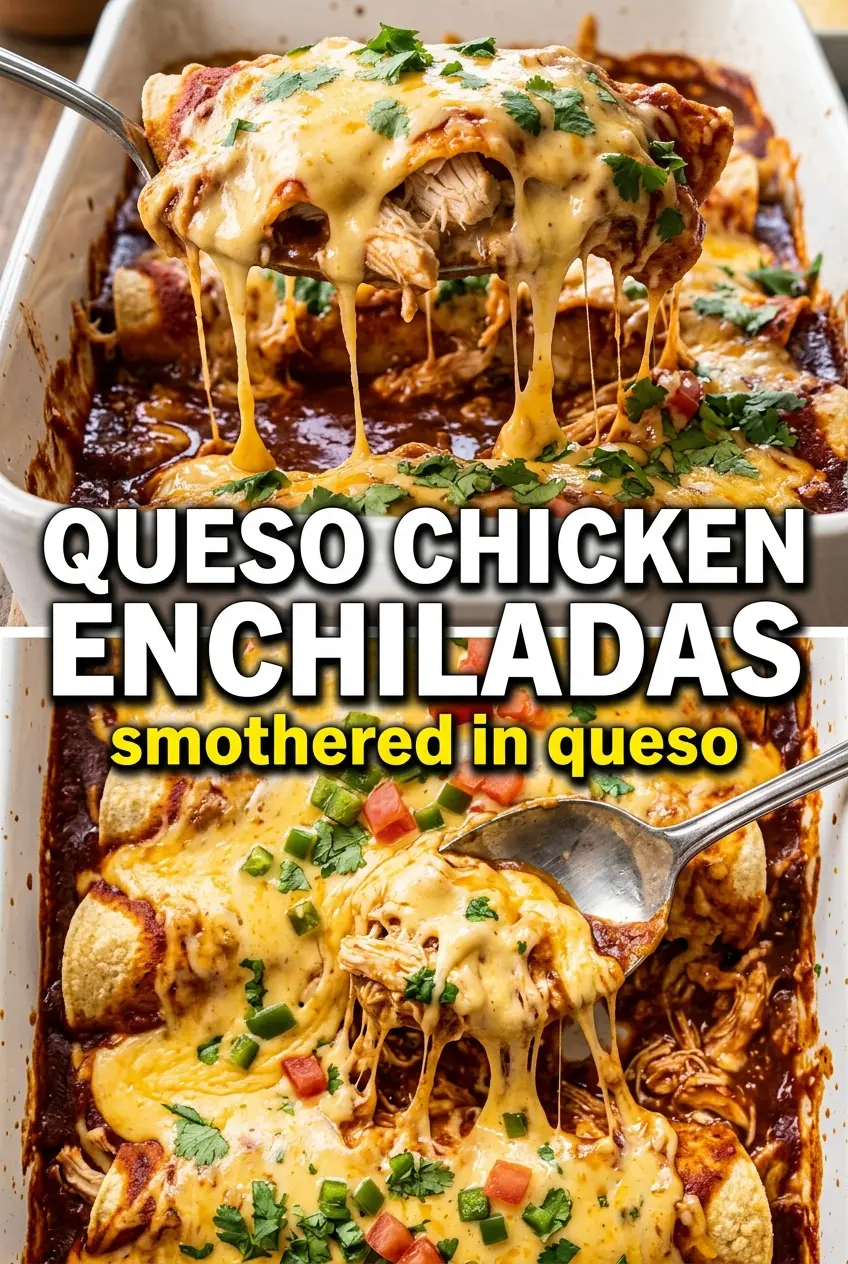
Queso Chicken Enchiladas
Ingredients
Equipment
Method
- Preheat the oven to 375°F and grease a 9x13 baking dish.
- Mix the shredded chicken with diced green chiles and 1/2 cup Monterey jack cheese, then fill each tortilla and roll tightly.
- Place the rolled enchiladas seam-side down in the greased baking dish.
- Melt the butter in a saucepan over medium heat, then add minced garlic and cook for 1 minute.
- Add the whole milk and bring it to a gentle simmer, keeping it just simmering and not boiling hard.
- Stir in the cubed Velveeta, Rotel tomatoes with green chiles, and chicken broth, stirring until fully smooth and creamy.
- Pour the queso sauce over the enchiladas, sprinkle the remaining cheese on top, and bake for 20–25 minutes until bubbly and golden at the edges.
- Top with sour cream, cilantro, and jalapeños, then serve immediately.