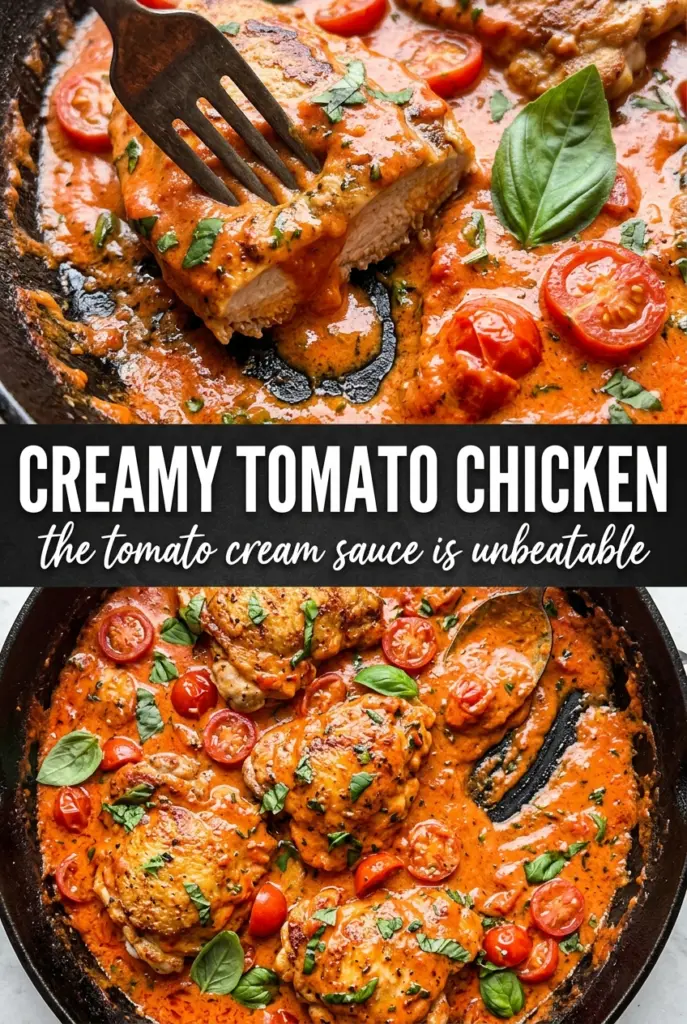
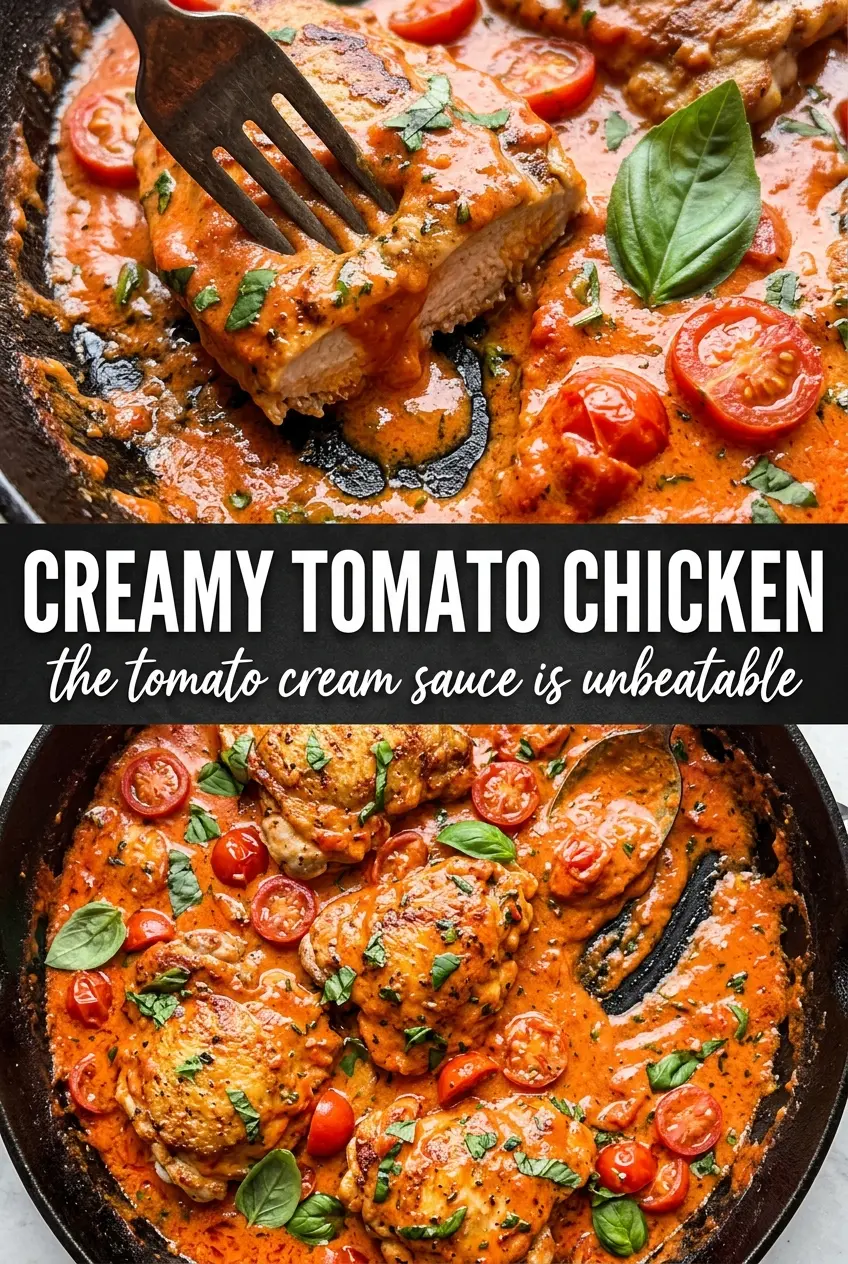
Golden seared chicken breasts tucked into a silky tomato cream sauce earn a permanent spot on the dinner rotation for one simple reason: they taste like a much slower meal than they are. The sauce lands in that perfect middle ground between bright and rich, with enough tomato to keep the cream from feeling heavy and enough Parmesan to give it body. Every bite gives you browned chicken, garlic, basil, and that glossy pink sauce clinging to the meat and whatever you serve underneath.
The key is building the sauce in the same pan you used for the chicken. Those browned bits at the bottom aren’t a mess to clean up later; they’re the base of the flavor. A short simmer after the tomatoes go in softens their sharp edge, and the cream only goes in once the pan has calmed down a little. That keeps the sauce smooth instead of grainy or split.
Below you’ll find the small details that matter here: how to get the chicken deeply golden without drying it out, when the sauce should look thick enough to coat a spoon, and the simplest swaps if you need to use broth instead of wine or want to stretch this into a full pasta dinner.
The sauce turned out silky and thick without needing flour, and the chicken stayed juicy after simmering in it for a few minutes. I used the white wine and the basil at the end made the whole pan smell amazing.
Love how the tomato cream sauce turns rosy and glossy? Save this Creamy Tomato Chicken for a fast skillet dinner that still feels special.
The Trick to Keeping the Cream from Turning Grainy
The most common mistake in a tomato cream sauce is rushing the cream into a pan that’s too hot. Tomatoes are acidic, and high heat can make the dairy tighten up instead of melting into the sauce. Let the crushed tomatoes simmer first so the sharpness mellows, then lower the heat before the cream and Parmesan go in. That slower finish gives you a sauce that looks glossy and smooth instead of speckled or broken.
The other thing that matters is not overcooking the chicken after it goes back in. It only needs a short simmer in the sauce, just long enough to warm through and pick up flavor. If you leave it bubbling away too long, the sauce reduces too far and the chicken turns dry at the edges. Pull the pan off the heat as soon as the sauce coats the spoon and the chicken is hot in the center.
What Each Ingredient Is Actually Doing in This Dish
- Chicken breasts — Boneless skinless breasts stay quick and clean here, but they need a good sear to stay interesting. If yours are especially thick, pound them to even thickness so they cook at the same rate and don’t dry out before the center reaches temperature.
- Crushed tomatoes — This is what gives the sauce its body and bright backbone. Crushed tomatoes work better than thin tomato sauce because they still have some texture, which helps the cream cling to them instead of disappearing into the pan.
- Heavy cream — This is the ingredient that turns the sauce from sharp to plush. Half-and-half can work in a pinch, but the sauce will be looser and a little more likely to separate if the heat is too high.
- Parmesan cheese — Freshly grated Parmesan melts into the sauce and helps thicken it. Pre-shredded cheese often has anti-caking agents, and those can make the sauce a little gritty instead of silky.
- Dry white wine or chicken broth — Wine adds a clean edge that makes the tomatoes taste brighter. Broth is the easy substitute if you don’t want alcohol, and it still loosens the browned bits in the pan, which is what you need most.
- Fresh basil — Basil at the end lifts the whole dish and keeps the sauce from tasting flat. Dried basil won’t give you the same fresh finish, so if all you have is dried, add a small pinch during the simmer and still use parsley or nothing on top.
Building the Rosy Sauce Without Losing the Sear
Searing the Chicken First
Season the chicken well, then get it into hot oil and leave it alone long enough to build a deep golden crust. If the pan is crowded or the heat is too low, the chicken will steam and the sauce will never have the same savory depth. You’re looking for browned edges and a piece that releases without sticking hard to the skillet. Pull it out once it reaches 165°F in the center, then move straight into the sauce.
Pulling Flavor from the Pan
Once the chicken comes out, garlic goes into the same pan for just 30 seconds. That’s enough to soften it without burning it, which would make the whole sauce bitter. The wine or broth should hit the pan and hiss as it loosens the browned bits from the bottom. Scrape them up fully; that’s the part that makes this taste cooked, not assembled.
Letting the Tomatoes and Cream Meet Slowly
Add the crushed tomatoes and let them simmer long enough to lose that raw, tinny edge. Then stir in the cream, Parmesan, and red pepper flakes with the heat lowered so the sauce can come together gradually. If it starts to look greasy or grainy, the burner was too high. Keep it at a gentle bubble and the sauce will thicken into that rosy, spoon-coating texture you want.
Finishing with Butter and Basil
A small knob of butter at the end gives the sauce a glossy finish and smooths out the acidity. Stir it in off the heat so it melts into the sauce instead of separating. Put the chicken back in, spoon sauce over the top, and finish with basil right before serving. Basil loses its fragrance fast once it hits hot sauce, so wait until the last minute.
Ways to Bend This Recipe Without Breaking It
Make It Gluten-Free
This recipe is naturally gluten-free as written as long as your broth is gluten-free. Serve it with rice, mashed potatoes, polenta, or gluten-free pasta, and keep the simmer gentle so the sauce stays smooth instead of needing any flour to thicken it.
Use Chicken Thighs Instead of Breasts
Boneless skinless thighs give you a richer, more forgiving result. They take a little longer to cook, but they stay tender even if you let them simmer in the sauce for a few extra minutes. The sauce won’t change much, but the finished dish will taste a little more luxurious.
Make It Lighter
You can swap in half-and-half for the cream, but expect a thinner sauce with a softer sheen. Keep the heat low and don’t let it boil hard, or the dairy can separate. This version works best if you’re serving it right away over pasta or vegetables.
Stretch It for More Servings
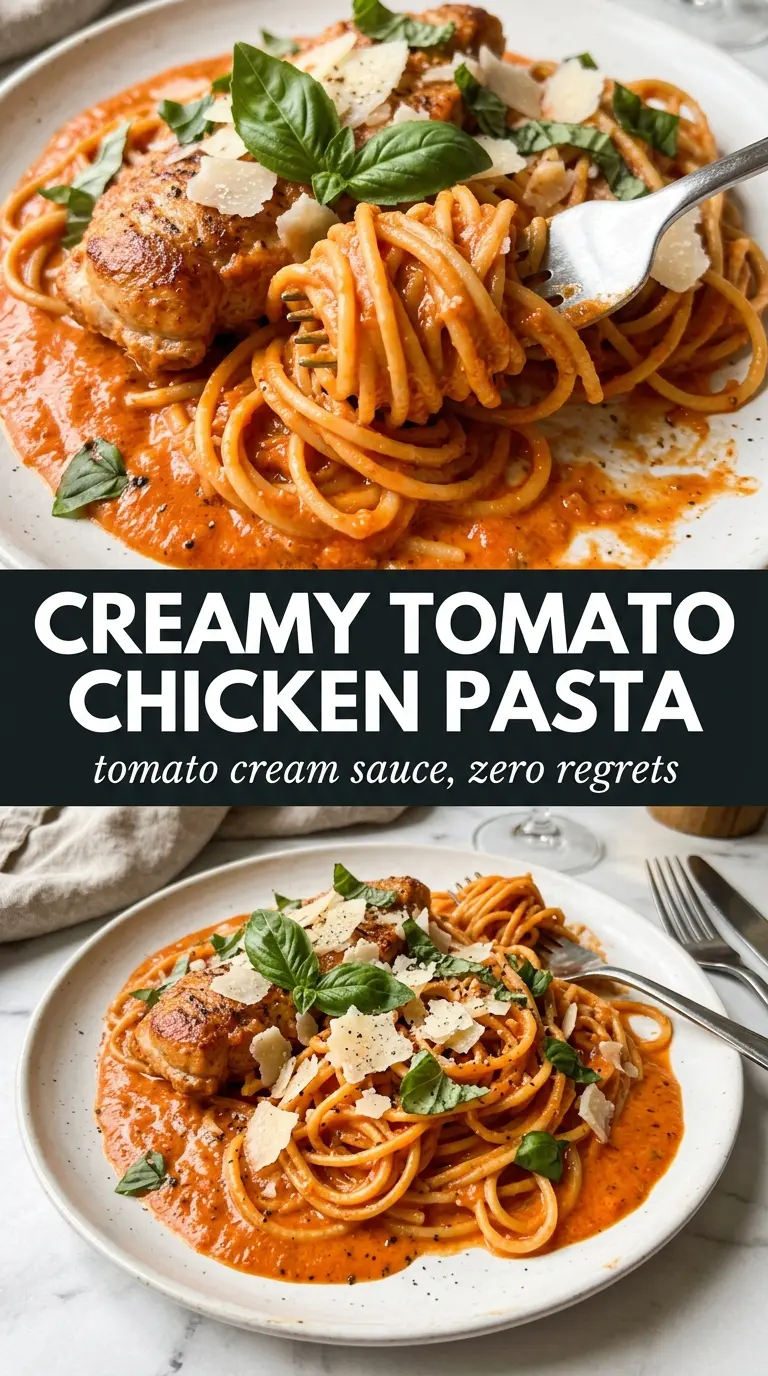
Toss in cooked pasta, gnocchi, or a handful of spinach at the end and you’ve got a fuller meal without changing the sauce. Spinach wilts in the hot pan in about a minute, and pasta or gnocchi catches the sauce best if you add a splash of its cooking water to loosen everything.
Storage and Reheating
- Refrigerator: Store leftovers in an airtight container for up to 3 days. The sauce thickens as it chills, and the chicken stays best when it isn’t overcooked in the pan.
- Freezer: It freezes, but the cream sauce can lose a little of its silky texture after thawing. For the best result, freeze in a shallow container for up to 2 months and thaw slowly in the fridge.
- Reheating: Warm gently on the stovetop over low heat with a splash of broth or water. High heat can make the cream sauce break, so go slow and stir often until the chicken is just heated through.
Answers to the Questions Worth Asking
Creamy Tomato Chicken
Ingredients
Equipment
Method
- Season the chicken breasts with salt, black pepper, garlic powder, and Italian seasoning. Heat olive oil in a skillet over medium-high heat until shimmering, then sear the chicken 5-6 minutes per side until golden, reaching 165°F internal temperature; remove to a plate.
- In the same skillet, cook the minced garlic for 30 seconds until fragrant, stirring to prevent browning. Deglaze with dry white wine or chicken broth, scraping up browned bits from the pan.
- Add crushed tomatoes and 1 teaspoon Italian seasoning, then simmer for 5 minutes until slightly thickened and cohesive. Keep the heat at a steady simmer for consistent reduction.
- Stir in heavy cream, Parmesan cheese, and red pepper flakes, then simmer 4-5 minutes until the sauce is thick and rose-colored, stirring occasionally to prevent sticking.
- Swirl in butter off the heat until glossy and fully melted, giving the sauce a smooth finish.
- Return the chicken to the skillet and spoon the tomato cream sauce over each breast, coating the tops. Garnish with fresh basil and serve with pasta or gnocchi.