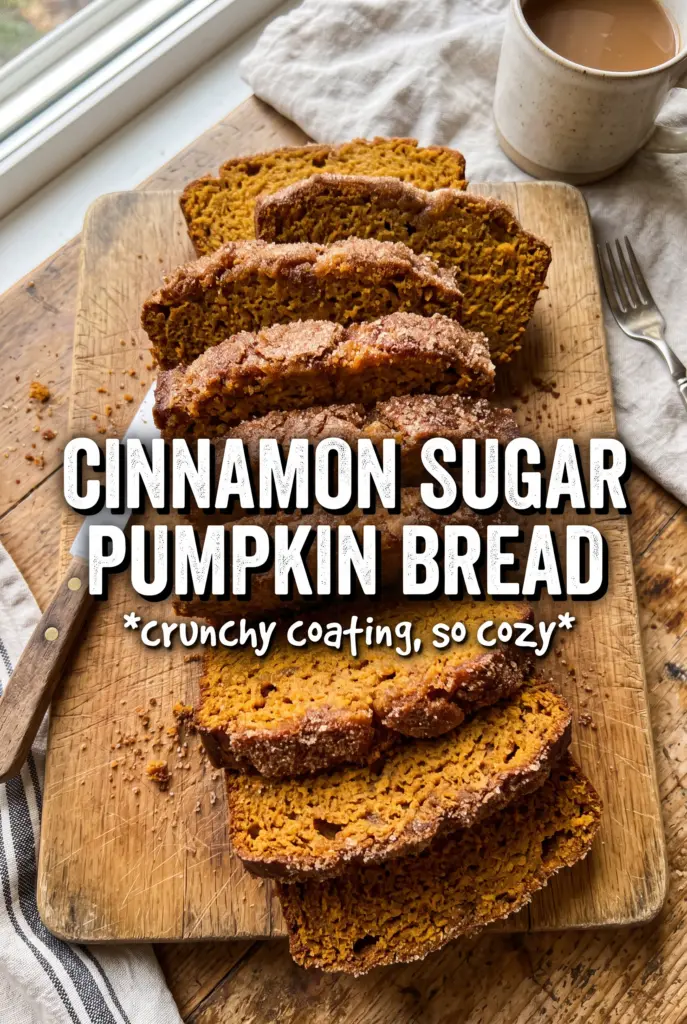
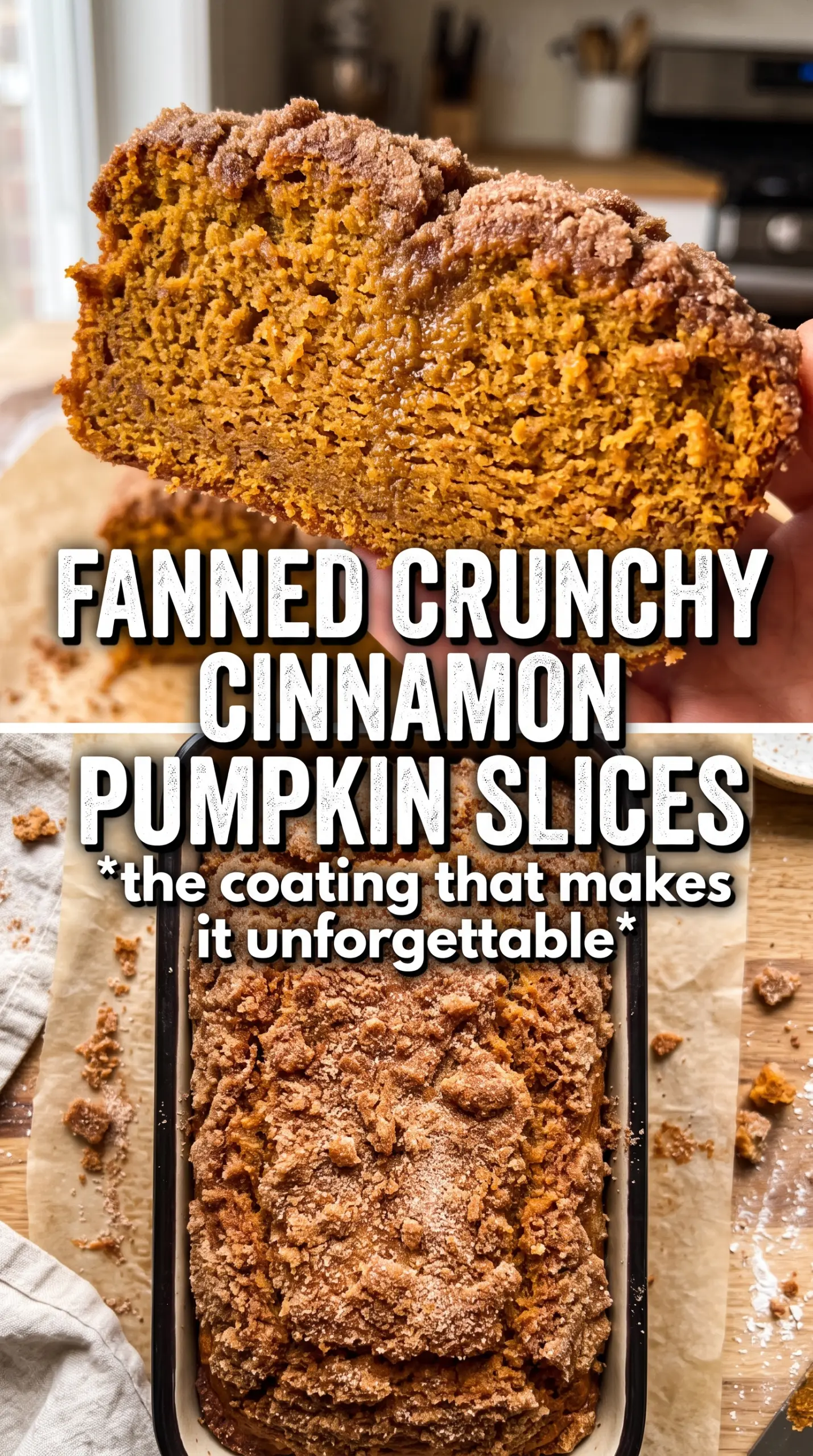
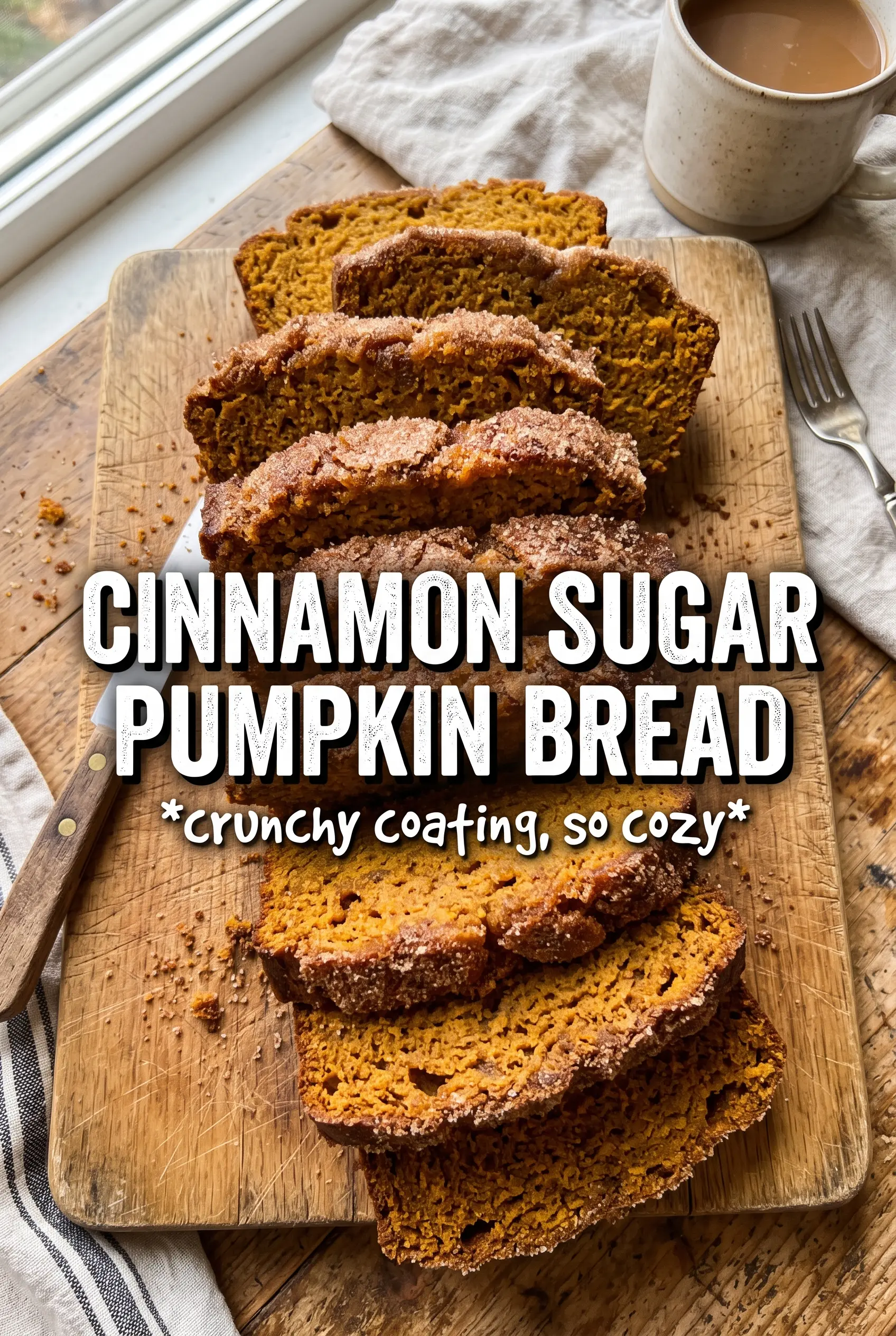
Cinnamon sugar pumpkin bread bakes into a loaf with a crackly, caramelized top and a tender, deeply moist crumb that stays soft for days. The cinnamon sugar crust doesn’t just sit on top here; it bakes into the sides and middle, giving every slice a little sparkle of spice and a sweet edge that makes plain pumpkin bread feel flat by comparison.
What makes this version work is the layering. A buttered, cinnamon-sugar-coated pan helps the loaf release cleanly and gives the bottom and sides a light crust. Then a portion of the cinnamon sugar is tucked into the middle, where it melts into a soft ribbon instead of disappearing into the batter. The result is pumpkin bread that tastes like it was finished with care, not just mixed and baked.
Below, I’ve included the small details that keep the crumb tender, the swirl distinct, and the top from getting soggy. If you’ve ever had pumpkin bread turn heavy or bland, this method fixes both problems.
The cinnamon sugar crust baked up thick and crisp, and the loaf stayed moist all the way through the next day. I loved the swirl in the middle because it gave every slice a little extra sweetness without making it cloying.
Save this cinnamon sugar pumpkin bread for the days when you want a thick crackly crust, a soft pumpkin crumb, and a swirled middle that slices beautifully.
The Reason the Cinnamon Sugar Crust Stays Crisp Instead of Melting Away
The pan coating is doing more work than most pumpkin bread recipes ask of it. When you brush the loaf pan with melted butter and add a generous layer of cinnamon sugar, you create a thin barrier that helps the loaf release and also gives the sugar a head start on caramelizing. If the pan is only lightly coated, that sugar disappears into the batter and you lose the crust entirely.
The other detail that matters is the swirl. A thick layer of cinnamon sugar in the middle gives you contrast instead of just sweetness. Keep the swirl gentle and stop once you see a marbled line or two. If you drag the knife too hard, you’ll blend the filling into the batter and end up with a uniform loaf instead of those distinct streaks.
What Each Ingredient Is Actually Doing in This Loaf
- Pumpkin puree — This is the moisture and body of the bread. Use plain pumpkin puree, not pumpkin pie filling, or the loaf will be too sweet and spiced before you even add the sugar and spice blend.
- Brown sugar — The brown sugar deepens the flavor and helps the crumb stay soft. Granulated sugar sweetens, but brown sugar brings that subtle molasses note that makes the loaf taste rounder and warmer.
- Oil — Oil keeps this bread tender for days. Butter would add flavor, but it won’t stay as moist over time, which matters in a loaf you’ll probably slice across a couple of days.
- Buttermilk — This loosens the batter just enough and adds a little tang that keeps the loaf from tasting flat. If you don’t have it, use milk with a teaspoon of lemon juice or vinegar and let it sit for 5 minutes before mixing.
- Cinnamon sugar — Dividing it between the pan, the middle, and the top is what gives the loaf its signature crust and swirl. If you dump it all on top, you lose that layered effect and the bread tastes less balanced.
Building the Batter Without Beating the Moisture Out of It
Mix the dry ingredients first
Whisk the flour, baking soda, pumpkin pie spice, cinnamon, and salt until everything looks evenly blended. This keeps the leavening and spice from clumping in one bite and leaving another bite bland. If you see streaks of spice later, it usually means the dry ingredients weren’t mixed well enough at the start.
Stir the wet ingredients until smooth
Whisk the pumpkin, sugars, oil, eggs, vanilla, and buttermilk until the mixture looks glossy and uniform. The goal is smooth, not airy. If the eggs are still streaky, keep whisking before you add the flour, because once the dry ingredients go in you want to stir as little as possible.
Fold just until the flour disappears
Pour the wet mixture into the dry ingredients and fold with a spatula until you don’t see dry flour anymore. A few small lumps are fine. Overmixing develops the flour and turns the loaf dense and chewy instead of soft and cakey in the center.
Layer and swirl with a light hand
Pour half the batter into the prepared pan, sprinkle on a layer of cinnamon sugar, then add the remaining batter. Drag a knife through once or twice in a loose S-shape. That’s enough to pull the sugar through the loaf without dissolving it into the batter.
Bake until the crust is set and the center springs back
Bake at 350°F for 60 to 65 minutes, until the top is deeply golden and a tester in the center comes out with a few moist crumbs, not wet batter. The sugar crust will look dark and almost lacquered. If the top is browning too fast before the center is done, tent it loosely with foil for the last 15 minutes.
Three Useful Ways to Change the Loaf Without Losing What Makes It Good
Dairy-Free Loaf
Swap the buttermilk for unsweetened almond milk or oat milk mixed with 1 teaspoon vinegar or lemon juice. You’ll lose a little tang, but the texture stays soft and the loaf still bakes up with a tender crumb. Keep the cinnamon sugar pan coating exactly the same, since that’s what gives the bread its signature finish.
Gluten-Free Version
Use a 1:1 gluten-free flour blend that already includes xanthan gum. The loaf will be a little more delicate, so let it cool before slicing or the crumb can crumble at the center. Everything else can stay the same, including the bake time, though some ovens may need a few extra minutes.
Extra-Spiced Version
Add an extra 1/2 teaspoon of cinnamon and a pinch of ground ginger to the dry ingredients if you want a sharper spice note. This pushes the loaf closer to a bakery-style pumpkin bread, but don’t add more sugar to compensate — the crust already brings enough sweetness.
Storage and Reheating
- Refrigerator: Store tightly wrapped for up to 5 days. The crust softens a little, but the crumb stays moist.
- Freezer: Freezes well for up to 3 months. Wrap the whole loaf or individual slices in plastic, then foil, and thaw at room temperature.
- Reheating: Warm slices in a toaster oven or 300°F oven for a few minutes. Microwaving works in a pinch, but it softens the cinnamon sugar crust instead of reviving it.
Answers to the Questions Worth Asking
Cinnamon Sugar Pumpkin Bread
Ingredients
Equipment
Method
- Preheat the oven to 350F. Brush a 9x5 loaf pan with melted butter and coat it with a generous layer of cinnamon sugar.
- Whisk together the bread dry ingredients until evenly combined. Whisk together the wet ingredients (pumpkin, sugar, brown sugar, oil, eggs, vanilla, and buttermilk) until smooth.
- Fold the wet mixture into the dry ingredients until no dry streaks remain. Pour half the batter into the prepared pan and sprinkle on a layer of cinnamon sugar.
- Add the remaining batter to the pan and level the top. Swirl gently with a knife, then top generously with the remaining cinnamon sugar.
- Bake for 60–65 minutes at 350F, until the cinnamon sugar forms a caramelized crust on top. Remove from the pan while still slightly warm to prevent sticking.