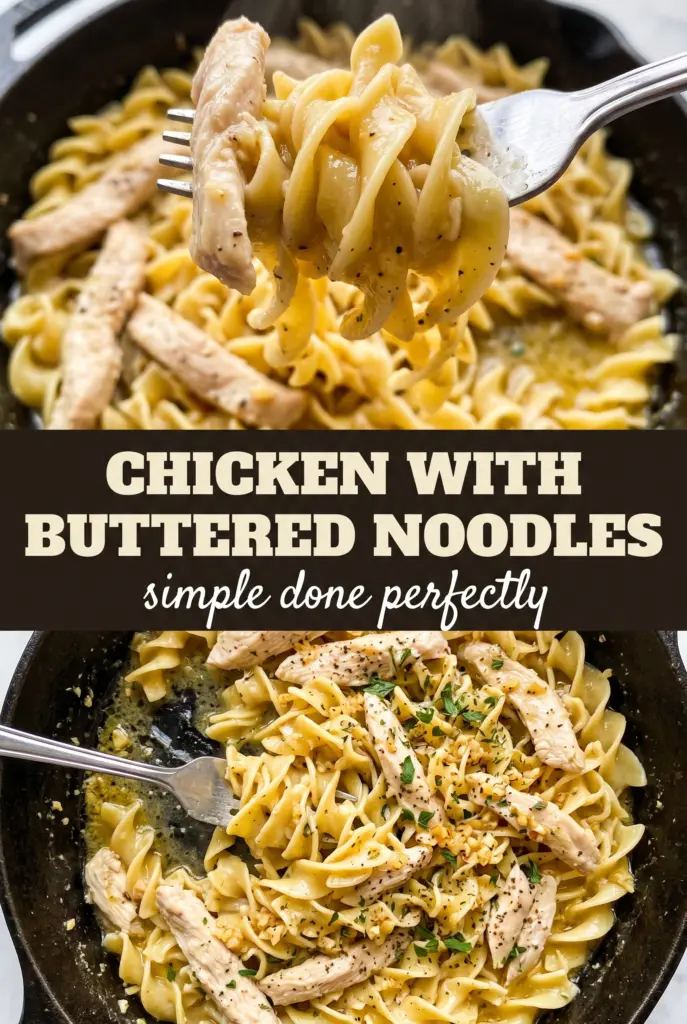
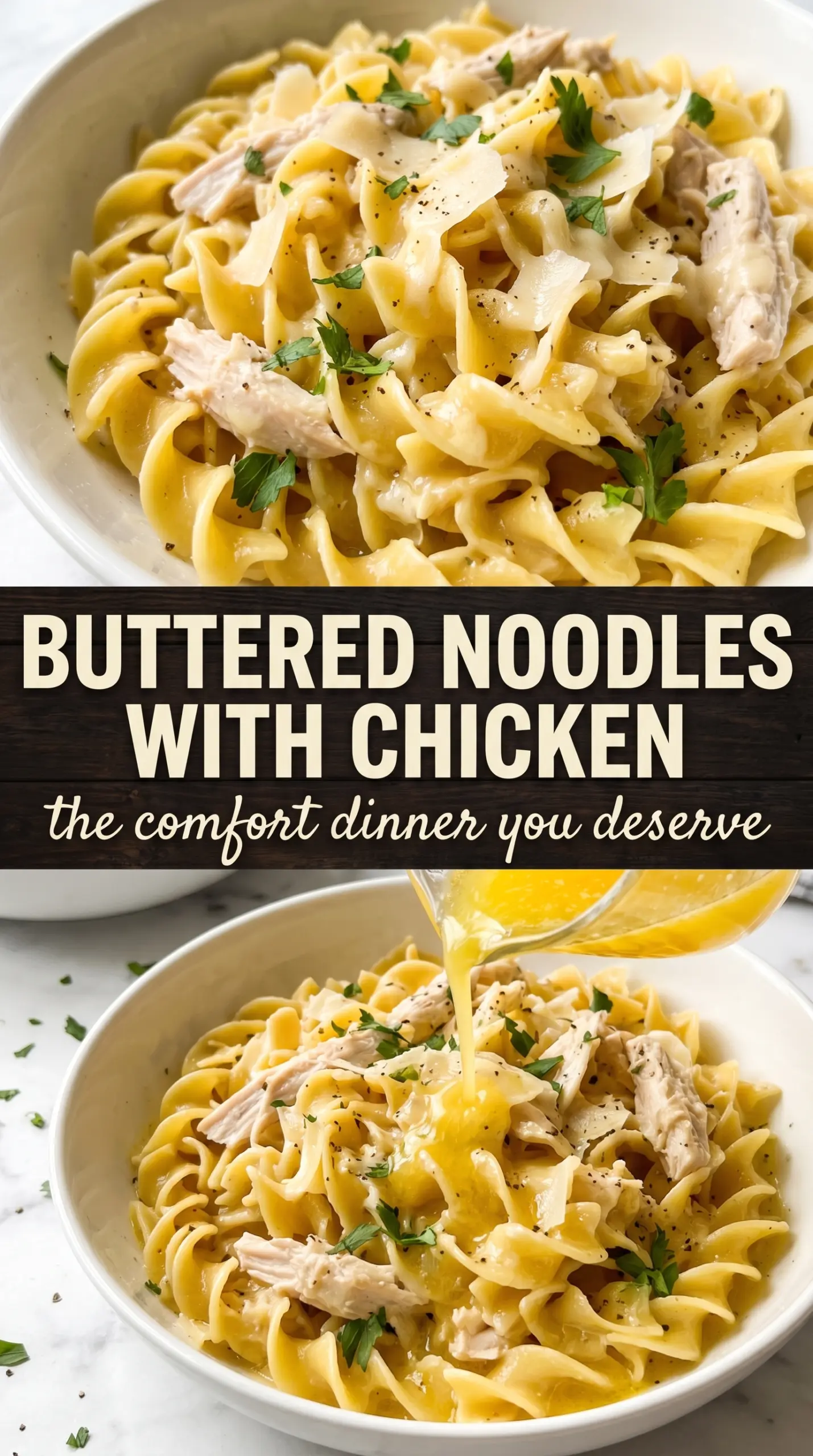
Golden chicken over glossy buttered noodles is the kind of dinner that disappears fast because it hits every note people want on a weeknight: tender meat, silky pasta, and a sauce that clings instead of pooling at the bottom of the bowl. The butter and garlic coat the noodles in a light sheen, while Parmesan and parsley keep the whole dish from tasting flat or heavy.
What makes this version work is the way the chicken and noodles share the same pan. The browned bits left behind after searing the chicken become the backbone of the sauce, so you don’t lose flavor by starting over in a clean skillet. A splash of pasta water gives the butter enough body to cling to the egg noodles without turning greasy.
Below you’ll find the small details that matter here: how to keep the garlic from burning, when to stop cooking the chicken, and how to use the pasta water so the noodles stay silky instead of stiff.
The noodles stayed silky instead of greasy, and the garlic butter picked up all the browned bits from the chicken. I tossed in a little extra pasta water at the end and the sauce coated every strand perfectly.
Save these chicken with buttered noodles for a quick skillet dinner with silky garlic butter sauce and golden sliced chicken.
The Reason the Noodles Stay Glossy Instead of Greasy
The sauce in this dish is more about emulsion than volume. Butter alone will just slick the noodles and slide off, but when you add a little starchy pasta water, the sauce loosens just enough to coat every strand and hold onto the Parmesan. That is what keeps the bowl looking glossy instead of oily.
The other thing that matters is the skillet you cook in. Those browned bits from the chicken add depth, and the garlic cooks in the same butter that will finish the noodles, so every layer builds on the last one. If the garlic goes too dark, the whole dish picks up a bitter edge, so keep the heat at medium and move quickly once it smells fragrant.
What the Butter, Garlic, and Pasta Water Are Doing Here
- Egg noodles — These are the right shape for this sauce because their surface catches the butter instead of letting it run off. Regular spaghetti works in a pinch, but you lose some of that soft, comfort-food texture that makes the dish feel special.
- Chicken breasts — Boneless, skinless breasts cook fast and slice neatly over the noodles. If yours are thick in the middle, pound them to an even thickness first so the outside doesn’t dry out before the center reaches 165°F.
- Butter — This is the base of the sauce, so use the real thing here. Salted or unsalted both work, but if you use salted butter, back off a little on the final seasoning until after the Parmesan goes in.
- Garlic — Fresh minced garlic gives the dish its backbone. Jarred garlic can work, but it tends to taste flatter and can turn harsh faster, so keep the cook time short and let it just bloom in the butter.
- Parmesan — Freshly grated Parmesan melts more smoothly and adds that nutty finish on top. The pre-shredded kind often has anti-caking agents, which can make the sauce a little grainy instead of silky.
- Pasta water — This is the little ingredient that turns butter into a sauce. Add it a splash at a time until the noodles look coated and glossy, not soupy.
Getting the Chicken Golden Before the Butter Goes In
Seasoning for a real crust
Pat the chicken dry, then season it well with salt, pepper, garlic powder, and Italian seasoning. Dry surface equals better browning, and that browned surface gives you more flavor in the pan later. If the chicken goes into the skillet damp, it steams before it sears and you’ll miss that golden edge.
Searing without crowding the pan
Heat the olive oil over medium-high and lay the chicken in a single layer. You want a steady sizzle right away; if the pan is too cool, the chicken will sit there and leak moisture before it colors. Cook until the first side is deeply golden, then flip and finish until the center reaches 165°F, because cutting too early sends all the juices onto the cutting board.
Letting the chicken rest before slicing
Move the chicken to a plate and let it rest for a few minutes before slicing it. That pause keeps the juices in the meat instead of flooding the noodles later. Slice against the grain so each piece stays tender and easy to eat with a forkful of pasta.
Building the noodles in the same skillet
Lower the heat before the butter goes in. Add the garlic and red pepper flakes and cook just until fragrant, which usually takes a minute or two; if the garlic starts to brown, pull the pan off the heat for a moment. Toss in the egg noodles, add a splash of pasta water, and keep turning until every noodle looks slick and lightly sauced.
Make It a Little Richer
Stir in a splash of heavy cream after the butter and garlic if you want a more saucy, silky finish. It will coat the noodles more heavily and turn the dish into something closer to a creamy pasta, but it also softens the sharper garlic-butter flavor.
Make It Dairy-Free
Use olive oil or a good dairy-free butter substitute in place of the butter, then finish with a dairy-free Parmesan-style topping if you like. The sauce won’t taste exactly the same, but the garlic and chicken still carry the dish, and the pasta water helps keep the texture smooth.
Swap In Chicken Thighs
Boneless thighs give you a juicier result and are more forgiving if you’re distracted at the stove. They usually need a little more time to cook through, but they bring a deeper, richer chicken flavor that works well with the butter and Parmesan.
Storage and Reheating
- Refrigerator: Store leftovers in an airtight container for up to 3 days. The noodles will absorb some sauce as they sit, so expect them to be a little less glossy the next day.
- Freezer: This dish isn’t a great freezer candidate. Buttered noodles tend to go soft after thawing, and the chicken slices lose some of their clean texture.
- Reheating: Warm gently in a skillet over low heat with a splash of water or broth to loosen the noodles. The common mistake is blasting it in the microwave until the chicken tightens up and the butter separates.
Questions I Get Asked About This Recipe
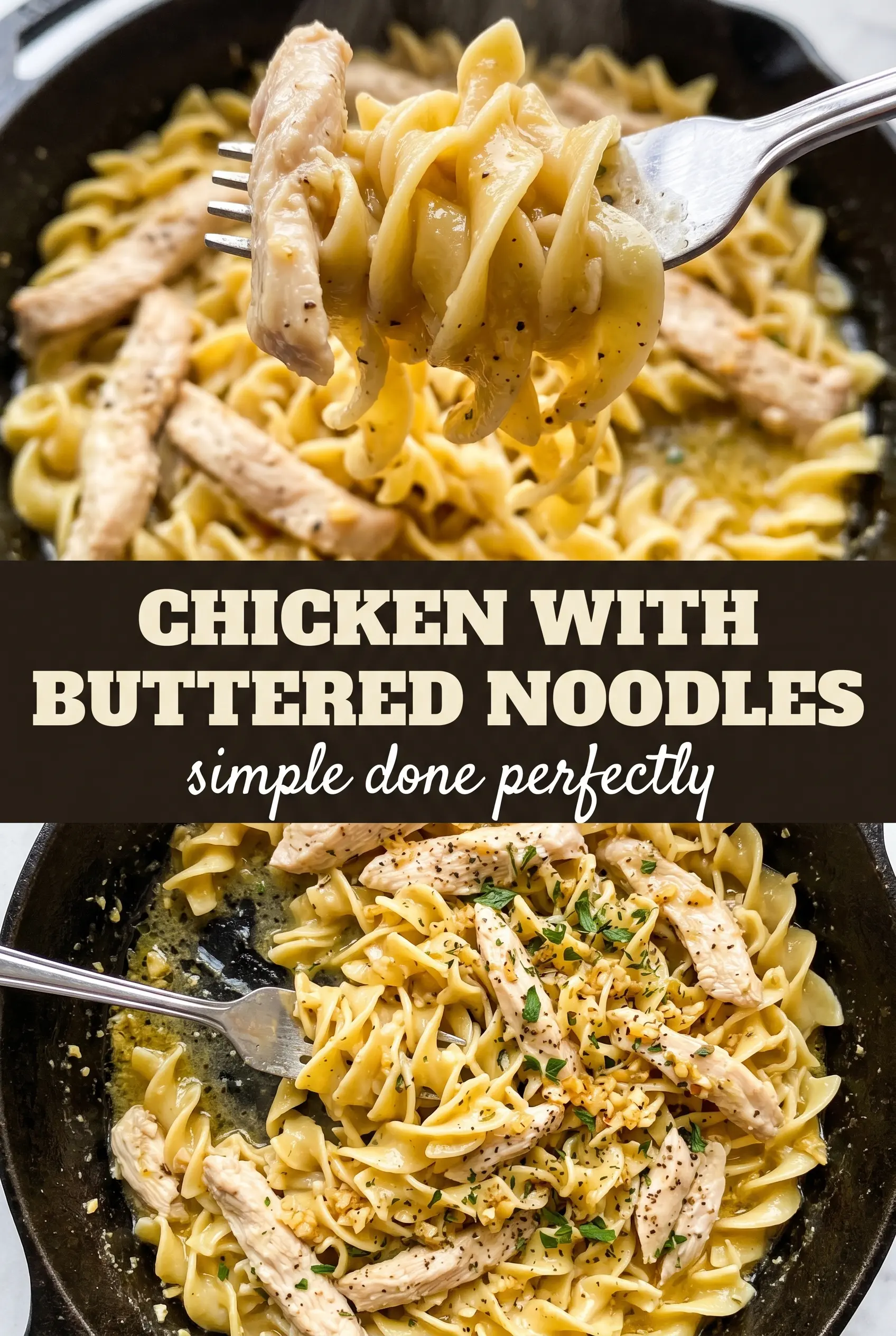
Chicken with Buttered Noodles
Ingredients
Equipment
Method
- Season the chicken breasts all over with salt, pepper, garlic powder, and Italian seasoning. Heat olive oil in a cast iron skillet over medium-high heat and sear the chicken until golden, 5-6 minutes per side, or until the internal temperature reaches 165°F.
- Remove the chicken to rest, then slice it into pieces so it can be fanned over the noodles.
- Melt the butter in the same skillet over medium heat. Add the minced garlic and red pepper flakes and cook 1-2 minutes until fragrant, stirring so the garlic doesn’t brown.
- Add the cooked egg noodles to the garlic butter and toss to coat. Drizzle in the reserved pasta water as needed to loosen and create a glossy sauce.
- Season with salt and pepper, then stir in the chopped parsley. Toss just until the parsley is distributed and the noodles look evenly buttered.
- Divide the noodles among plates and top each portion with sliced chicken. Finish by scattering Parmesan generously over the top.
- Serve immediately while the butter sauce glistens and the chicken is warm.