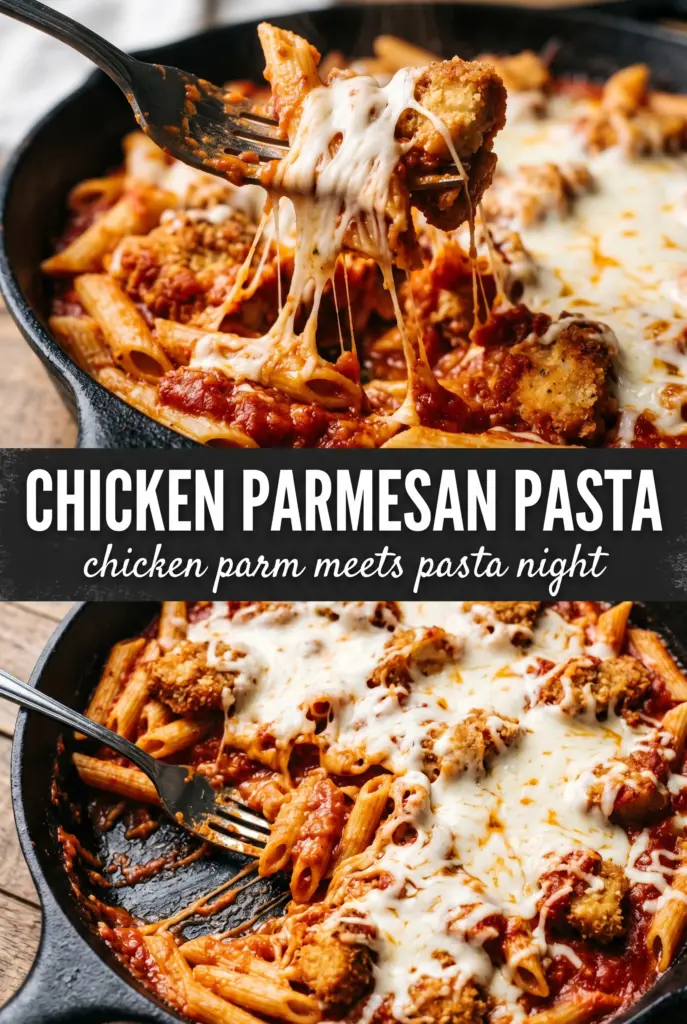
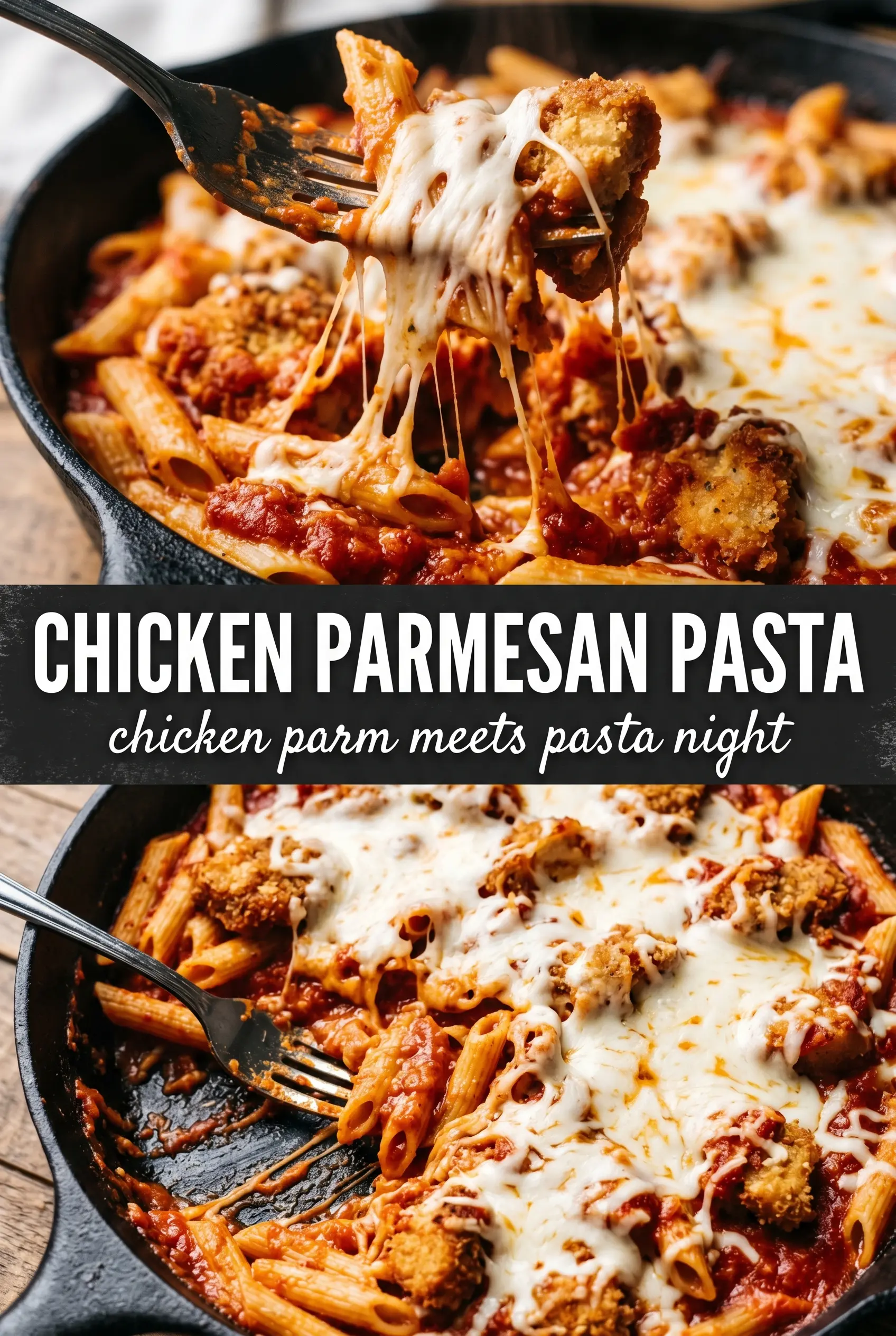
Chicken Parmesan pasta hits the table with everything people love about classic chicken parm, just a little easier to serve in one pan. The chicken stays crisp on the outside, the pasta soaks up marinara in all the right places, and the blanket of melted mozzarella turns the whole dish into something worth scraping the corners for. It’s the kind of baked pasta that disappears fast because every bite gives you sauce, cheese, and a little bit of crunch.
What makes this version work is the way each part keeps its own texture before they come together. The chicken gets breaded and browned first, which keeps it from going soft in the oven. The pasta is coated with sauce before baking, so it doesn’t dry out under the cheese, and the final bake is just long enough to melt everything together without overcooking the chicken. That balance is what keeps this from turning into a heavy casserole.
Below, I’ve included the little details that matter most, from the breadcrumb coating to the best way to keep the cheese bubbling without making the pasta mushy. If you’ve ever had chicken parm pasta that tasted flat or came out soggy, the fixes are all here.
The chicken stayed crisp even after baking, and the pasta underneath soaked up the marinara without getting watery. I used a little extra basil at the end and my husband went back for seconds before I even sat down.
Save this Chicken Parmesan Pasta for nights when you want crispy chicken, bubbling mozzarella, and a baked pasta that feels a little more special than the usual skillet dinner.
The Reason the Chicken Stays Crispy Instead of Going Soggy
The biggest mistake with chicken Parmesan pasta is treating the chicken like it can survive a long simmer in sauce. It can’t. Once breaded chicken sits in marinara too long, the coating turns soft and the whole dish starts to feel muddy instead of crisp and layered. The fix is to cook the chicken fully first, then move it straight into the baking dish at the end so the oven only has to melt the cheese and bring everything together.
The other detail that matters is the pasta texture. Cook the penne until just al dente, because it keeps absorbing sauce in the oven. If you push it too far on the stovetop, it’ll go soft by the time the cheese is bubbly. You want the pasta to still have a little bite when it goes into the dish.
What Each Ingredient Is Doing in This Bake
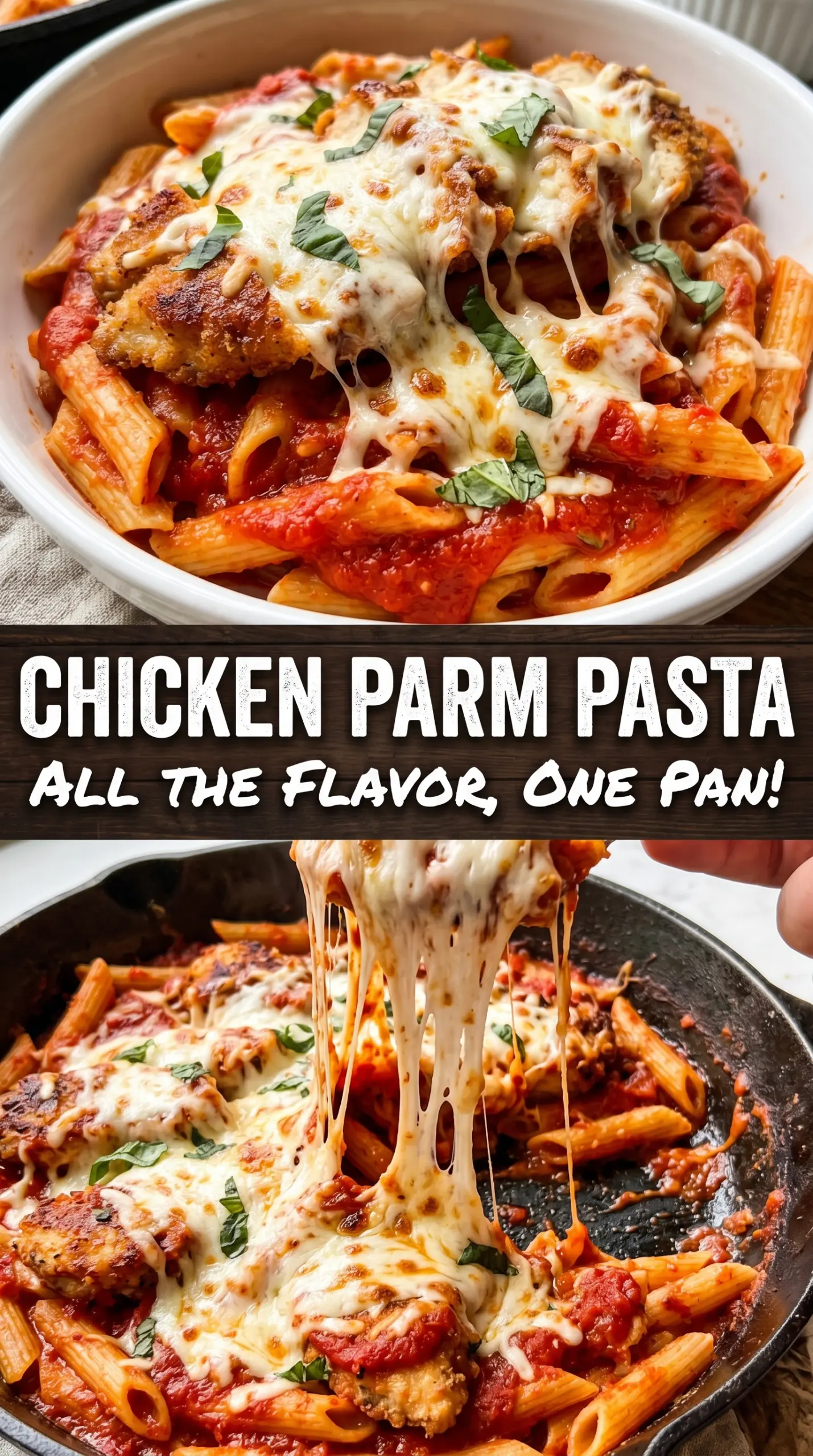
- Chicken breasts — Cutting them into bite-sized pieces gives you more golden crust per serving and helps them cook quickly without drying out. Thighs work too if you want a richer, juicier result, but breasts give you the classic chicken parm feel.
- Flour, egg, and breadcrumbs — This three-part coating is what locks in that crisp edge. The flour helps the egg cling, and the breadcrumbs create the textured shell that survives the trip from skillet to oven.
- Parmesan in the breading — Grated Parmesan adds salt and a deeper savory note right in the crust. Use the real grated stuff, not the powdery shaker version, or the coating won’t brown as well.
- Marinara sauce — This is where quality matters most. A good sauce tastes balanced before it ever touches the pasta; if yours is sharp or flat, the whole dish will taste that way after baking.
- Mozzarella — Shredded mozzarella gives you that stretchy, melted top people expect from chicken parm. Buy a block and shred it yourself if you can; pre-shredded cheese can melt a little grainy because of the anti-caking coating.
Building the Layers So the Pasta Bakes Up Right
Breading the Chicken
Set up your flour, egg, and breadcrumb mixture before you start coating. Dry chicken won’t hold the breading well if it’s damp, so pat the pieces dry first, then press them into the crumbs so the coating actually sticks. If the breading looks patchy, it won’t brown evenly in the pan and you’ll lose the crisp edge that makes this dish work.
Getting the Chicken Golden
Cook the chicken over medium-high heat until the crust is deep golden and the centers are cooked through. Don’t crowd the pan, or the chicken will steam and the coating will soften before it ever crisps. If the pan starts smoking hard, lower the heat a little; the goal is a steady sizzle, not burnt breadcrumbs.
Assembling the Bake
Toss the cooked penne with marinara before it goes into the dish so every piece gets coated. That step keeps the pasta from drying out under the cheese and prevents dry spots in the middle of the pan. Arrange the chicken over the top rather than burying it, because the exposed pieces keep more of their texture in the oven.
Melting the Cheese Without Overbaking
Bake just until the mozzarella is melted, bubbling, and beginning to turn golden at the edges. The oven isn’t cooking the chicken from scratch here; it’s finishing the dish. If you leave it in too long, the cheese will tighten up and the pasta underneath will go past the point where it still has a nice bite.
How to Adapt This Chicken Parm Pasta for Different Nights
Gluten-Free Chicken Parmesan Pasta
Swap in gluten-free breadcrumbs and gluten-free penne. The crust will be a little more delicate, so press the coating onto the chicken firmly and let the chicken rest a few minutes after breading before it hits the pan.
Dairy-Free Version
Use a dairy-free mozzarella-style shred and skip the Parmesan in the topping, but keep the breadcrumb layer seasoned well so the chicken doesn’t taste flat. The melt won’t be quite as stretchy, but you’ll still get a satisfying baked finish.
Make It Spicier
Stir red pepper flakes into the marinara or add a pinch to the breadcrumb mixture. That heat cuts through the cheese and gives the sauce a little edge without changing the structure of the dish.
Storage and Reheating
- Refrigerator: Store leftovers in an airtight container for up to 4 days. The chicken will soften a little in the sauce, but the flavor holds up well.
- Freezer: Freeze portions in a tightly sealed container for up to 2 months. The texture of the pasta will be softer after thawing, but it still works for a make-ahead dinner.
- Reheating: Reheat covered in a 350°F oven until hot, or warm single portions in the microwave in short bursts. If you use the microwave, stop as soon as the cheese loosens again; overheating makes the chicken tough and the pasta dry at the edges.
Answers to the Questions Worth Asking
Chicken Parmesan Pasta
Ingredients
Equipment
Method
- Dredge the bite-sized chicken pieces in all-purpose flour, then dip them in beaten eggs so each piece is fully coated.
- Coat the egg-dipped chicken in Italian breadcrumbs mixed with 1/2 cup grated Parmesan, pressing lightly so the crumbs adhere.
- Heat olive oil in a Dutch oven over medium-high heat, then pan-fry the chicken for 3-4 minutes per side until golden and cooked through.
- Transfer the chicken to paper towels to drain while you assemble the pasta.
- Toss the cooked penne pasta with marinara sauce, then pour it into a greased 9x13 baking dish.
- Arrange the crispy chicken pieces over the pasta so they sit evenly across the surface.
- Top with shredded mozzarella cheese and sprinkle with the additional 1/2 cup grated Parmesan for a browned, cheesy finish.
- Bake at 375°F for 20-22 minutes, until the cheese is melted and golden; garnish with fresh basil right before serving.