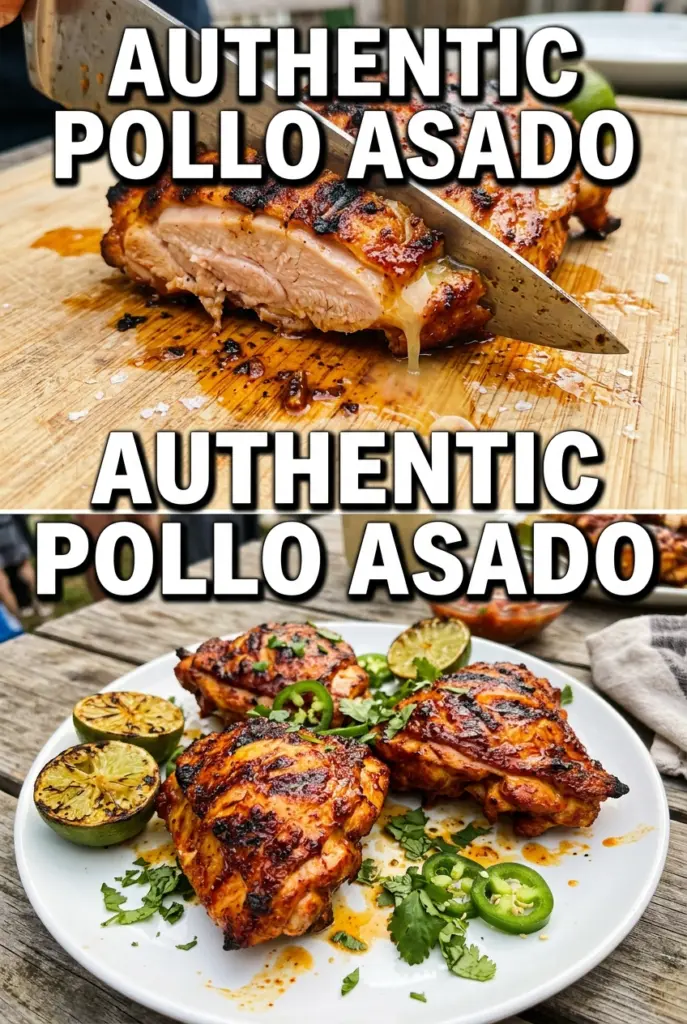
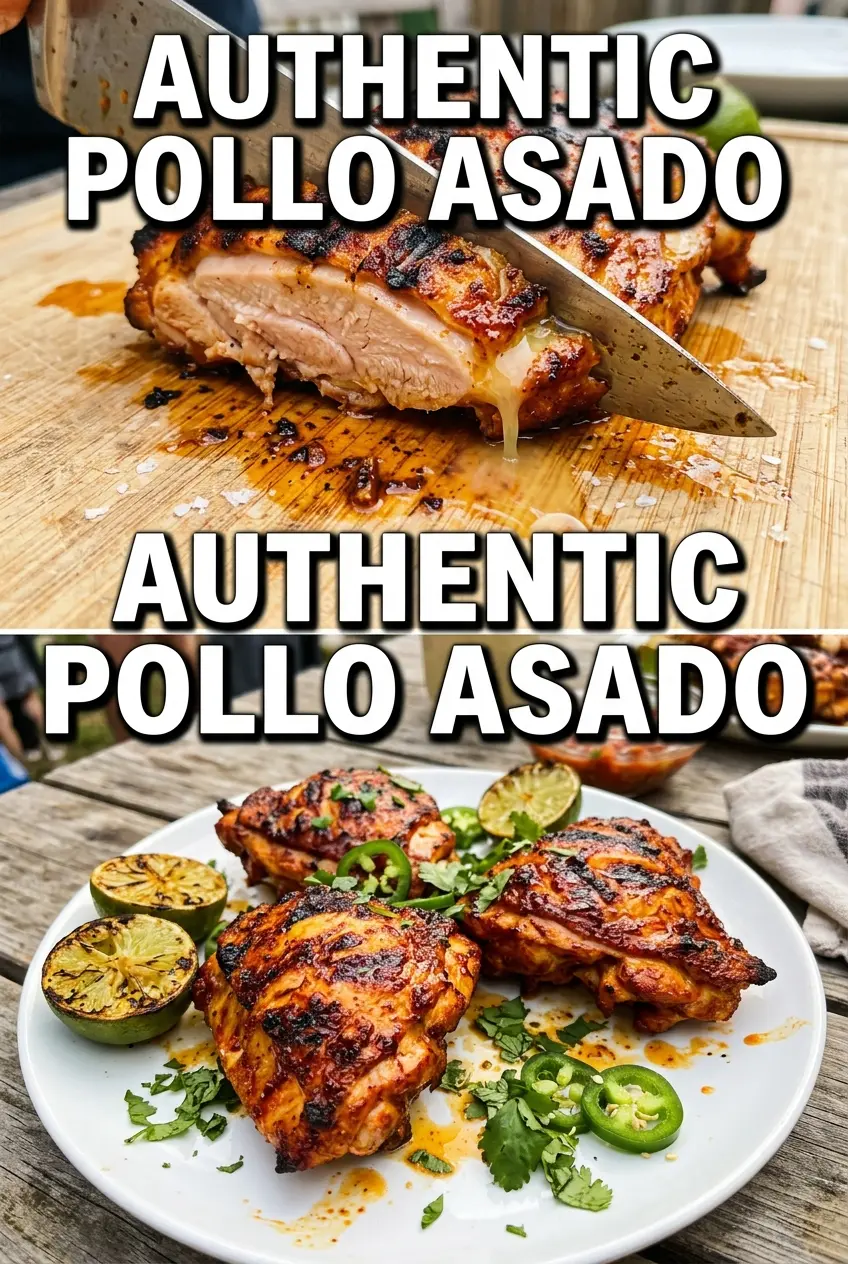
Pollo asado earns its place in the rotation because it hits that rare middle ground: smoky, bright, deeply seasoned, and still simple enough to pull off on a weeknight if you start the marinade ahead. The chicken comes off the grill with charred edges and a vivid orange-red color, and the citrus keeps every bite lively instead of heavy.
The real work happens in the marinade. Orange juice brings sweetness and color, lime juice sharpens everything, and achiote paste gives the chicken that signature earthy, almost peppery depth you can’t fake with regular spices alone. The olive oil helps the marinade cling, while garlic, cumin, oregano, and chili powder build the background so the chicken tastes seasoned all the way through, not just on the surface.
Below, I’m walking through the part that matters most: how to get the flavor into the meat without turning the chicken mushy, how to grill it without burning the sugars in the marinade, and what to change if you’re using bone-in pieces instead of a whole bird.
The chicken picked up such a good char without drying out, and the citrus marinade tasted bright instead of sour. I let it sit overnight and the flavor went all the way through the meat.
Save this pollo asado for the nights when you want charred citrus chicken with achiote color and grill-kissed flavor.
The Marinade Needs Time, Not Heat
Pollo asado gets its character from the marinade, but the biggest mistake is treating it like a quick glaze. The citrus and achiote need hours to settle into the chicken, especially if you’re using bone-in pieces or a whole bird. If you rush it, the outside tastes seasoned and the inside tastes plain. If you let it sit long enough, the meat takes on the color and the aroma all the way through.
The other place people go wrong is the grill. Citrus marinades contain sugar, so high flames can scorch the outside before the chicken cooks through. Medium-high heat is the sweet spot: hot enough for char marks, controlled enough that the marinade darkens instead of burning.
What the Marinade Is Doing Beyond Color
- Orange juice — This gives the chicken sweetness and helps carry the achiote’s color. Fresh juice tastes brighter, but bottled orange juice works if it isn’t loaded with extra sugar.
- Lime juice — Lime keeps the marinade sharp and balanced. Don’t double it to “make it more Mexican”; too much acid can make the outside of the chicken tighten up before the inside seasons properly.
- Achiote paste — This is the ingredient that makes pollo asado look and taste like pollo asado. It adds that brick-red color and a deep, earthy flavor that paprika alone can’t replace.
- Oil — Olive oil helps the marinade coat the chicken evenly and keeps the spices from clumping. A neutral oil also works if that’s what you have, but don’t skip it.
- Chicken pieces or whole chicken — Pieces cook faster and pick up more char; a whole chicken gives you a dramatic presentation and juicier meat near the bone. If you use a whole bird, butterfly it or spatchcock it so it cooks evenly on the grill.
How to Grill Pollo Asado Without Burning the Marinade
Blending the Marinade Until Smooth
Blend the orange juice, lime juice, oil, garlic, achiote paste, cumin, oregano, chili powder, salt, and pepper until the mixture looks smooth and thick enough to coat the chicken. If the achiote stays in little bits, those bits can scorch on the grill. A blender or food processor gives you a more even marinade than whisking by hand.
Letting the Chicken Marinate Long Enough
Coat the chicken well and refrigerate it for at least 4 hours, with overnight giving you the best color and flavor. Turn the pieces once or twice if you can so the marinade hits every side. Don’t go much past 24 hours, especially with lots of lime juice, or the surface can turn a little dense.
Building Char on the Grill
Preheat the grill to medium-high and give the grates time to get hot before the chicken goes on. The chicken should sizzle as soon as it lands, then release easily once it’s seared enough. If it sticks, it needs another minute; forcing it off tears the skin and loses the best char.
Knowing When It’s Done
Grill the chicken, turning occasionally, until it’s cooked through and the outside is darkened in spots. For bone-in pieces, use the thickest part of the meat as your guide; the juices should run clear and the meat should feel firm but not dry. Whole chicken takes longer, so move it to cooler spots on the grill if the outside is coloring faster than the center is cooking.
Make It With Chicken Thighs Only
Thighs are the easiest cut for this recipe because they stay juicy and handle the high heat of the grill without drying out. They’ll also give you more char per bite. If you use thighs alone, start checking them a little earlier than a whole chicken, since they cook faster.
For a Gluten-Free Plate
The marinade itself is naturally gluten-free, but the tortillas and any store-bought sides matter here. Serve it with corn tortillas and check your achiote paste label if you’re cooking for someone with celiac disease, since some brands add fillers or shared-seasoning blends.
Oven Finish When the Grill Isn’t Cooperating
If you can’t keep steady grill heat, sear the chicken briefly on the grill and finish it in a 400°F oven until cooked through. You lose a little smoke, but you keep the marinade from burning before the center is done. This works especially well for thicker pieces or a butterflied whole chicken.
Storage and Reheating
- Refrigerator: Store cooked pollo asado in an airtight container for up to 4 days. The flavor stays strong, and the meat is still good for tacos or bowls the next day.
- Freezer: It freezes well for up to 2 months. Slice or shred the chicken first, then freeze it with a little of its cooking juices so it doesn’t dry out on thawing.
- Reheating: Reheat gently in a covered skillet over low heat or in a 300°F oven. High heat pulls the moisture out fast, especially from grilled chicken, so avoid blasting it in the microwave unless you’re okay with a tougher texture.
Questions I Get Asked About This Recipe
Pollo Asado (Mexican Grilled Chicken)
Ingredients
Equipment
Method
- Blend orange juice, lime juice, olive oil, garlic, achiote paste, cumin, oregano, chili powder, salt, and pepper until smooth and evenly colored orange-red.
- Toss the chicken with the marinade, then refrigerate for 4-24 hours, covered, for flavor penetration.
- Preheat the grill to medium-high heat and let it heat until you can sear the chicken quickly.
- Grill the chicken, turning occasionally, until cooked through and charred in spots, about 30-40 minutes for whole chicken.
- Rest the chicken for 10 minutes so the juices settle, then slice or serve pieces.
- Serve with warm tortillas, lime wedges, and cilantro for a fresh finish and brighter flavor.