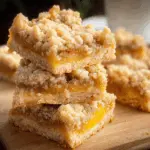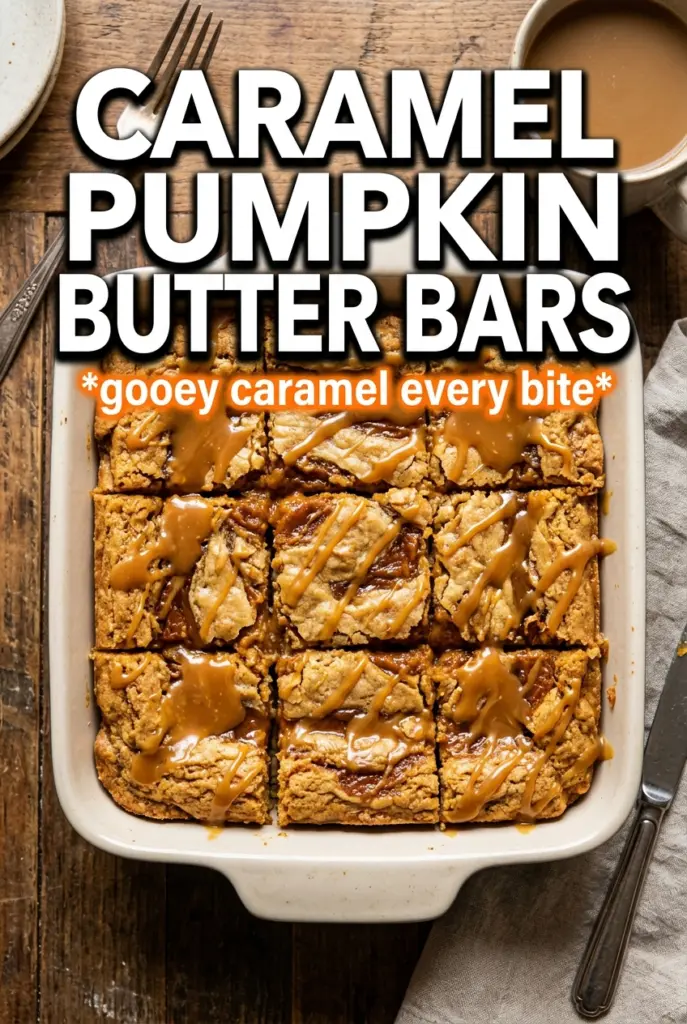
These caramel pumpkin butter bars land somewhere between a shortbread cookie, a pumpkin pie square, and a sticky caramel bar, and that’s exactly why they disappear fast. The crust stays crisp and buttery under a thick pumpkin-caramel filling, while the crumble on top bakes into little golden ridges that catch the flaky salt. Each bite gives you that clean snap from the base, then a soft, custardy center with just enough caramel depth to keep it from tasting like plain pumpkin dessert.
The trick is in the contrast. The shortbread base uses powdered sugar and cornstarch, which keep it tender instead of dense, and the butter goes in cold so the crust bakes up sandy and crisp. On the filling side, the caramel adds body and a deeper sweetness than pumpkin alone, while the eggs set everything into neat bars once the pan goes back in the oven. If you’ve ever had pumpkin bars turn wet or gummy, it usually comes down to underbaked crust or a filling that’s too loose. This version handles both.
Below, I’ve included the one step that matters most for clean slices, plus a few swaps that actually work if you need to adapt the recipe.
The crust stayed crisp under the filling and the caramel set up beautifully. I used flaky salt on top and it made the pumpkin taste even richer.
Like these caramel pumpkin butter bars? Save them to Pinterest for a fall dessert with a crisp shortbread base, silky pumpkin-caramel filling, and flaky salt on top.
The Shortbread Layer Is Doing More Than Holding Things Together
With bars like this, the bottom layer can’t just be a base. It has to stay crisp under a wet filling, and that’s where the powdered sugar and cornstarch come in. Powdered sugar melts into a finer crumb than granulated sugar, and cornstarch softens the texture without making the crust cakey.
Cold butter matters here. If it starts out soft, the dough turns greasy and presses into a dense layer instead of a short, sandy crust. You want the mixture to look like damp crumbs that hold when squeezed, then you want to press it firmly into the pan so it bakes into one even sheet instead of separating at the edges.
What Each Ingredient Is Actually Doing in This Recipe
- Primary ingredient (the star) — Quality matters most. Choose the best you can find.
- Cooking medium (oil, butter, or broth) — This carries flavors and prevents dryness.
- Seasonings (salt, pepper, spices, herbs) — Layer flavors so nothing overpowers. Build depth gradually.
- Aromatics (garlic, onion, herbs) — Cook with fat to bloom flavors. Become the foundation.
- Supporting ingredients — Complement the main ingredient without overpowering it.
- Sauce or liquid (if applicable) — Brings flavors together. Balance richness with acid.
- Acid (lemon, vinegar, wine, or other) — Brightens and prevents flat-tasting results.
- Final finish (garnish, glaze, or sauce) — Prevents one-dimensional taste and adds visual appeal.
What the Pumpkin and Caramel Each Bring to the Filling
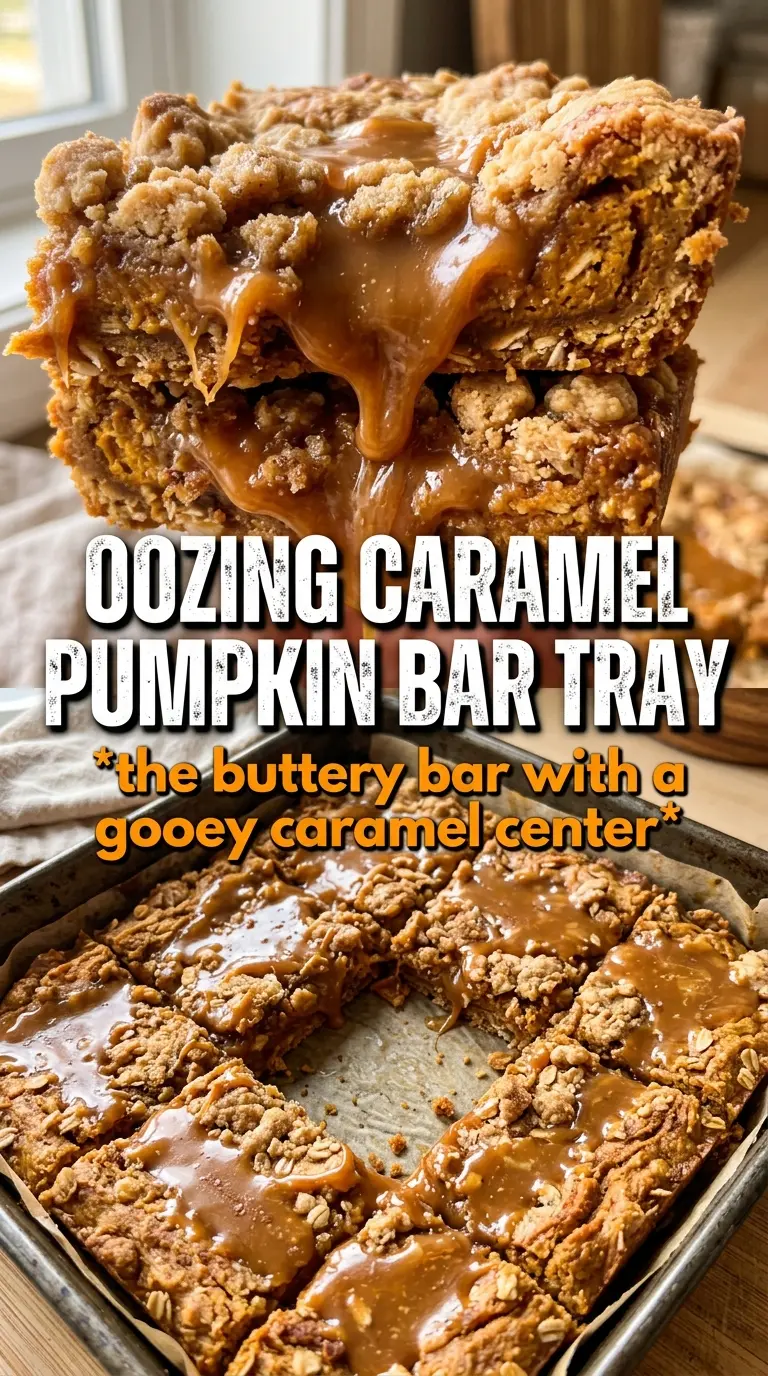
- Pumpkin puree — This gives the bars their body and that earthy pumpkin flavor, but it needs help or it can taste flat. Use plain pumpkin puree, not pumpkin pie filling, so you control the spice and sweetness.
- Caramel sauce — This is what gives the filling its deep, buttery sweetness and keeps it from tasting one-note. A thick caramel works best because thin sauce can make the filling loose.
- Heavy cream — It loosens the caramel just enough to blend smoothly with the pumpkin and eggs. Half-and-half can work in a pinch, but the filling won’t set with quite the same plush texture.
- Eggs — These are the set. They turn the filling from pourable custard into neat bars once baked. Whisk them in completely so you don’t end up with streaks of egg white in the finished squares.
- Flaky sea salt — Don’t skip it. The salt cuts through the sweetness and makes the caramel taste sharper and more defined.
Building the Layers So the Bars Slice Cleanly
Mixing the Crumble
Start by combining the dry ingredients, then cut in the cold butter until the mixture looks like damp sand with a few larger clumps. Those clumps are what bake into a crumbly top, so don’t overwork them into a paste. If the mixture starts feeling warm or greasy, stop and chill it for a few minutes before pressing or crumbling.
Pressing and Prebaking the Crust
Reserve about a cup of the dough for the topping, then press the rest firmly into a parchment-lined 9×13 pan. Pressing matters more than people think; a loosely packed crust can puff and crumble when the filling goes on top. Bake it until it’s just pale golden at the edges. If you wait until it looks deeply browned, it’ll overbake by the time the filling sets.
Whisking the Filling
Whisk the pumpkin puree, caramel sauce, cream, brown sugar, spice, vanilla, and eggs until completely smooth. You want the mixture glossy and uniform, with no streaks of egg or clumps of spice. If the caramel is thick and stubborn, warm it for a few seconds so it blends easily, but don’t cook the filling on the stove or you’ll start setting the eggs before it even reaches the oven.
Baking Until Just Set
Pour the filling over the hot crust, scatter the reserved crumble over the top, and bake until the center is set with only the slightest jiggle. The bars finish setting as they cool, so don’t keep them in the oven until the middle is completely firm. That’s how you end up with dry edges and a filling that cracks when you cut it.
Cooling for Clean Slices
Let the pan cool completely before you lift it out and cut the bars. Warm bars will smear and slump, even if they taste fine. For the sharpest edges, chill them briefly after cooling, then use a long knife wiped clean between cuts.
How to Adapt These Bars Without Losing the Texture
Make Them Gluten-Free
Use a cup-for-cup gluten-free flour blend in place of the all-purpose flour. The cornstarch already helps keep the crust tender, so the texture stays close to the original as long as the blend contains xanthan gum or another binder.
Swap in Homemade Caramel
If you’ve got homemade caramel on hand, use it as long as it’s thick and spoonable, not runny. A loose caramel can make the filling take longer to set and soften the crust underneath.
Turn the Spice Up or Down
Pumpkin pie spice can be nudged higher if you want a more chai-like finish, or reduced if you want the caramel to stay front and center. The bars still work either way because the pumpkin and caramel carry the flavor on their own.
Storage and Reheating
- Refrigerator: Store in an airtight container for up to 5 days. The crust stays best in the first 2–3 days, then softens a little at the edges.
- Freezer: These freeze well. Cut into bars, wrap individually, and freeze for up to 2 months. Thaw in the fridge so the filling doesn’t sweat and loosen the topping.
- Reheating: Serve them chilled or at room temperature. If you want them slightly warm, use a low oven for a few minutes. Microwaving makes the filling soft and the crust loses its snap.
Questions I Get Asked About This Recipe
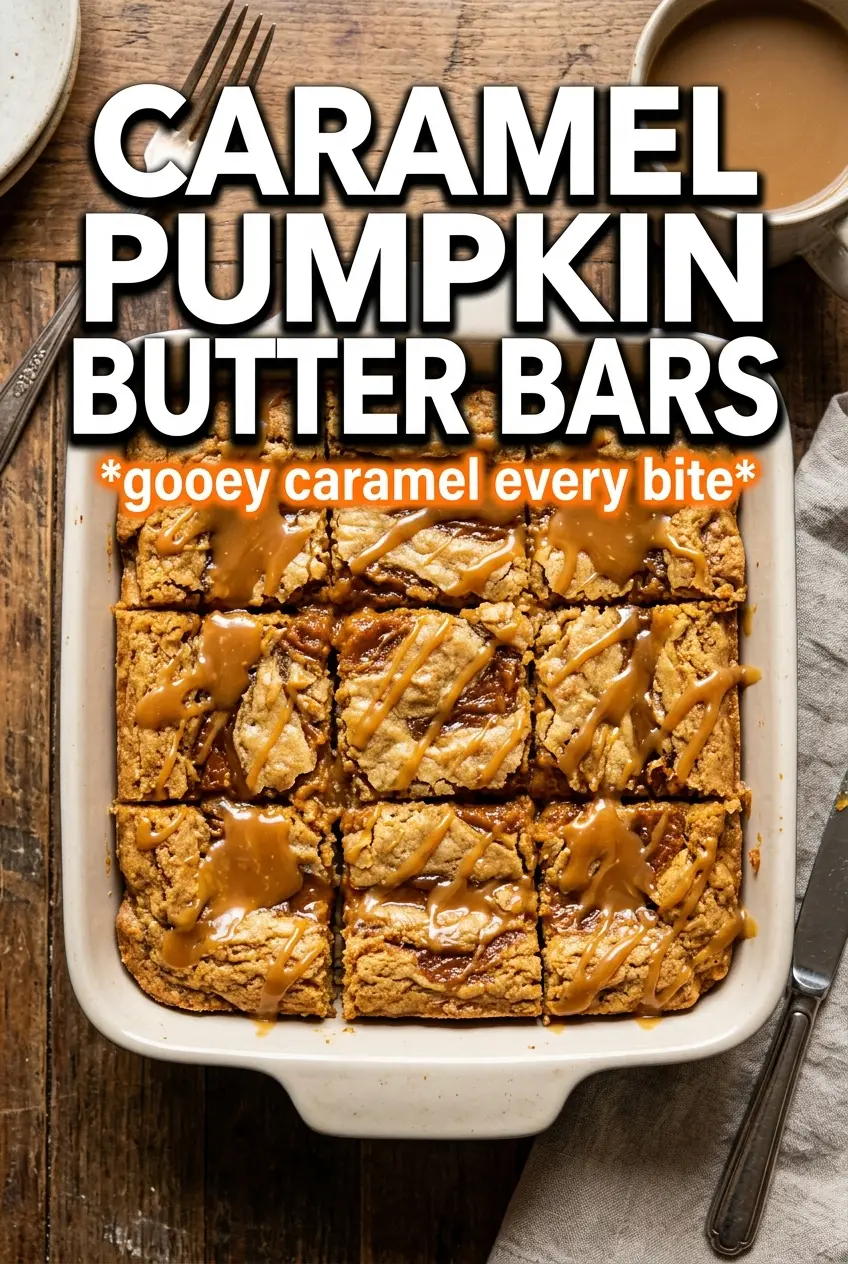
Caramel Pumpkin Butter Bars
Ingredients
Equipment
Method
- Preheat the oven to 350F and line a 9x13 pan with parchment so the bars lift out easily.
- In a bowl, combine all-purpose flour, powdered sugar, cornstarch, cinnamon, and salt.
- Cut in the cold unsalted butter until the dough comes together and looks sandy with some larger clumps.
- Reserve 1 cup of the dough for crumble topping and press the remaining dough firmly into the lined pan.
- Bake for 15 minutes until pale golden, then remove from the oven.
- Crumble the reserved dough into coarse pieces and set aside while you prepare the filling.
- Whisk pumpkin puree, caramel sauce, heavy cream, brown sugar, pumpkin pie spice, vanilla, and eggs until smooth and fully combined.
- Pour the filling over the hot crust and spread evenly.
- Sprinkle the reserved crumble over the filling.
- Bake 22-25 more minutes at 350F until the filling is set.
- Sprinkle flaky sea salt over the top while warm for a crisp, salty finish.
- Cool completely before cutting so the bars hold clean slices and the filling firms up.