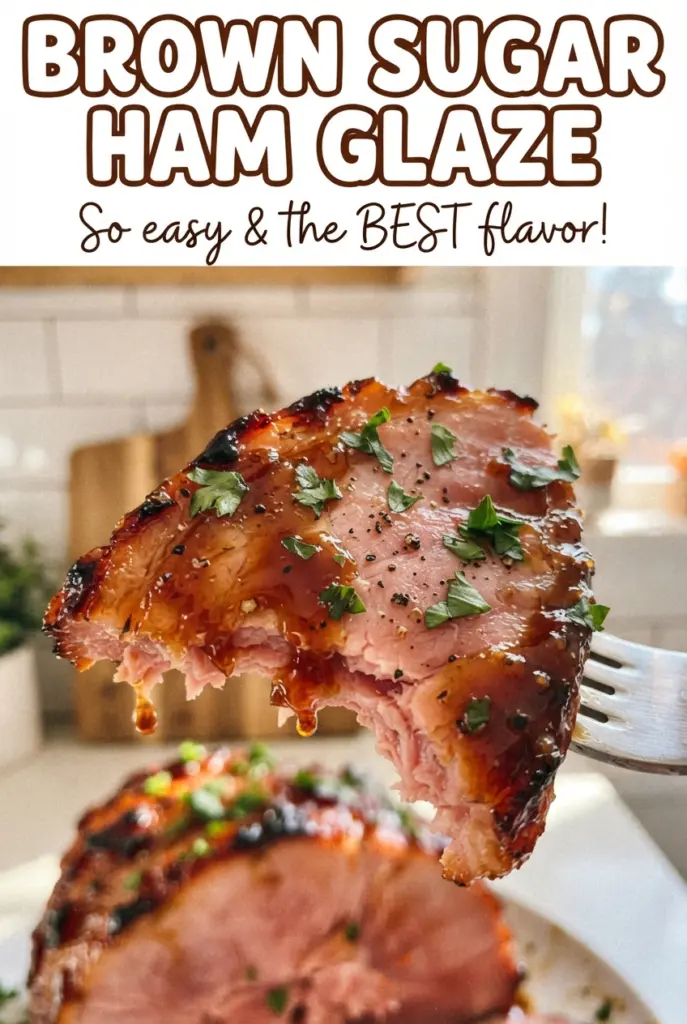
Glossy, sticky brown sugar ham glaze turns an ordinary baked ham into the kind of centerpiece people keep hovering near with a carving fork in hand. It brushes on thick, clings to the diamond pattern, and bakes into a lacquered finish that tastes sweet, tangy, and just a little spiced. The best part is that it doesn’t just sit on top of the ham; it settles into the surface and builds layers of shine with every brushing.
This version works because the sugar, honey, and juice are balanced with Dijon and vinegar, so the glaze tastes rounded instead of candy-sweet. Butter gives it body and a smooth finish, while cinnamon and cloves add warmth without taking over. The glaze simmers only long enough to dissolve the sugar and thicken slightly, which keeps it easy to brush and helps it caramelize in the oven instead of turning into a hard shell.
Below you’ll find the little details that matter most: how to keep the glaze glossy, when to start brushing it on, and which juice gives the cleanest finish if you want to switch it up.
The glaze thickened just enough to brush on without running everywhere, and the pineapple juice plus Dijon gave the ham a great sweet-tangy finish.
Save this brown sugar ham glaze for a glossy, sweet-tangy ham with a caramelized finish.
The Part That Keeps Brown Sugar Glaze Glossy Instead of Grainy
Brown sugar glaze can go grainy fast if the sugar doesn’t fully dissolve before it starts reducing. That happens when the heat is too high or the simmer is rushed. Here, the butter and honey help the sugar melt into the liquid, and the short simmer gives you a syrup that brushes cleanly instead of dragging clumps across the ham.
The other detail that matters is timing. This glaze goes on during the last 30 minutes of baking, not at the beginning, because sugar burns long before the ham finishes heating. A few layers brushed on every 10 minutes give you a deep amber coating without blackened edges.
What Each Ingredient Is Actually Doing In This Glaze
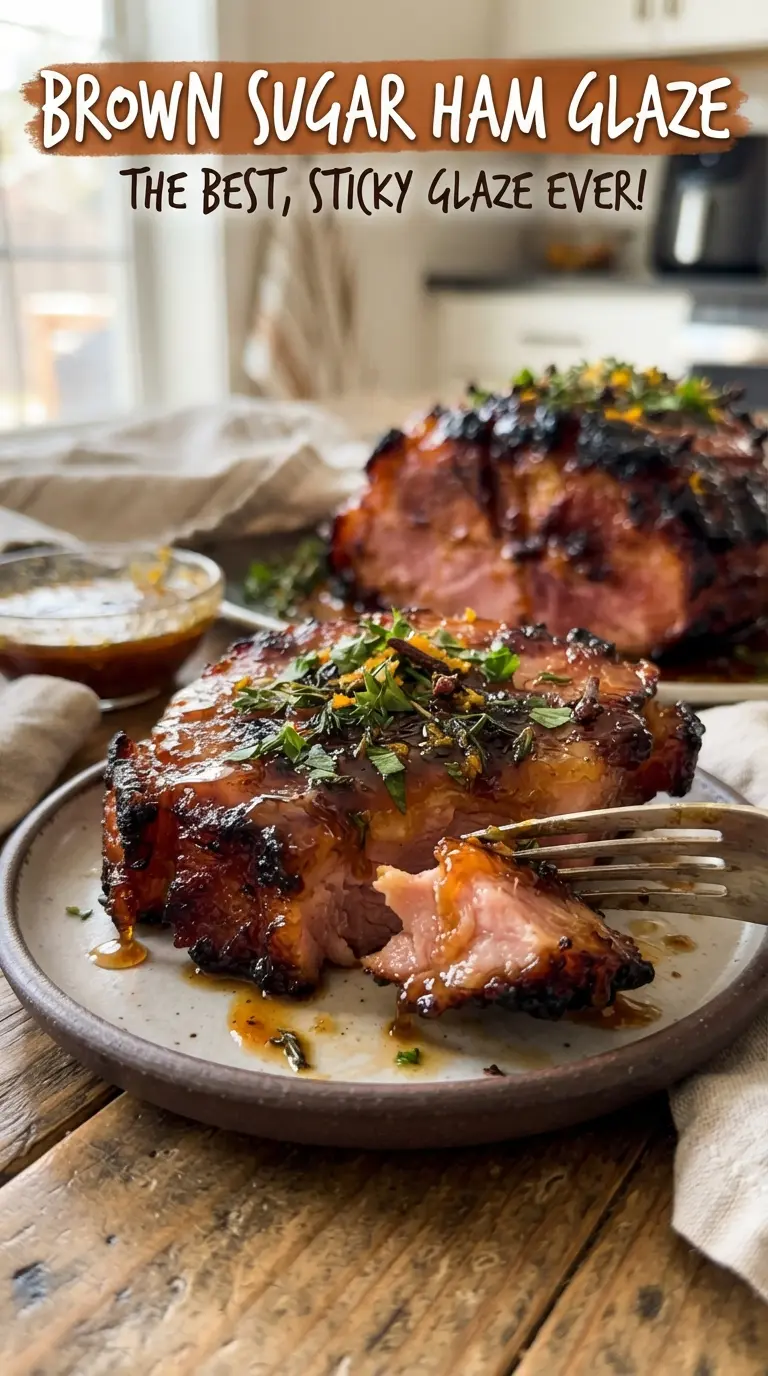
- Brown sugar — This is the body of the glaze and the main source of caramel flavor. Packed brown sugar gives the right density, so use the packed measure instead of scooping loosely.
- Honey — Honey keeps the glaze fluid enough to brush and gives it a smoother shine after baking. Maple syrup works in a pinch, but the flavor lands a little more earthy and less classic.
- Pineapple or orange juice — The juice loosens the glaze and gives the sugar something to melt into. Pineapple tastes brighter and slightly sharper; orange is softer and a little rounder.
- Dijon mustard — Dijon keeps the sweetness in check and adds a faint bite that wakes up the ham. Yellow mustard won’t give the same depth.
- Butter — Butter makes the glaze glossy and helps it coat the ham instead of sliding off. If you need a dairy-free version, use a neutral oil, but expect a thinner, less rich finish.
- Apple cider vinegar — The vinegar matters more than it looks like it should. It cuts through the sugar and keeps the glaze from tasting flat once it bakes.
- Cinnamon and cloves — These should stay in the background. They add warmth and that familiar holiday-style ham flavor, but too much clove can take over fast, so measure carefully.
How to Cook the Glaze So It Brushes, Bakes, and Sets Right
Building the Base
Combine everything in a saucepan before you turn on the heat, then stir until the brown sugar starts dissolving as the mixture warms. Medium heat is enough; higher heat doesn’t speed up the right part of the process, and it can scorch the sugar on the bottom before the top has even melted. You want a smooth, bubbling syrup with no gritty sound against the spoon.
The Short Simmer
Once the glaze reaches a simmer, keep it there for 3 to 4 minutes until it looks slightly thicker and glossy. It should coat a spoon lightly, not cling like caramel. If it reduces too much, it will set up thick and sticky before it hits the ham, which makes brushing uneven and wastes half the pan.
Brushing the Ham
Apply the glaze during the last 30 minutes of baking, then brush on another layer every 10 minutes. That repeated brushing builds a lacquered surface and lets each layer cling before the next one goes on. If the ham is still wet with its own juices, pat the surface dry first or the glaze will slide off instead of setting.
Serving the Finish
Spoon the remaining warm glaze over the sliced ham at the table while it is still fluid. The glaze thickens as it cools, so don’t wait too long or you’ll lose that beautiful pour. If it firms up in the pan, warm it gently for a minute with a splash of juice until it loosens again.
How to Adapt This Glaze for Different Hams and Pantry Staples
Pineapple Juice for a Brighter, More Classic Ham Finish
Use pineapple juice when you want the glaze to taste sharper and a little more traditional. It brings enough acidity to balance the sugar without making the glaze thin, and it pairs especially well with spiral-cut ham because the juices settle into the slices.
Orange Juice for a Softer, Sweeter Glaze
Orange juice makes the glaze taste rounder and less sharp than pineapple. It is a good swap if you want a gentler citrus note and a lighter finish on a ham that already has plenty of salt and smoke.
Dairy-Free Version That Still Bakes Up Glossy
Skip the butter and add 1 tablespoon of neutral oil instead. The glaze won’t taste quite as rich, but it still brushes well and caramelizes nicely. The structure stays the same, which matters more here than chasing extra richness from a substitute.
Reducing the Clove for a Milder Crowd-Pleaser
If you don’t want the spice to read strongly, cut the cloves in half. Cinnamon gives warmth, but cloves can dominate quickly, especially after the glaze reduces in the oven. The result is cleaner and more kid-friendly without losing the familiar ham-glaze character.
Storage and Reheating
- Refrigerator: Store leftover glaze in a covered container for up to 1 week. It will thicken as it chills.
- Freezer: It freezes well for up to 3 months. Thaw overnight in the refrigerator before reheating.
- Reheating: Warm gently in a saucepan over low heat with a splash of juice or water. High heat can make the sugar seize or scorch before it loosens.
Answers to the Questions Worth Asking
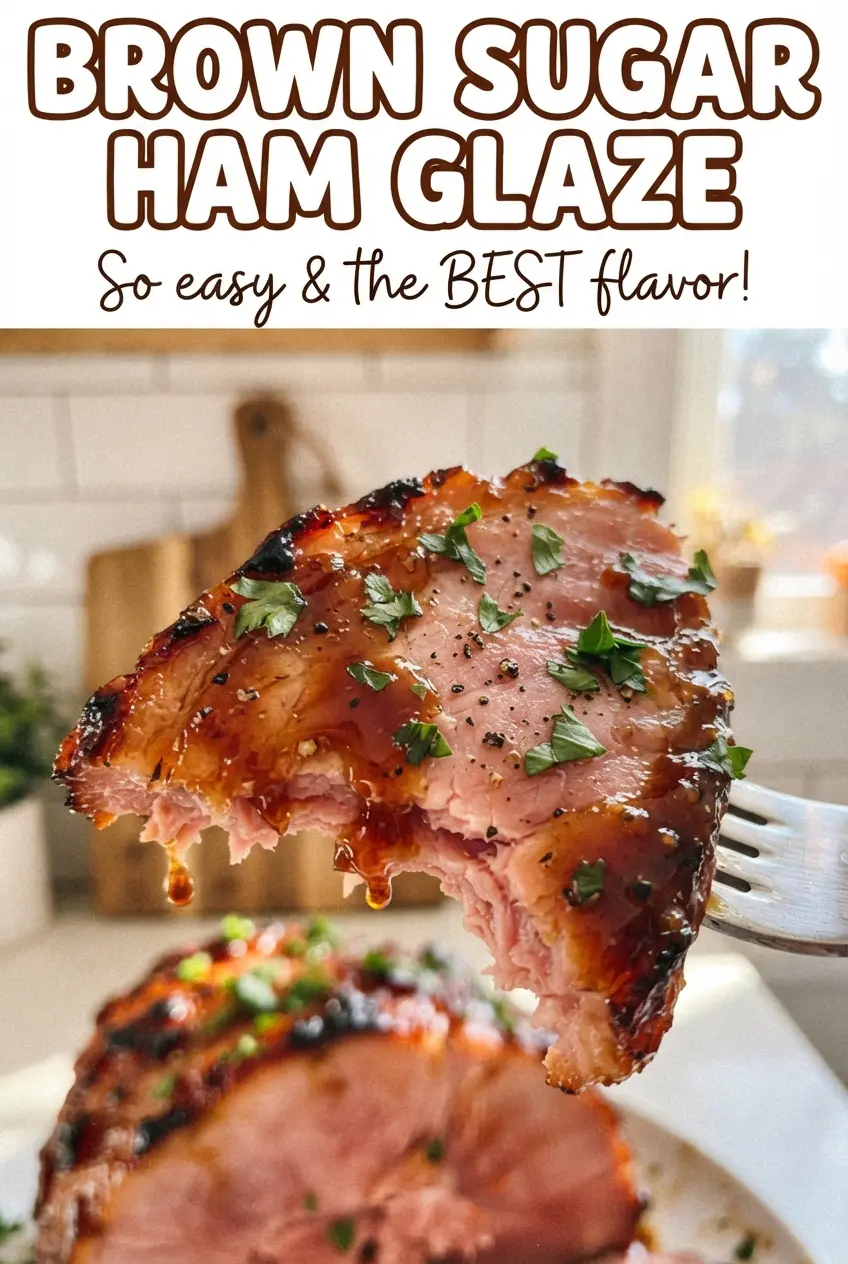
Brown Sugar Ham Glaze
Ingredients
Equipment
Method
- In a saucepan, combine brown sugar, honey, pineapple or orange juice, Dijon mustard, butter, apple cider vinegar, cinnamon, and cloves. Stir until the mixture is evenly combined with no dry pockets (no heat yet).
- Set the saucepan over medium heat and bring the mixture to a simmer, stirring continuously so the sugar dissolves. Maintain a steady simmer and look for small bubbling around the edges as the liquid turns glossy.
- Simmer for 3–4 minutes, stirring, until the glaze is slightly thickened and glossy. When lifted with a spoon, it should coat lightly and look syrupy.
- Brush the warm glaze over a fully cooked ham during the last 30 minutes of baking. Apply a shiny, even layer, then use the brush to reach into the scored diamond pattern for glossy drips.
- Brush again every 10 minutes during the last 30 minutes of baking. Each pass should build a darker amber shine as it sets.
- Spoon the remaining warm glaze over sliced ham at the table. Serve right away so the glaze stays glossy and clings to the cut surface.