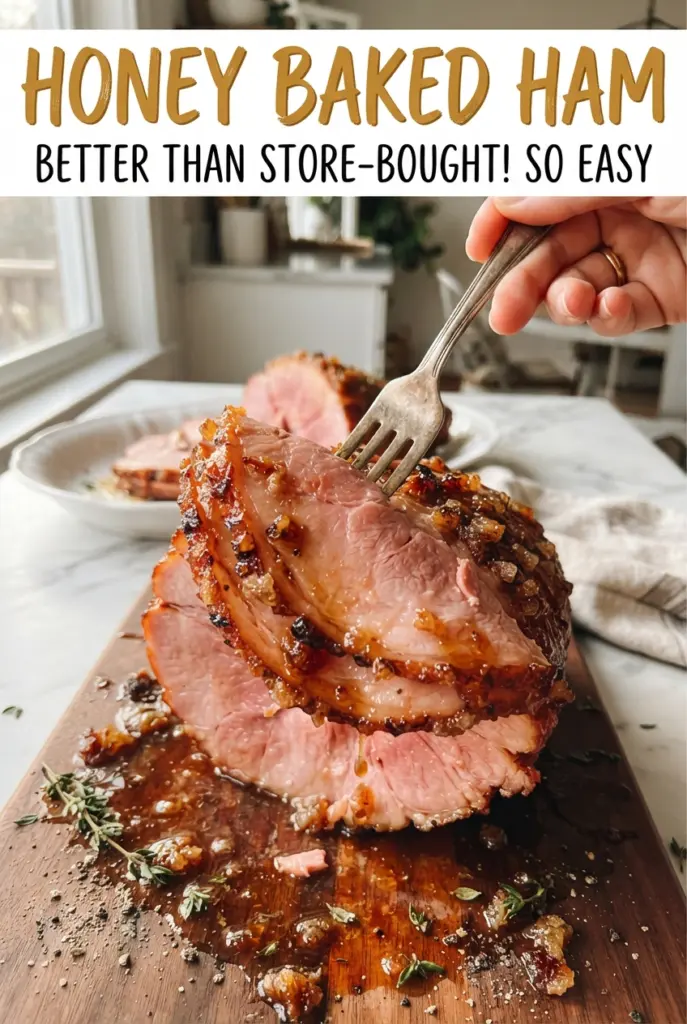
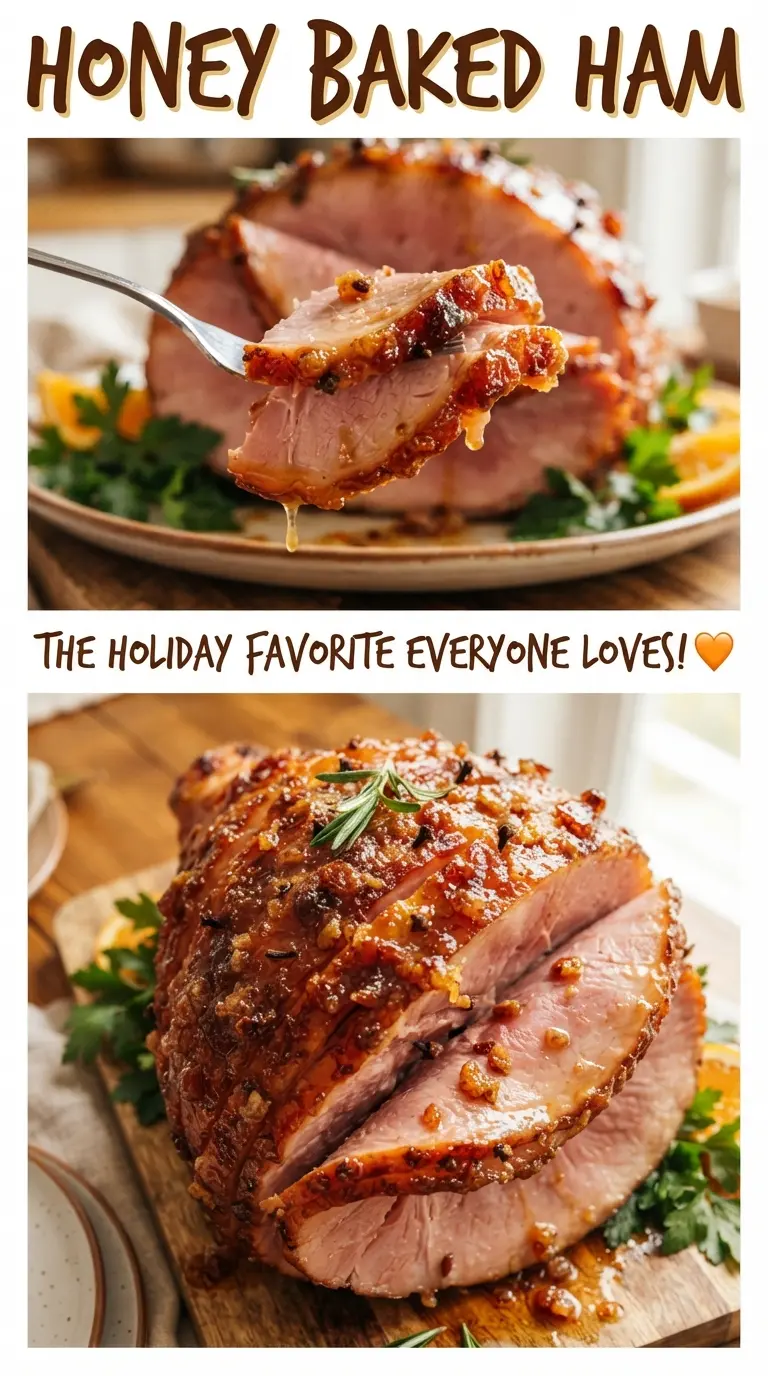
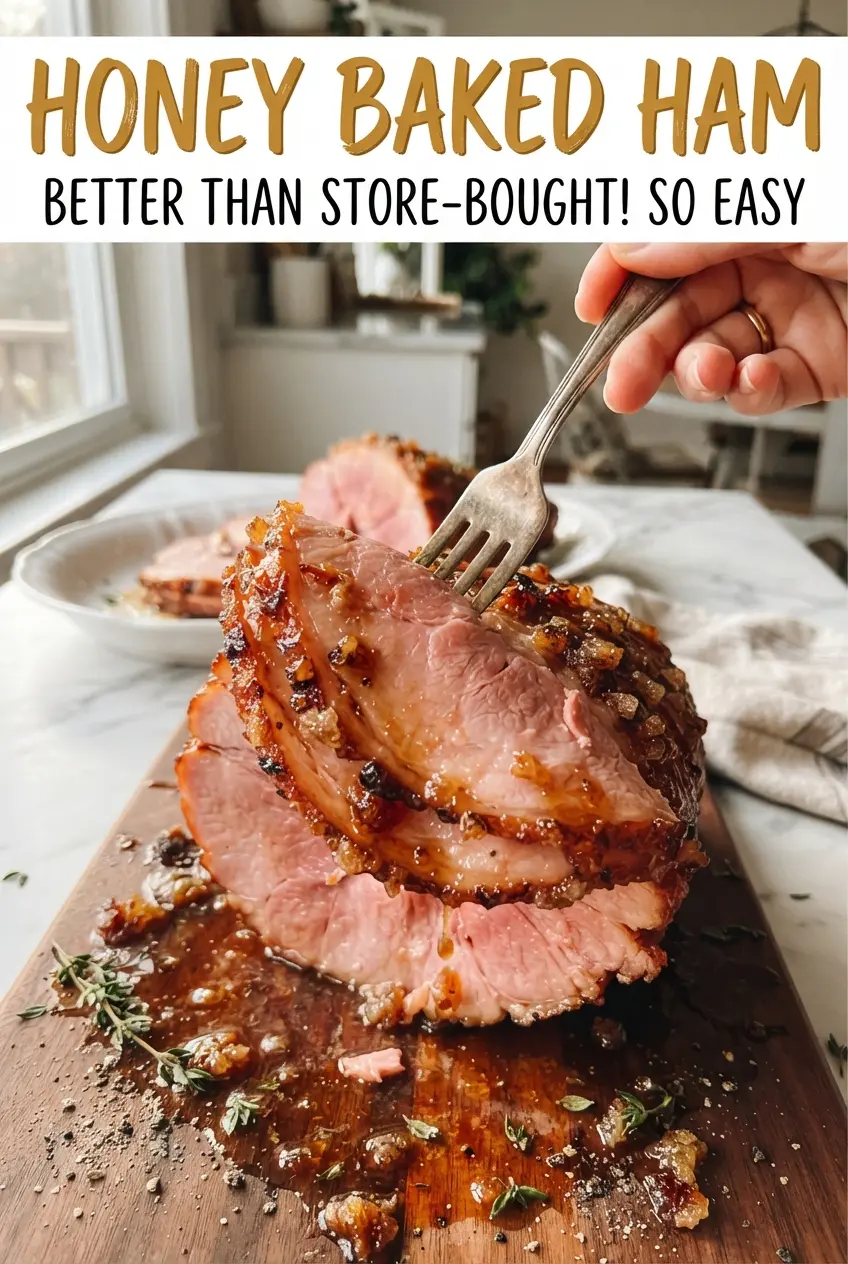
Honey baked ham earns its place at the center of the table because the outside turns crackly and lacquered while the inside stays juicy and sliceable. The glaze clings in a thin, shiny shell, and every cut exposes sweet, salty, spiced layers that taste a lot more deliberate than the usual baked ham.
The trick is building that crust in layers. Honey and butter give the ham something sticky to hold onto, while the sugar-spice mixture bakes into a shell instead of sliding off. Starting the ham covered at a lower temperature keeps the meat tender, then the final high-heat passes caramelize the top without drying out the slices underneath.
Below you’ll find the timing that keeps the ham moist, the reason the sugar goes on in stages, and a few useful ways to adjust the glaze if you want it a little more smoky, a little more spiced, or easier to manage for a crowd.
The glaze turned into that crackly candy shell I was hoping for, and the ham stayed juicy all the way through. I followed the two-stage baking and the slices carved cleanly instead of falling apart.
Like this crackly honey baked ham? Save it to Pinterest for the dinners when you want a glossy spiral ham with a spiced sugar crust that slices beautifully.
The Secret to a Crackly Crust Without Drying Out the Ham
Honey baked ham goes wrong when the glaze starts browning before the meat has warmed through. A spiral-cut ham heats quickly because the slices are already exposed, so the covered lower-temperature bake matters more than people think. That first stretch brings the center up gently and keeps the edges from tightening before the sugar crust has a chance to form.
The other mistake is piling on the sugar too early and letting it sit there. In this version, the honey butter acts like glue, then the sugar-spice mixture is added in layers while the oven is hot enough to set it. That repeated brushing and sugaring is what gives you a crust that crackles instead of a wet glaze that slides off the ham.
- Spiral-sliced ham — The pre-cut slices let the glaze seep between layers, which is exactly why this style works so well. A bone-in ham gives you better flavor and helps the meat stay moist during the long bake.
- Honey — This is the sticky base that helps the sugar cling and caramelize. If you swap in maple syrup, the flavor goes deeper and woodsy, but the crust will set a little softer.
- Butter — Butter carries the honey and helps the glaze brush on evenly. Use real butter here; margarine can separate and leave the glaze greasy instead of glossy.
- Brown sugar and granulated sugar — The mix gives you both flavor and structure. Brown sugar adds molasses depth, while white sugar helps the crust harden into that crackly finish.
What Each Ingredient Is Actually Doing in This Recipe
- Primary ingredient (the star) — Quality matters most. Choose the best you can find.
- Cooking medium (oil, butter, or broth) — This carries flavors and prevents dryness.
- Seasonings (salt, pepper, spices, herbs) — Layer flavors so nothing overpowers. Build depth gradually.
- Aromatics (garlic, onion, herbs) — Cook with fat to bloom flavors. Become the foundation.
- Supporting ingredients — Complement the main ingredient without overpowering it.
- Sauce or liquid (if applicable) — Brings flavors together. Balance richness with acid.
- Acid (lemon, vinegar, wine, or other) — Brightens and prevents flat-tasting results.
- Final finish (garnish, glaze, or sauce) — Prevents one-dimensional taste and adds visual appeal.
Building the Glaze in Layers So It Actually Stays On
Starting the Ham Covered
Set the ham cut-side down and cover the pan tightly with foil before it goes into the oven. That keeps the steam trapped around the meat and protects the exposed slices from drying out while the center warms to temperature. If the foil is loose, the edges dry before the glaze stage even begins.
Warming to the Right Internal Temperature
Bake at 325F until the ham reaches about 120F inside. At this point the goal isn’t browning; it’s even heating. A spiral-sliced ham can go from warm to dry faster than people expect, so pull out the thermometer and check the thickest part away from the bone.
Brushing and Sugaring in Passes
When the ham is hot, brush on the honey butter and pat on the spiced sugar instead of dumping it all at once. The first coat will look rough and sandy, and that’s fine. Each return to the oven melts and fuses the coating, so by the third pass you get that glassy, crackling shell.
Finishing at High Heat
Raise the oven to 400F for the final bake and watch the surface closely. You want deep golden edges and a crackly top, not scorched sugar, which can happen fast once the coating starts bubbling. Pull the ham when it reaches 140F and let it rest so the juices settle back into the slices.
What to Change When You Want a Different Glaze
Maple Instead of Honey
Swap the honey for pure maple syrup if you want a deeper, woodsy sweetness. The glaze will still caramelize, but it sets a little softer and tastes less floral.
Less Sweet, More Savory
Cut the granulated sugar a bit and add a little more paprika or a pinch of black pepper. You’ll lose some of the candy-like crust, but the ham tastes less dessert-like and a little more balanced.
Gluten-Free and Dairy-Free
This recipe is naturally gluten-free as written if your ham is gluten-free. For dairy-free, use a plant-based butter with a high fat content; the glaze won’t be quite as rich, but it will still brush on and caramelize well.
Making It for a Bigger Crowd
Use a larger ham and scale the glaze ingredients up proportionally, then keep the same two-stage baking approach. The timing changes with weight, but the cue stays the same: warm through gently first, then glaze and finish hot at the end.
Storage and Reheating
- Refrigerator: Store leftovers in an airtight container for up to 4 days. The crust softens in the fridge, but the flavor stays good.
- Freezer: Freeze sliced ham in small portions for up to 2 months. Wrap tightly and thaw in the refrigerator before reheating so the slices don’t dry out.
- Reheating: Warm covered in a low oven with a splash of water or pan juices, then uncover briefly at the end. High heat dries spiral ham fast and can turn the sugar crust bitter.
Answers to the Questions Worth Asking
Honey Baked Ham
Ingredients
Equipment
Method
- Preheat the oven to 325F. Place the ham cut-side down in a roasting pan and cover tightly with foil.
- Bake at 325F for 12-14 minutes per pound, until the ham reaches 120F inside. Keep the foil on during this phase to prevent drying.
- Melt the honey and butter together. Mix the granulated sugar and brown sugar with the cinnamon, cloves, ginger, nutmeg, allspice, and paprika in a separate bowl.
- Remove the foil and brush the ham generously with honey butter. Pat on a layer of the spiced sugar so it adheres evenly.
- Raise the oven to 400F and bake for 5 minutes. Look for the sugar to start browning and forming a thin set crust.
- Brush again with honey butter and pat on another layer of spiced sugar. Bake again at 400F for 5 minutes, watching for deeper caramel color.
- Brush a final time with honey butter and add the remaining spiced sugar. Bake at 400F until the crust is deep golden and crackly and the ham reaches 140F.
- Rest the ham for 15 minutes before serving. The crust should stay crisp while the interior finishes setting.