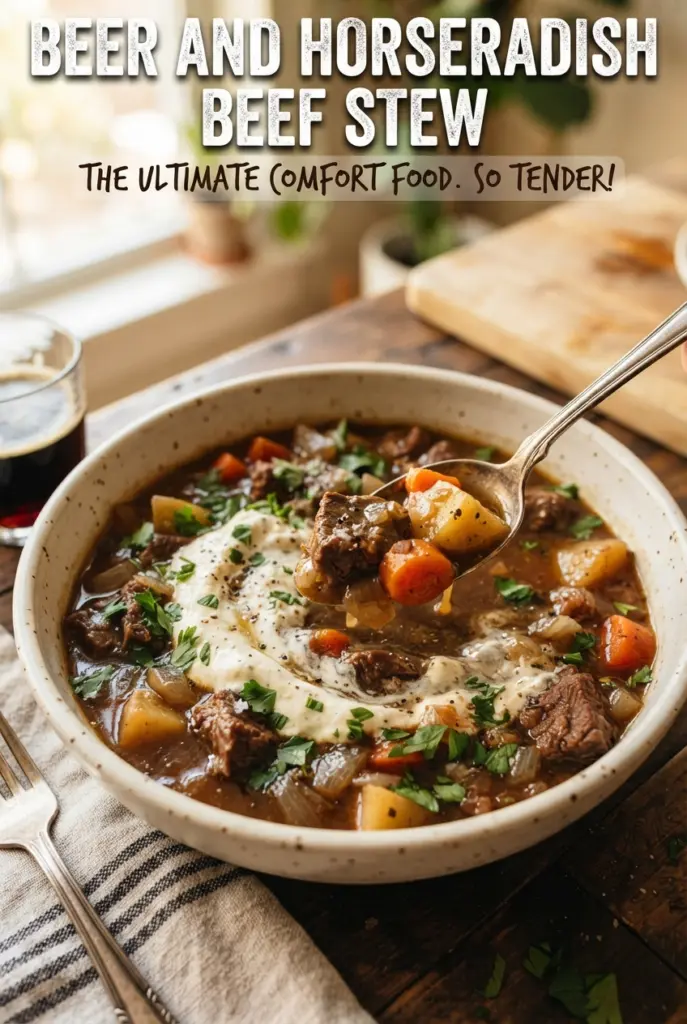
Beer and horseradish beef stew lands in the bowl with deep, slow-cooked richness and a sharp little finish that keeps every spoonful interesting. The beef turns tender enough to cut with a spoon, the potatoes soak up the broth without falling apart, and the horseradish gives the whole pot a clean, peppery lift instead of the heavy, one-note taste a lot of stews can end up with.
What makes this version work is the balance. Brown ale adds malt and body, tomato paste brings depth, and Worcestershire rounds out the broth so it tastes like it simmered all day. The horseradish goes in twice: once early enough to season the stew itself, then again in the sour cream right before serving so you get both warmth and brightness.
Below, I’ll show you how to brown the beef without crowding the pan, when to add the vegetables so they stay intact, and how to finish each bowl so the horseradish stays fresh and sharp.
The beef got meltingly tender and the horseradish sour cream cut through the broth in the best way. I loved that the potatoes held their shape after the long simmer.
Save this beer and horseradish beef stew for a cold-night dinner with tender beef, potatoes, and a sharp creamy finish.
The Browning Step That Gives the Stew Its Deep Flavor
The biggest mistake with beef stew is rushing the sear. If the pan is crowded, the beef steams, and you lose the dark bits that make the broth taste cooked instead of flat. Brown the meat in batches over medium-high heat and leave it alone long enough to form a crust before turning it. Those browned edges are not just color; they’re the base of the whole pot.
Once the onion goes in, scrape up every bit stuck to the pan. That fond dissolves into the beer and broth and gives the stew its backbone. The horseradish is also part of what keeps this recipe from feeling heavy. It doesn’t make the stew spicy-hot; it sharpens the flavor the way mustard does in a sauce.
What Each Ingredient Is Actually Doing in This Stew
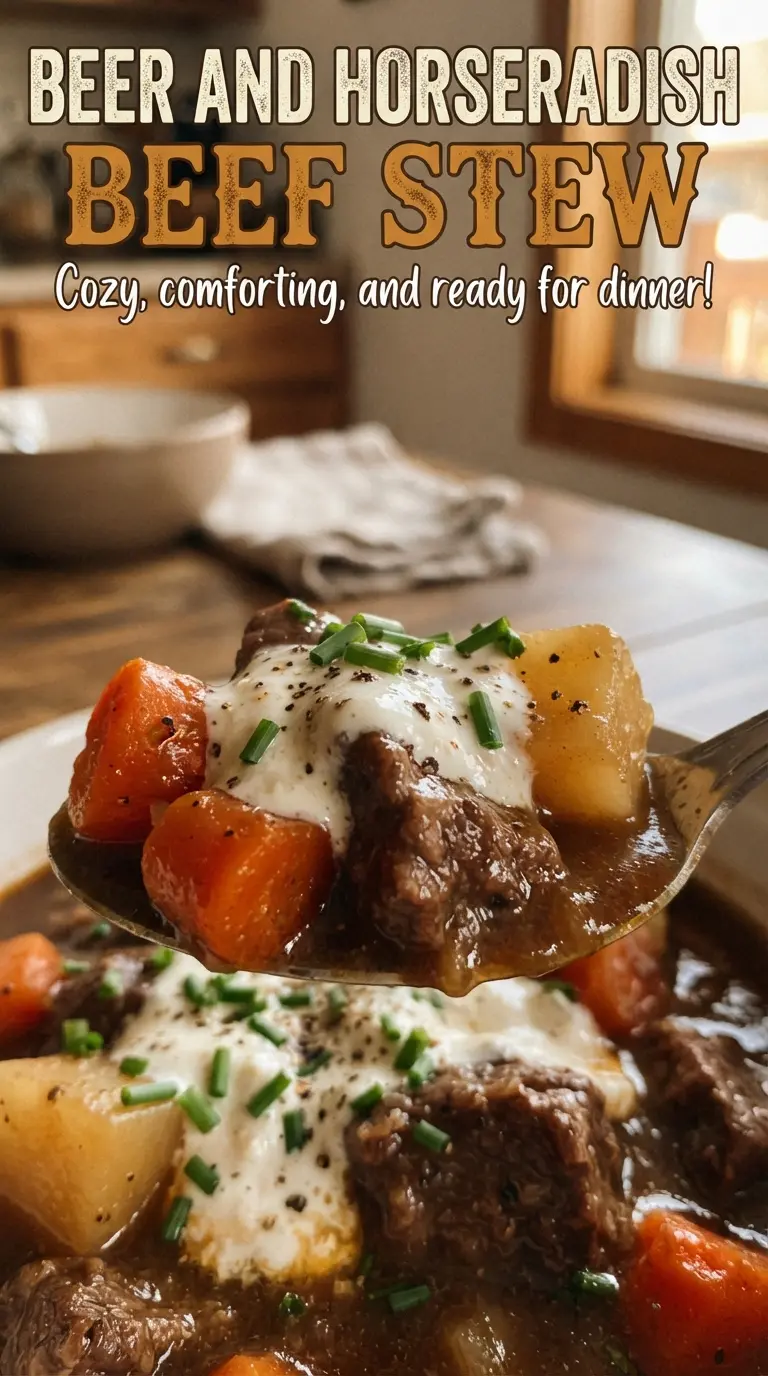
- Beef chuck — This is the cut you want because it has enough connective tissue to turn tender during the long simmer. Leaner beef gets dry and stringy before the vegetables are done.
- Brown ale or amber beer — Use a beer you’d actually drink. A dark, bitter stout can take over the pot, while a malty brown ale adds depth and a gentle sweetness that works with the horseradish.
- Prepared horseradish — Freshly prepared horseradish gives the stew its lift. Stir some into the pot early for background heat, then blend the rest with sour cream at the end so the top of each bowl tastes fresh.
- Tomato paste — It doesn’t make the stew taste like tomato. It adds body, color, and a little sweetness after it cooks for a minute with the onion and garlic.
- Potatoes and carrots — Add them later so they hold their shape. If they go in with the beef, they’ll break down before the stew is ready.
How to Keep the Beef Tender While the Vegetables Hold Their Shape
Season and Sear in Batches
Pat the beef dry, season it with salt and pepper, then toss it with flour right before it hits the pan. The flour helps the broth thicken later, but more importantly, it gives the beef a better crust. Brown it in a thin layer of oil in batches so each cube has contact with the pan. If the meat looks gray, the pan was too crowded or not hot enough.
Build the Base in the Same Pot
After the beef comes out, cook the onion until it softens and picks up the browned bits on the bottom. Add the garlic and tomato paste for just a minute; any longer and the garlic can turn bitter. When the beer goes in, scrape the bottom well. That’s where the flavor lives, and it should dissolve into the liquid before the broth goes in.
Simmer Low and Slow
Once the beef is back in the pot with the broth, Worcestershire, sugar, thyme, and horseradish, keep the simmer gentle. A hard boil tightens beef and can make the broth cloudy and harsh. You want a few lazy bubbles and a lid that sits slightly askew so steam can escape. After about 1 3/4 hours, the beef should be close to tender enough to break apart with a spoon.
Add the Potatoes and Carrots Later
Stir in the potatoes and carrots only after the beef has had its head start. They need less time than the meat, and adding them too soon turns the potatoes mealy and the carrots dull. Keep simmering until a knife slips into the potatoes without resistance and the carrots are tender but still intact. The broth should thicken lightly from the flour and the starch from the potatoes, not turn paste-thick.
Finish with the Horseradish Sour Cream
Mix the remaining horseradish into the sour cream right before serving so it stays bright and sharp. Spoon the stew into bowls, then add a dollop on top instead of stirring it in. That gives you a creamy hit on the first bite and keeps the horseradish from disappearing into the broth. A sprinkle of chives finishes it with color and a fresh onion note.
How to Adapt This for Different Kitchens and Different Eaters
Gluten-Free Version
Swap the all-purpose flour for a gluten-free flour blend or 1 1/2 tablespoons cornstarch mixed with cold water at the end. The stew won’t have exactly the same browned coating on the beef, but the broth still thickens well and the flavor stays intact.
No Beer on Hand
Use more beef broth plus 1 tablespoon red wine vinegar or a splash of apple cider vinegar for brightness. You’ll lose some malt depth, but the stew still tastes balanced instead of heavy.
Dairy-Free Finish
Skip the sour cream and serve the horseradish straight into the stew or whisk it into a spoonful of unsweetened cashew cream. You’ll lose a little tangy richness, but the sharp finish still works.
Make It Heartier
Add mushrooms with the onions or stir in parsnips with the carrots for a deeper, earthier bowl. Mushrooms echo the beer’s savoriness, while parsnips bring a little sweetness that plays well with the horseradish.
Storage and Reheating
- Refrigerator: Store covered for up to 4 days. The stew thickens as it sits, which is normal.
- Freezer: Freezes well for up to 3 months, though the potatoes soften a little after thawing. Cool it completely before freezing in airtight containers.
- Reheating: Warm it gently on the stove over low heat with a splash of broth if needed. Don’t boil it hard or the beef can tighten up and the potatoes can break apart.
Answers to the Questions Worth Asking
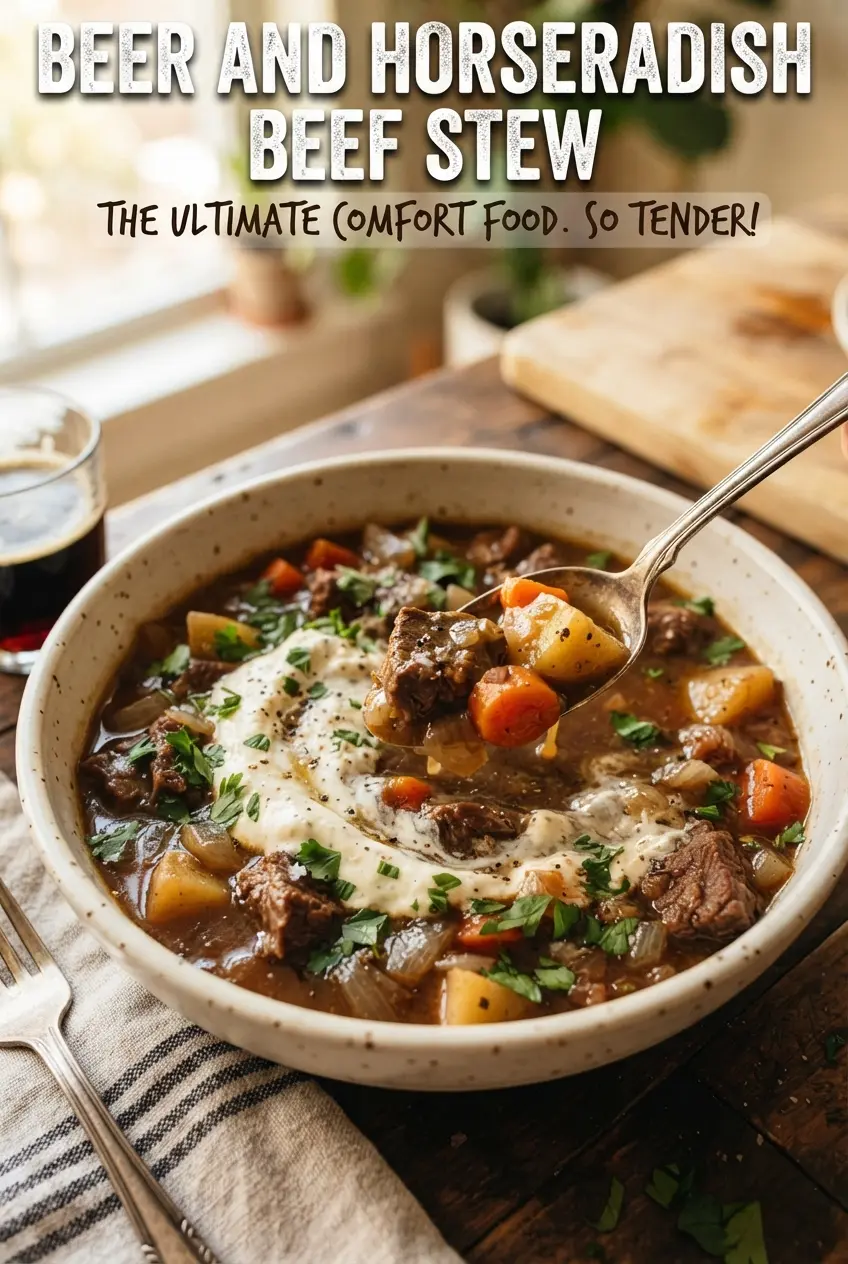
Beer and Horseradish Beef Stew
Ingredients
Equipment
Method
- Season the beef with salt and black pepper, then toss with the all-purpose flour until coated and no dry flour remains. The mixture should look lightly dusty on the cubes.
- Heat the vegetable oil in a Dutch oven over medium-high heat until shimmering, then brown the beef in batches, 3 to 5 minutes per batch, without crowding. Look for deep-brown edges on the cubes.
- Add the chopped onion and cook for 5 minutes, stirring, until softened. Scrape up any browned bits from the bottom for extra flavor.
- Stir in the minced garlic and tomato paste and cook for 1 minute. The tomato paste should darken slightly and smell fragrant.
- Pour in the brown ale and stir, scraping the bottom of the pot to loosen all browned bits. Keep stirring until the liquid looks smooth and cohesive.
- Add the beef broth, 2 tablespoons prepared horseradish, Worcestershire sauce, brown sugar, and dried thyme, then stir to combine. The mixture should turn evenly brown with visible herbs and spices.
- Cover the Dutch oven and simmer for 1 3/4 hours, keeping a gentle bubbling. Skim off any foam if it forms, and look for the beef to start becoming tender.
- Add the cubed potatoes and sliced carrots to the stew, then stir gently to distribute. Make sure the vegetables are mostly submerged in the braising liquid.
- Cover and simmer for 45 to 60 minutes, until the potatoes are tender and the carrots yield when pierced. The stew should be thickened and the beef should be very tender.
- Mix the sour cream with the remaining prepared horseradish until smooth. The dollop base should be pale with visible horseradish flecks.
- Serve the stew hot, topping each bowl with a dollop of the horseradish sour cream and a sprinkle of fresh chives. The garnish should sit on top without fully blending into the stew.