Tender, lemony Greek chicken with a deep herb finish earns a permanent place in the dinner rotation because it stays juicy on the grill and tastes bright enough to stand on its own. The marinade doesn’t just season the surface; it slips into the chicken during the rest time and gives you meat that tastes seasoned all the way through, not just on top.
The difference here comes from balance. Olive oil carries the garlic and oregano, lemon juice adds lift without making the chicken stringy, and a solid marinating window gives the salt time to work before the heat hits. Grill it hot enough to pick up color, but not so hot that the outside scorches before the center reaches temperature.
Below, you’ll find the small details that keep the chicken juicy, the best swaps if you only have dried herbs, and what to do if you want to turn this into a full meal with almost no extra effort.
The marinade gave the chicken such a clean lemon-oregano taste, and the grill marks came out perfect without drying it out. I used the full 24 hours and the chicken was unbelievably juicy.
Save this juicy Greek chicken for the nights when you want lemony, herb-marinated chicken with crisp grill marks and almost no cleanup.
Why This Marinade Stays Bright Instead of Turning Harsh
The biggest mistake with lemon-based chicken is overdoing the acid or grilling before the chicken has had enough time to absorb the seasoning. This version stays balanced because the olive oil softens the lemon juice, and the garlic, oregano, and thyme bring enough backbone that the flavor doesn’t taste thin or sharp.
Four hours is the sweet spot for most cuts. That gives you plenty of flavor without pushing the texture into that mealy, over-marinated zone that can happen with smaller pieces. If you’re using bone-in chicken, a longer rest is fine, but don’t assume more time always means better flavor. The salt does the real work here, and it needs time to move inward before the grill sets the outside.
What Each Ingredient Is Actually Doing in the Bowl
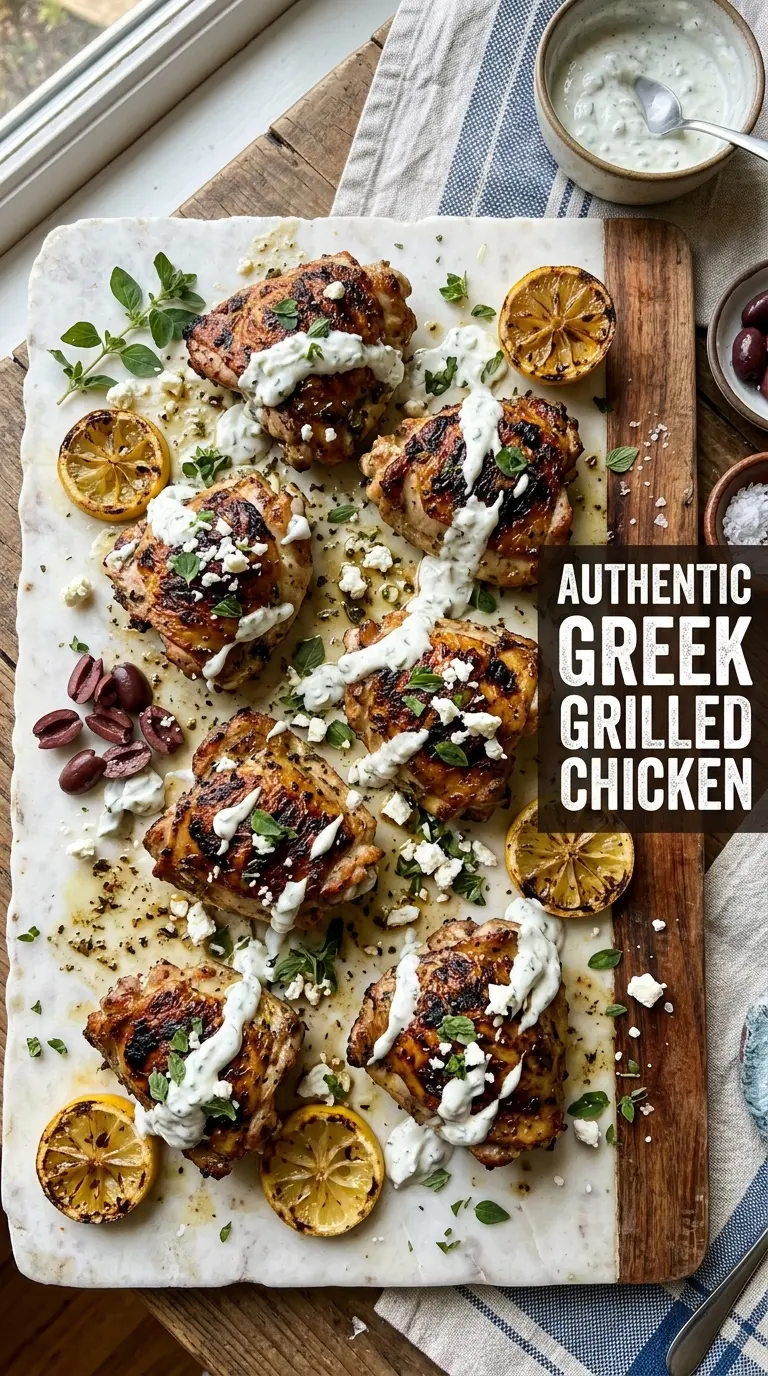
- Chicken pieces — Thighs stay juicier and forgive a little extra grill time, while breasts cook faster and need closer attention. Bone-in pieces hold moisture better on the grill, but boneless works if you shorten the cook and watch the temperature closely.
- Olive oil — This carries the herbs and helps the chicken brown instead of drying out. Use a good everyday olive oil here; you’ll taste it, but you don’t need your most expensive bottle.
- Lemon juice and zest — Juice brings the brightness, but the zest is where the real lemon aroma lives. If you skip the zest, the marinade tastes flatter and less Greek.
- Fresh oregano — Fresh oregano has a green, peppery edge that dried oregano can’t fully match. If you only have dried, use half the amount and crush it between your fingers before it goes in so the oils wake up.
- Garlic — Minced garlic gives the marinade bite, but don’t grate it too fine or it can scorch on the grill if any clings to the chicken. A rough mince is enough.
- Dried thyme — Thyme fills in the herbal gap and keeps the marinade from tasting one-note. It’s subtle, but it helps the whole mixture taste rounded instead of lemony and sharp.
How to Grill the Chicken So It Stays Juicy to the Center
Mix the marinade until it looks emulsified
Whisk the olive oil, lemon juice, zest, garlic, oregano, thyme, salt, and pepper until the oil no longer sits in a separate layer. That matters because an evenly mixed marinade coats the chicken more consistently, and the seasoning won’t pool at the bottom of the bowl. If the marinade looks broken, keep whisking for another few seconds before you add the chicken.
Give the chicken enough time to absorb the salt
Marinate for at least 4 hours and up to 24. The lower end gives you surface flavor, while the longer rest helps the seasoning move deeper into the meat. If you rush this step, the outside will taste good, but the inside will still need help from the salt shaker at the table.
Grill over medium-high heat, not raging heat
Set the chicken on a hot grill and leave it alone long enough to pick up color before turning it. If the flames are too aggressive, the lemon and garlic can burn before the chicken cooks through, which gives you bitter edges and a dry center. Cook until the thickest part reaches 165°F, then pull it off right away.
Let it rest before slicing
Rest the chicken for 5 minutes after it comes off the grill. That short pause keeps the juices from spilling out the second you cut in. If you slice too early, the board catches the moisture instead of the chicken.
How to Adapt This for Different Cut Sizes and Serving Styles
Boneless Chicken for Faster Grilling
Use boneless thighs or breasts if you want dinner on the table faster. They’ll cook more quickly and take on the marinade well, but they also overcook faster, so start checking early and pull them the moment they hit 165°F. Thighs stay more forgiving than breasts.
Dairy-Free and Naturally Gluten-Free
This recipe already fits both dairy-free and gluten-free eating without any changes, which makes it an easy main dish for a mixed table. Just check your seasoning blend if you’re using anything pre-mixed, since some blends sneak in fillers or anti-caking agents that muddy the clean herb flavor.
Oven-Baked Instead of Grilled
If you don’t have a grill, bake the chicken on a rack over a sheet pan at 425°F until it reaches temperature. You’ll lose a little of the smoky edge, but the marinade still gives you bright, savory flavor and a nice browned finish if you start with well-dried chicken.
Storage and Reheating
- Refrigerator: Store leftover chicken in an airtight container for up to 4 days. It stays flavorful, though the grilled edges soften a bit.
- Freezer: Freeze cooked chicken for up to 2 months, wrapped tightly and sealed well. Slice it before freezing if you want easy portions later.
- Reheating: Warm it gently in a covered skillet with a splash of water or broth over low heat, or use the oven at 300°F until just heated through. High heat dries out grilled chicken fast, so avoid blasting it in the microwave unless you’re in a hurry.
Questions I Get Asked About This Recipe
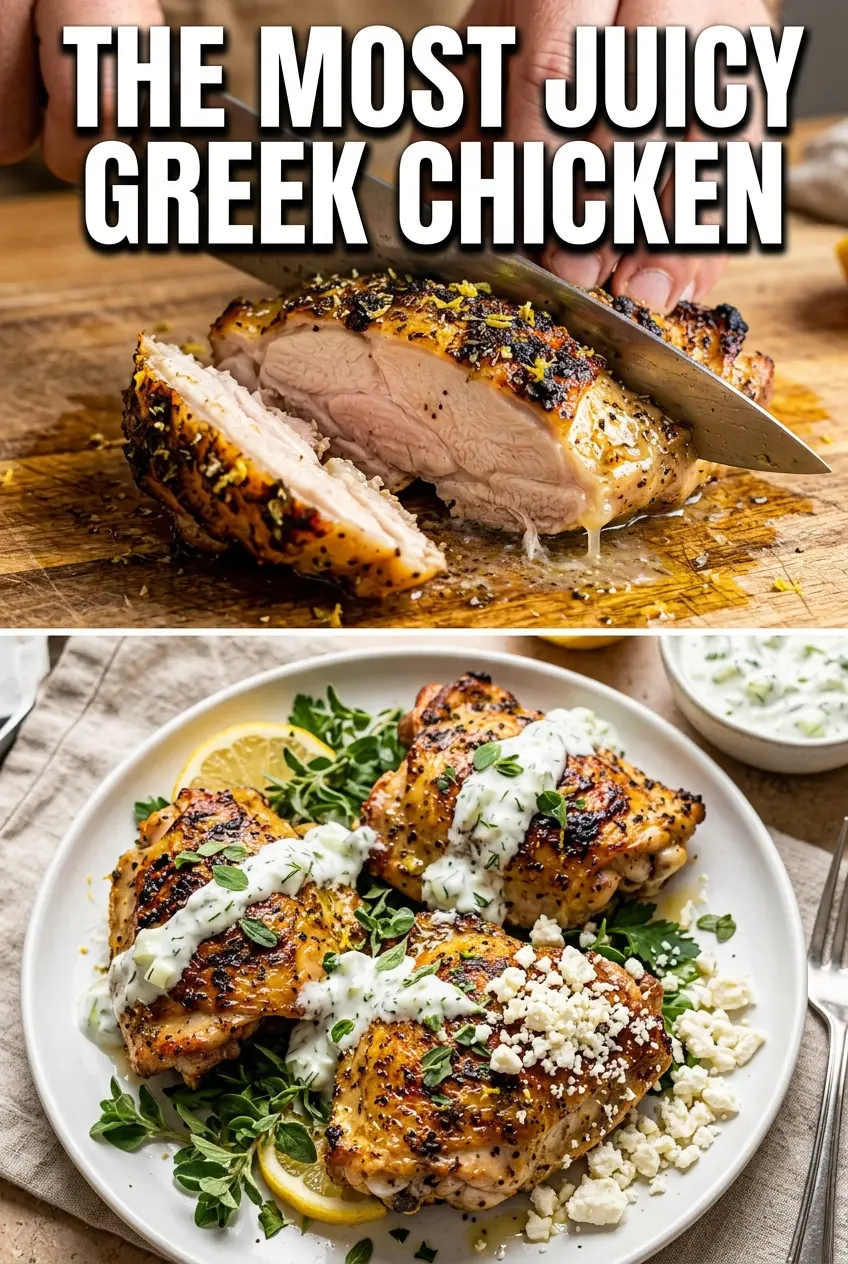
Juicy Greek Chicken
Ingredients
Equipment
Method
- Whisk together olive oil, lemon juice, lemon zest, garlic, oregano, thyme, salt, and pepper until the mixture is evenly combined. Visual cue: the marinade looks glossy and speckled from the herbs.
- Add the chicken pieces to the marinade and coat thoroughly. Cover and refrigerate for 4-24 hours to marinate.
- Grill the chicken over medium-high heat until the internal temperature reaches 165°F. Visual cue: juices run clear and the surface has visible grill marks.
- Transfer the chicken to a plate and let it rest for 5 minutes before serving. Visual cue: the juices settle and the chicken looks slightly less steaming.