Birria seasoning should taste deep, smoky, earthy, and just a little warm at the finish, with enough backbone to stand up to beef, lamb, or chicken. The right blend doesn’t taste flat or dusty. It smells bold the second you whisk it together, and when it hits vinegar and oil it turns into a paste that clings to meat instead of sliding off.
This version leans on ancho and chipotle for layered chile flavor, then adds cumin, oregano, garlic, onion, paprika, clove, and cinnamon in amounts that stay balanced. The cloves and cinnamon matter, but they should stay in the background. Too much of either and the seasoning starts to taste like dessert instead of birria. Mixing the spices well before storing also helps every spoonful taste the same, which matters when you’re using a blend like this over and over.
Below you’ll find the small details that make homemade birria seasoning dependable: how to keep the chile powders from tasting bitter, what to expect from the paste, and the easiest ways to adjust the heat without losing the deep, rich flavor that makes birria worth making.
I used this on beef chuck for tacos, and the paste coated the meat evenly without turning gloopy. The cinnamon and clove were there, but not overpowering, and the broth came out dark and rich after simmering.
Like this birria seasoning? Save it to Pinterest for smoky, balanced taco nights and rich braises.
The Spice Ratios That Keep Birria Tasting Deep, Not Muddy
The mistake most homemade birria seasoning makes is stacking too many strong spices until the blend turns muddy. Birria needs a clear chile base first, then the warm spices underneath it. Ancho gives you body and sweetness, chipotle brings smoke and heat, and the smaller amounts of cumin, clove, and cinnamon round the edges without taking over.
That balance matters even more once the seasoning is mixed with vinegar and oil. If the blend is too heavy on clove or cinnamon, the paste can read sharp instead of savory. If it’s too heavy on cumin, it loses the layered chile flavor that makes birria taste like birria.
- Ancho chili powder — This is the foundation. It brings deep color and a mild, raisin-like richness that dried chiles provide better than regular chili powder ever will.
- Chipotle chili powder — Use this for smoke and heat. If you want a softer blend, cut it slightly and replace the missing amount with more ancho.
- Cloves and cinnamon — These should stay restrained. They’re what give birria its warm edge, but too much will dominate the whole jar.
What Each Spice Is Actually Doing in the Jar
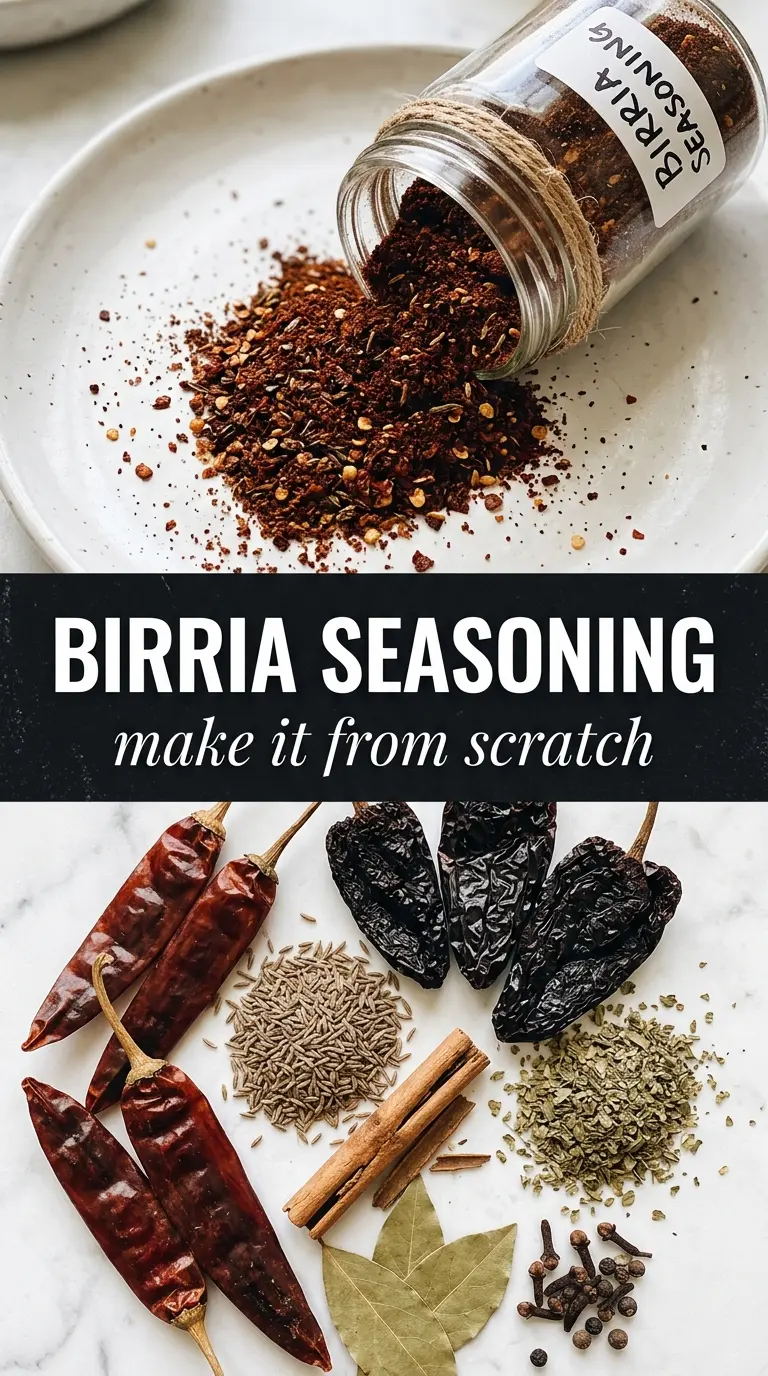
The dry ingredients here aren’t interchangeable in the same way. Dried oregano is there for the herbal, savory note that keeps the blend from tasting one-dimensional, and Mexican oregano is the best choice if you have it because it brings a more citrusy, earthy edge. Paprika adds color and helps the seasoning look as rich as it tastes, while garlic and onion powder build the base without adding moisture.
The cheap version works fine for garlic powder, onion powder, and paprika. Spend the money on the chile powders if you can, because that’s where the blend gets its character. If you need to swap, you can use all ancho if chipotle is too hot, but don’t replace both with regular chili powder or the seasoning loses its depth.
- Ancho chili powder — Use the freshest jar you can. Older chile powder fades fast and the seasoning will taste flat no matter how carefully you mix it.
- Chipotle chili powder — This is the easiest place to control heat. Start with the listed amount; if you know your crowd likes milder birria, reduce it a bit rather than adding more sugar or salt later.
- Mexican oregano — If you have it, use it. Regular oregano still works, but it tastes a little more familiar and less earthy.
- Apple cider vinegar for the paste — The acidity wakes up the spices and helps them cling to the meat. White vinegar can work in a pinch, but cider vinegar gives a softer tang.
Mixing the Blend So the Flavor Stays Even
Whisk Until the Color Changes Uniformly
Measure everything into a small bowl and whisk until the color looks even from top to bottom. You’re not just combining powders; you’re making sure the stronger spices don’t sit in pockets and hit one bite harder than the next. If you see streaks of darker chile powder or clumps of cinnamon, keep whisking and break them up with the back of the spoon.
Store It Away From Heat and Light
Spoon the blend into an airtight jar and keep it in a cool, dark cabinet. Heat and light are what drain chile powders fastest, and once that happens the seasoning starts to taste dusty instead of deep. Label the jar with the date if you’re making more than one spice mix at a time, because this one is easy to reach for again and again.
Turn the Seasoning Into a Paste Before It Hits the Meat
For birria, mix 3 tablespoons of seasoning with apple cider vinegar and olive oil to form a paste. The paste should look thick and spreadable, not watery. If it seems loose, let it sit for a minute so the spices hydrate before you judge the texture, because the powders thicken as they absorb the liquid.
How to Adjust Birria Seasoning for Different Needs
Milder Birria
Cut the chipotle chili powder in half and replace it with more ancho. You’ll keep the dark chile flavor without as much heat, which is useful if the seasoning is going into a long braise and you don’t want the spice to build too aggressively.
Gluten-Free and Naturally Dairy-Free
This blend is already gluten-free and dairy-free as written, which makes it an easy seasoning to keep on hand for a lot of different cooking styles. The important part is checking the labels on your chili powders, since some spice brands add anti-caking agents or cross-contamination warnings that matter to strict gluten-free cooking.
Taco Night Shortcut
Use the same seasoning paste on shredded beef, chicken thighs, or mushrooms. Chicken and mushrooms need less time to absorb the paste than beef chuck, so the flavor comes through faster and you don’t have to wait for a long braise to taste the seasoning.
Storage and Reheating
- Refrigerator: Store the dry seasoning in an airtight container for up to 6 months. Once mixed into a paste, use it right away or refrigerate for up to 3 days; the vinegar keeps it lively, but the texture thickens as it sits.
- Freezer: The dry blend freezes fine, though it doesn’t need to. A paste made with oil and vinegar can be frozen in small portions, but the texture is best when freshly mixed.
- Reheating: If you’ve made the paste ahead, let it come to room temperature before spreading it on meat. Cold paste clings less evenly, and that’s where people end up with patchy seasoning.
Questions I Get Asked About This Recipe
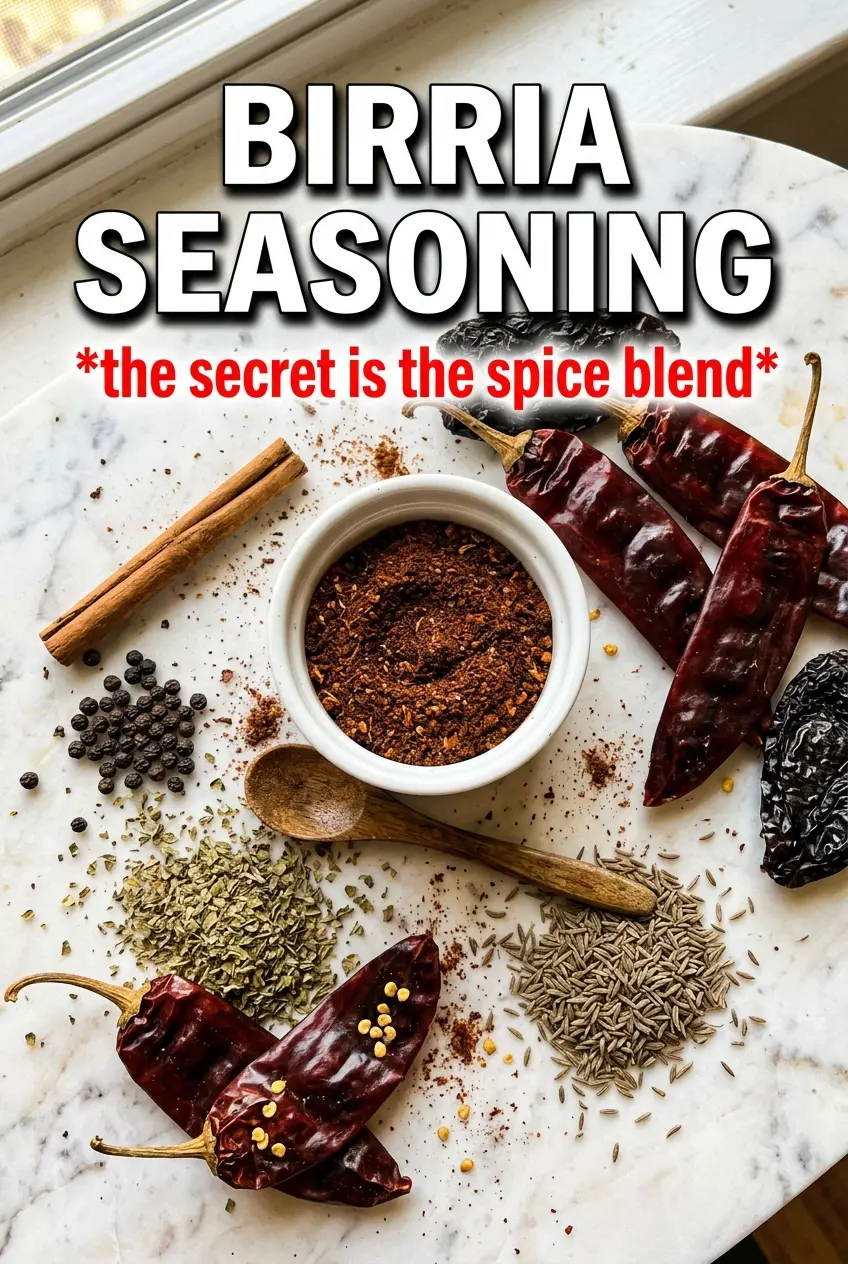
Birria Seasoning (DIY Spice Blend)
Ingredients
Method
- Measure ancho chili powder, chipotle chili powder, ground cumin, and dried oregano into a small bowl, then whisk until evenly combined.
- Add garlic powder, onion powder, paprika, black pepper, and cloves, then whisk again until the blend looks uniformly speckled.
- Whisk in cinnamon and cayenne pepper until fully distributed, creating a rich, deep-colored seasoning with visible chile throughout.
- Transfer the birria seasoning to an airtight container and store it in a cool, dark place for up to six months.
- To coat meat, mix 3 tablespoons of the seasoning blend with apple cider vinegar and olive oil to form a paste.