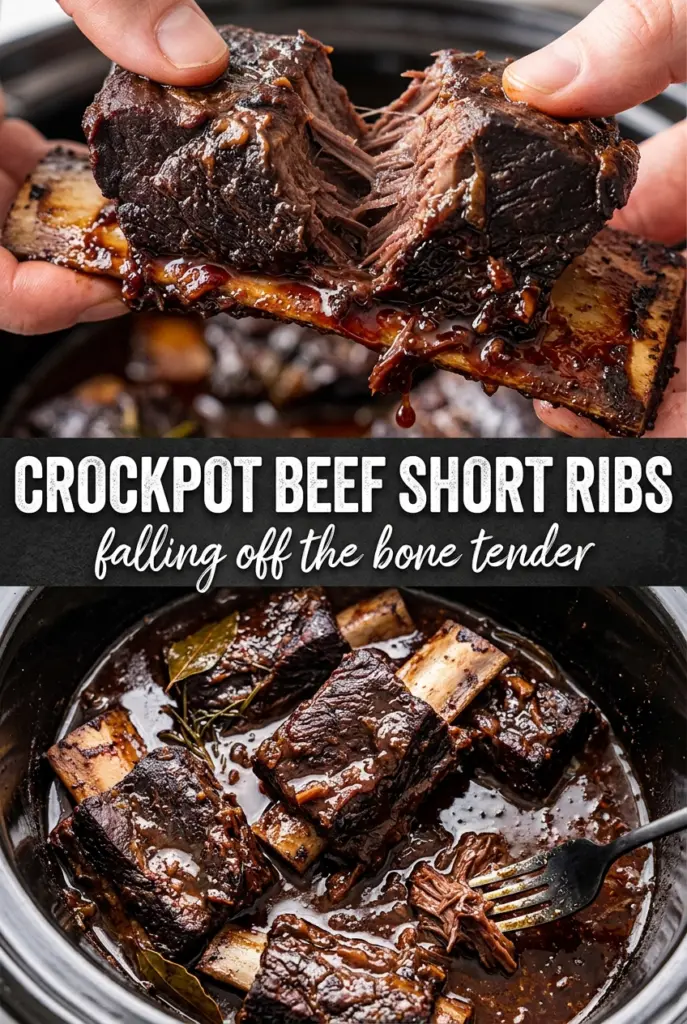
Crockpot beef short ribs turn into the kind of dinner that makes the whole house smell like you’ve been tending a pot for hours, even though the slow cooker is doing the work. The meat comes out deeply tender, the sauce turns glossy and wine-dark, and the bones slide cleanly away when the ribs are ready. Piled over mashed potatoes or creamy polenta, it’s the sort of meal that feels calm and complete on the plate.
What makes this version work is the balance in the sauce. Red wine and beef broth give it depth, crushed tomatoes add body, and a little brown sugar keeps the acidity from tasting sharp after hours of cooking. The vegetables break down into the braising liquid, which thickens the sauce naturally without needing flour or cornstarch at the end.
Below, I’ll walk through the one step that keeps the sauce from tasting flat, the ingredient swaps that still hold up in the slow cooker, and the timing cues that tell you the ribs are finished.
The ribs were fall-apart tender after 8 hours on low, and the sauce had the perfect rich, spoonable texture over mashed potatoes.
Save these crockpot beef short ribs for a low-effort braise with deep red wine gravy and fall-off-the-bone texture.
The Trick to Slow-Cooked Short Ribs That Don’t Taste Flat
Short ribs need more than heat and time. They need a sauce with enough salt, acid, and body to stand up to the long cook, because the slow cooker softens everything, including flavor. That’s why the wine, tomato paste, Worcestershire, and brown sugar work together here instead of relying on one note to carry the whole dish.
Another important piece is not overfilling the cooker with liquid. The short ribs release their own juices as they cook, and if you start with too much broth, you end up with a thin sauce that tastes boiled instead of braised. The goal is a braising liquid that looks a little aggressive going in and turns silky and concentrated by the end.
- Bone-in beef short ribs — The bones add flavor and help the meat stay succulent through the long cook. Boneless short ribs can work, but they tend to finish a little less rich and can dry out faster if they’re cut smaller.
- Dry red wine — Cabernet or Merlot both bring enough structure for the sauce to taste deep instead of sweet. Use a wine you’d actually drink; cooking won’t hide a rough, harsh bottle.
- Crushed tomatoes and tomato paste — The crushed tomatoes give the sauce body, while the paste concentrates the savory base. Don’t skip the paste; it’s what keeps the braising liquid from tasting watery after hours in the slow cooker.
- Worcestershire sauce — This adds the kind of savory depth that makes the sauce taste finished. There isn’t a perfect substitute, but a small splash of soy sauce can cover some of the same ground if needed.
What Each Ingredient Is Actually Doing in This Slow Cooker Beef
- Beef (chuck roast, short ribs, or ground beef) — Tougher cuts break down beautifully in slow cooking. The connective tissue becomes gelatin, enriching the broth.
- Liquid (beef broth, wine, or sauce) — This becomes both the cooking medium and the final sauce. Choose quality broth for better flavor.
- Onions (the aromatic base) — Slice thick so they stay distinct while melting into the sauce. They become sweet and mellow during cooking.
- Garlic (the depth flavor) — Minced garlic cooks into the broth; sliced stays more distinct. Use generously for deep flavor.
- Vegetables (carrots, potatoes, peppers) — Layer them by cooking time. Hard vegetables first, softer ones later so everything finishes together.
- Seasonings (salt, pepper, Worcestershire, spices) — Build flavor as you layer. Taste midway and adjust because flavors concentrate during cooking.
- Tomato paste or sauce (optional richness) — This adds body and depth. Cook for hours so it becomes part of the sauce rather than a separate element.
- Low heat for 8 hours (the transformation) — Long, slow cooking turns tough cuts into fork-tender meat. This is what makes cheap cuts taste expensive.
Building the Braise So the Meat Falls Apart, Not Falls Dry
Seasoning the Ribs First
Season the short ribs generously with salt, pepper, and smoked paprika before they go into the slow cooker. That first layer matters because the meat won’t brown or intensify much once it’s submerged in sauce. If the seasoning looks sparse, it probably isn’t enough; short ribs need a bold hand at the start. The paprika gives the sauce a subtle smoky edge that reads as depth, not barbecue.
Mixing the Sauce Before It Hits the Pot
Whisk the wine, broth, tomatoes, tomato paste, Worcestershire, and brown sugar together until the tomato paste is mostly dissolved. If you drop the paste in as a lump, it can sit there and cook unevenly, leaving sharp pockets and a less unified sauce. Once the vegetables are tucked around the ribs, pour the liquid over everything so the ribs are coated but not swimming. The slow cooker should braise, not boil.
Knowing When They’re Done
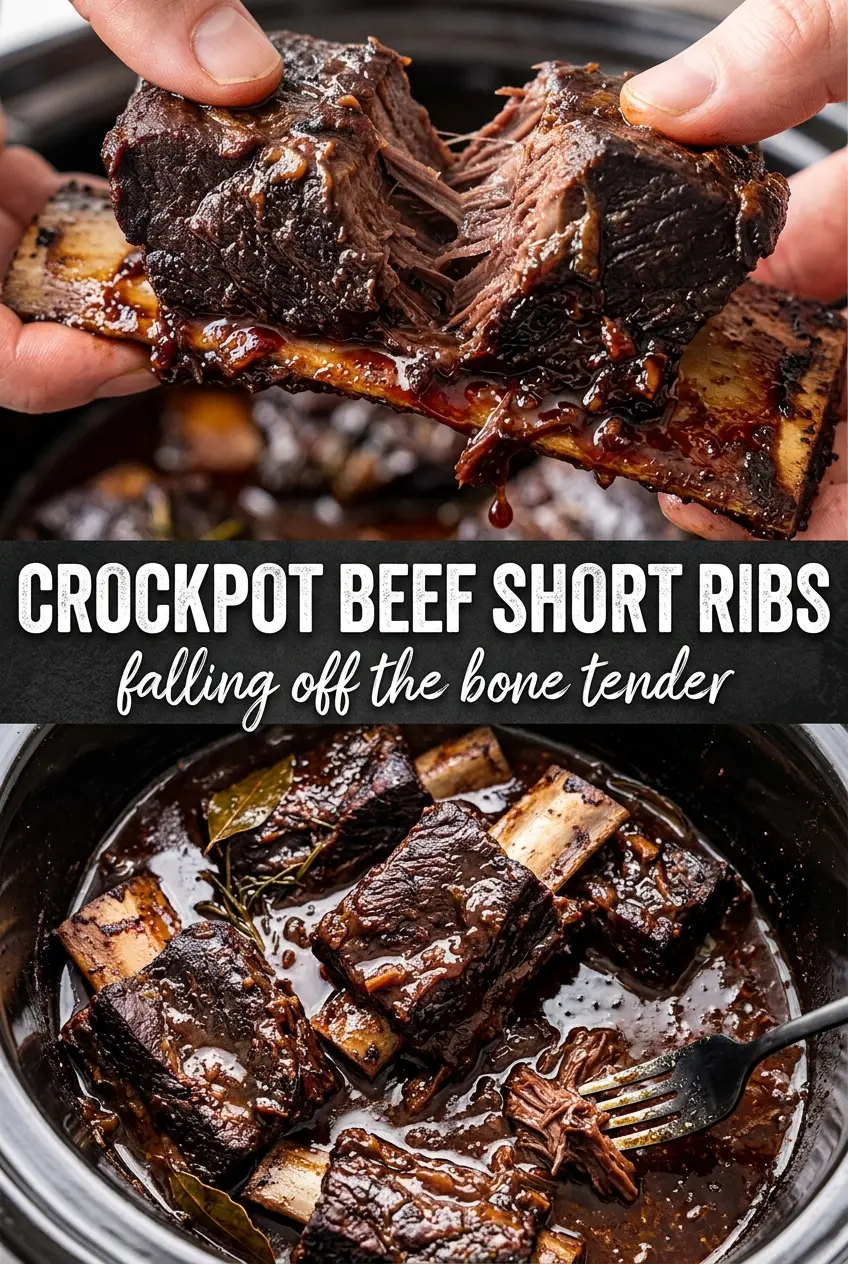
Cook on low for 8 to 9 hours until the meat yields when pressed with a spoon and pulls back from the bone. If you try to rush this on high heat, the connective tissue tightens before it softens, and the result is chewy instead of spoon-tender. The ribs are ready when the meat nearly collapses as you lift them out. That’s the moment you want.
Finishing the Sauce
Skim the fat from the surface before serving so the sauce tastes rich instead of greasy. If the sauce seems looser than you want, let it sit uncovered for a few minutes while you plate the ribs; it thickens slightly as it cools. Spoon the sauce over the meat rather than drowning it, then finish with fresh thyme or parsley for a clean, fresh top note.
How to Change These Short Ribs Without Losing the Good Part
For a deeper, richer sauce
Use Cabernet Sauvignon instead of Merlot and add an extra teaspoon of tomato paste. Cabernet brings more tannin and structure, which makes the finished sauce taste darker and a little more serious. If you want that restaurant-style braise flavor, this is the swap that gets you there.
For a gluten-free table
This recipe already works well as written if your Worcestershire sauce is gluten-free. The rest of the ingredients are naturally gluten-free, so the main thing to check is the label on that bottle before you pour it in.
For a dairy-free dinner
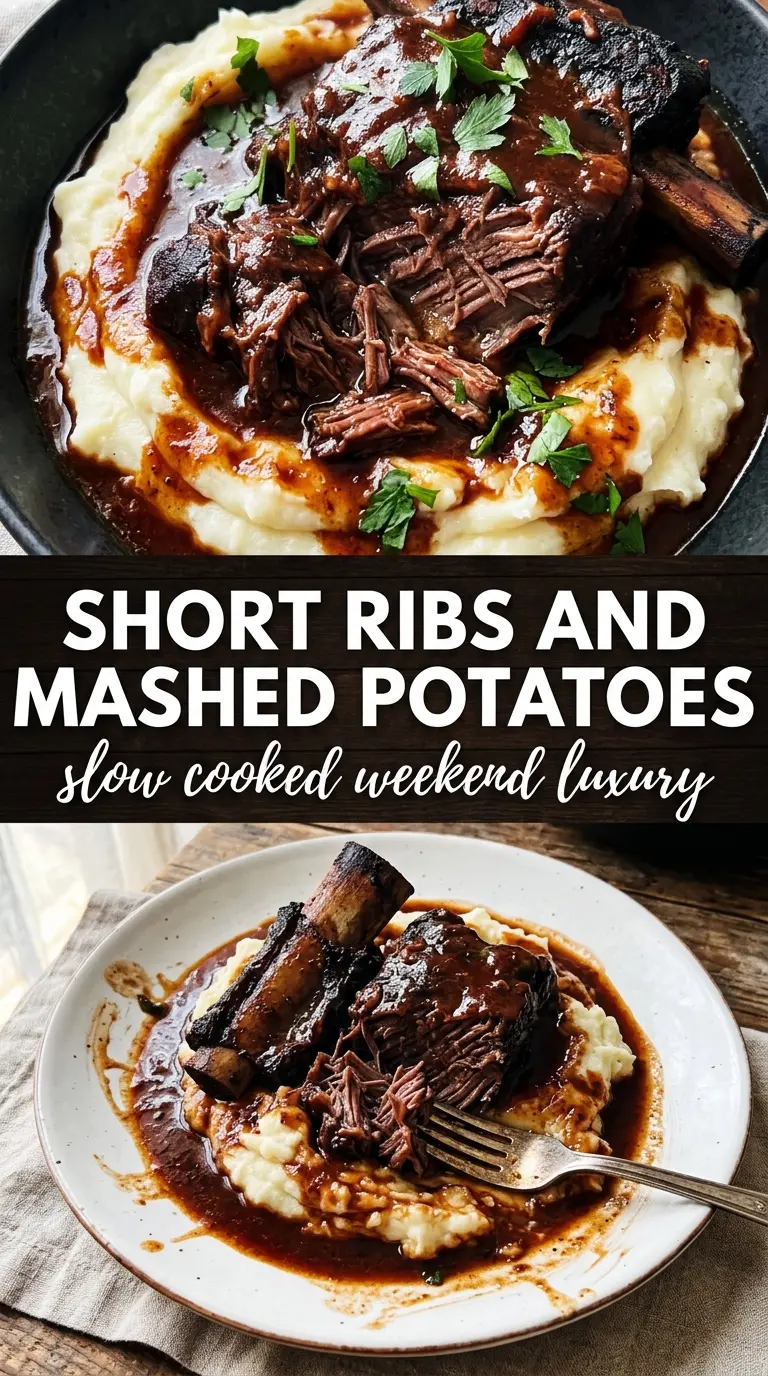
Serve the ribs over olive oil mashed potatoes or creamy polenta made with broth instead of butter and cream. The braise itself is already dairy-free, so the only adjustment is in the base you serve underneath it.
For boneless short ribs
Boneless short ribs work, but cut the cook time back by about 30 to 45 minutes and start checking early. They’re easier to overcook because they lose the bone’s protection, so stop when they’re tender enough to pull apart without shredding into dry strands.
Storage and Reheating
- Refrigerator: Store for up to 4 days. The sauce will thicken and the fat may solidify on top, which is normal.
- Freezer: Freeze the ribs and sauce for up to 3 months in a sealed container. Freeze with some sauce on top so the meat doesn’t dry out.
- Reheating: Rewarm gently on the stove or in a covered dish in a 300°F oven until hot through. Don’t blast it on high heat; that’s how tender braised meat turns stringy.
Answers to the Questions Worth Asking
Crockpot Beef Short Ribs
Ingredients
Equipment
Method
- Season the bone-in beef short ribs generously with salt, black pepper, and smoked paprika, coating all sides.
- Place the seasoned short ribs in the slow cooker in a single layer as much as possible.
- Whisk together the red wine, beef broth, crushed tomatoes, tomato paste, Worcestershire sauce, and brown sugar until evenly combined.
- Add the diced onion, minced garlic, diced celery, and diced carrots to the slow cooker, then sprinkle in the dried thyme and dried rosemary.
- Pour the sauce over everything so the meat and vegetables are well covered.
- Cook on low for 8–9 hours until the meat is fall-off-the-bone tender, with the sauce bubbling gently around the edges.
- Remove the ribs from the slow cooker and skim excess fat from the surface of the sauce.
- Serve the ribs over mashed potatoes or creamy polenta, spooning the sauce generously over the top.
- Garnish with fresh thyme and parsley for a bright finish before serving.