Golden-seared chicken breasts tucked into a silky cream sauce with spinach and Parmesan is the kind of dinner that looks like you worked much harder than you did. What makes Chicken Florentine worth repeating is the balance: the chicken stays juicy, the sauce turns glossy instead of heavy, and the spinach softens into the cream without disappearing completely.
The trick is building the sauce in the same skillet you used for the chicken. Those browned bits on the bottom bring the savory backbone, while the white wine and chicken broth keep the cream from feeling flat. Parmesan goes in after the liquid has had a minute to reduce, which helps it melt smoothly instead of turning grainy. A little lemon at the end keeps the sauce bright enough to handle the richness.
Below, you’ll find the small details that keep the chicken tender, the sauce stable, and the spinach looking fresh instead of tired. I’ve also included a few smart variations and the most common questions that come up when making this at home.
The sauce came together silky and smooth, and the lemon kept it from tasting heavy. I used the white wine like you suggested, and the chicken stayed tender all the way through.
Save this Chicken Florentine for a silky white wine cream sauce with golden chicken and spinach in every bite.
The Part That Keeps the Sauce Silky Instead of Grainy
Chicken Florentine can go wrong in two places: the chicken gets dry, or the sauce turns tight and chalky after the cheese goes in. The fix is simple, but it matters. Sear the chicken first until it’s deeply golden, then pull it out before building the sauce. That gives you flavor without overcooking the meat while the cream reduces.
The other mistake is pushing the heat too hard once the dairy hits the pan. Heavy cream wants a gentle simmer, not a boil. If the sauce boils after the Parmesan is added, it can separate or turn sandy. Lower heat keeps the emulsion stable and gives the cheese time to melt into the sauce instead of clumping.
What Each Ingredient Is Actually Doing in Chicken Florentine
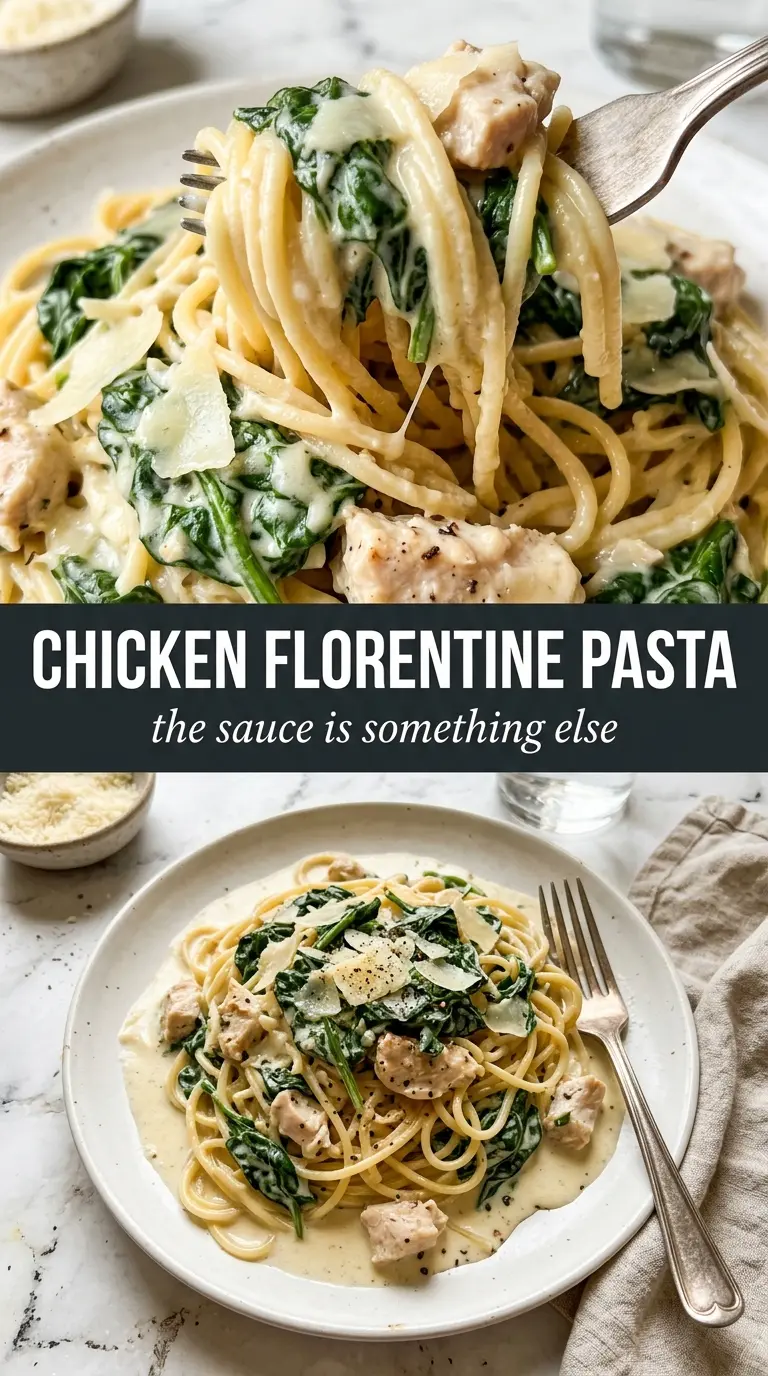
- Chicken breasts — Boneless, skinless breasts cook fast and give you that clean, elegant presentation. If yours are thick, pound them to even thickness so they sear and finish at the same time. That’s the difference between juicy and stringy.
- Dry white wine — This cuts the richness and lifts the browned bits off the pan. A dry Pinot Grigio or Sauvignon Blanc works well. Don’t use sweet wine here; it makes the sauce taste muddled instead of bright.
- Heavy cream — This is what gives the sauce its velvety body. Half-and-half will work in a pinch, but the sauce won’t cling the same way and it’s more likely to curdle if the heat runs hot.
- Parmesan — Grate it fresh if you can. Pre-shredded cheese often has anti-caking agents that keep it from melting as smoothly. Add it off the hottest part of the heat so it melts into the sauce instead of seizing up.
- Spinach — Fresh baby spinach wilts fast and keeps its shape just enough to look good on the plate. Chop larger leaves if that’s what you have, but don’t cook it long enough to drain the sauce of its color and texture.
- Lemon juice and zest — These are not garnish here; they’re part of the balance. The zest gives a fragrant top note, and the juice keeps the cream sauce from tasting heavy. Add both at the end so the flavor stays clean.
Building the Pan Sauce Without Breaking It
Getting the Chicken Golden First
Season the chicken generously on both sides, then sear it in hot olive oil until the surface is a deep golden brown and the center reaches 165°F. If the pan is crowded, the chicken steams instead of browns, so cook in batches if needed. Pull it out and let it rest while you make the sauce; that short pause keeps the juices inside when you return it to the skillet.
Using the Same Pan for the Sauce
Keep the skillet as is after the chicken comes out. Add the garlic and stir for just about 30 seconds, long enough to smell it but not long enough for it to brown. Pour in the wine and scrape up the stuck-on bits with a wooden spoon; that’s where the flavor is. If the garlic scorches before the wine goes in, start over, because burnt garlic will carry through the whole sauce.
Reducing the Cream to the Right Spoon-Coating Texture
After the wine has simmered down a bit, add the cream and chicken broth and let the mixture bubble gently until it thickens enough to coat a spoon. This takes a few minutes, not a rush of high heat. When the sauce leaves a line on the back of a spoon and looks glossy instead of thin, it’s ready for the Parmesan. Stir the cheese in off a hard boil so it melts smoothly.
Finishing with Spinach, Lemon, and the Chicken
Add the spinach last and stir just until it wilts into the sauce. Then return the chicken to the skillet and spoon the sauce over the top so every piece gets coated. Finish with lemon juice, zest, and parsley right at the end. If the sauce tastes flat, it usually needs that final hit of acid more than more salt.
How to Adapt Chicken Florentine for Different Kitchens
Make It Dairy-Light
Swap the heavy cream for half-and-half and keep the heat low. The sauce will be thinner and a little less luxurious, but it still works if you simmer it gently and skip any boiling once the cheese goes in.
Gluten-Free Without Changes
This recipe is naturally gluten-free as written, as long as your chicken broth is certified gluten-free. The sauce gets its body from reduction and cream, not flour, so there’s nothing to replace.
Make It a Little Lighter
Use slightly less Parmesan and serve the chicken over sautéed zucchini noodles or steamed vegetables instead of pasta. You’ll lose some richness, but the lemon and spinach still keep the dish feeling complete.
What to Do with Leftovers
Store the chicken and sauce together so the meat stays moist. The spinach will soften a little more by the next day, but the flavor holds up well. Reheat gently so the sauce doesn’t separate.
Storage and Reheating
- Refrigerator: Keep in an airtight container for up to 3 days. The sauce thickens as it chills, so it will look denser the next day.
- Freezer: I don’t recommend freezing this one. Cream sauces can separate after thawing, and the spinach turns soft enough to lose its texture.
- Reheating: Warm it slowly in a skillet over low heat with a splash of broth or cream. High heat is the fastest way to break the sauce.
Answers to the Questions Worth Asking
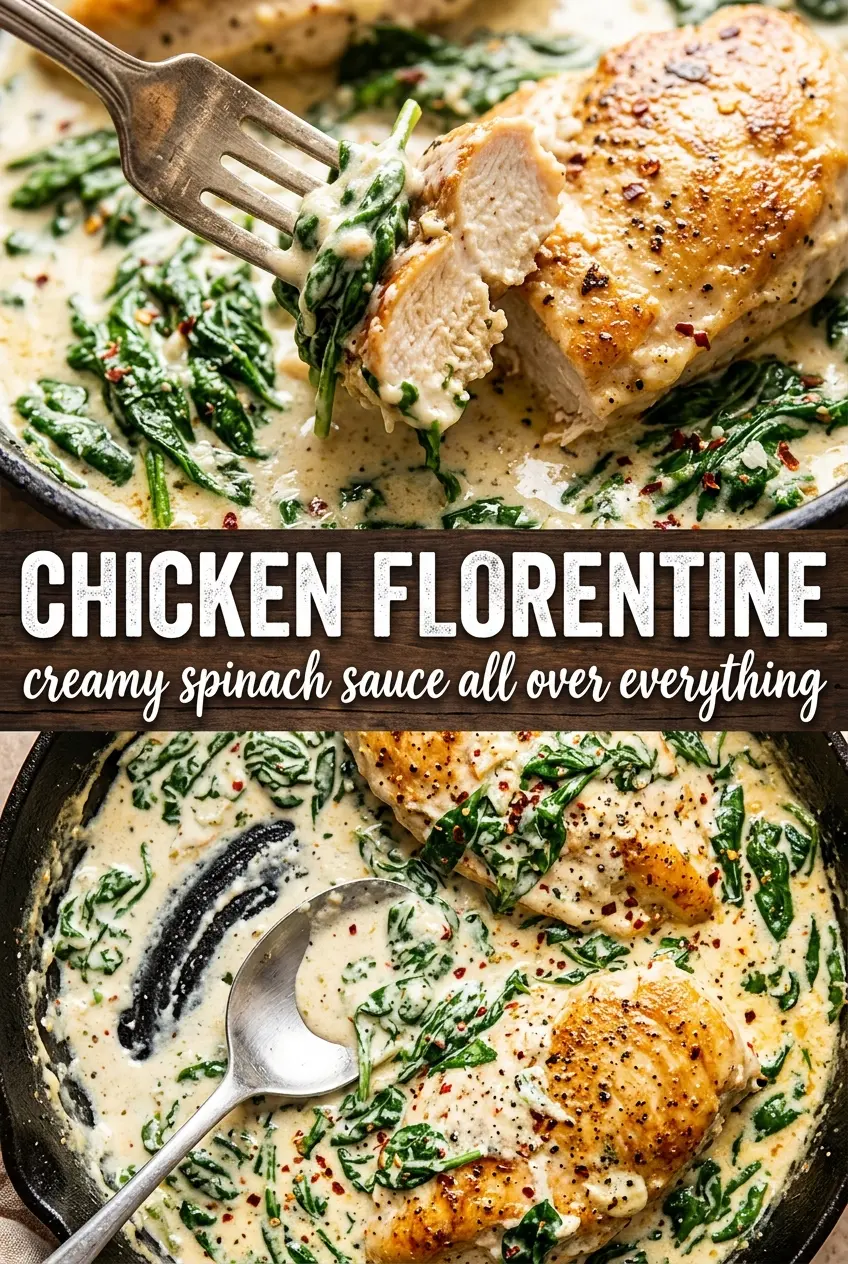
Chicken Florentine
Ingredients
Equipment
Method
- Season the boneless skinless chicken breasts generously on both sides with salt, pepper, garlic powder, and Italian seasoning.
- Heat olive oil in a large skillet over medium-high heat and sear the chicken for 5-6 minutes per side until golden and cooked through to 165°F; remove to a plate.
- Add the minced garlic to the same pan and cook for 30 seconds.
- Pour in the dry white wine, scraping up browned bits, and simmer for 2 minutes.
- Stir in the heavy cream and chicken broth and simmer for 4-5 minutes until slightly thickened.
- Stir in the grated Parmesan, fresh lemon juice, and lemon zest until the sauce turns smooth and glossy.
- Add the fresh baby spinach and stir until wilted and bright green.
- Return the chicken breasts to the pan and spoon the sauce over each one.
- Garnish with fresh parsley and lemon, then serve hot over pasta or rice.