
Vegetarian taco soup lands in that sweet spot between pantry dinner and bowl-of-comfort food. It’s brothy, smoky, and loaded with beans and tomatoes, but it still eats like a full meal thanks to the mix of black beans, pinto beans, kidney beans, and corn. The best bowls have a little of everything in each spoonful: tender vegetables, a punch of taco spice, and just enough brightness from lime to keep the broth from tasting flat.
What makes this version work is the layering. The onion and bell pepper go in first so they soften and give the broth a savory base, then the spices bloom in the pot before the liquid goes in. That small step keeps the seasoning from tasting dusty or one-note. Fire-roasted tomatoes add a deeper edge than regular diced tomatoes, and the Rotel brings both heat and acidity without making you start from scratch.
Below, I’ve included the ingredient swaps that actually matter, the simmering cue that tells you the soup is ready, and a few ways to stretch it for leftovers or adjust the heat without losing the character of the soup.
The broth thickened just enough after simmering, and the fire-roasted tomatoes gave it a deeper flavor than my usual taco soup. I topped mine with avocado and lime, and even my meat-loving husband went back for a second bowl.
Save this Vegetarian Taco Soup for a fast Tex-Mex dinner with smoky broth, three kinds of beans, and bright lime on top.
The Shortcut That Can Make Taco Soup Taste Flat
The mistake most people make with taco soup is treating everything like it can just simmer together from the start. The result is usually fine, but the broth tastes thin and the spices never fully wake up. Cooking the onion and bell pepper first gives the soup a savory foundation, and blooming the seasoning in the pot for a minute before the liquid goes in turns the taco seasoning from background noise into the main event.
The other thing that matters here is balance. With three kinds of beans, corn, and three kinds of tomatoes, this soup has plenty of body already. That means the broth should stay brothy, not turn into bean mash. Fifteen to twenty minutes of simmering is enough to meld the flavors without breaking down the vegetables into something muddy.
What Each Bean and Tomato Is Actually Doing Here
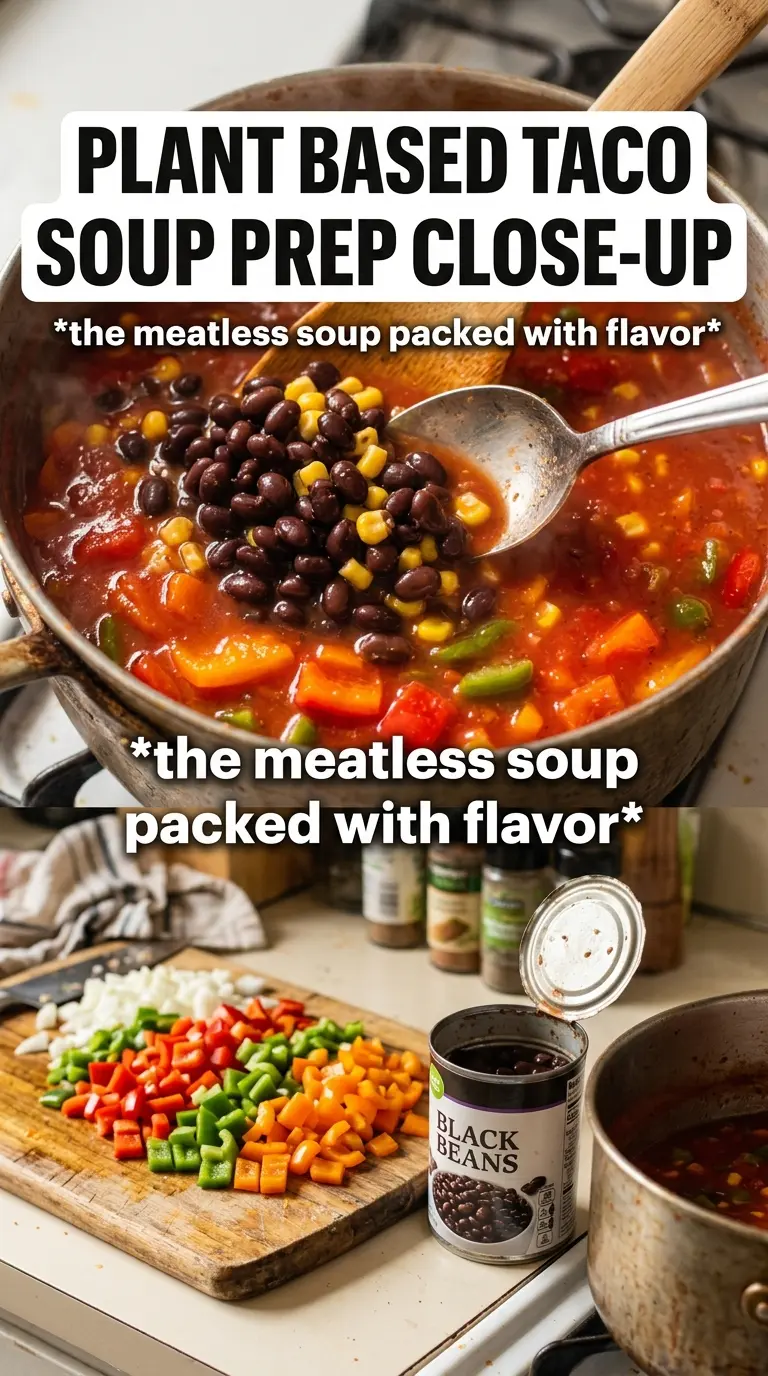
- Black beans — These hold their shape and give the soup that deep, earthy bean flavor. They’re the bean most likely to stay intact after simmering, which is what you want for texture.
- Pinto beans — Pinto beans soften more than black beans and help the broth feel a little creamier without adding dairy. If you only have one type of bean, use it, but the mix gives the soup better contrast.
- Kidney beans — These bring a firmer bite and a little visual variety. Drain them well so the soup doesn’t taste like can liquid.
- Rotel, diced tomatoes, and fire-roasted tomatoes — This is the flavor base. Rotel adds heat and acidity, diced tomatoes add bulk, and fire-roasted tomatoes bring a smoky edge that makes the whole pot taste slower-cooked than it is.
- Vegetable broth — Use a broth you actually like tasting on its own. Since this is a broth-forward soup, a bland broth leaves you trying to fix flavor at the end, and that rarely works as well as starting with a good base.
Building the Soup So the Broth Stays Bright
Softening the Vegetables First
Start by heating the olive oil and cooking the onion and bell pepper until they look glossy and the onion has turned translucent at the edges. You’re not chasing color here; you’re giving the vegetables time to release their sweetness and lose that raw crunch. If you rush this part, the soup can taste sharp even after simmering, because the vegetables never had a chance to round out.
Blooming the Seasoning
Add the garlic, let it go for about a minute, then stir in the taco seasoning, cumin, chili powder, and smoked paprika. The pot should smell toasted and fragrant before you add any liquid. If the spices catch on the bottom, pull the heat down right away and stir; burnt spice tastes bitter fast, and there’s no fixing it later with extra broth.
Letting the Soup Simmer Without Overcooking It
Once the beans, corn, tomatoes, and broth are in, bring the pot to a boil, then lower it to a steady simmer. You want gentle bubbling around the edges, not a hard boil that tears up the beans and makes the vegetables taste tired. After 15 to 20 minutes, the broth should taste cohesive and a little richer, with the spices no longer sitting on top of the soup.
Finishing With the Toppings That Matter
Serve the soup with avocado, cilantro, lime, sour cream, and tortilla chips while it’s still hot. The toppings are not decoration here; they change the bowl. Lime wakes up the tomatoes, avocado cools the heat, and chips add the crunch the soup itself doesn’t have.
How to Adapt This Soup Without Losing the Point
Make it dairy-free
Skip the sour cream or use a vegan sour cream on top. The soup itself is already dairy-free, so this swap only changes the finish, not the body of the dish.
Turn down the heat without flattening the flavor
Use mild Rotel if you can find it, and cut the chili powder back a little. Keep the smoked paprika and cumin in place so the soup still tastes layered instead of bland.
Make it thicker and more filling
Mash a few spoonfuls of beans against the side of the pot near the end of cooking. That gives the broth a little body without needing cream or flour, and it keeps the soup vegetarian-friendly.
Stretch it for a bigger crowd
Add another can of broth and an extra can of beans if you need more servings. The flavor stays balanced because the tomatoes and taco seasoning already do the heavy lifting.
Storage and Reheating
- Refrigerator: Store in an airtight container for up to 4 days. The broth gets a little thicker as it sits, which is normal.
- Freezer: This freezes well for up to 3 months. Leave a little space at the top of the container because the liquid expands.
- Reheating: Warm it on the stove over medium-low heat, stirring often and adding a splash of broth or water if it has thickened. Don’t boil it hard or the beans can split and the tomatoes can taste dull.
Questions I Get Asked About This Recipe

Vegetarian Taco Soup
Ingredients
Equipment
Method
- Heat 1 tablespoon olive oil in a large pot over medium heat, then sauté the onion and bell pepper for 4-5 minutes until softened and slightly translucent.
- Add the minced garlic and cook for 1 minute, stirring, until fragrant.
- Stir in taco seasoning, cumin, chili powder, and smoked paprika, and cook for 30 seconds to toast the spices.
- Add the drained black beans, pinto beans, kidney beans, corn, Rotel tomatoes, diced tomatoes, fire-roasted tomatoes, and vegetable broth, then bring the mixture to a boil.
- Reduce to a simmer and cook for 15-20 minutes, stirring occasionally, until the flavors meld; season with salt and black pepper to taste.
- Ladle the taco soup into bowls and top with avocado, cilantro, lime wedges, sour cream (or vegan sour cream), and tortilla chips.