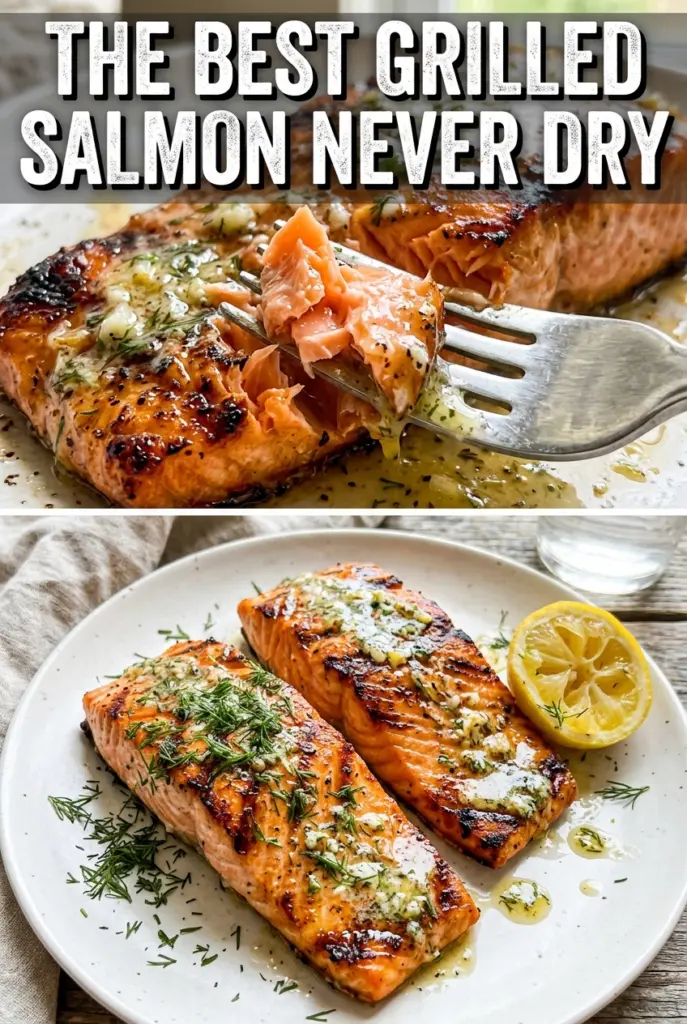
Perfectly grilled salmon should give you crisp skin, tender flakes, and clean smoky flavor without sticking to the grates or drying out at the edges. The best version isn’t overloaded with marinade or buried under sauce. It tastes like salmon first, with enough lemon, garlic, and dill to sharpen the richness and keep every bite bright.
The trick is treating the fish gently and giving the grill time to do the work. A short marinade adds flavor without turning the flesh mushy, and skin-on fillets hold together much better over high heat. Once the salmon goes on the grill, it needs a steady, undisturbed first side so the skin can release on its own and form that deep golden crust.
Below, I’m walking through the small details that matter: how to keep the salmon from tearing, what the marinade is actually doing, and how to tell when it’s done before it slips from juicy to dry.
The salmon released from the grill cleanly and the skin turned out crisp instead of sticking. The lemon-Dijon marinade was light but gave it exactly the right kick, and it was still juicy in the center after 8 minutes.
Save this grilled salmon for a fast dinner with crisp skin, flaky centers, and a lemon-Dijon finish.
The Part Most People Get Wrong When Grilling Salmon
Salmon fails on the grill for two reasons: the grill isn’t hot enough, or the fish is moved too soon. When the grates are properly heated and oiled, the skin sears fast and releases with much less tearing. If you try to flip before the fish has formed a crust, it sticks, shreds, and leaves half the skin behind.
The other common mistake is over-marinating. Lemon juice is helpful here, but it’s still acid, and too much time can start to cure the surface of the fish. Fifteen minutes is enough to season the outside and keep the flavor bright without compromising the texture.
- Skin-on fillets — The skin protects the flesh from direct heat and gives you a built-in barrier against sticking. Skinless salmon can work, but it’s less forgiving on the grill.
- Medium-high heat — You want the grates hot enough to mark the fish quickly. If the grill is only warm, the salmon lingers and sticks.
- One clean flip — Let the first side cook almost all the way through before turning. The fish should release with a little nudge, not a tug.
What the Marinade Is Doing to the Salmon
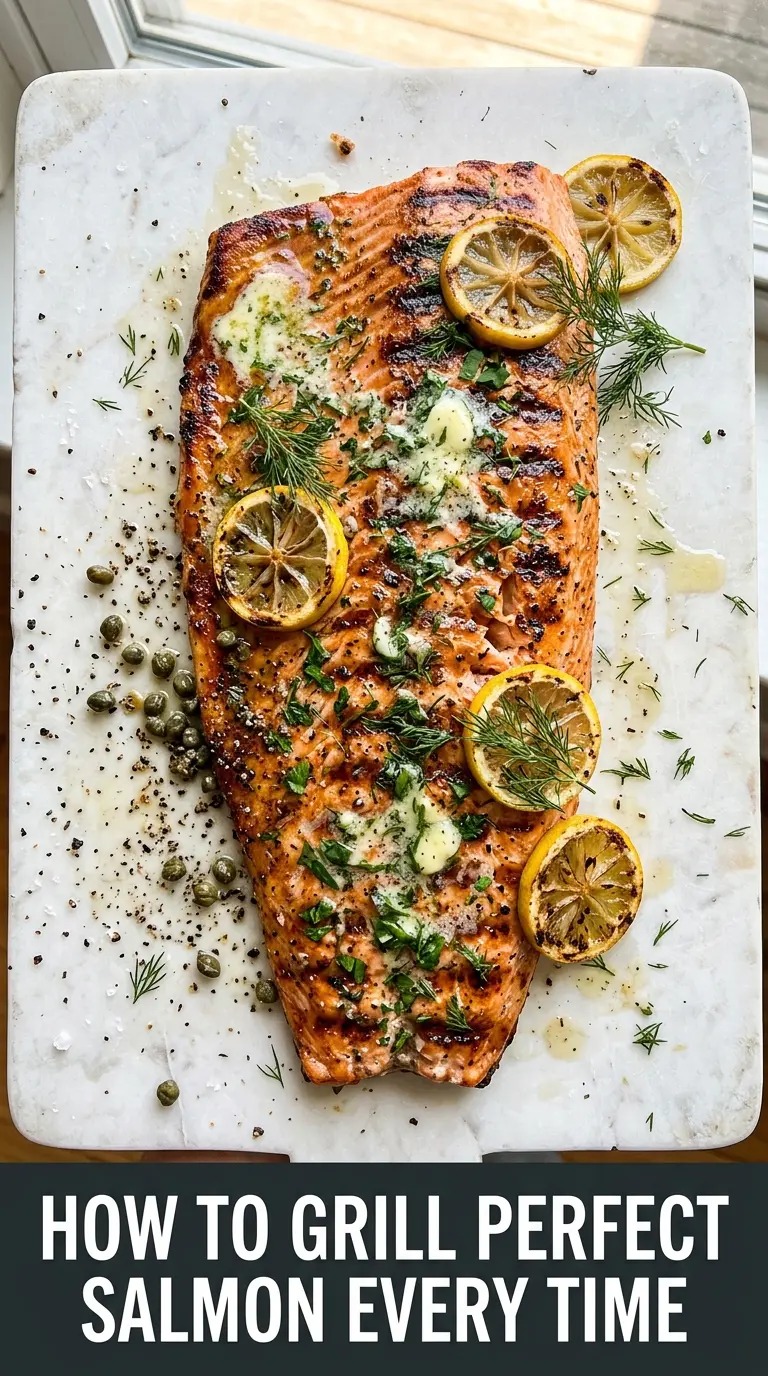
The olive oil coats the salmon so the surface doesn’t dry out before the inside is done. Dijon mustard helps the marinade cling and adds a subtle sharpness that keeps the fish from tasting flat. Garlic gives the salmon a savory base, but it doesn’t need to be heavy-handed because grill smoke brings plenty of flavor on its own.
Fresh lemon juice matters here, but only in a small amount. It lifts the richness of the salmon without overpowering it, and it works best when paired with dill at the end. If you swap in bottled lemon juice, the flavor gets harsher and less clean, which you’ll notice right away on a simple dish like this.
- Olive oil — Helps the seasoning spread evenly and keeps the fish supple on the grill. Use a decent oil, but not your most expensive bottle.
- Dijon mustard — This is the ingredient that ties the marinade together. Yellow mustard won’t give the same depth or texture.
- Fresh dill and lemon wedges — Don’t skip the finish. The salmon needs that bright, fresh contrast after grilling.
Getting the Salmon Off the Grill in One Piece
Mixing the Marinade
Stir the olive oil, lemon juice, garlic, Dijon, salt, and pepper until the mustard dissolves into the oil. It won’t look thick like a sauce, and that’s fine. You’re building a coating, not a glaze. If the garlic starts to sit in clumps, whisk a little longer before brushing it over the fish.
Giving the Fish Its Short Rest
Brush the marinade over the salmon and let it sit for 15 minutes. That’s enough time for the surface to take on flavor without softening the texture. Longer than that, especially with a heavier hand on the lemon, can make the outside turn too delicate for the grill.
Grilling Skin-Side Down
Oil the grates well, then place the salmon skin-side down and leave it alone. You should hear a steady sizzle, not a violent pop. The skin will tighten, crisp up, and help the fillet release on its own. If you poke at it early, it sticks and tears before the crust has a chance to set.
Flipping and Finishing
After 6 to 8 minutes on the first side, the salmon should be mostly opaque around the edges and lift easily with a spatula. Flip it carefully and cook 2 to 3 minutes on the second side, just until the center turns flaky but still moist. Pull it a little early if you like it medium; overcooked salmon goes chalky fast.
How to Adapt This for Different Dinners
Dairy-Free, As Written
This recipe already skips dairy, which keeps the salmon clean-tasting and lets the grill flavor come through. If you’re serving it with a sauce, keep that sauce on the side so the crisp skin stays intact.
No Grill, Same Seasoning
A grill pan or cast-iron skillet works if the weather or equipment gets in the way. Use medium-high heat, start skin-side down, and keep the salmon still until it releases cleanly. You won’t get the same smoke, but you’ll still get crisp skin and a good sear.
Garlic-Lover’s Version
If you want a bolder finish, add one extra small clove of minced garlic, but don’t push it much further. Too much raw garlic can burn on the grill and turn bitter before the salmon is finished.
How to Scale It for a Crowd
This recipe doubles cleanly, but grill the fillets in batches so the heat doesn’t drop. Crowding the grate leads to steaming, which is the fastest way to lose those crisp edges.
Storage and Reheating
- Refrigerator: Store leftovers in an airtight container for up to 3 days. The skin will soften, but the fish stays useful for salads, grain bowls, or quick lunches.
- Freezer: Cooked salmon can be frozen, but the texture gets a little drier after thawing. Wrap portions tightly and freeze for up to 2 months if you need to, then thaw overnight in the fridge.
- Reheating: Warm it gently in a low oven at 275°F until just heated through. High heat dries salmon out fast, so skip the microwave if you want the flakes to stay tender.
Answers to the Questions Worth Asking
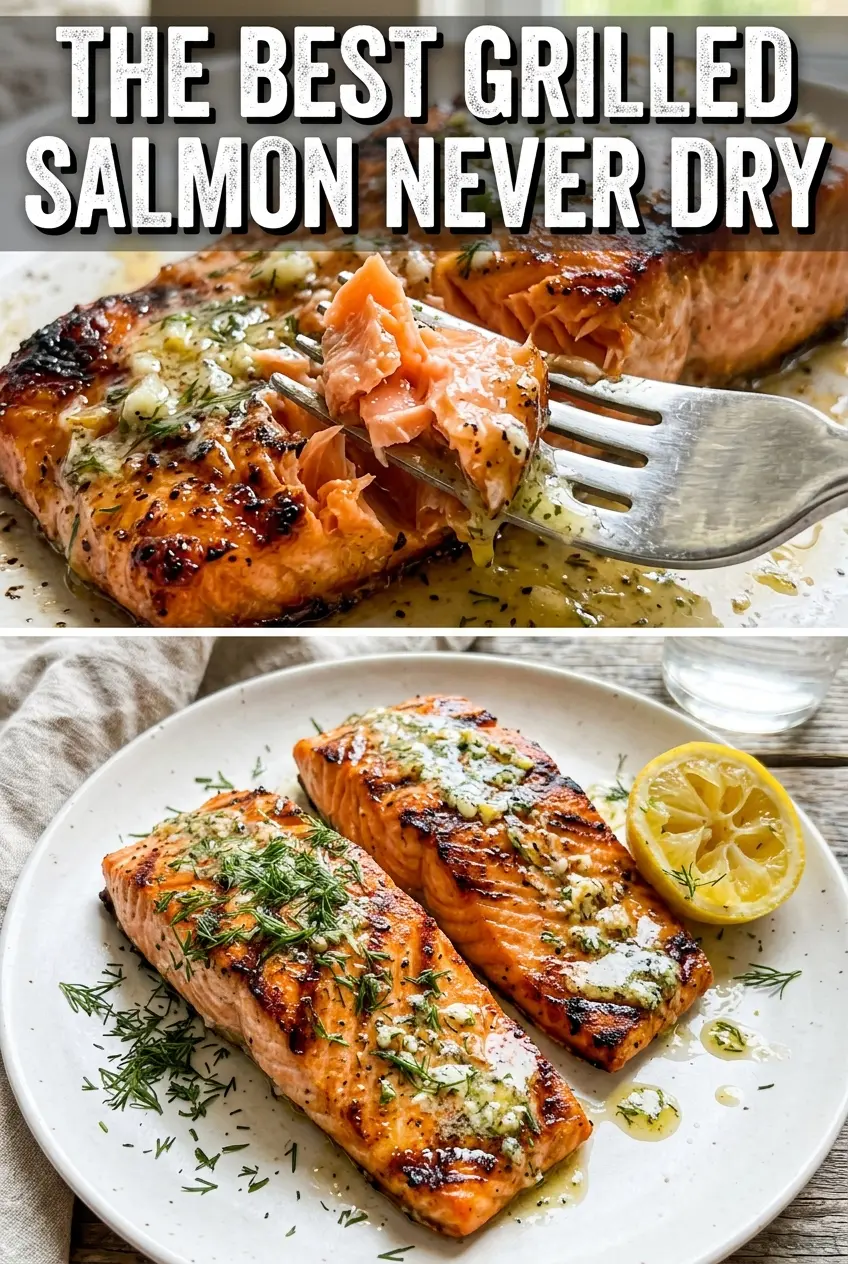
The Best Grilled Salmon
Ingredients
Method
- Stir olive oil, lemon juice, minced garlic, Dijon mustard, salt, and pepper in a bowl until evenly combined.
- Taste and adjust seasoning with more salt and pepper if needed.
- Brush the salmon fillets with the marinade, coating skin and flesh.
- Let the salmon rest for 15 minutes so the flavors set.
- Preheat the grill to medium-high heat and oil the grates well to prevent sticking.
- Place salmon skin-side down on the grill and close the lid.
- Grill for 6-8 minutes without moving the fillets until the skin is crisp and grill marks form.
- Carefully flip the salmon and grill for 2-3 minutes until cooked to your desired doneness.
- Transfer salmon to plates and serve immediately with fresh dill and lemon wedges.