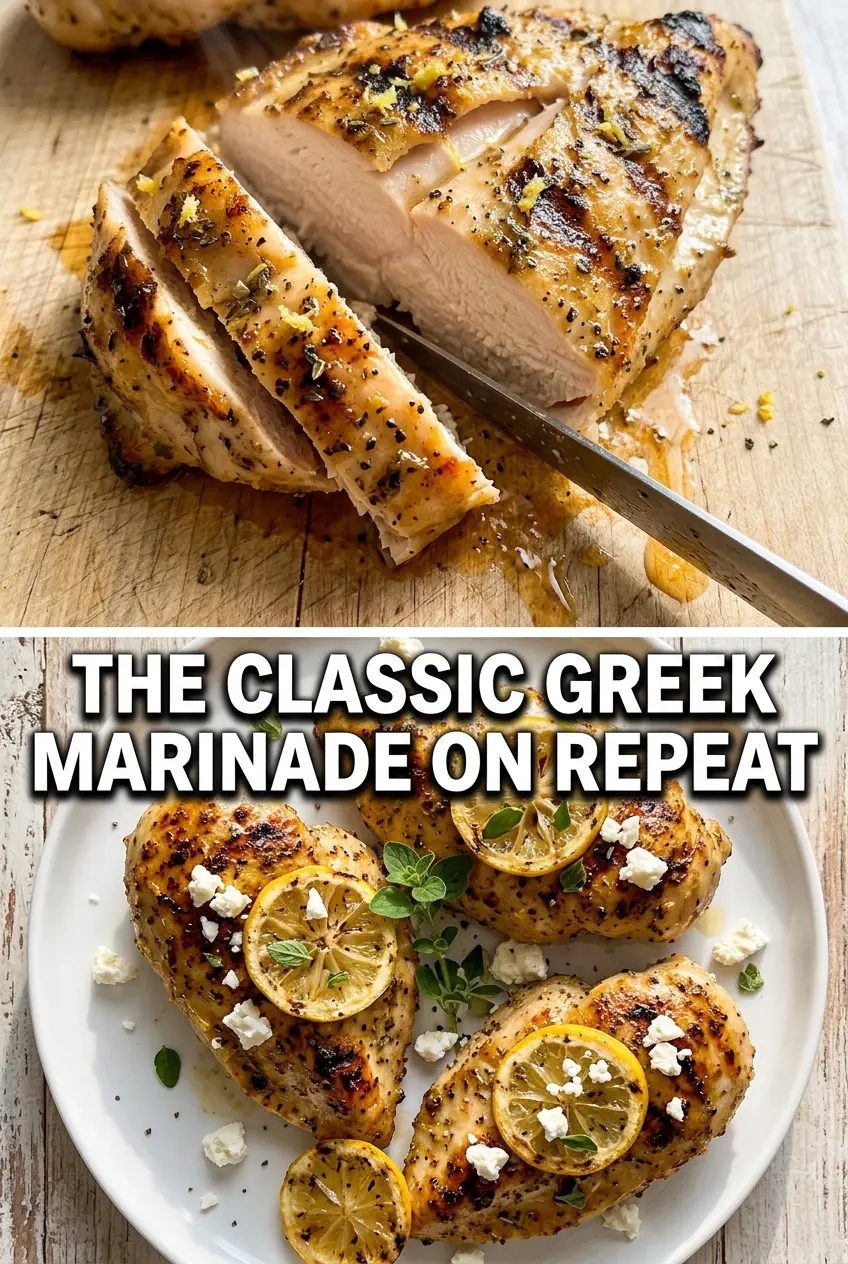
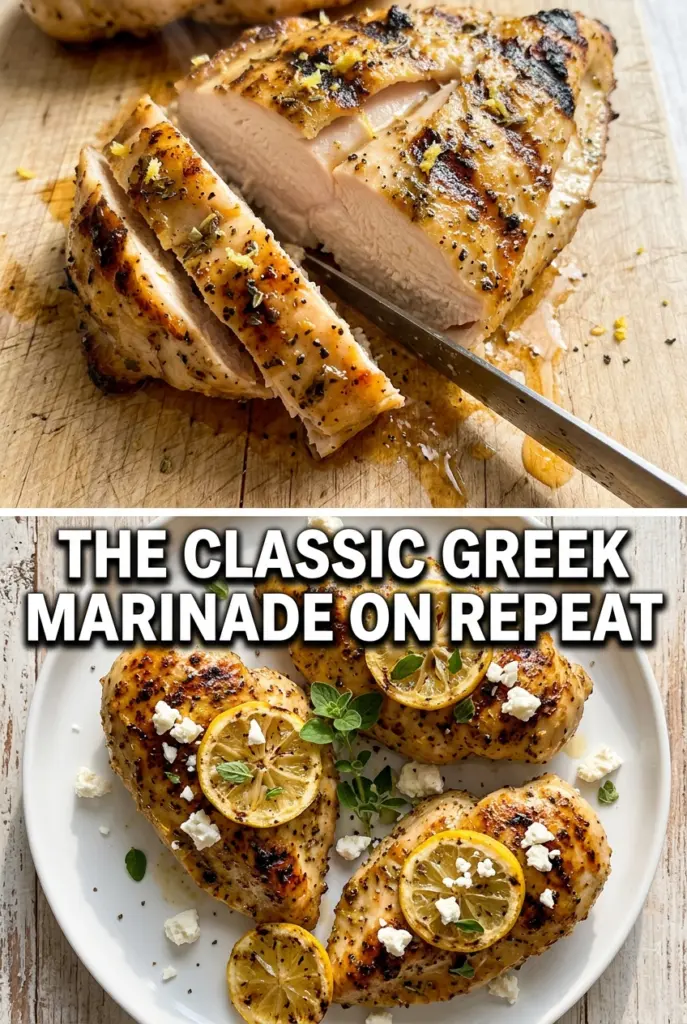
Tender, deeply seasoned chicken starts with a marinade that knows exactly what it’s doing: bright lemon, plenty of garlic, oregano that tastes earthy instead of dusty, and olive oil to carry all of it into the meat. This Greek chicken marinade earns its keep because it doesn’t just coat the surface — it seasons the chicken all the way through and leaves the outside ready for a proper char or a golden roast.
The balance matters here. Lemon juice brings the lift, but too much acid for too long can turn the chicken firm and a little stringy, which is why the oil and the short ingredient list matter so much. Dijon doesn’t make this taste mustardy; it helps the marinade cling and gives the finished chicken a subtle background depth that keeps the flavor from tasting flat.
Below, I’ll show you the one marinating window that gives the best texture, the small prep detail that keeps the garlic from scorching, and a few smart swaps for when you need to work with what’s already in the kitchen.
The lemon and oregano came through beautifully, and the chicken stayed juicy even after grilling. I marinated it overnight, and the garlic never burned — just a clean, classic Greek flavor.
Save this Greek chicken marinade for juicy grilled chicken with lemon, oregano, garlic, and that classic Mediterranean finish.
The Acid-to-Oil Balance That Keeps Chicken Tender, Not Tough
Greek marinades live or die by the ratio. Too much lemon juice and not enough oil, and the chicken can tighten up before it ever hits the heat. This version keeps the lemon bright enough to wake up the meat without crossing into ceviche territory, and the olive oil softens that edge while helping the garlic, herbs, and mustard cling to every piece.
The other mistake people make is marinating too long without thinking about the cut. Boneless pieces can take a full day, but smaller cuts, especially chicken breast, taste best in the 4 to 12 hour range. Past that, the texture starts to get a little mealy at the surface, which is the opposite of what you want after all that good seasoning.
What Each Ingredient Is Doing in the Marinade
- Olive oil — This is the base that carries the herbs and keeps the chicken from tasting sharp. Use a decent extra-virgin olive oil if you can; the flavor comes through because there aren’t many ingredients to hide behind.
- Lemon juice and zest — Juice gives the marinade its brightness, but the zest is where the deeper lemon aroma lives. If you skip the zest, the chicken tastes more acidic than lemony.
- Garlic — Fresh minced garlic gives this marinade its backbone. Powder works in a pinch, but it won’t give you that same savory bite or the little roasted edges once the chicken hits the grill.
- Fresh oregano or dried oregano — Fresh oregano tastes greener and sharper, while dried oregano brings the classic Greek note most people expect. If you’re using dried, crush it lightly between your fingers before whisking it in so the oils wake up.
- Dijon mustard — This isn’t here for mustard flavor. It helps emulsify the marinade so the oil and lemon stay blended long enough to coat the chicken evenly.
Building the Marinade So Every Piece Cooks Up Juicy
Whisking the base until it looks unified
Start by whisking the olive oil, lemon juice, zest, garlic, oregano, thyme, Dijon, salt, and pepper until the mixture looks slightly thickened and the oil no longer sits in a clean layer on top. That emulsified look matters because it helps the marinade cling instead of sliding off in the bag. If the garlic is floating in a puddle of oil, keep whisking a few more seconds.
Coating the chicken evenly
Use a large zip-top bag or a bowl wide enough to turn the chicken in one layer. Every piece should be glossy and coated from edge to edge, not just sitting in the liquid at the bottom. The failure here is crowding the chicken so only one side really picks up the marinade, which leaves you with uneven flavor after cooking.
Marinating without overdoing it
Refrigerate the chicken for at least 4 hours and up to 24, depending on the cut. Chicken thighs can handle the longer end of that range; chicken breasts are happier closer to the middle. If the chicken sits too long in this much acid, the surface can turn soft and chalky, so don’t treat overnight as a default if the pieces are thin.
Cooking to the right finish
Grill over medium-high heat until the thickest part reaches 165°F. You’re looking for dark grill marks, clear juices, and a little resistance when you press the meat with tongs, not a dry, hard surface. Let it rest for 5 minutes before slicing so the juices settle back into the chicken instead of running onto the cutting board.
How to Adapt This Greek Chicken Marinade for Different Cuts and Diets
For chicken thighs
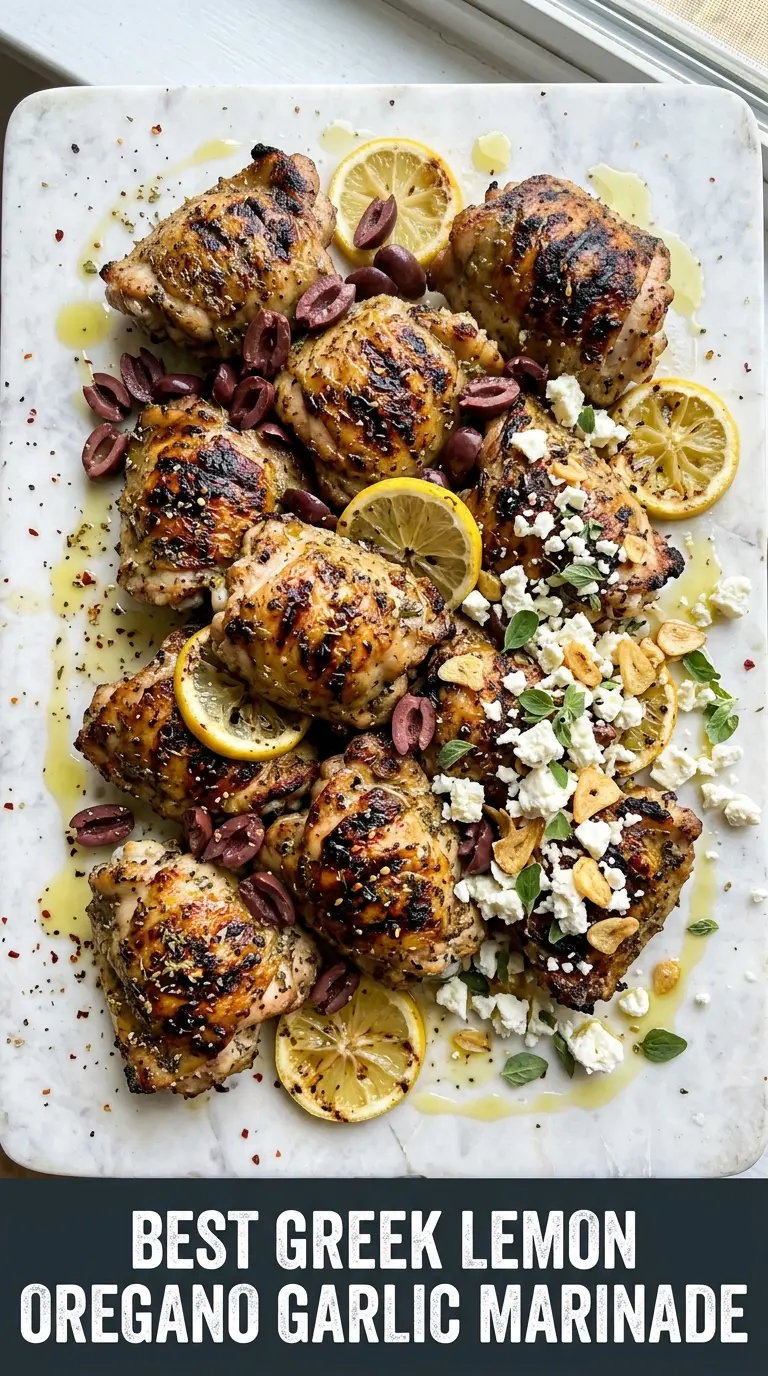
Thighs are the most forgiving option here because their higher fat content stands up to the lemon and stays juicy on the grill. Give them the full marinating time if you want the deepest flavor and the best char.
For chicken breasts
Breasts need a shorter marinade and more careful cooking because they dry out faster and pick up acid faster than dark meat. Pull them as soon as they hit 165°F and rest them before slicing so they stay moist.
Dairy-free and gluten-free as written
This marinade already fits both diets without any changes, which is part of why it works so well for a crowd. Just check your Dijon label if you’re cooking for someone who needs strict gluten-free ingredients.
Oven-baked instead of grilled
If grilling isn’t an option, roast the marinated chicken at high heat until it’s cooked through and browned at the edges. You won’t get the smoky char, but you’ll still keep the clean lemon-herb flavor and juicy interior.
Storage and Reheating
- Refrigerator: Cooked chicken keeps for 3 to 4 days in an airtight container. The lemon flavor stays lively, but the texture is best the first couple of days.
- Freezer: The cooked chicken freezes well for up to 2 months. Wrap it tightly and freeze in portions so it thaws evenly.
- Reheating: Warm it gently in a covered skillet over low heat with a splash of water or broth. High heat dries out marinated chicken fast, especially breast meat.