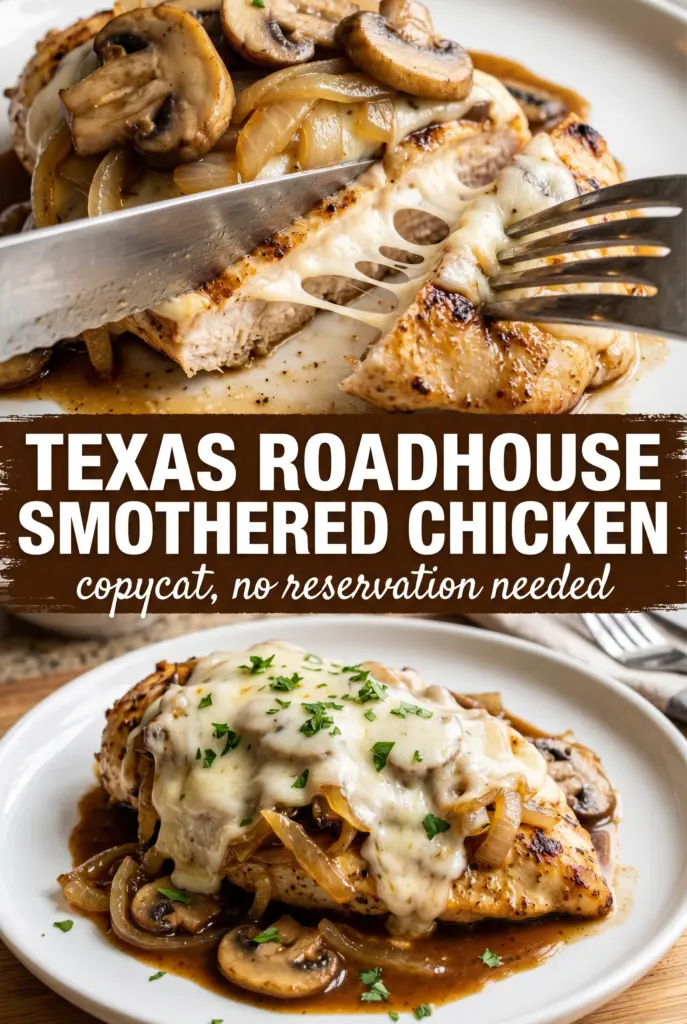
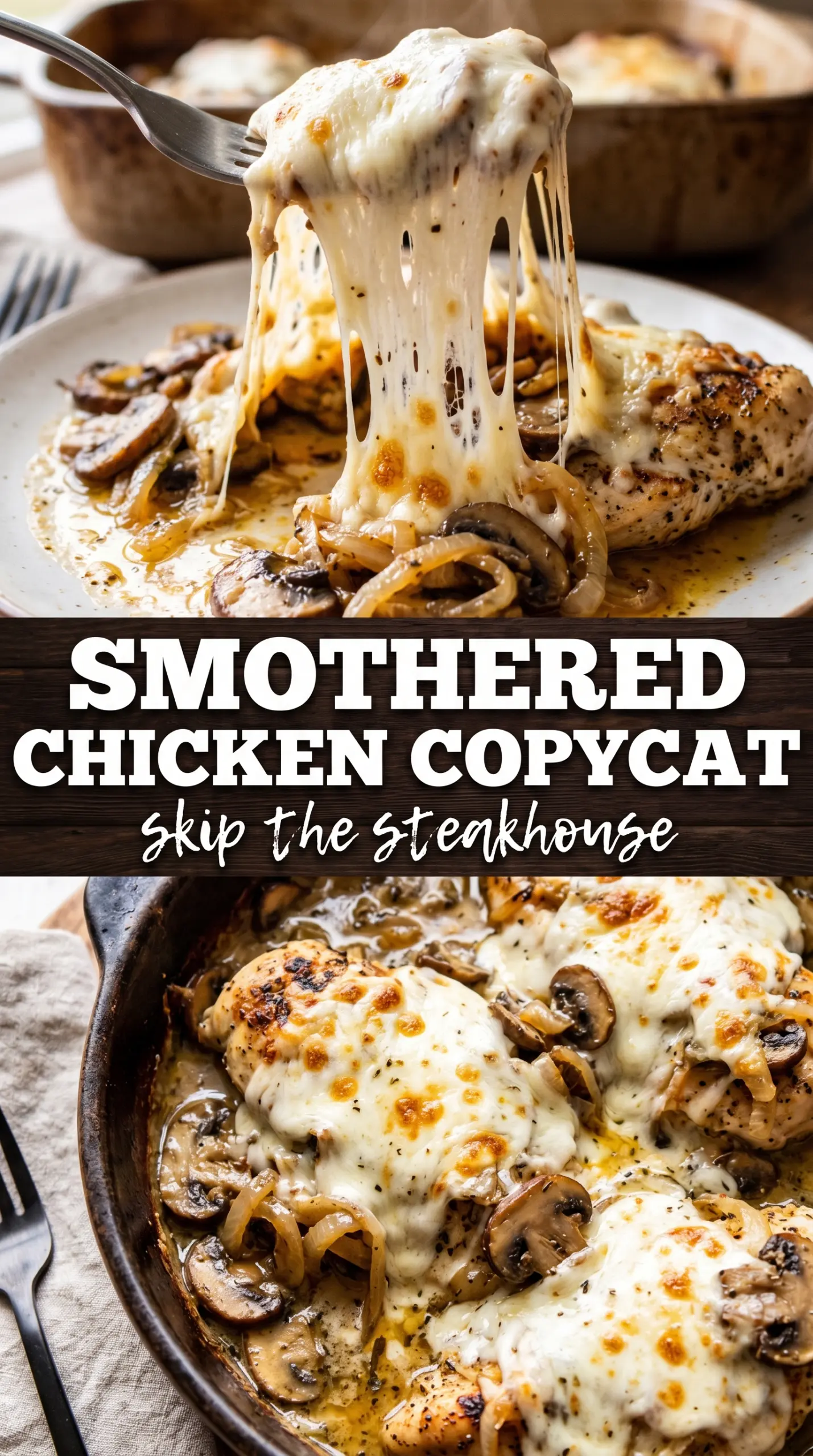
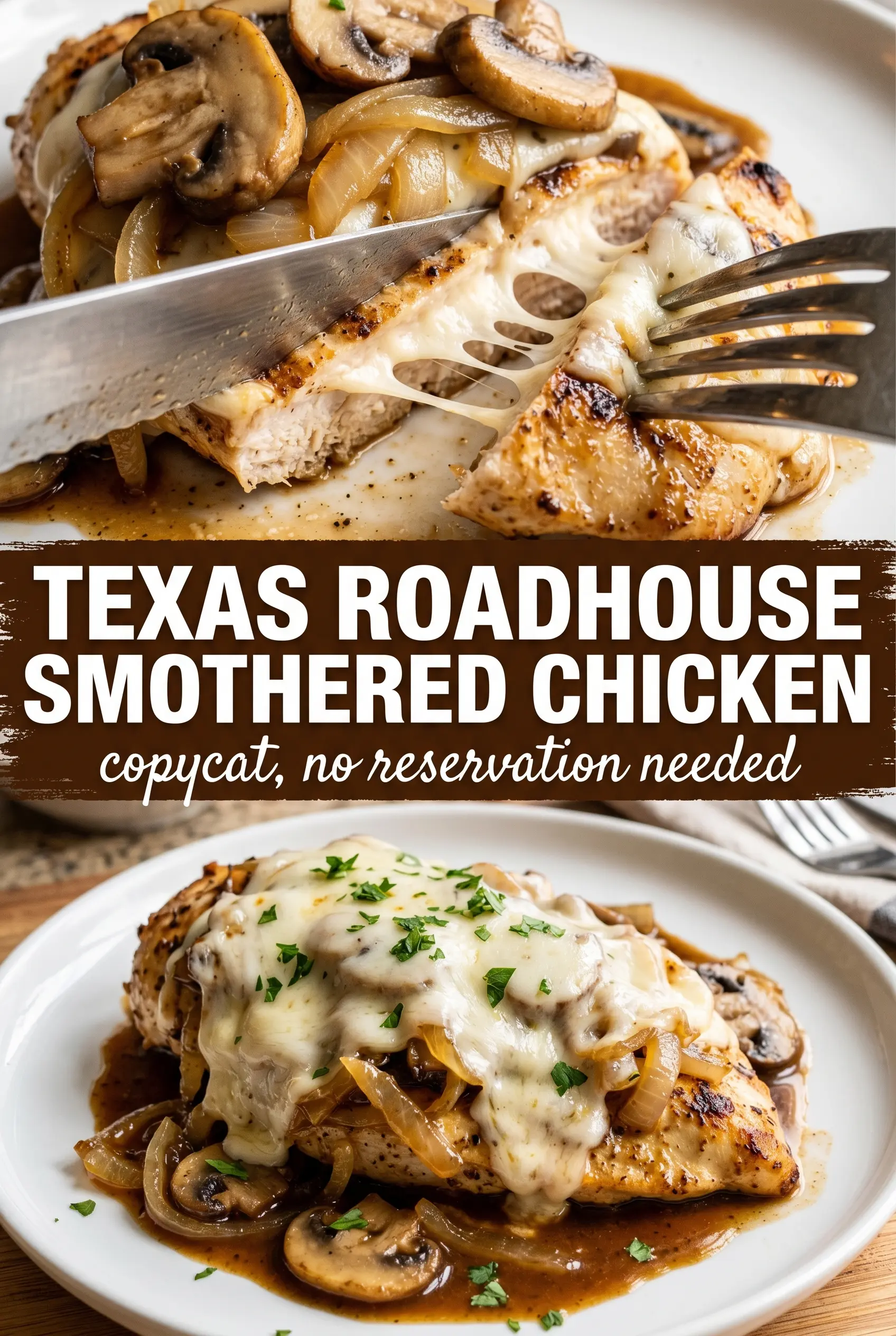
Seared chicken breasts blanketed with caramelized onions, sautéed mushrooms, and melted Monterey jack turn into the kind of skillet dinner that disappears fast and never feels fussy. The chicken stays juicy because it’s browned first, then finished under the broiler just long enough for the cheese to melt into the savory juices underneath.
What makes this version work is the order. The chicken gets a hard sear so it actually has flavor before the toppings go on, and the onions and mushrooms cook long enough to lose their raw bite and pick up some color. A splash of broth pulls the browned bits off the pan, which is where a lot of the deep, restaurant-style taste comes from.
Below you’ll find the part that matters most: how to keep the chicken from drying out, why Monterey jack melts better here than a sharper cheese, and a few smart ways to adapt the skillet if you need to change up the ingredients.
The mushrooms and onions cooked down into this glossy topping and the jack cheese melted smooth without getting greasy. I used thinner chicken breasts and they were done right on time.
Save this Texas Roadhouse smothered chicken copycat for a skillet dinner with juicy chicken, caramelized onions, and melty jack cheese.
The Trick Most Smothered Chicken Gets Wrong: Searing Before the Topping Goes On
The mistake with smothered chicken is treating the topping like it can cover up underdone or pale chicken. It can’t. The chicken needs a real sear first so the surface browns and the meat has flavor before the onions, mushrooms, and cheese go on top. If you crowd the pan or rush this part, the chicken steams instead of browns, and the whole dish tastes flat.
Thin chicken breasts help a lot here because they cook through at the same pace as the toppings finish. If yours are thick, pound them to an even thickness so the center stays juicy instead of forcing the outside to overcook. That even thickness matters more than almost anything else in the recipe.
- Boneless skinless chicken breasts — Pounding them thin keeps the cook time short and the texture tender. You can use chicken cutlets if that’s what you already have; they save time and brown beautifully.
- Monterey jack cheese — This melts smoothly and blankets the chicken without turning oily or stringy. Mozzarella works in a pinch, but jack has a little more body and a softer, richer melt for this dish.
- Mushrooms and onion — These aren’t just toppings; they’re the savory backbone of the dish. Let them cook long enough to shed moisture and caramelize a little, or they’ll taste watery instead of deeply browned.
- Chicken broth — A small splash loosens the browned bits from the skillet and turns them into the sauce underneath. Water won’t give you the same depth, so broth is worth using here.
What Each Ingredient Is Actually Doing in This Chicken Dish
- Chicken (bone-in or boneless, skin-on or skinless) — Each cut has different cooking times and flavor profiles. Let thighs reach 165°F; breasts dry out if overcooked past that.
- Sauce or braising liquid (the moisture keeper) — This prevents the chicken from drying out and adds flavor. Don’t skip it even if the recipe seems moist.
- Aromatics (garlic, onion, herbs) — These add depth and complexity. Cook them with fat so they soften and sweeten instead of staying sharp.
- Cream or butter (optional richness) — These make the dish luxurious. Add to the sauce off the boil so it stays smooth instead of breaking.
- Cheese (if using) — This adds umami and richness. Mix into the sauce or sprinkle on top; either works depending on the dish.
- Acid (lemon, vinegar, wine, or tomato) — This prevents heavy sauces from tasting flat. Add at the end so the brightness doesn’t cook off.
- Proper temperature (165°F is perfect) — Use a thermometer to avoid guessing. Pull slightly early if the chicken will rest or finish in residual heat.
- Resting time (at least 5 minutes) — This lets juices redistribute so the meat stays moist when you cut into it instead of running dry.
Building the Skillet in the Right Order So Nothing Turns Watery
Searing the Chicken First
Heat the oil until it shimmers, then lay the chicken in without moving it for the first few minutes. You want a deep golden crust that releases from the pan on its own before you turn it. If it sticks, it needs another minute; forcing it early tears the surface and leaves the pan too cool to brown the second side well.
Pull the chicken out when it’s browned but not fully cooked through. It finishes later under the broiler, and that second cook is short. If you cook it all the way in the skillet first, it will dry out once the cheese melts.
Cooking Down the Onions and Mushrooms
Add the butter to the same skillet and work the onions and mushrooms over medium heat until the onions soften and start turning amber at the edges. The mushrooms should shrink, lose their raw smell, and release their liquid before that liquid cooks off again. If the pan looks dry before the vegetables soften, the heat is too high; they need time, not a blast of heat.
This is where the dish gets its smothered character. Don’t rush the browning. Pale onions and mushrooms taste like filler, but properly cooked ones bring the savory depth that makes the whole skillet taste finished.
Deglazing and Finishing Under the Broiler
Pour in the broth and scrape up every browned spot on the bottom of the pan. That liquid should look glossy and lightly browned, not thin and gray. Nestle the chicken back in, spoon some onions and mushrooms over the top, then cover each breast with a generous layer of cheese.
Slide the skillet under the broiler only until the jack is melted and bubbling at the edges. Step away and watch closely; broilers go from perfect to scorched fast. You’re looking for melted cheese, not browned cheese.
How to Adapt the Skillet When You Need a Different Finish
Dairy-Free Version
Skip the butter and use all olive oil, then finish with a dairy-free melting cheese that you already know behaves well under heat. The topping won’t be quite as silky as Monterey jack, but the mushrooms and onions still carry the dish if you brown them well.
Low-Carb Serving Idea
Serve the chicken over cauliflower mash or sautéed greens instead of potatoes or rice. The skillet juices are the part you want to keep, and a low-carb base catches that sauce without changing the chicken itself.
Using Chicken Thighs Instead
Boneless thighs work if you want richer meat and don’t mind a little extra cook time. They stay very juicy, but they need to be cooked through before the cheese goes on, so check the thickest part before broiling.
Storage and Reheating
- Refrigerator: Store leftovers in a covered container for up to 3 days. The cheese will firm up a bit, but the flavor holds well.
- Freezer: Not ideal once the cheese and mushrooms are together. The texture gets softer after thawing, so I’d skip freezing this one if you can.
- Reheating: Warm it covered in a 325°F oven until hot, or use a skillet over low heat with a splash of broth. The common mistake is blasting it in the microwave until the chicken turns rubbery and the cheese separates.
Questions I Get Asked About This Recipe
Texas Roadhouse Smothered Chicken Copycat
Ingredients
Equipment
Method
- Season boneless skinless chicken breasts with garlic powder, onion powder, salt, and black pepper until evenly coated. Let them sit while you preheat the skillet for a consistent sear.
- Heat olive oil in an oven-safe cast iron skillet over medium-high heat, then add the chicken in a single layer. Sear for 5–6 minutes per side until golden, then set aside.
- Melt butter in the same skillet over medium heat, then add the sliced onions and mushrooms. Cook for 8–10 minutes, stirring occasionally, until caramelized.
- Pour in chicken broth and stir to deglaze the pan, loosening the browned bits into the sauce. Keep it simmering briefly so the juices lightly thicken.
- Nestle the seared chicken breasts back into the skillet on top of the mushroom-onion mixture. Spoon some of the mixture over the tops as you arrange them.
- Pile Monterey jack cheese generously on top of each chicken breast so it fully covers. Place the skillet under the broiler for 3–4 minutes until the cheese is melted and bubbly, then garnish with fresh parsley.