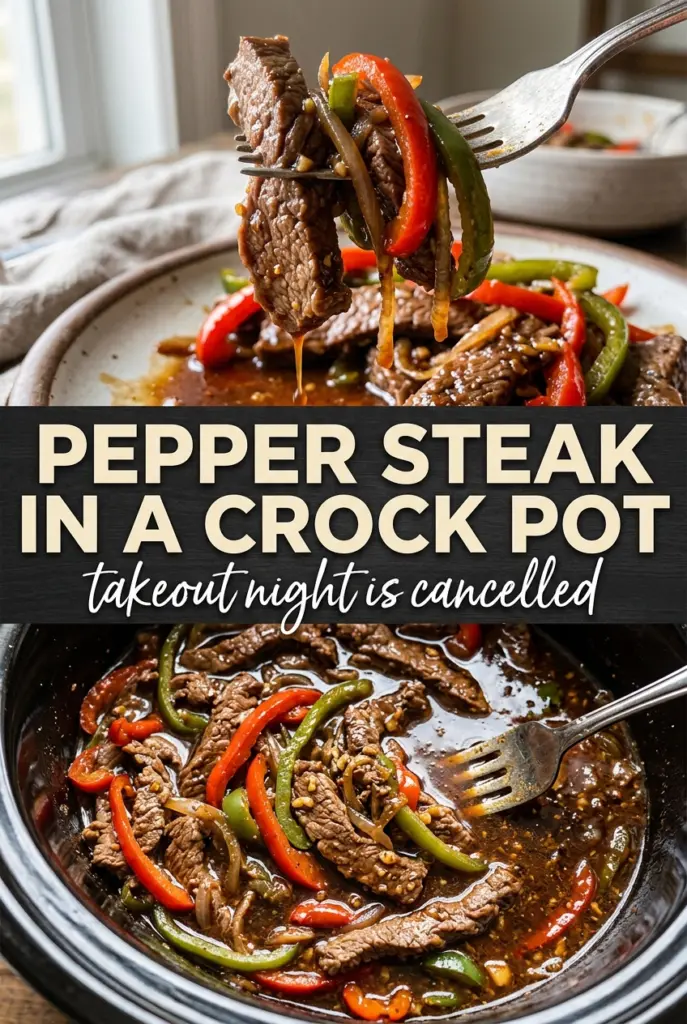
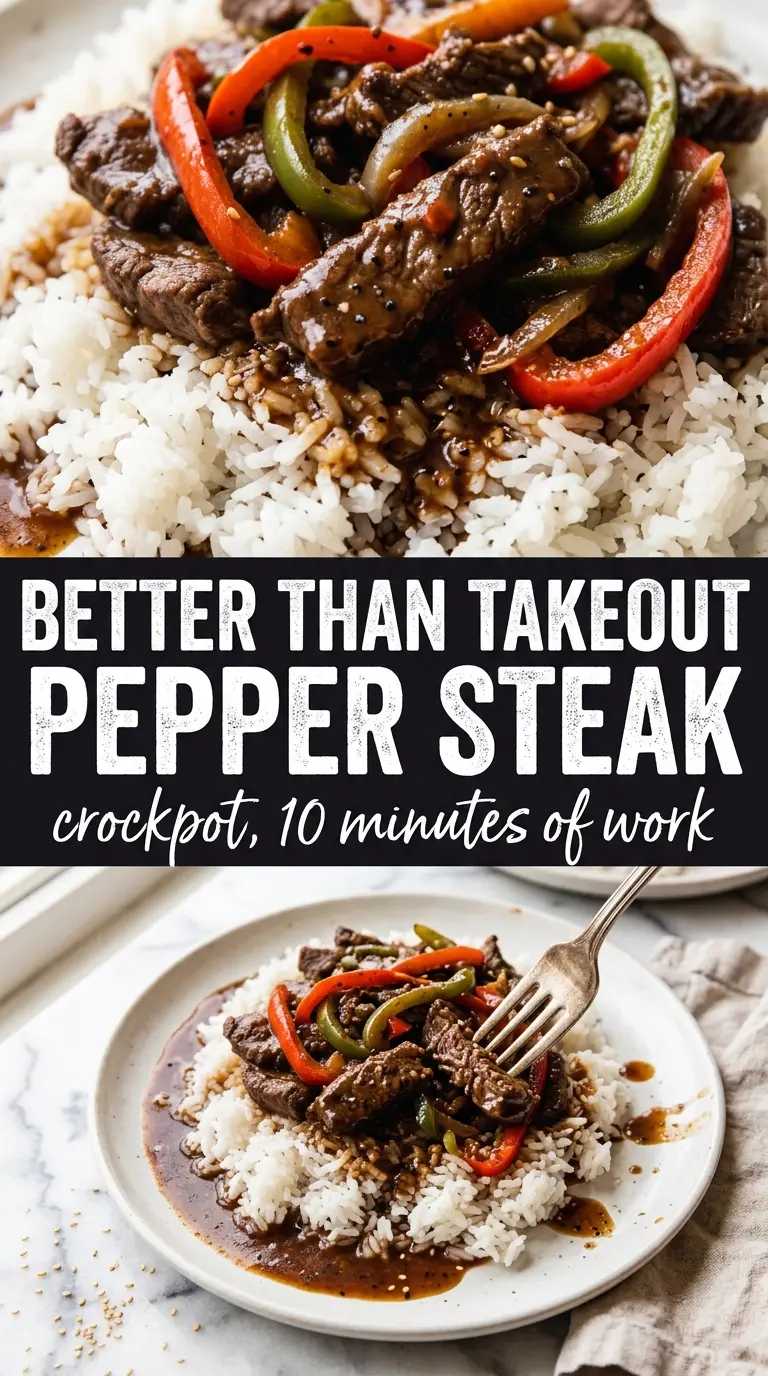
Slow-cooked pepper steak lands in that sweet spot between takeout comfort and honest home cooking: tender strips of beef, soft but still distinct peppers, and a glossy sauce that clings to rice instead of running off the plate. The slow cooker does the heavy lifting here, but the payoff depends on a few smart choices, especially how thin the steak is sliced and when the cornstarch goes in.
Flank steak is the right cut because it turns tender without falling apart when you slice it against the grain. The sauce stays balanced with soy sauce, beef broth, brown sugar, rice vinegar, and fresh ginger, which gives you that familiar Chinese-American pepper steak flavor without needing a long ingredient list. Cooking the peppers right on top of the beef lets them soften and soak up the sauce without turning to mush.
Below, you’ll find the timing that keeps the steak tender, the one step that thickens the sauce cleanly, and a few ways to adapt this dish if you want it a little lighter or need to work with what you already have.
The sauce thickened up right at the end and coated every piece of steak. I sliced the flank steak thin like you said and it came out tender instead of chewy.
Love the glossy soy-ginger sauce and tender slow-cooked steak? Save this pepper steak in a crock pot for an easy dinner that goes straight over white rice.
The Mistake That Makes Crock Pot Pepper Steak Watery
Most slow cooker pepper steak goes sideways when the vegetables give up too much liquid before the sauce has a chance to cling. Bell peppers and onions both release moisture as they cook, and if the sauce starts too thin, you end up with seasoned broth instead of a lacquered beef-and-pepper dish. The fix is simple: build the sauce with enough body from the start, then thicken it at the end with cornstarch after the beef has turned tender.
Flank steak also matters here because it rewards gentle, low-and-slow cooking as long as it’s sliced thinly against the grain. If you leave the steak in thick strips, it stays stringy no matter how long it cooks. Thin slices plus a short finishing rest in the sauce give you the best texture.
- Flank steak — Thin slicing against the grain is what keeps this cut tender. Skirt steak can work, but it cooks a little looser and needs the same thin-slice treatment.
- Soy sauce — This is the backbone of the sauce, so use a brand you like the taste of. Low-sodium soy sauce works well if you want more control over the salt.
- Beef broth — It adds depth that water can’t give you. If you’re out of it, use water in a pinch, but the sauce will taste flatter.
- Rice vinegar and brown sugar — These keep the sauce balanced. The vinegar keeps it from tasting heavy, while the sugar rounds out the salt and ginger.
- Cornstarch slurry — Don’t add it early. It needs heat at the end to thicken properly and turn the sauce glossy instead of cloudy.
- Fresh ginger and garlic — Fresh is worth it here. Powdered versions work, but the finished dish won’t have the same sharp, clean aroma.
What Each Ingredient Is Actually Doing in This Slow Cooker Recipe
- Protein (meat, beans, or both) — Slow cooking breaks down tough cuts beautifully. This is where inexpensive cuts become delicious.
- Liquid (broth, sauce, or water) — This is the cooking medium and becomes part of the final dish. Proper ratio is essential.
- Vegetables (variety, cut by size) — Layer them by cooking time so everything finishes together. Hard vegetables first, soft last.
- Aromatics (onion, garlic, herbs) — These mellow and sweeten during long cooking. Mince finely for even distribution.
- Seasonings (salt, spices, Worcestershire) — Build flavor as you layer ingredients. Taste midway and adjust as needed.
- Thickening agent (if needed) — Cornstarch or flour thickens liquid at the end. Add in the last hour so it cooks through.
- Acid (lemon, vinegar, wine) — This brightens flavors that slow cooking can dull. Add near the end to preserve freshness.
- Low heat for 6-8 hours (the secret) — Gentle, long cooking transforms tough ingredients into tender, delicious meals. Patience pays off.
How to Keep the Steak Tender and the Sauce Glossy
Starting with the Beef
Lay the sliced flank steak in the bottom of the slow cooker first so it sits closest to the heat and starts softening right away. Thin slices cook more evenly, and cutting against the grain shortens the muscle fibers so the beef stays pleasant to chew. If the pieces are thick or uneven, the outside can go soft while the middle stays stubborn.
Layering the Vegetables and Sauce
Scatter the peppers, onion, and garlic over the beef, then whisk the sauce ingredients until the brown sugar dissolves before you pour them in. That little bit of whisking matters because undissolved sugar can settle in the crock and leave the sauce uneven. The peppers will soften as they cook, but they should still hold their shape instead of disappearing into the sauce.
Cooking Until the Beef Slices Cleanly
Cook on low for 5 to 6 hours if you want the most forgiving texture. High heat works in a pinch, but it leaves less margin if your steak is sliced a little thicker than ideal. The beef is ready when it yields easily with a fork and the peppers are soft but not collapsed into ribbons.
Thickening at the End
Mix the cornstarch with cold water until it looks smooth and milky, then stir it into the hot slow cooker and give it 15 minutes on high. If you add cornstarch straight in, it clumps. If you skip the final burst of heat, the sauce stays loose and won’t coat the rice the way it should.
What to Change When You Need a Different Version of Pepper Steak
Gluten-Free Pepper Steak
Use a gluten-free soy sauce or tamari in the same amount. The flavor stays close to the original, but tamari usually tastes a touch rounder and less sharp. Check your broth too, because some brands hide gluten there.
Lower-Sugar Sauce
Cut the brown sugar down to 1 tablespoon if you want a less sweet sauce. You’ll lose a little of the takeout-style gloss, but the vinegar and ginger still keep the sauce balanced. Don’t remove the sugar completely unless you like a sharper, salt-forward finish.
Swap the Beef Cut
Sirloin is a solid backup if flank steak isn’t available. Slice it thin and keep the cook time on the shorter side, because it doesn’t need quite as long to turn tender. Chuck will work, but it makes the dish heavier and gives you a softer, stew-like result.
Adding Heat
Add a pinch of crushed red pepper flakes or a sliced fresh chili to the sauce if you want a little bite. The heat works best in the background, not as a major flavor shift, so start small and taste before adding more.
Storage and Reheating
- Refrigerator: Store leftovers in an airtight container for up to 4 days. The peppers soften a little more as they sit, but the flavor deepens overnight.
- Freezer: It freezes well for up to 2 months. Cool it completely first, then pack it with some sauce so the beef doesn’t dry out when reheated.
- Reheating: Warm it gently on the stove over medium-low or in the microwave at short intervals. If the sauce looks thick after chilling, add a splash of broth or water before heating so it loosens instead of turning sticky.
Answers to the Questions Worth Asking
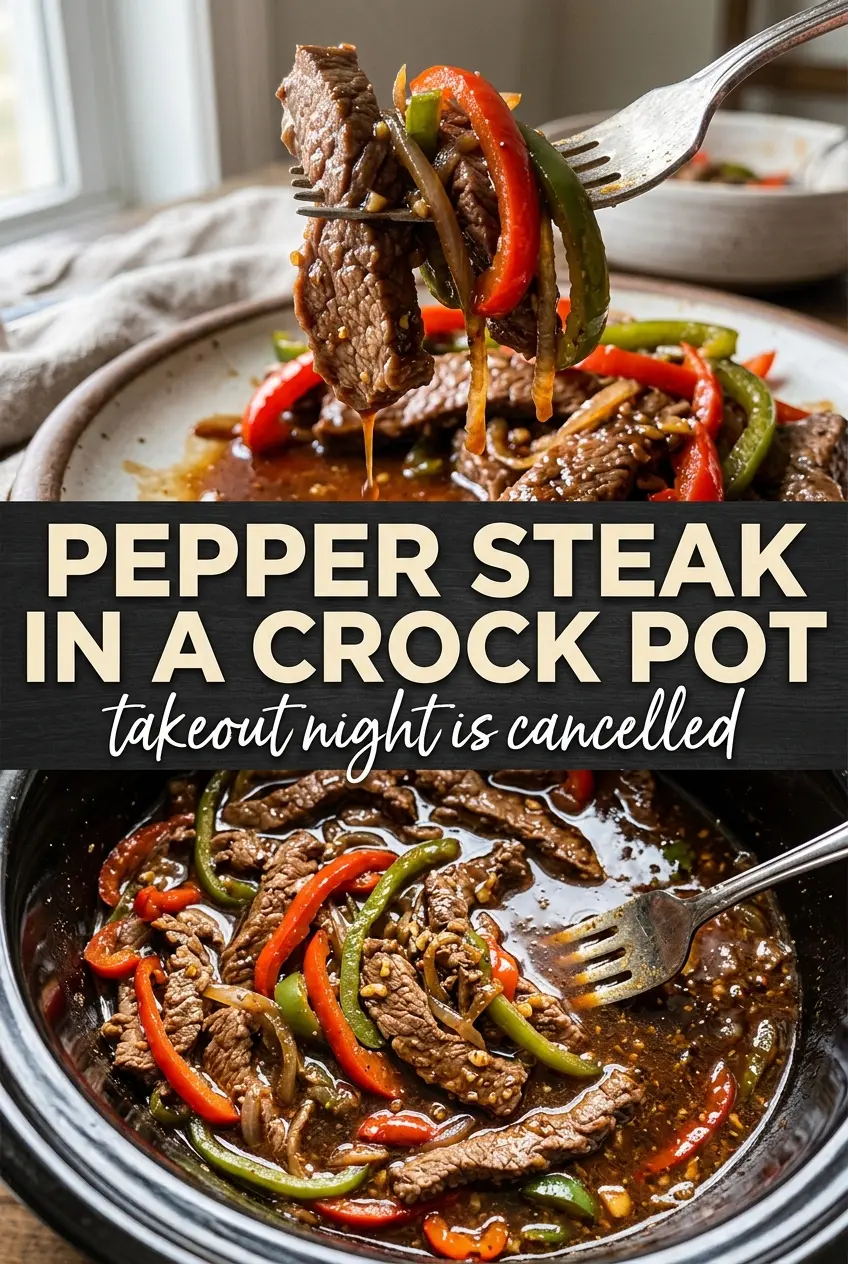
Pepper Steak in a Crock Pot
Ingredients
Equipment
Method
- Place the thinly sliced flank steak into the slow cooker.
- Layer the red bell pepper, green bell pepper, yellow bell pepper, onion, and garlic over the steak.
- Whisk together soy sauce, beef broth, brown sugar, rice vinegar, and grated fresh ginger, then pour the mixture over the steak and vegetables.
- Cook on low for 5–6 hours until the steak is tender, or cook on high for 2.5–3 hours.
- Whisk cornstarch and cold water together, then stir the slurry into the slow cooker.
- Cook on high for 15 minutes until the sauce thickens and coats the steak.
- Serve the pepper steak over cooked white rice and garnish with sesame seeds and green onions.