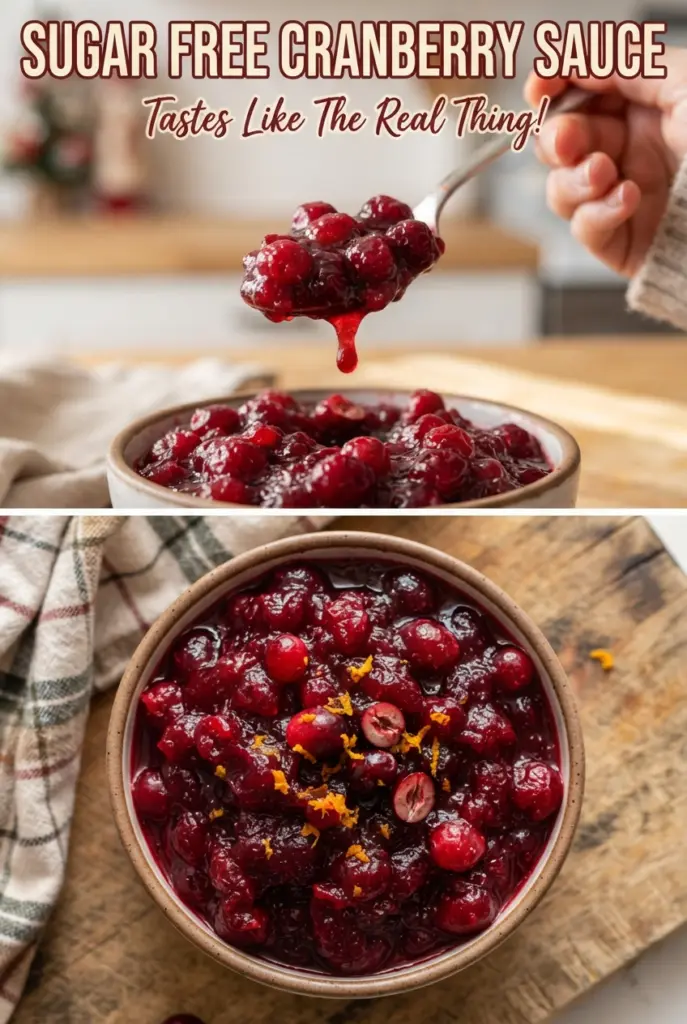
Glossy cranberry sauce gets its best texture when the berries burst just enough to thicken the pot on their own. This sugar free version lands right where it should: tart, bright, and spoonable, with a clean finish instead of the heavy sweetness that can flatten the fruit. It tastes like the cranberry sauce people hope for on the table, not a compromise.
The trick is starting with the sweetener dissolved in the water before the cranberries go in. That gives the berries a head start in a balanced syrup, and it helps the sauce cook evenly instead of turning watery at the end. Orange zest goes in off the heat so the citrus stays fresh and fragrant instead of fading into the pot. Cinnamon adds warmth without making the sauce taste spiced in a dessert way.
Below, I’ve included the small timing cues that matter most, plus a few smart swaps if you’re using allulose, monk fruit, or want a slightly looser sauce for serving warm.
The berries burst at the 10-minute mark and the sauce thickened up beautifully after chilling. I used allulose, and it tasted bright instead of overly sweet — exactly what I wanted with roast turkey.
Love the tart, glossy finish of this sugar free cranberry sauce? Save it for turkey dinners and holiday plates that need a bright, make-ahead side.
The Reason Cranberry Sauce Turns Watery After It Cools
Cranberry sauce always looks thinner in the pan than it will in the fridge, and that’s where a lot of people stop too early. The berries need enough simmer time to split and release pectin, which is what gives the sauce body once it cools. If you pull it the second it starts looking jammy in the pot, it can set up loose and pooled on the plate instead of spooning cleanly.
The other place this recipe stays steady is the sweetener choice. Monk fruit blends and allulose both work, but they behave a little differently from sugar, so a brief simmer and a proper chill matter more here than in a classic syrup. The sauce should still look a touch loose when you take it off the heat. It thickens as the berries settle and cool.
What Each Ingredient Is Doing In This Cranberry Sauce
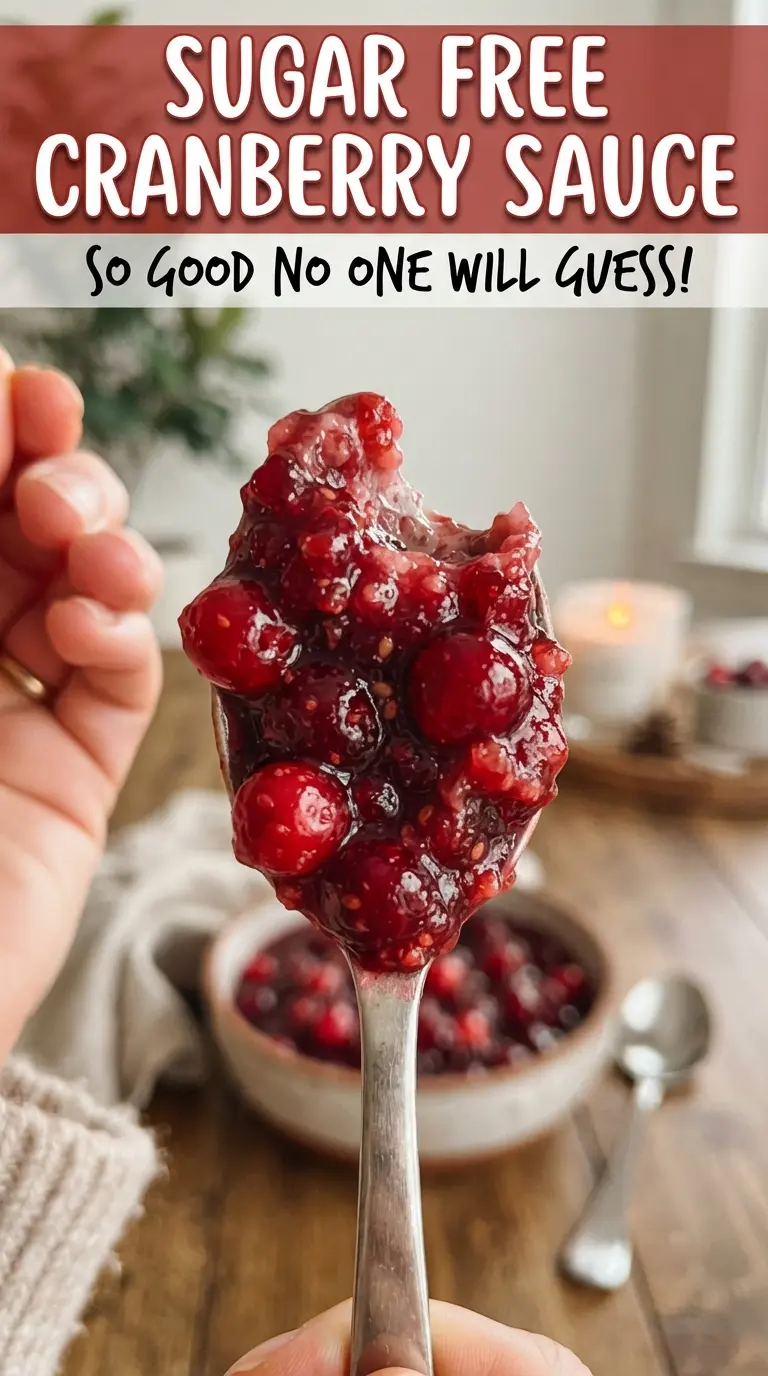
- Fresh cranberries — These are the body of the sauce. Once they burst, they give you the natural pectin and tart flavor that make cranberry sauce set up without starch or added sugar.
- Monk fruit or allulose sweetener — This balances the sharp cranberry tang without changing the color the way some sugar substitutes can. Allulose gives the smoothest, most sugar-like finish; monk fruit blends vary a lot, so taste before chilling and add a little more if the fruit still tastes too sharp.
- Orange zest — Zest lifts the whole pot with fresh citrus oils. Add it at the end so it stays bright; if you simmer zest for the full cook, the flavor turns dull and muddy.
- Ground cinnamon — Just enough to round out the cranberries without turning the sauce into pie filling. It works in the background, especially when the sauce is served cold next to savory food.
How To Cook It So The Berries Burst At The Right Time
Dissolve The Sweetener First
Bring the water and sweetener to a boil and stir until the granules disappear. That keeps the cranberries from tasting unevenly sweet and gives you a cleaner sauce from the start. If you dump everything in at once, the sweetener can sit on the bottom and the berries won’t cook as evenly.
Let The Cranberries Pop, Don’t Rush The Simmer
Add the cranberries, cinnamon, and salt, then lower the heat enough for a steady simmer. You’ll hear the berries start to split and pop, and the liquid will turn from thin and watery to glossy and slightly syrupy. Stir now and then so the bottom berries don’t scorch, especially if your pan runs hot.
Finish With Zest Off The Heat
Pull the pan from the burner once most of the berries have burst and the sauce coats a spoon. Stir in the orange zest while the sauce is still hot enough to bloom the oils, but not boiling hard enough to cook them away. Taste before chilling; cranberry sauce always tastes a little sharper warm, and a small extra spoonful of sweetener can be the difference between tart and balanced.
How To Adapt This For Different Sweeteners, Serving Styles, And Make-Ahead Needs
Allulose For The Smoothest Finish
Allulose gives the most sugar-like texture and a softer, rounder sweetness. It also keeps the sauce glossy after chilling, which is handy if you want cranberry sauce that looks polished on the table.
Monk Fruit Blend When You Want A Firmer Sweetness
Monk fruit blends can read a little brighter and more concentrated, so start with the listed amount and taste before chilling. If the sauce seems sharp, add another small spoonful while it’s still warm, since cold cranberry sauce tastes less sweet than it does in the pot.
Chunkier Or Smoother Texture
For a chunkier sauce, stop cooking as soon as most berries burst and leave a few whole. For a smoother version, mash the berries lightly with a spoon before chilling. Both versions thicken well, but the smoother one spreads more easily on leftovers and sandwiches.
Storage and Reheating
- Refrigerator: Store in an airtight container for up to 1 week. The sauce will thicken as it chills.
- Freezer: It freezes well for up to 2 months. Thaw overnight in the refrigerator and stir before serving; the texture may loosen slightly after thawing but stays spoonable.
- Reheating: Cranberry sauce is usually best served cold or room temperature, but if you want it warm, heat it gently on low. High heat can make it splatter and can thin the texture before it has a chance to settle again.
Answers To The Questions Worth Asking
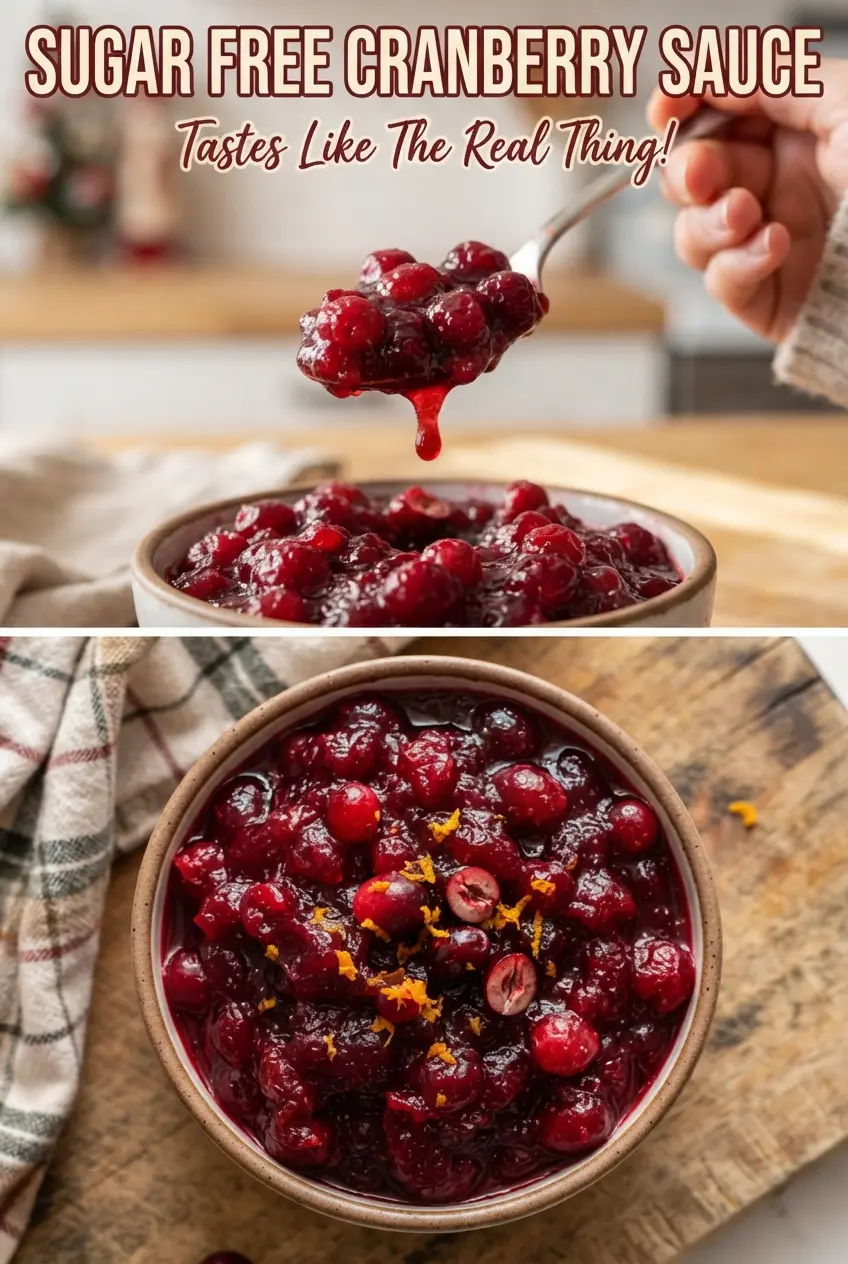
Sugar Free Cranberry Sauce
Ingredients
Equipment
Method
- Bring the water and sweetener to a boil in a saucepan, stirring until dissolved. Visual cue: the liquid turns clear and fully uniform as the sweetener dissolves.
- Add the cranberries, cinnamon, and salt. Visual cue: you should see berries submerged and cinnamon dispersing through the liquid.
- Simmer for 10–12 minutes until the berries burst and the sauce thickens, stirring occasionally. Visual cue: the sauce becomes glossy and coats the back of a spoon.
- Remove from heat and stir in the orange zest, then taste and add more sweetener if needed. Visual cue: orange zest speckles evenly through the red sauce.
- Cool and chill before serving. Visual cue: the sauce thickens more as it cools and the surface looks smooth and set.


