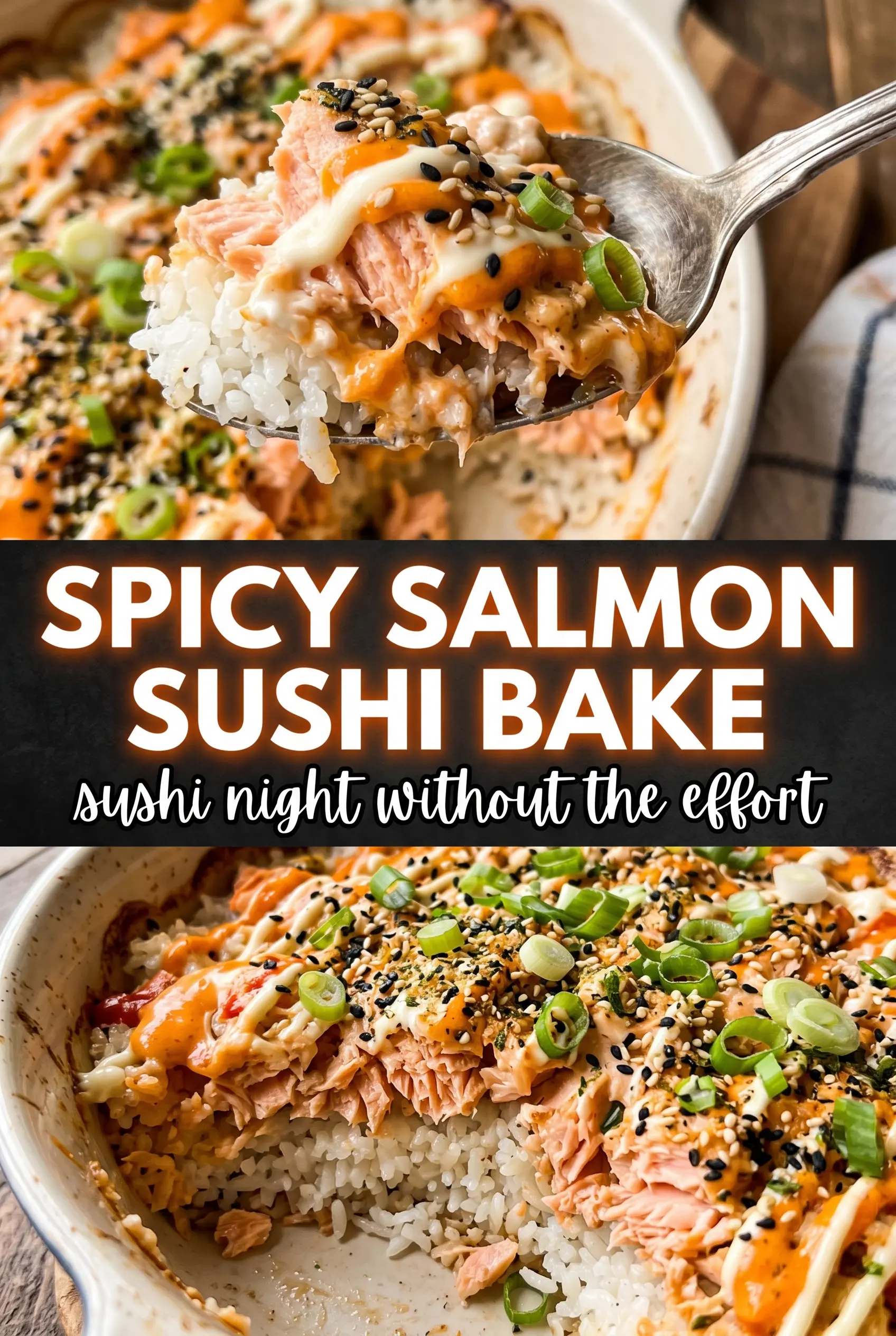
Golden, bubbling spicy salmon sushi bake brings everything people love about sushi into one shareable pan: seasoned rice on the bottom, a creamy salmon topping in the middle, and a salty-sweet hit of furikake on top. What comes out of the oven is rich without feeling heavy, with crisp edges where the rice meets the pan and a soft, spoonable center that scoops up beautifully with nori.
This version works because the rice is seasoned before it ever goes into the oven, which gives the whole dish that sushi-bar taste instead of just tasting like baked salmon over rice. The salmon mixture also uses softened cream cheese and Japanese mayo for body, so it turns lush and spreadable instead of drying out under the heat. Sriracha brings warmth, not just heat, and the soy sauce keeps the top from tasting flat.
Below you’ll find the small details that matter: how to keep the rice from going bland, why the topping should be mixed until smooth before baking, and the few swaps that still give you a great result when you need to work with what you have.
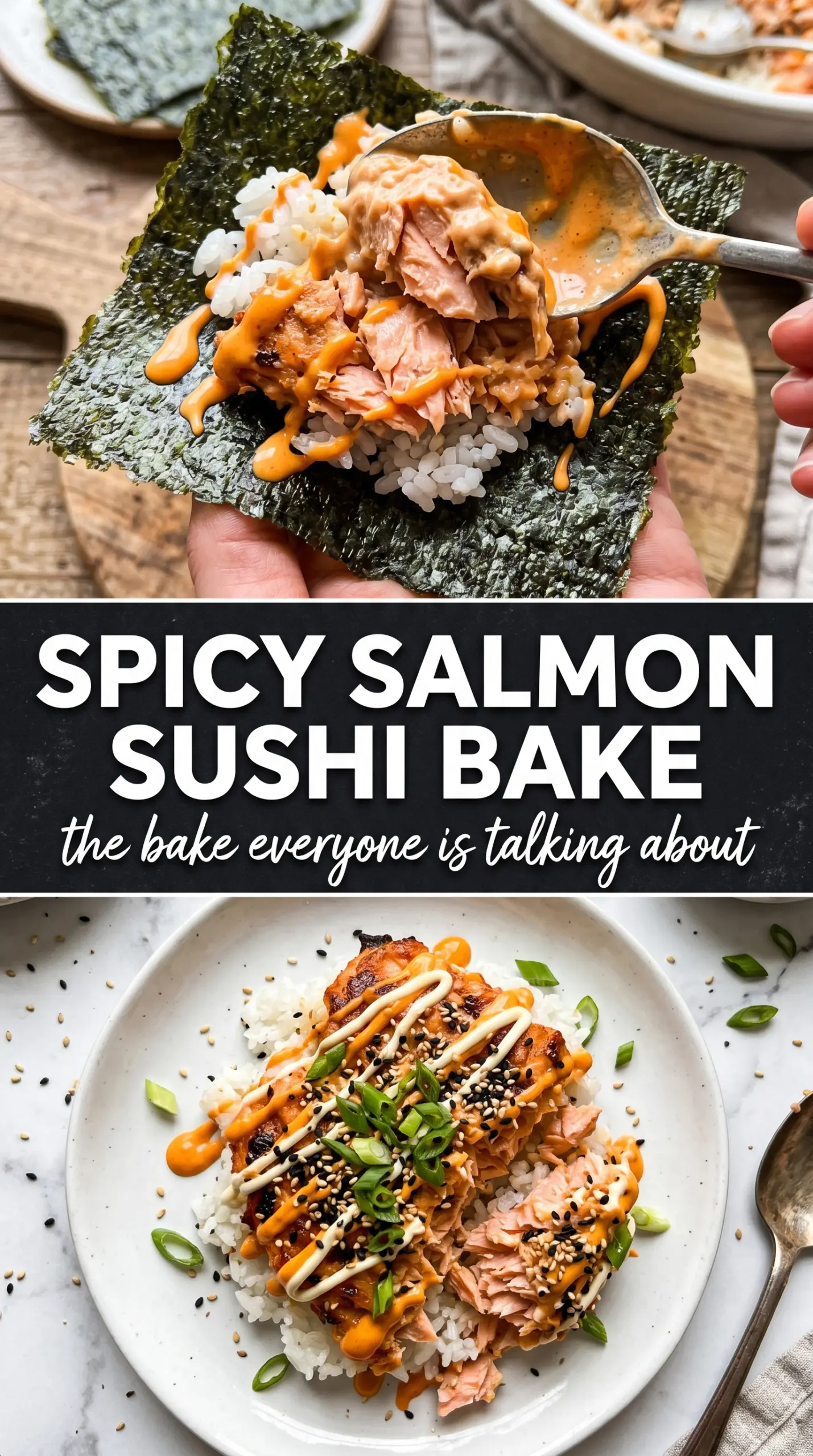
The rice stayed fluffy, the salmon topping baked into this creamy layer, and the furikake on top gave it that little salty crunch. I served it with nori sheets and my husband kept going back for more.
Love a creamy, spicy salmon sushi bake with crispy-edged rice? Save this one for nights when you want sushi flavors without rolling a single thing.
The Rice Layer That Keeps This from Tasting Flat
A sushi bake can fall apart fast if the rice is treated like a plain casserole base. The seasoning needs to go into the warm rice before baking so every bite has that familiar sushi rice tang. If the rice goes in bland, the topping has to do all the work, and the dish ends up tasting heavy instead of balanced.
The other thing that matters is the pan. Spread the rice into an even layer and press it down gently, not hard. You want a compact base that holds together when scooped, but if you pack it like a brick, it turns dense and loses the soft bite that makes this dish work.
What Each Ingredient Is Actually Doing in This Bake
- Salmon — Use fully cooked, flaked salmon for the best texture here. It should fold into the creamy topping instead of turning stringy or watery. Leftover baked salmon works well, and even poached salmon is fine as long as it’s well drained.
- Sushi rice — This is what gives the dish its sticky, scoopable base. Regular long-grain rice won’t cling the same way, so the bites fall apart more easily.
- Rice vinegar, sugar, and salt — This is the seasoning that makes the rice taste like sushi rice instead of plain white rice. Stir it in while the rice is still warm so it absorbs evenly.
- Cream cheese — Softened cream cheese gives the salmon topping its rich, bakeable texture. Cold cream cheese leaves little lumps, so let it sit out before mixing.
- Japanese mayonnaise — Kewpie mayo brings a deeper, eggier richness than standard mayo. You can use regular mayo in a pinch, but the flavor will be slightly flatter.
- Sriracha and soy sauce — Sriracha gives the heat, soy sauce adds salt and depth. Together they keep the topping from tasting one-note.
- Furikake — This adds the savory, salty finish that makes the top layer taste complete. Don’t skip it if you can help it; it’s one of the biggest reasons the dish tastes like sushi instead of just salmon and rice.
- Nori sheets and green onions — These are serving ingredients, but they matter. Nori turns each scoop into a hand-held bite, and green onions cut through the richness at the end.
How to Layer It So the Top Bakes Creamy, Not Dry
Season the Rice While It’s Warm
Mix the rice vinegar, sugar, and salt into the hot rice until it looks glossy and evenly seasoned. Warm rice absorbs the seasoning better, and that’s what gives the bottom layer its sushi-style flavor. If the rice has cooled too much, the seasoning sits on the surface and the finished bake tastes uneven. Spread it into a greased 9×13 dish in an even layer, then sprinkle on the first round of furikake.
Build a Smooth Salmon Topping
Stir the flaked salmon with softened cream cheese, Japanese mayo, sriracha, and soy sauce until the mixture looks creamy and spreadable. If the cream cheese is still cold, keep mixing until the lumps disappear, because those pockets won’t melt smoothly in the oven. The topping should hold together when you spread it, but it shouldn’t be stiff.
Bake Until the Edges Bubbly
Slide the dish into a 400°F oven and bake until the top looks lightly golden and the edges are bubbling. That bubbling tells you the topping has heated through and the flavors have melded. If you leave it in until the whole surface browns, the salmon can dry out and the cream cheese can start to tighten.
Finish Fast and Serve Right Away
Drizzle with extra sriracha mayo, scatter over the green onions, and serve immediately with nori sheets. The contrast matters here: hot, creamy rice with cool toppings and crisp nori is what makes each bite feel complete. Once the bake sits too long, the rice tightens up, so have everything ready before it comes out of the oven.
How to Adapt This for Different Tables and Tastes
Dairy-Free Version
Swap the cream cheese for a dairy-free cream cheese that softens well and holds its shape in the oven. The topping will still be creamy, but it may bake up a little less rich, so the extra drizzle of spicy mayo matters more here.
No Kewpie Mayo on Hand
Regular mayonnaise works, but the topping will taste sharper and a little less round. Add a tiny pinch of sugar or a few drops of rice vinegar if you want to bring back some of the softness that Kewpie naturally has.
Make It Milder
Cut the sriracha down to 1 tablespoon and keep the extra for drizzling at the table. That gives you the same savory-creamy balance without the heat taking over the salmon.
Gluten-Free Version
Use gluten-free soy sauce or tamari and check that your furikake is certified gluten-free. The texture and structure stay the same, so this is one of the easiest swaps to make without changing the dish.
Storage and Reheating
- Refrigerator: Store leftovers covered for up to 3 days. The rice will firm up a bit, but the flavor stays good.
- Freezer: It freezes, but the cream cheese topping changes texture after thawing, so I don’t recommend it if you’re chasing the original creamy result.
- Reheating: Reheat covered in a 325°F oven until warmed through, or microwave in short bursts with a damp paper towel over the top. Don’t blast it on high heat, or the salmon dries out and the rice gets tough.
Answers to the Questions Worth Asking
Spicy Salmon Sushi Bake
Ingredients
Equipment
Method
- Season the cooked sushi rice with rice vinegar, sugar, and salt, then spread evenly in a greased 9x13 baking dish with a level top.
- Sprinkle 1 tablespoon furikake over the rice layer so each bite has a light seasoning layer.
- Mix the flaked salmon with softened cream cheese, Japanese mayonnaise (Kewpie), sriracha, and soy sauce until combined, then spread evenly over the rice.
- Sprinkle the remaining furikake over the top to create a textured, flavorful crust as it bakes.
- Bake at 400°F for 15–20 minutes until the top is golden and bubbling at the edges, then remove from the oven.
- Drizzle with extra sriracha mayo, top with green onions, and serve immediately with nori sheets for scooping.