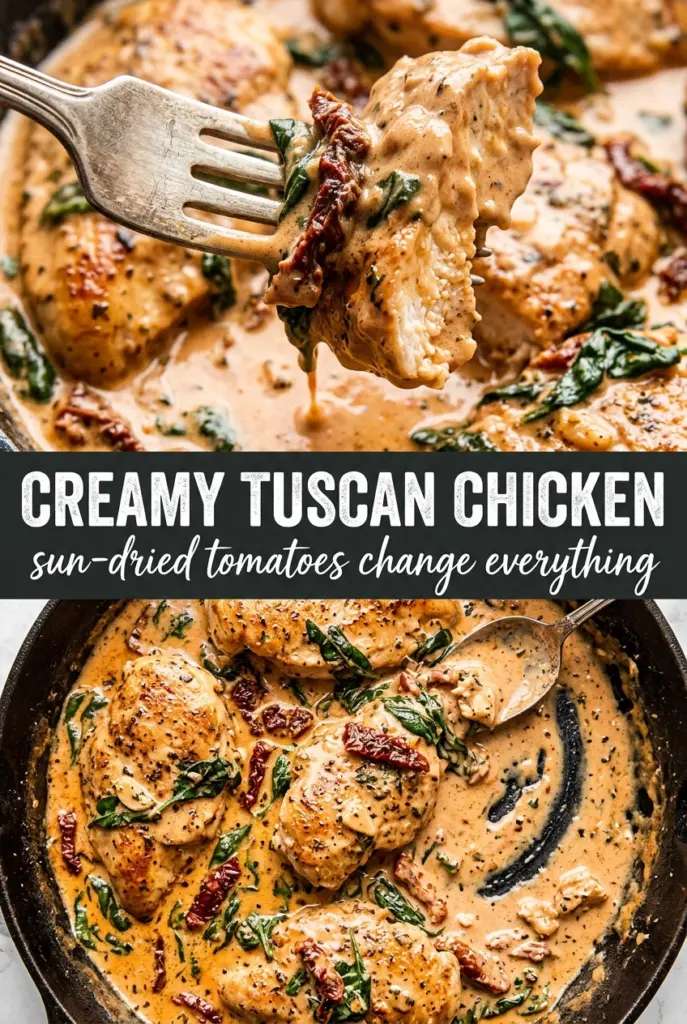
Golden seared chicken breasts in a silky sun-dried tomato and spinach cream sauce earn their place in the regular dinner rotation because they deliver a restaurant-style pan sauce without any fussy steps. The chicken stays juicy, the sauce clings to every slice, and the whole skillet smells like garlic, Parmesan, and basil the second it hits the table.
What makes this version work is the order. The chicken gets a deep sear first, which leaves those browned bits in the pan for the sauce to pick up, and the cream goes in after the broth has loosened everything from the bottom. That keeps the sauce smooth instead of greasy or flat. Sun-dried tomatoes bring concentrated sweetness, while spinach softens into the sauce at the very end so it stays bright and fresh.
Below, I’ll walk through the part that matters most: building a sauce that stays glossy and coats the spoon, plus a few smart swaps if you need to adjust for what’s in your kitchen.
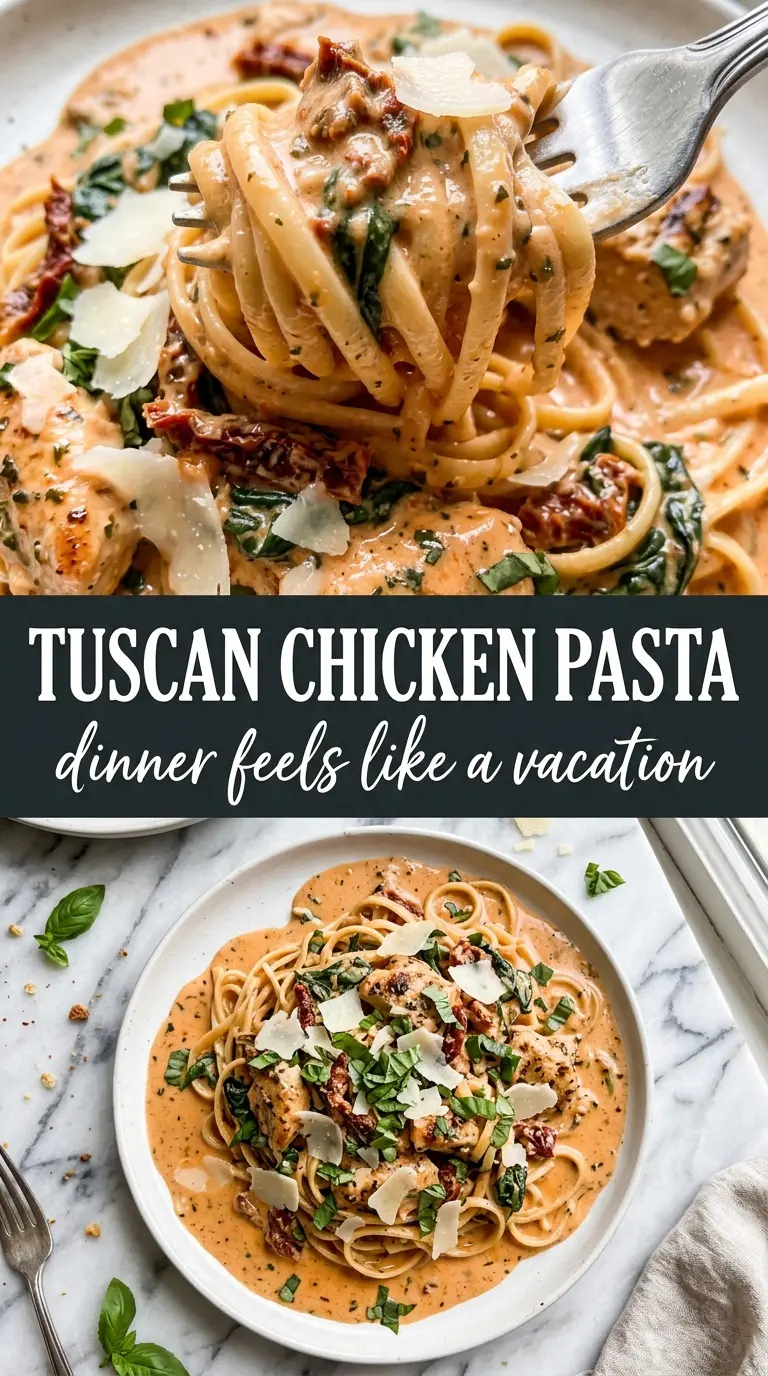
The sauce thickened up exactly the way you described, and the chicken stayed juicy instead of drying out. I served it with pasta, and my husband went back for seconds before I even sat down.
Save this Creamy Tuscan Chicken for the nights when you want a silky skillet sauce, juicy seared chicken, and dinner that feels special without extra cleanup.
The Reason the Sauce Stays Silky Instead of Breaking
The biggest mistake with creamy skillet chicken is rushing the sauce after the pan comes off the heat. If the pan is scorching hot when the cream and Parmesan go in, the dairy can tighten up, turn grainy, or separate. This recipe works because the broth goes in first and does the heavy lifting: it loosens the browned bits, cools the pan a touch, and creates the base the cream can settle into.
The other detail that matters is reducing the sauce before the spinach goes in. You want the cream to simmer until it lightly coats a spoon, not boil hard and race past that point. Once the Parmesan melts smoothly into the cream, the sauce thickens on its own. That’s when the spinach gets folded in, so it wilts without watering everything down.
What Each Ingredient Is Actually Doing in the Skillet
- Chicken breasts — Boneless, skinless breasts give you that classic Tuscan chicken presentation and slice cleanly for serving. If yours are thick, pound them to an even thickness so they cook through before the outside overcooks.
- Sun-dried tomatoes in oil — These bring concentrated tomato sweetness and a little richness from the oil-packed jar. The drained, sliced tomatoes are best here; dry-packed tomatoes need extra soaking and won’t give the same mellow texture.
- Heavy cream — This is what makes the sauce plush and stable. Half-and-half can work in a pinch, but the sauce will be thinner and less forgiving once the Parmesan goes in.
- Parmesan — Use finely grated Parmesan so it melts into the sauce instead of clumping. Pre-shredded cheese often has anti-caking agents that can make the sauce a little grainy.
- Baby spinach — It wilts fast and keeps its shape just long enough to give the skillet some color. Add it at the end; if it cooks too long, it disappears and can thin the sauce more than you want.
- Chicken broth — This deglazes the pan and carries the browned flavor into the sauce. Don’t skip it; without that little bit of liquid, the cream has less to build on.
- Italian seasoning and red pepper flakes — The seasoning rounds out the sauce, and the pepper flakes add a soft background heat. If you’re serving kids or anyone sensitive to spice, cut the flakes back or leave them out.
How to Build the Skillet in the Right Order
Getting a Deep Sear on the Chicken
Season the chicken well before it ever touches the pan. You want a loud sizzle the second it hits the oil, and you want to leave it alone long enough for a golden crust to form. If it sticks when you try to lift it, it’s not ready yet. Give each side 5 to 6 minutes, depending on thickness, until the exterior is browned and the center reaches 165°F.
Pulling the Flavor Off the Bottom of the Pan
After the chicken comes out, the pan should still have all the browned bits stuck to it. That’s the flavor base. Add the garlic and let it move for just 30 seconds, then add the sun-dried tomatoes and broth. The broth should hiss and loosen everything immediately. If the garlic darkens before the liquid goes in, it will turn bitter and the whole sauce will taste off.
Reducing the Cream Into a Glossy Sauce
Once the broth has scraped the pan clean, stir in the cream, Parmesan, Italian seasoning, and red pepper flakes. Keep the heat at a steady simmer, not a hard boil. You’re waiting for the sauce to thicken enough to coat the back of a spoon. If it looks too thin after a few minutes, give it a little more time; if it starts to split, the heat is too high.
Finishing With Spinach and Basil
Stir the spinach in just until it wilts and turns dark green. It should look soft, not collapsed into nothing. Return the chicken to the skillet and spoon the sauce over the top so it reheats gently in the sauce instead of drying out. Finish with fresh basil right before serving so it stays bright and fragrant.
How to Adapt This Creamy Tuscan Chicken Without Losing the Sauce
Dairy-Free Version With Coconut Cream
Swap the heavy cream for full-fat coconut cream and use a dairy-free Parmesan-style alternative or skip the cheese entirely. The sauce will still turn silky, but it will taste a little sweeter and less sharp than the original. Keep the heat low so the coconut cream doesn’t separate.
Gluten-Free and Low-Carb as Written
This recipe is naturally gluten-free and low-carb as long as your chicken broth and Parmesan are labeled gluten-free. Serve it on its own, over cauliflower mash, or with zucchini noodles if you want to keep the meal light without losing the sauce.
Thighs Instead of Breasts
Boneless skinless thighs work well if you want richer meat and a little more wiggle room on cook time. They usually need a few extra minutes in the skillet, but they stay tender and pair beautifully with the creamy sauce.
Make the Sauce a Little Lighter
Use half-and-half instead of heavy cream if you want a lighter skillet, but expect a thinner sauce and a little less richness. Let it simmer gently and reduce a bit longer so it still coats the chicken instead of pooling around it.
Storage and Reheating
- Refrigerator: Store leftovers in an airtight container for up to 3 days. The sauce will thicken as it chills.
- Freezer: I don’t recommend freezing this one. Cream sauces can separate after thawing, and the spinach turns soft in a way that hurts the texture.
- Reheating: Rewarm gently in a skillet over low heat with a splash of broth or cream. Don’t blast it in the microwave or the sauce can break and the chicken can turn dry.
Answers to the Questions Worth Asking
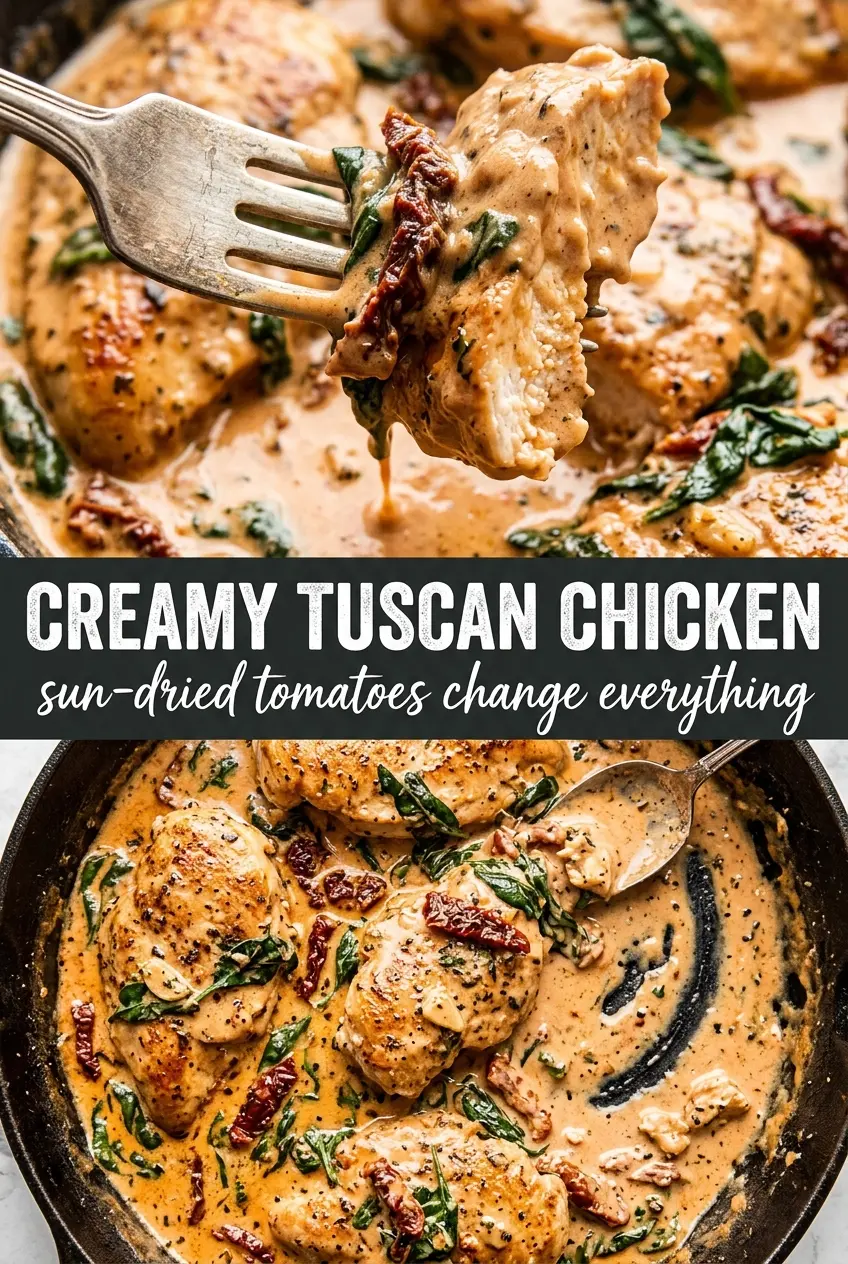
Creamy Tuscan Chicken
Ingredients
Equipment
Method
- Season the chicken breasts generously with salt, pepper, garlic powder, Italian seasoning, and smoked paprika. Heat olive oil in a large skillet over medium-high heat and place the chicken in the pan.
- Sear until golden, about 5-6 minutes per side, turning once for even browning. Cook to an internal temperature of 165°F, then remove the chicken to a plate.
- In the same pan, cook the minced garlic for 30 seconds until fragrant, keeping it from browning. Add the sun-dried tomatoes and cook for 1 minute.
- Pour in the chicken broth and deglaze, scraping up the browned bits from the pan. Stir in the heavy cream, Parmesan cheese, Italian seasoning, and red pepper flakes.
- Simmer the sauce until thickened, 4-5 minutes, stirring occasionally so it turns glossy. Look for a coating texture when you draw a spoon through the sauce.
- Stir in the baby spinach until wilted, then let it settle into the sauce for about 30 seconds. Return the chicken breasts to the pan.
- Spoon the sauce over each breast so the tops are glossy and coated. Garnish with fresh basil and serve right away.