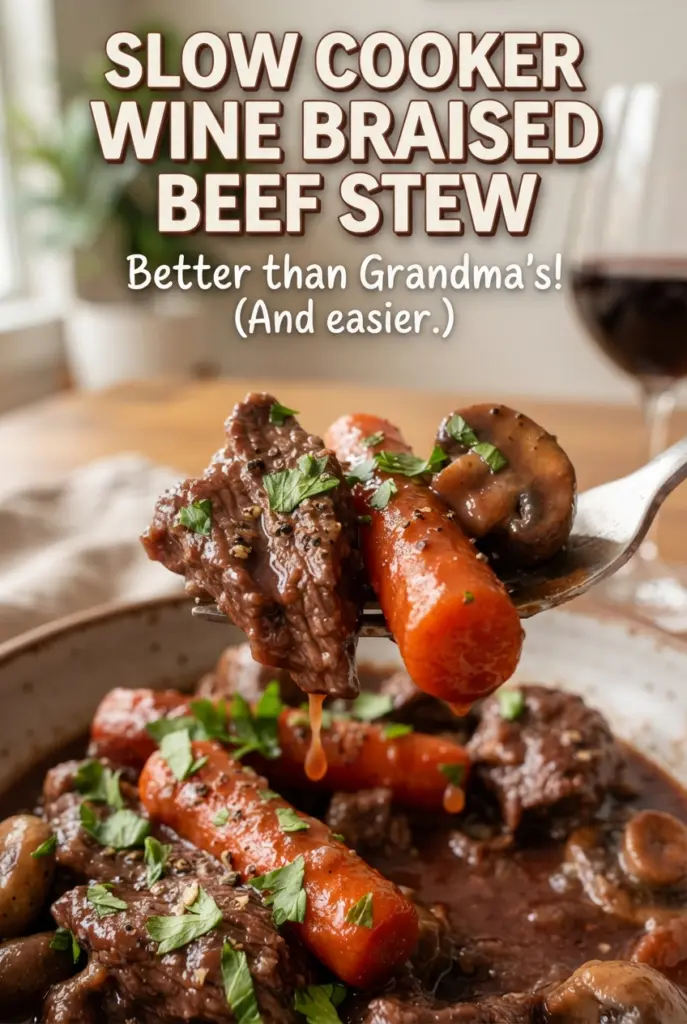
Slow cooker wine braised beef stew lands in that deep, glossy place where the beef is spoon-tender, the broth tastes rounded instead of flat, and the carrots soak up just enough wine and herb flavor to matter. It’s the kind of stew that feels like it took all day because it did, but not because you had to stand over it. The slow cooker turns a sturdy chuck roast into something silky and rich with very little hands-on work.
The trick is not dumping everything in at once and hoping for the best. Browning the beef first gives the stew a darker, beefier base, and cooking the tomato paste in the pan wakes it up so it doesn’t taste raw or tinny. The wine needs a quick simmer after deglazing so the sharp edge cooks off before it goes into the slow cooker. That step matters more than most people think.
Below you’ll find the small details that keep the sauce balanced, plus a few smart swaps if you want to work with what’s already in the kitchen.
The sauce turned out rich and silky, and the beef was falling apart at the 8-hour mark just like you said. I served it over mashed potatoes and the wine flavor was warm, not overpowering.
Love a stew with deep winey broth and fall-apart beef? Save this slow cooker wine braised beef stew for the next night you want dinner to taste like it simmered all afternoon.
The Sear and Simmer That Keep the Stew from Tasting Flat
The biggest mistake with slow cooker beef stew is treating the slow cooker like it can build flavor on its own. It can’t. Chuck roast needs browning so the surface gets those dark, savory notes that carry through the whole pot, and the aromatics need a quick cook in the pan so the onion and garlic lose their raw bite before they go in. If you skip that part, the stew can taste muddy instead of deep.
The wine also needs a short simmer after you deglaze the pan. That cooks off the harsh alcohol edge and leaves the fruit and acidity behind, which is what gives this stew its French-inspired backbone. The flour on the beef helps thicken the braising liquid as it cooks, but the stew still stays brothy enough to spoon over polenta or potatoes.
What Each Ingredient Is Actually Doing in the Pot
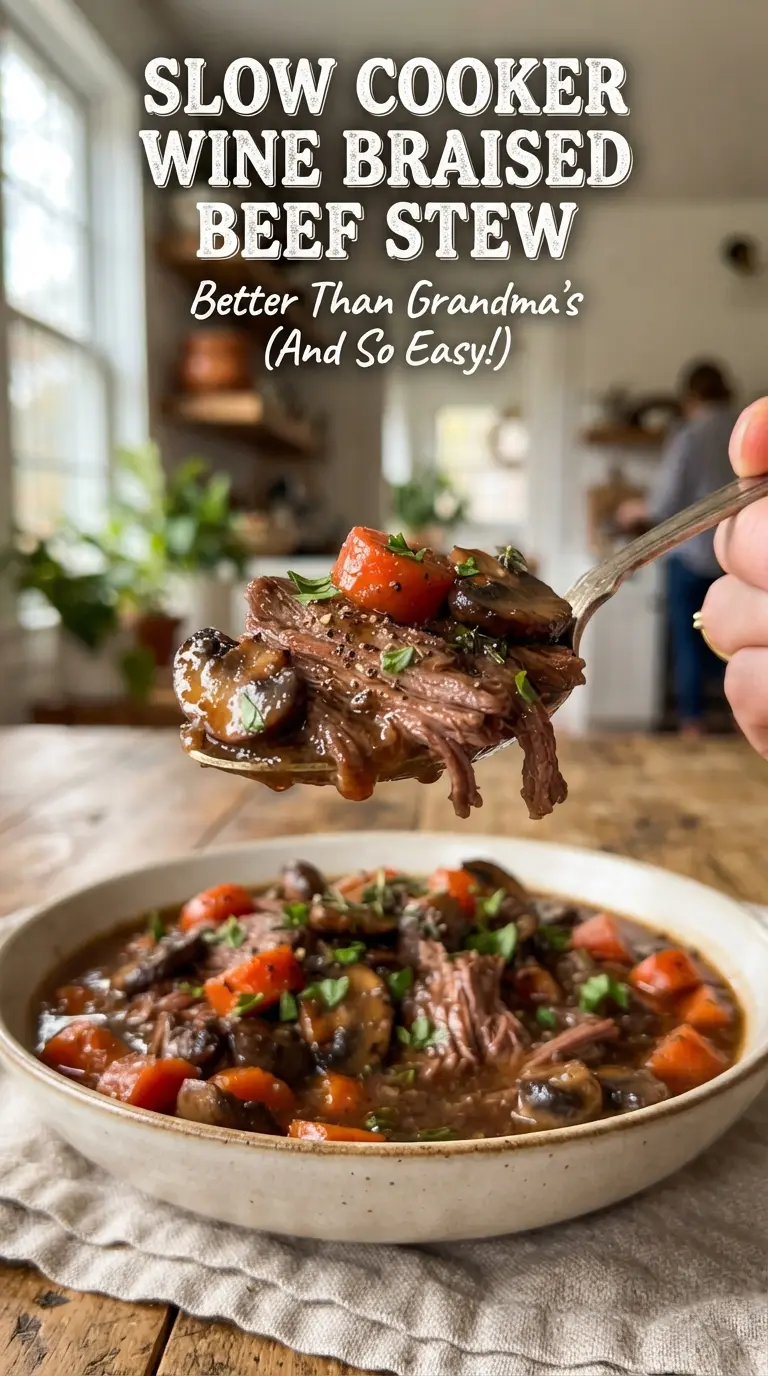
- Beef chuck — This is the right cut because it has enough connective tissue to turn tender over a long cook. Leaner stew meat will dry out before it gets that soft, spoonable texture.
- Dry red wine — Use a wine you’d drink. It doesn’t have to be expensive, but it needs to taste clean and dry; sweet wine will make the stew heavy and throw off the balance.
- Tomato paste — Cooking it in the pan for a minute or two deepens the stew and keeps it from tasting sharp. If you skip that quick fry, it can come across metallic.
- Fresh rosemary and thyme — Fresh herbs hold up best here because the stew cooks for hours. Dried works in a pinch, but use less and expect a flatter, less layered finish.
- Frozen pearl onions — These save time and hold their shape beautifully. If you use fresh pearl onions, blanch and peel them first, which is a project in itself.
Building the Braise So the Beef Stays Rich, Not Dry
Coating and Browning the Beef
Toss the beef with flour, salt, and pepper before it hits the pan. The flour gives the sauce a little body later, and the salt seasons the meat all the way through instead of just the surface. Brown the beef in batches so the pieces actually sear instead of steam; if the pan looks crowded, pull some out and keep going. You want dark edges and a browned bottom in the pan, not gray meat and a puddle of liquid.
Cooking the Aromatics in the Pan Drippings
After the beef comes out, cook the onion and garlic in the same pan, then stir in the tomato paste. The drippings left behind are part of the stew’s flavor, so don’t wipe them away. Cook until the onion softens and the tomato paste darkens slightly, which usually takes about 3 minutes. If the garlic starts to brown too fast, lower the heat; burnt garlic will haunt the whole pot.
Deglazing with Wine Before It Goes Low and Slow
Pour in the red wine and scrape the bottom until every browned bit lifts into the liquid. That fond is concentrated flavor, and it dissolves best while the wine is still hot. Let it simmer for about 3 minutes so the raw alcohol note backs off. Then pour it into the slow cooker with the broth, balsamic vinegar, herbs, carrots, and pearl onions. Cook on LOW until the beef falls apart easily at the touch of a fork.
Red Wine Swap
If you don’t want to open wine, use extra beef broth plus 1 tablespoon red wine vinegar. The stew will still be savory, but it won’t have the same rounded depth or gentle fruitiness that red wine brings.
Gluten-Free Version
Swap the all-purpose flour for a gluten-free flour blend or skip it and thicken the finished stew with a cornstarch slurry at the end. The flavor stays the same, but the sauce will be a little lighter if you leave out the flour entirely.
No Pearl Onions
Use extra diced onion or a handful of halved shallots if pearl onions aren’t available. You’ll lose that little sweet pop in each bite, but the stew will still feel complete.
Storage and Reheating
- Refrigerator: Store in an airtight container for up to 4 days. The flavor deepens overnight and the sauce thickens as it chills.
- Freezer: This freezes well for up to 3 months. Cool it completely first, then freeze in portions so the beef stays tender when you reheat it.
- Reheating: Warm gently on the stove over low heat or in the microwave at medium power. A hard boil can tighten the beef and split the sauce, especially if you’ve already reduced it down.
Questions I Get Asked About This Recipe
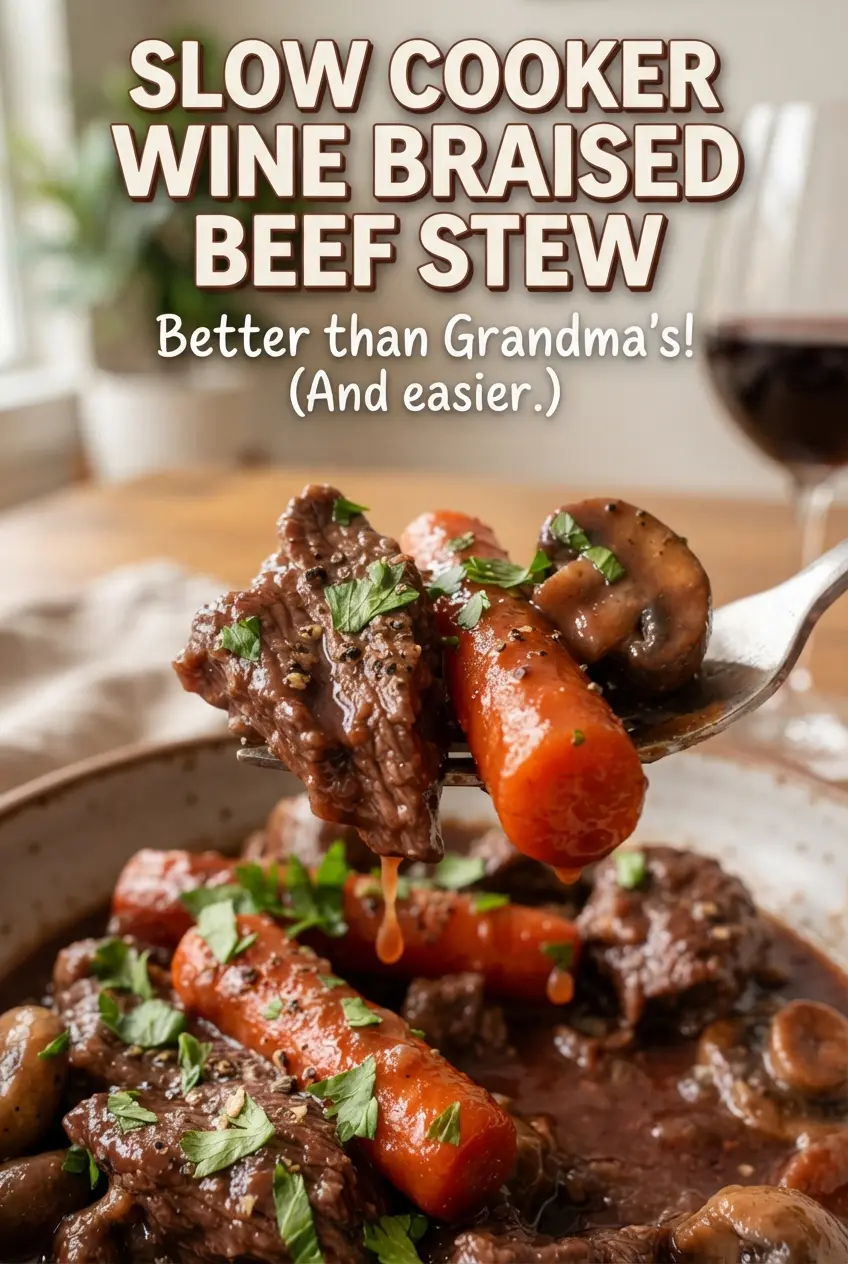
Slow Cooker Wine Braised Beef Stew
Ingredients
Equipment
Method
- Toss the beef chuck with flour, salt, and black pepper until coated. Brown in batches in a hot pan, turning to sear the surfaces, then transfer to the slow cooker.
- In the same pan, cook the diced onion, minced garlic, and tomato paste for 3 minutes to soften and deepen in color.
- Pour in the dry red wine and scrape the bottom of the pan. Simmer for 3 minutes, then pour the mixture into the slow cooker.
- Add the beef broth, balsamic vinegar, rosemary sprigs, thyme sprigs, carrots, and frozen pearl onions to the slow cooker and stir to combine.
- Cover and cook on LOW for 8 hours, until the beef falls apart and the stew looks glossy and thick.
- Remove the herb stems and discard them. Serve the wine braised beef stew over creamy polenta or mashed potatoes.