
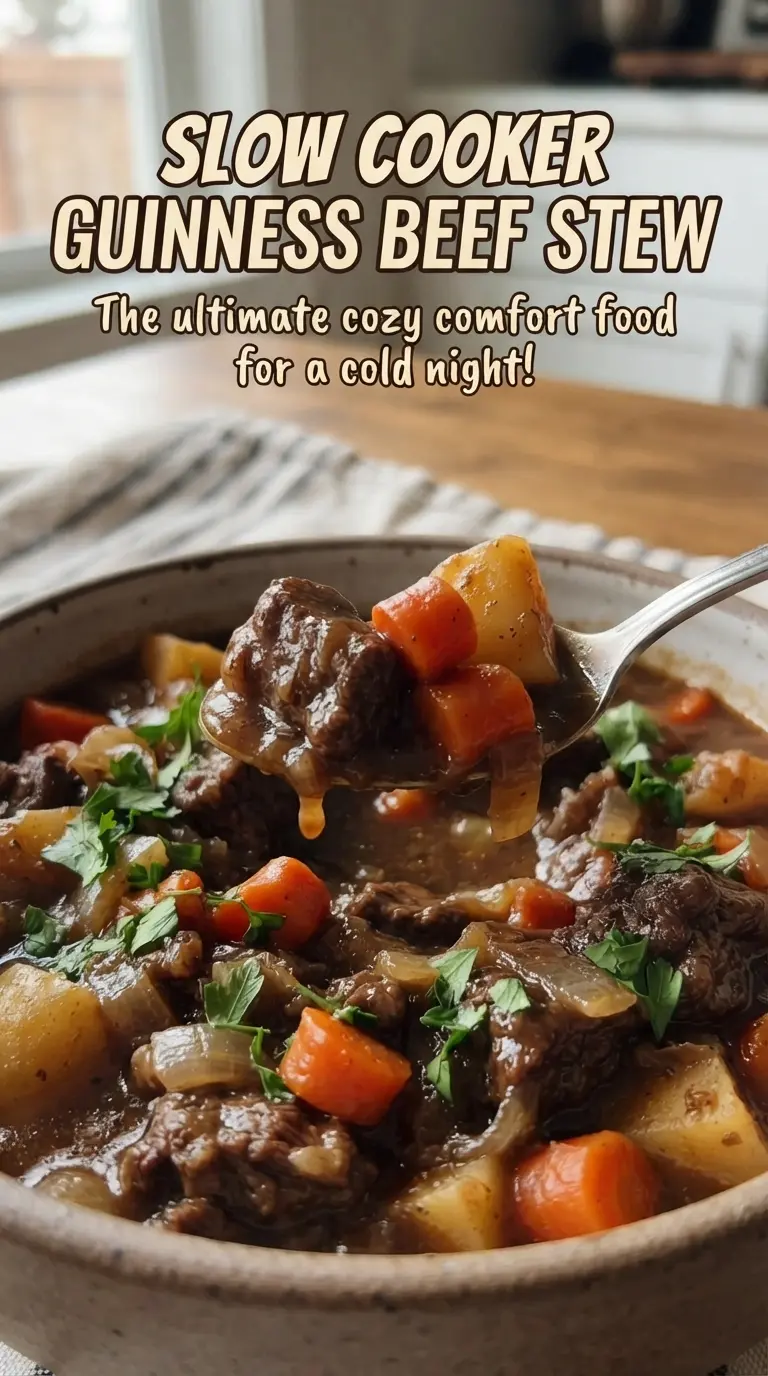
Dark, glossy beef stew gets its best version when the broth turns almost silky and the beef collapses at the touch of a fork. This slow cooker version keeps all the deep stout flavor you want, but it stays balanced instead of heavy, with tender carrots, creamy potatoes, and a rich gravy that clings to every bite. It’s the kind of stew that tastes like it took all day because it did, but most of that time is hands-off.
The trick is building flavor before the slow cooker ever turns on. Browning the beef first gives you those savory edges that hold up after hours of cooking, and the tomato paste needs a quick cook in the pan so it loses that raw bite and turns sweeter and darker. Guinness adds depth, but it’s the scraping of the pan and the slow simmer that keep it from tasting flat. The flour on the beef does a little work here too, helping the stew thicken naturally as it cooks.
Below, I’ll walk through the one step that makes the biggest difference in flavor, plus a few swaps and storage notes that matter once you’ve made it once and want to make it again.
The gravy came out thick and glossy, and the beef was fall-apart tender after 8 hours on low. Even the potatoes held their shape, which never happens for me in the slow cooker.
Guinness beef stew with glossy gravy, tender potatoes, and that deep stout-braised finish is worth pinning for cold nights and easy make-ahead dinners.
The Browning Step That Keeps This Stew from Tasting Flat
Slow cooker stews can taste muddy when everything goes in raw at once. The missing layer is browned beef and a quick cook on the tomato paste, which gives the finished broth a deeper, rounder flavor before the long simmer starts. That little bit of pan time is where the stew gets its backbone.
Don’t crowd the beef when you brown it. If the pieces steam, they won’t develop the dark crust that carries into the gravy. You’re looking for a deep brown surface, not cooked-through meat at this stage. The same goes for the onion and garlic: cook them just until softened and fragrant, then scrape up every brown bit with the Guinness. Those bits dissolve into the stew and make the sauce taste like it’s been simmering for hours already.
What the Guinness, Flour, and Tomato Paste Are Doing Here
- Beef chuck — This cut has enough fat and connective tissue to turn tender during a long cook. Lean stew meat will dry out before the broth gets properly rich.
- Guinness stout — The stout gives the stew its dark, malty depth. It doesn’t make the dish taste boozy after eight hours; it turns mellow and savory. If you need a substitute, use a dark beer and add a teaspoon of balsamic vinegar for a little of that rounded bite.
- Flour — Tossing the beef in flour helps the surface brown and gives the stew a natural thickness. If you need gluten-free, use a spoonful of cornstarch slurry at the end instead, but the gravy won’t have quite the same body from the start.
- Tomato paste — It’s small, but it matters. Cooking it in the pan for a few minutes takes away the raw tinny edge and pushes the flavor toward sweet and concentrated.
- Baby potatoes and thick-sliced carrots — Baby potatoes hold together better than diced russets, and thicker carrot slices keep some texture after hours of cooking. Cut them too small and they’ll fade into the broth.
Building the Stew So the Slow Cooker Can Do Its Best Work
Searing the Beef First
Heat the oil until it shimmers, then brown the beef in batches. Each piece should pick up a dark crust before you turn it. If the pan looks crowded or wet, stop and pull some pieces out. The goal is flavor on the outside and a pot full of browned bits underneath, because that base is what gives the stew its depth later.
Softening the Aromatics
Use the same pan for the onion, garlic, and tomato paste. Cook them until the onion looks translucent and the paste darkens slightly and smells sweeter. If the garlic starts to brown hard, the heat is too high and it will turn bitter in the finished stew. A minute or two of patient cooking here pays off more than an extra pinch of seasoning later.
Pouring in the Stout
Add the Guinness and scrape the pan immediately. You want the liquid to loosen every stuck-on bit before it reduces for a couple of minutes. That short simmer burns off the harsh edge of the beer and concentrates the maltiness, which keeps the stew rich instead of sharp. Once it’s in the slow cooker, add the broth, Worcestershire, brown sugar, thyme, carrots, and potatoes, then nestle the beef back in.
Letting It Cook Down
Cover and cook on LOW for 8 hours. The stew is ready when the beef breaks apart easily with a fork and the carrots are tender all the way through. If the gravy looks thin at the end, take the lid off for the last 20 to 30 minutes and let some steam escape. Don’t rush it onto high heat; that’s how potatoes get mushy while the beef is still catching up.
How to Adapt This Stout Beef Stew for Your Kitchen
Gluten-Free Version
Skip the flour on the beef and use a cornstarch slurry at the end if you want the gravy thicker. The stew will still taste rich, but the sauce will be a little lighter in body than the flour-coated version.
No Guinness on Hand
Use another dark stout or a dark beer with good body. If you swap in a lighter beer, the stew loses some of that deep roasted edge, so add a teaspoon of balsamic vinegar or a little extra tomato paste to bring back some balance.
Make It Dairy-Free and Steadier for Leftovers
This recipe is already dairy-free as written, which makes it an easy one for a mixed table. If you want even better leftovers, keep the potatoes on the larger side so they hold up after chilling and reheating instead of turning grainy.
Add More Vegetables Without Diluting the Flavor
Parsnips, mushrooms, or celery can go in with the carrots and potatoes. Keep the total volume reasonable, though, because too many vegetables can thin out the stout gravy and make the beef feel lost in the pot.
Storage and Reheating
- Refrigerator: Store in an airtight container for up to 4 days. The flavor gets even deeper overnight, and the gravy will thicken as it chills.
- Freezer: It freezes well for up to 3 months. Cool it completely first, and leave a little headspace if you’re freezing in containers because the broth expands.
- Reheating: Warm gently on the stovetop over low heat or in the microwave in short bursts. Don’t boil it hard when reheating, or the beef can dry out and the potatoes can split.
Questions I Get Asked About This Recipe

Slow Cooker Guinness Beef Stew
Ingredients
Equipment
Method
- Toss beef with flour, salt, and black pepper until coated. Brown in hot vegetable oil in a cast iron skillet over high heat, then transfer to the slow cooker.
- Heat the same skillet with the browned-bits oil for the next step, keeping everything loosened from the pan surface.
- Cook onion, garlic, and tomato paste for 3 minutes, stirring until fragrant and slightly darkened. Scrape up any browned bits from the pan.
- Pour in Guinness stout and scrape the bottom of the skillet to release fond. Simmer for 2 minutes, then pour the mixture into the slow cooker.
- Add beef broth, Worcestershire sauce, brown sugar, dried thyme, carrots, and baby potatoes to the slow cooker. Stir to distribute the vegetables and coat them in the stout mixture.
- Cover and cook on LOW for 8 hours until the beef is very tender. If needed, stir once near the end so potatoes cook evenly.
- Season the stew to taste with additional salt and black pepper if needed. Garnish with chopped fresh parsley right before serving.