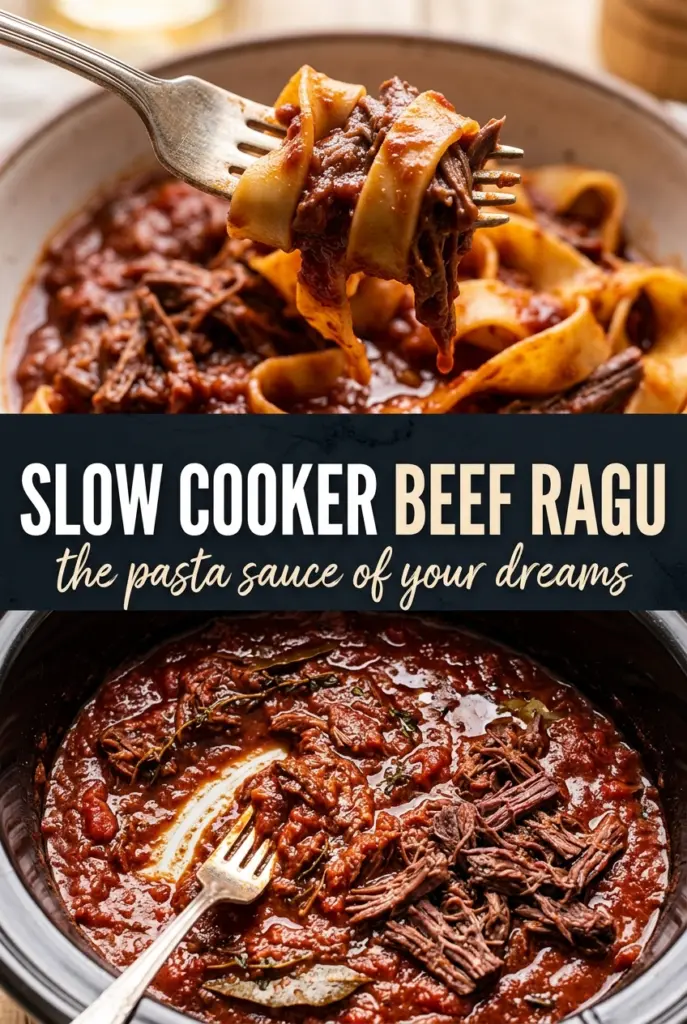
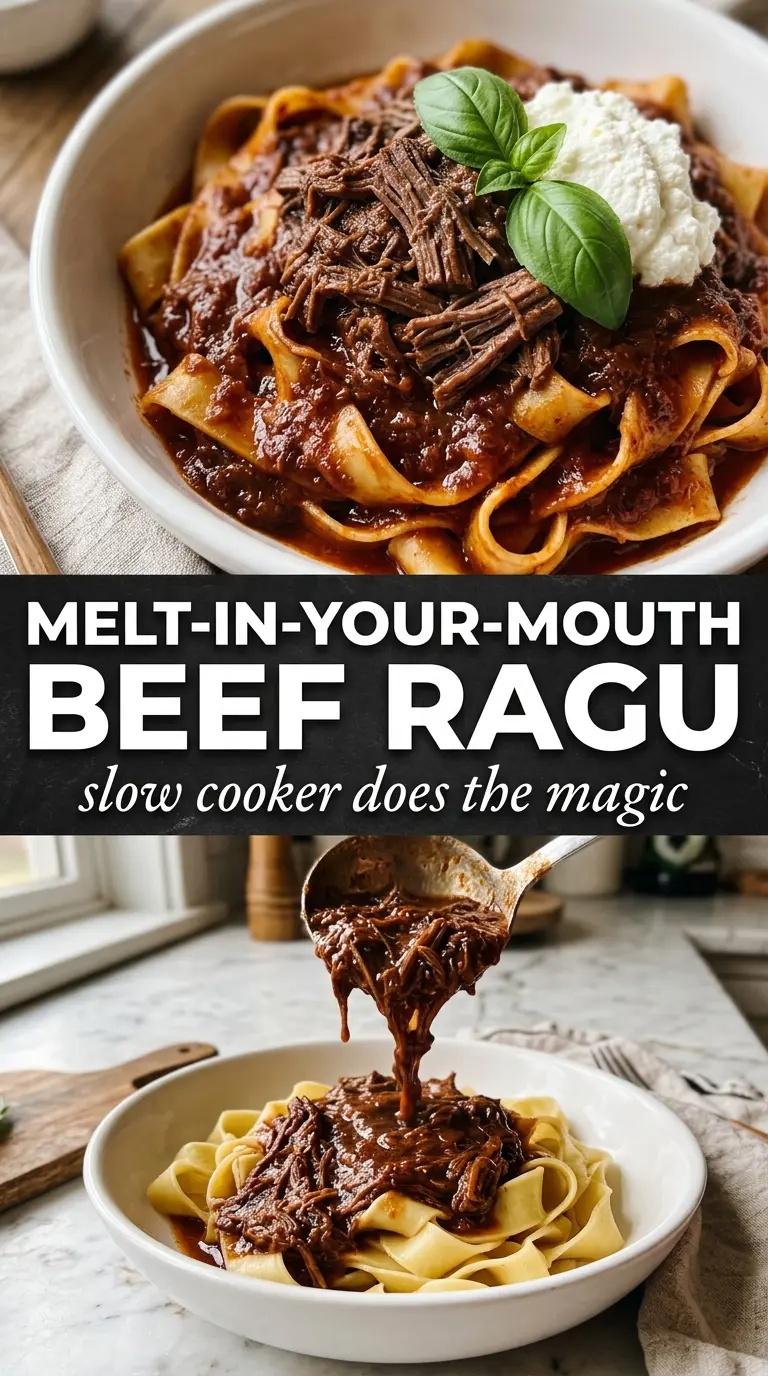
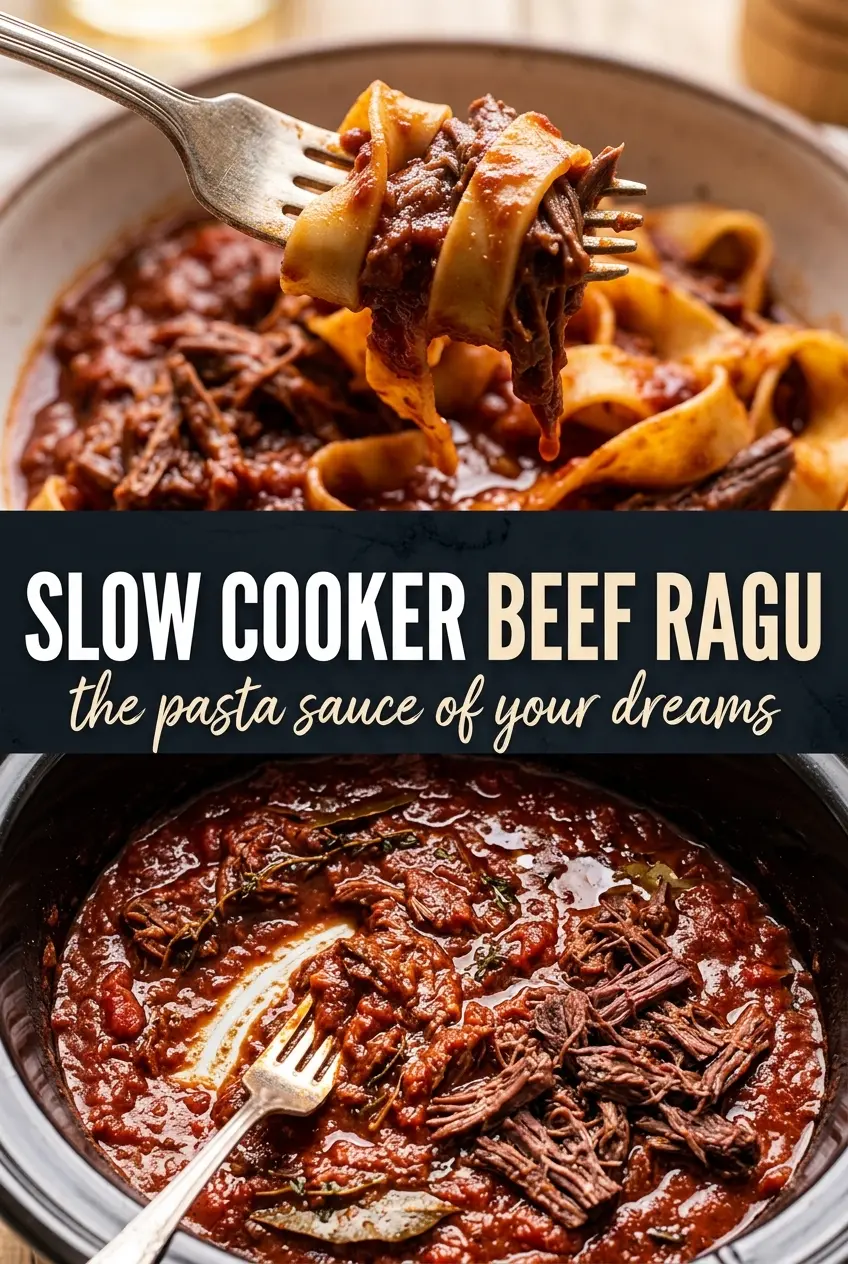
Slow cooker beef ragu turns a tough chuck roast into a spoon-coating sauce with deep tomato flavor, sweet onion, and beef that falls apart into thick, silky strands. What makes it worth making is the texture: the sauce clings to pappardelle instead of sliding off, and every bite tastes like it simmered all afternoon on the stove without you standing over it.
This version leans on San Marzano tomatoes, a splash of red wine, and a little tomato paste to build body before the lid ever goes on. The wine cooks down into the sauce, the vegetables melt into the base, and the chuck roast slowly gives up its collagen, which is what gives ragu that rich, glossy finish. The slow cooker does the work, but the layering of ingredients is what keeps it from tasting flat.
Below, you’ll find the one step that keeps the sauce from turning watery, the ingredient swaps that actually work, and how to serve it so the ragu settles into the pasta instead of pooling at the bottom of the bowl.
The sauce thickened up beautifully and the beef shredded into these rich little pieces that clung to the pasta. I made it on Sunday and it tasted even better on Tuesday.
Love a sauce that clings to every ribbon of pasta? Save this slow cooker beef ragu for the nights when you want deep, slow-cooked flavor with almost no hands-on time.
The Secret to Rich Ragu in a Slow Cooker
The biggest mistake people make with slow cooker ragu is treating it like a dump-and-walk-away sauce. If the tomato base is too thin at the start, it stays thin at the end, even after hours of cooking. This version avoids that by using tomato paste, a full-bodied red wine, and enough vegetables to give the sauce backbone as they break down.
Chuck roast is the right cut here because it has enough connective tissue to turn silky over a long cook. Leaner beef can dry out and taste stringy by the time the tomatoes are done. The long, low heat softens the meat without scorching the sauce, and the bay leaves add a quiet savory edge that keeps the whole pot from tasting one-note.
- Chuck roast — This cut is built for slow cooking. It turns tender and shred-ready instead of dry or crumbly, which is exactly what you want in ragu.
- San Marzano tomatoes — They bring a sweeter, less harsh tomato flavor. Regular crushed tomatoes work too, but if they taste sharp out of the can, the sauce can need a longer finish to mellow.
- Dry red wine — Chianti or Cabernet adds depth and helps deglaze the flavor of the vegetables once everything cooks together. Use something you’d actually drink; overly sweet wine makes the sauce taste off.
- Tomato paste — This is what gives the sauce body. Let it get whisked in well so it doesn’t sit in little concentrated streaks at the end.
What Each Ingredient Is Actually Doing in This Slow Cooker Beef
- Beef (chuck roast, short ribs, or ground beef) — Tougher cuts break down beautifully in slow cooking. The connective tissue becomes gelatin, enriching the broth.
- Liquid (beef broth, wine, or sauce) — This becomes both the cooking medium and the final sauce. Choose quality broth for better flavor.
- Onions (the aromatic base) — Slice thick so they stay distinct while melting into the sauce. They become sweet and mellow during cooking.
- Garlic (the depth flavor) — Minced garlic cooks into the broth; sliced stays more distinct. Use generously for deep flavor.
- Vegetables (carrots, potatoes, peppers) — Layer them by cooking time. Hard vegetables first, softer ones later so everything finishes together.
- Seasonings (salt, pepper, Worcestershire, spices) — Build flavor as you layer. Taste midway and adjust because flavors concentrate during cooking.
- Tomato paste or sauce (optional richness) — This adds body and depth. Cook for hours so it becomes part of the sauce rather than a separate element.
- Low heat for 8 hours (the transformation) — Long, slow cooking turns tough cuts into fork-tender meat. This is what makes cheap cuts taste expensive.
Building the Sauce So It Stays Thick and Meaty
Seasoning the Beef First
Salt and pepper go on the roast before it goes into the slow cooker, not after. That seasoning has time to work its way into the meat while it cooks, which gives the shredded beef flavor all the way through instead of only on the outside. If you skip this, the sauce has to do all the work.
Whisking the Base Until It Looks Even
Stir the tomatoes, wine, tomato paste, garlic, onion, celery, carrots, and herbs together before they meet the beef. You want the paste fully dissolved and the vegetables evenly distributed so the sauce cooks as one cohesive base. If the tomato paste stays in clumps, it can taste raw in spots.
Letting the Slow Cooker Do the Texture Work
Cook on low until the roast gives way easily to a fork and starts to fall apart at the edges. The goal is not just tender beef; it’s beef that can be shredded into thick pieces that soak up sauce. If it still slices cleanly, it needs more time, and rushing this stage is the fastest way to end up with chewy meat in a bland sauce.
Shredding Back Into the Pot
Remove the bay leaves before you shred the beef, then return the meat to the sauce and stir it in well. This is where the ragu becomes ragu instead of a pot roast with tomato sauce. Let it sit for a few minutes on warm so the meat drinks up the sauce before serving.
Make It Without Wine
Replace the red wine with an equal amount of beef broth plus 1 tablespoon of red wine vinegar. You lose some of the deep, rounded edge that wine brings, but the vinegar gives the sauce the missing brightness so it doesn’t taste heavy.
Make It Dairy-Free
The ragu itself is already dairy-free, so the only thing to watch is the garnish. Serve it with basil and skip the Parmesan, or use a dairy-free hard cheese if you want that salty finish.
Turn It Into a Sunday Batch Cook
Double the recipe if your slow cooker is large enough and freeze half of the finished sauce. The flavor gets even better after a day in the fridge, and having a second batch waiting turns this into an almost effortless pasta dinner later in the month.
Use a Different Pasta Shape
Pappardelle catches the sauce best, but rigatoni holds onto the meat in its ridges and tubes. If you use a thinner pasta, the ragu will still taste great, but it won’t cling the same way, so the dish feels a little looser.
Storage and Reheating
- Refrigerator: Store the ragu for up to 4 days. The sauce thickens as it chills, and the flavor deepens overnight.
- Freezer: It freezes well for up to 3 months. Cool it completely first, then freeze the sauce without the pasta in airtight containers or bags.
- Reheating: Warm it gently on the stove over low heat with a splash of water or broth if needed. Don’t blast it in a hard boil or the beef can dry out and the sauce can turn greasy.
Questions I Get Asked About This Recipe
Slow Cooker Beef Ragu
Ingredients
Equipment
Method
- Season the beef chuck roast generously with salt and black pepper, then place it in the slow cooker.
- Whisk together the crushed San Marzano tomatoes, red wine, tomato paste, garlic, onion, celery, carrots, dried basil, dried oregano, dried thyme, sugar, and remaining salt and pepper.
- Pour the sauce mixture over the beef, then tuck in the bay leaves.
- Cook on low for 8–10 hours until the beef is completely fall-apart tender, with the sauce bubbling gently around the meat.
- Remove the beef and shred into large pieces with two forks, then discard the bay leaves.
- Return the shredded beef to the sauce and stir to combine until the ragu looks thick and evenly coated.
- Serve the ragu over pappardelle or rigatoni, then garnish with fresh basil and freshly grated Parmesan.