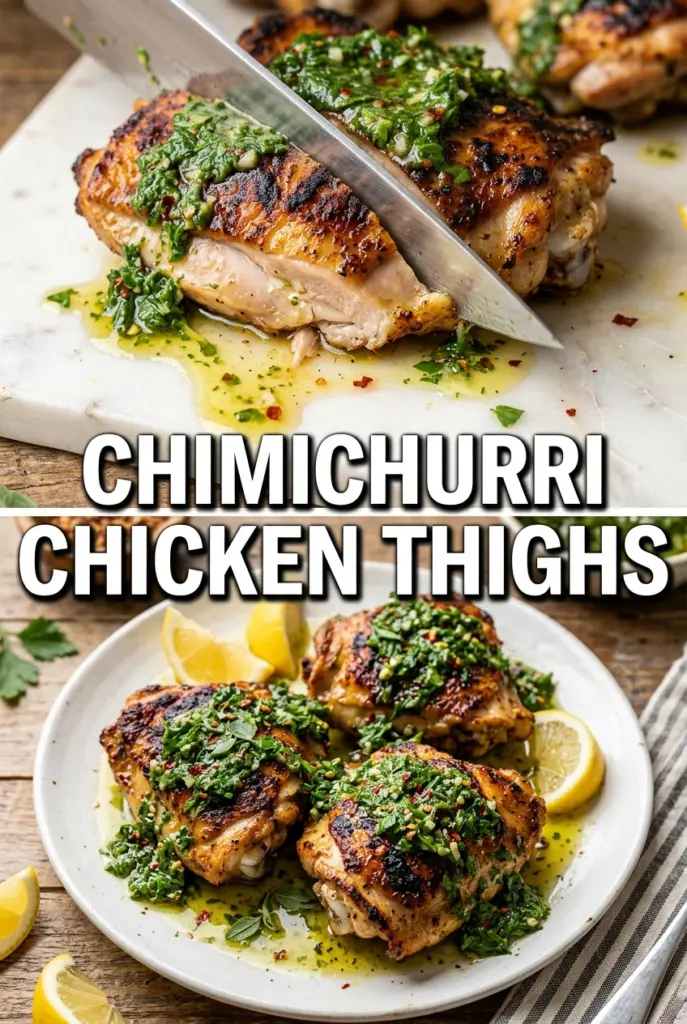
Charred chicken thighs with a bright blanket of chimichurri are the kind of main dish that wakes up the whole plate. The chicken stays juicy while the edges pick up just enough grill smoke to stand up to the herb sauce, and that contrast is what keeps this recipe in regular rotation. It feels bold without being fussy, which is exactly why it works for both an easy weeknight and a casual dinner with friends.
The trick is treating the chimichurri as both a marinade and a finishing sauce, but not the same portion. A little goes on the chicken first so the vinegar and garlic can work into the meat, then the rest stays fresh and bright for serving. I also like making the sauce a little chunky instead of fully pureed; that texture clings to the chicken instead of sliding off, and the herbs taste sharper and greener. Grilled thighs are forgiving, but they still need enough heat to brown the skin or the whole dish loses its edge.
Below, you’ll find the small details that keep the sauce vibrant, the chicken juicy, and the grill marks where they belong. I also included a few smart swaps and a simple way to keep leftovers tasting close to day one.
The chimichurri stayed bright after marinating, and grilling the thighs over medium-high heat gave me crispy skin without drying them out. The extra sauce on top at the end made it taste fresh, not heavy.
Save these chimichurri chicken thighs for nights when you want smoky grilled chicken with a fresh herb sauce that actually tastes alive.
The Part Most People Miss: Keeping the Chimichurri Bright After It Hits the Chicken
Chimichurri loses its spark fast if it spends too long sitting on raw chicken. The vinegar softens the herbs, the garlic gets blunt, and what should taste sharp and green starts tasting muddy. That’s why this recipe uses the sauce in two stages: a short marinate for flavor, then a fresh spoonful at the end for contrast.
Chicken thighs handle this better than lean cuts because they stay juicy even with a little acid on the surface. Bone-in thighs take a few minutes longer and reward you with more flavor and a deeper crust; boneless thighs cook faster and are easier for weeknights, but they can overcook by a minute or two if you’re not watching the temperature closely. Pull them as soon as they hit 165°F in the thickest part.
- Fresh parsley — This carries the sauce. Flat-leaf parsley is best because it blends into a vivid, grassy sauce without getting bitter.
- Fresh oregano — This is the ingredient that makes the chimichurri taste Argentine instead of just like herbed oil. Dried oregano won’t give the same punch, but if that’s all you have, use a small pinch and let it sit in the vinegar for 10 minutes before blending.
- Red wine vinegar — This is what keeps the sauce sharp enough to cut through the chicken skin. Lemon juice works in a pinch, but it tastes brighter and less rounded.
- Olive oil — Use a decent one here. It doesn’t need to be expensive, but it should taste clean, not greasy, because the sauce is mostly oil and herbs.
- Garlic — Raw garlic is part of the point. If yours is strong enough to sting, blanch the cloves for 10 seconds first; the sauce stays garlicky, but the bite softens.
What Each Ingredient Is Actually Doing in Chimichurri Chicken Thighs
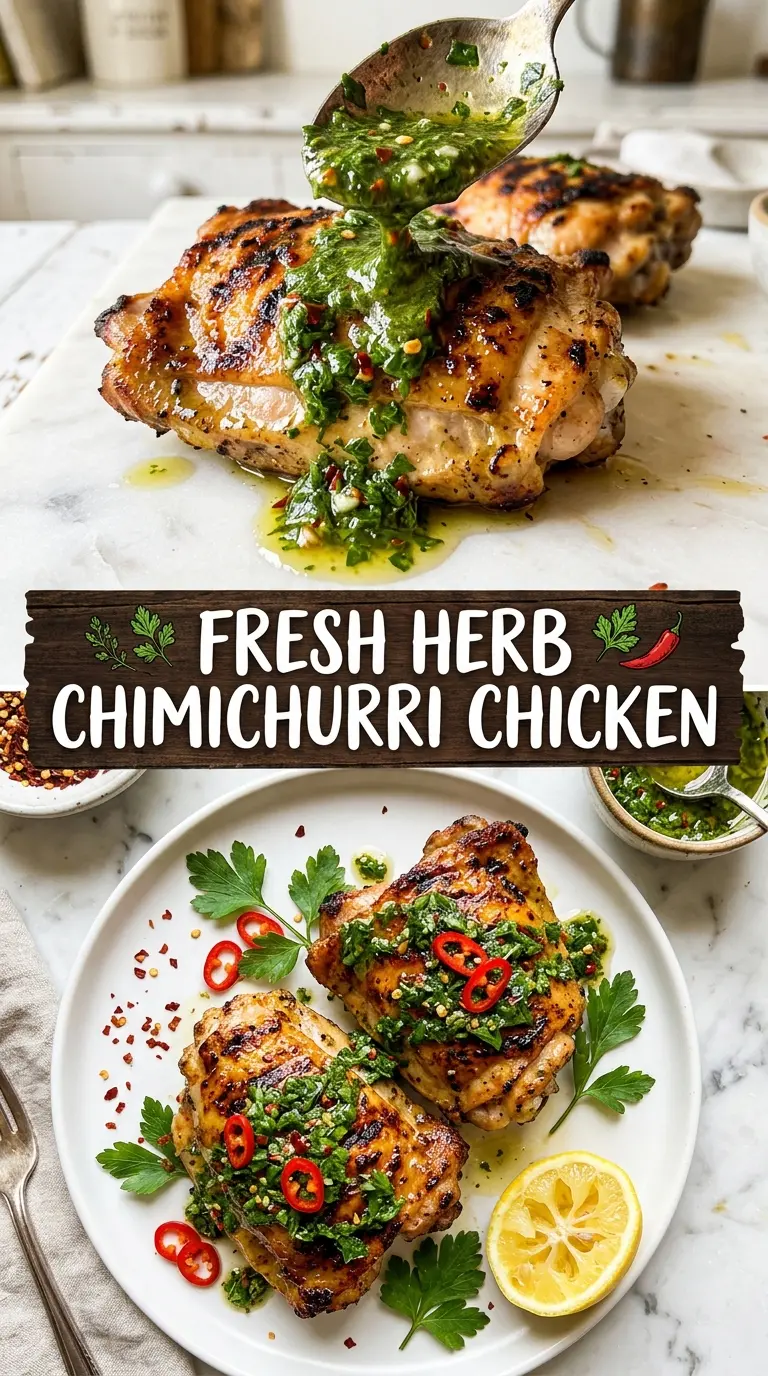
- Fresh parsley (the foundation) — Parsley is what carries the sauce and makes it taste green and vibrant. Flat-leaf is essential because curly parsley gets bitter when blended. The volume matters here; don’t skimp thinking it’s “just herbs.”
- Fresh oregano (the Argentine character) — This is what makes chimichurri taste Argentine instead of just herbed oil. Dried oregano won’t give the same brightness. The oregano should taste peppery and slightly citrus when you blend it raw.
- Red wine vinegar (the sharp element) — The vinegar keeps the sauce from tasting one-dimensional and is what cuts through the richness of the grilled chicken skin. It also prevents the herbs from tasting muddy after marinating.
- Olive oil (the binding carrier) — Good olive oil is essential because the sauce is mostly oil and herbs. It needs to taste clean and carry the herb flavors evenly. Cheap oil makes the whole thing taste flat.
- Raw garlic (the punch) — Raw garlic provides sharpness and depth. If it’s overpowering, blanch it briefly first. The vinegar will mellow the garlic as it sits, so start with what tastes a little sharp and it will balance.
- Red pepper flakes (optional but adds complexity) — Heat adds a subtle background note that makes the sauce taste complete. You shouldn’t taste heat first; you should taste herbs, then notice the warmth at the end.
- Salt (brings everything forward) — The salt makes all the other flavors taste more like themselves. Season the chimichurri boldly; it should taste punchy and assertive when you taste it alone.
- Texture (chunky, not smooth puree) — The sauce should have visible herb flecks that cling to the chicken skin instead of sliding off. Over-blending creates a heavy sauce that tastes dull and doesn’t have the same character.
Getting the Grill Marks and the Sauce Timing Right
Blending the Chimichurri
Pulse or blend the parsley, oregano, garlic, vinegar, olive oil, red pepper flakes, and salt until the sauce is smooth but still has tiny flecks of herb. If you puree it until silky, it turns heavy and loses the texture that makes chimichurri cling to grilled chicken. Taste it before it goes anywhere near the meat; it should be punchy, salty, and a little sharp.
Marinating Without Blunting the Herbs
Brush half of the chimichurri over the chicken and let it sit for 30 minutes to 2 hours. Shorter than that and the flavor stays on the surface; much longer and the vinegar starts to dull the herbs rather than sharpen them. Keep the reserved sauce separate so it stays fresh for serving.
Grilling to a Crisp Finish
Preheat the grill to medium-high and lay the thighs on with enough space between them for the fat to render and the skin to crisp. If they stick, don’t force them — they need another minute or two to release cleanly. Cook until the outside is deeply browned and the thickest part reaches 165°F, then rest them for 5 minutes so the juices settle instead of running out the second you cut in.
What to Change When You Need a Different Version
Boneless Thighs for Faster Weeknight Cooking
Boneless thighs cook in less time and are easier to turn on the grill, but they also dry out faster once they go past temperature. Start checking them early and pull them the moment they hit 165°F and keep the marinate time on the short side. You’ll lose a little of the deep, fatty richness you get from bone-in pieces, but the chimichurri keeps the final dish bright and juicy.
Dairy-Free and Naturally Gluten-Free
This recipe already fits both needs as written, which is part of why it’s such an easy main dish to keep in rotation. Just double-check your spice blend and vinegar if you’re using packaged versions, since some can contain additives you don’t expect. Serve it with potatoes, rice, or grilled vegetables and the whole plate stays in the clear.
Milder Sauce for Less Heat
Cut the red pepper flakes in half if you want the herbs and garlic to lead instead of the heat. The sauce still tastes bold because the vinegar and oregano carry plenty of character on their own. You’re adjusting the finish, not flattening the dish.
Storage and Reheating
- Refrigerator: Store the chicken and chimichurri separately for up to 4 days. The sauce will darken a little, but the flavor stays good.
- Freezer: The chicken freezes well for up to 2 months. Chimichurri doesn’t freeze beautifully because the herbs lose their fresh texture, so make that part fresh when you can.
- Reheating: Warm the chicken gently in a 325°F oven or in a covered skillet over low heat until just hot. High heat dries out the thighs fast, so don’t blast them in the microwave unless you’re okay with losing the crisp edges.
Questions I Get Asked About This Recipe
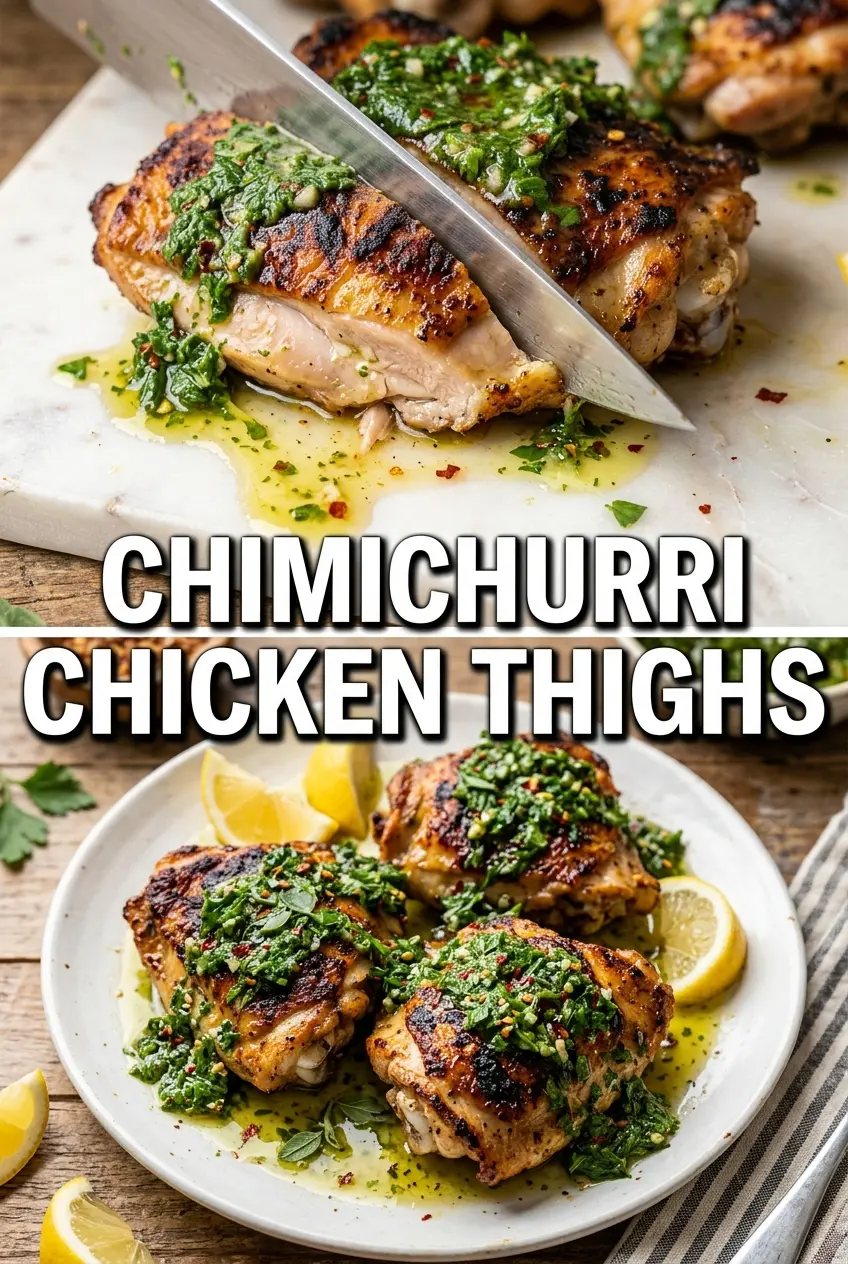
Chimichurri Chicken Thighs
Ingredients
Equipment
Method
- Blend fresh parsley, fresh oregano, garlic, red wine vinegar, olive oil, red pepper flakes, and salt until smooth but slightly chunky, scraping down the jar as needed. Stop blending while it still looks green and textured.
- Season the chicken thighs with salt and pepper, then brush them with half the chimichurri until evenly coated. Keep the remaining chimichurri covered and chilled if possible.
- Marinate the brushed chicken thighs for 30 minutes to 2 hours. Cover to prevent drying and let the herbs soak in.
- Preheat the grill to medium-high heat. Aim for steady heat so the thighs sear without burning.
- Grill the chicken thighs for 6 to 7 minutes per side until the internal temperature reaches 165°F and the skin is crispy. Look for charred grill marks and bubbling fat at the edges.
- Rest the chicken thighs for 5 minutes after grilling. This helps the juices settle so the meat stays tender.
- Serve the chicken thighs topped with the remaining fresh chimichurri. Spoon it on right before eating so the sauce stays bright and fresh.