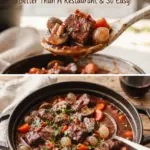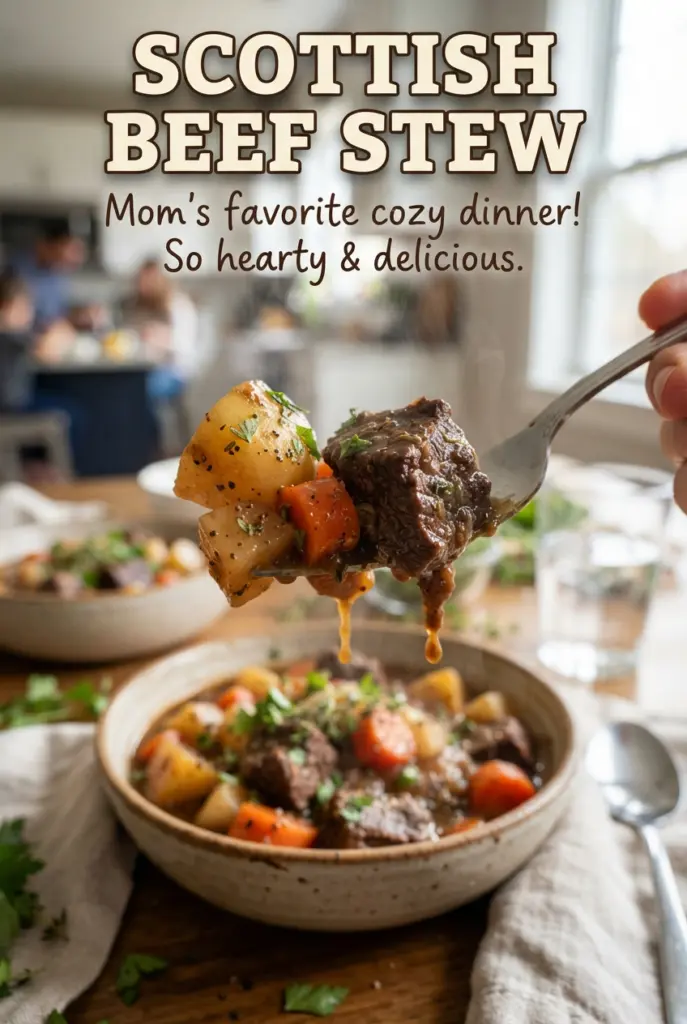
Scottish beef stew earns its place at the table because it comes out thick, hearty, and deeply savory without needing a long list of extras. The beef turns tender in a gravy that tastes built, not rushed, and the pearl barley gives the whole pot a satisfying, spoonable body that holds up from the first bowl to the last. It’s the kind of stew that feels rustic in the best way: simple ingredients, cooked patiently, with every part of the pot doing real work.
The method matters here. Browning the beef in batches gives the stew its backbone, and that quick splash of ale or broth after the onions and leeks loosens all the browned bits from the pan so they become part of the sauce instead of staying stuck behind. The barley goes in later, along with the turnip and carrots, so it softens into the broth without turning the whole pot muddy or overcooked.
Below, I’ve broken down the parts that make this stew taste like it simmered all afternoon on purpose, not by accident. There’s also a note on the best swaps if you don’t have Scottish ale on hand and a few practical tips for reheating it without drying out the beef.
The gravy turned out thick and glossy, and the barley held its shape instead of going mushy. I used extra broth instead of ale, and it still tasted rich enough that my husband went back for seconds.
Save this Scottish beef stew for a slow Sunday dinner, with tender beef, pearl barley, and a thick gravy that only gets better after a night in the fridge.
The Brown Bits Are What Give This Stew Its Depth
If the beef goes straight into the pot without getting a proper sear, the stew still cooks, but it won’t taste layered. The flour helps the meat brown and gives the broth a little body later on, but the real flavor comes from taking the time to brown the cubes in batches so they actually color instead of steaming. Crowding the pan is the fastest way to lose that step. You want a dark crust in the bottom of the pot and enough space for the meat to sizzle as it hits the fat.
The onions and leeks build on that base. They soften into the browned drippings and pick up the savory notes left behind by the beef, which is why that quick deglaze with ale or broth matters. Scraping the pot at that point pulls all the good stuff into the stew and keeps the final gravy from tasting flat.
What Each Ingredient Is Doing in the Pot
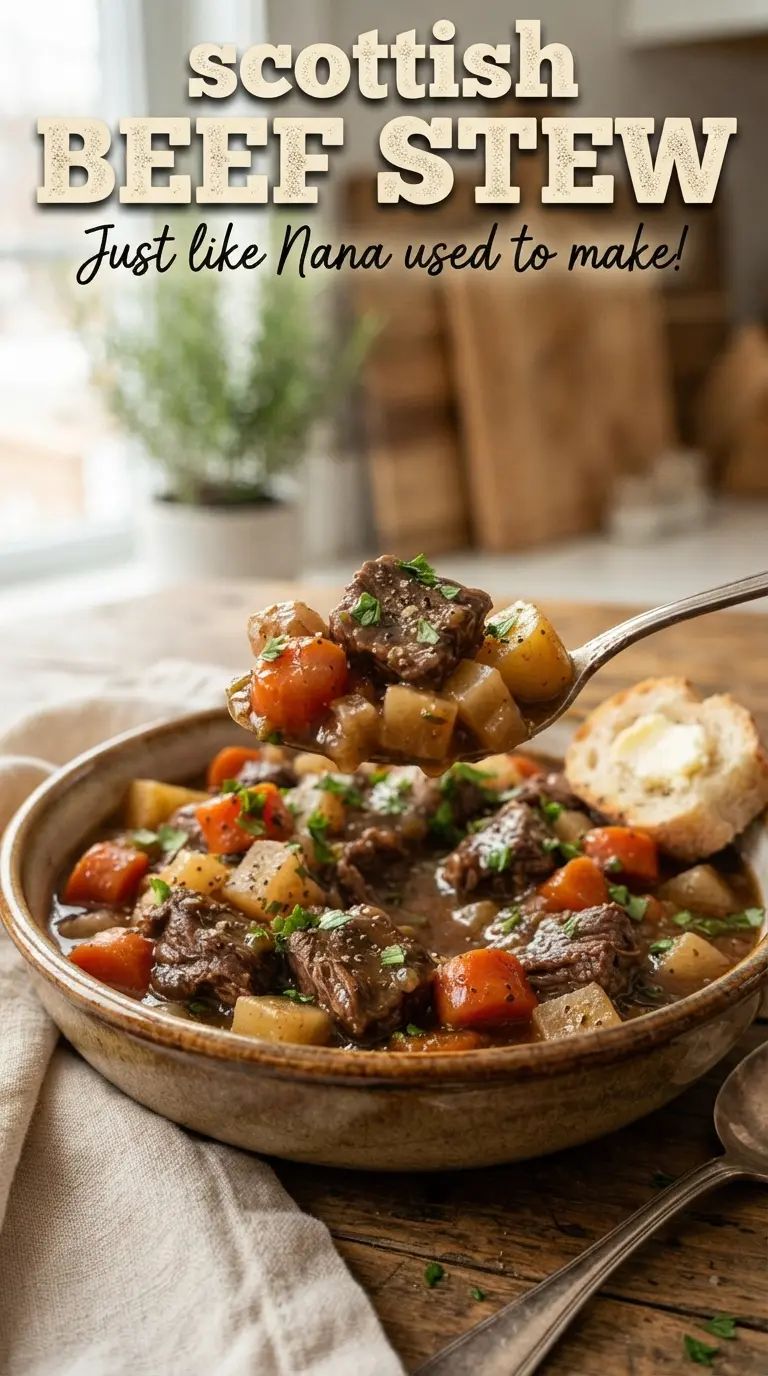
- Beef chuck — This is the cut that stands up to a long simmer. It has enough connective tissue to turn tender and rich without drying out. If you swap it, choose another braising cut like stewing beef or brisket, not lean stew meat that will go stringy.
- Scottish ale — It adds maltiness and a little bitterness that works beautifully with the beef. If you don’t want to use beer, extra beef broth works, but the stew will taste a bit less rounded. The key is to deglaze the pan with something flavorful so the browned bits dissolve into the liquid.
- Pearl barley — This is what makes the stew feel properly Scottish and gives the broth its gentle thickness. Rinse it before adding it so excess starch doesn’t cloud the pot too much. Add it later in the cook or it can absorb too much liquid and turn gummy.
- Turnip or swede — This brings an earthy sweetness that balances the beef and barley. Swede is a little sweeter and softer than a regular turnip, so either works depending on what you can find. Cut it into even cubes so it softens at the same pace as the carrots.
- Leeks and onions — Together they make the savory foundation. The leeks bring a gentler, almost buttery allium flavor, while the onions add sweetness as they cook down. Slice the leeks well and rinse out any grit between the layers before they go in the pot.
How to Build the Pot so the Beef Stays Tender
Browning the Beef in Batches
Season the beef first, then toss it with the flour so the outside gets a light coating. Brown it in butter and oil in small batches until the pieces have a deep crust on several sides; if the pan looks crowded or the meat starts releasing a lot of liquid, stop and give it more room. This stage is where the stew gets its color and its base flavor, so don’t rush it. The meat doesn’t need to cook through here, just color well enough to leave browned fond behind.
Softening the Aromatics
Add the onions and leeks to the same pot and cook them until they’re fully softened and starting to look glossy. They should pick up some of the brown residue in the pot and loosen what’s stuck to the bottom. If the pan seems dry, a small splash of broth helps keep the vegetables from scorching. You want soft, sweet aromatics, not browned bits of onion that fight the gravy.
Letting the Stew Simmer Gently
Once the ale and broth go in, the pot should come up to a gentle simmer, not a hard boil. A strong boil can make the beef tough before it has time to relax, and it can reduce the liquid too quickly. Cover the pot and let it work slowly until the beef is starting to give when pierced with a fork. That first long simmer is what turns chuck into stew meat instead of chewy cubes.
Adding the Barley, Turnip, and Carrots at the Right Time
Barley needs less time than the beef, so it goes in after the meat has already had a head start. Add the turnip and carrots at the same time so they soften without collapsing. Keep the lid on and simmer until the barley is tender but still has a little chew, and the vegetables are cooked through. If the pot looks too thick before everything is tender, add a splash of broth rather than turning up the heat.
How to Adapt This Stew for What’s in Your Kitchen
Make It Gluten-Free
Skip the flour and use a gluten-free all-purpose blend or simply brown the beef without dredging it. The stew will still thicken from the barley starch, though the broth will be a touch looser at first. If you need it fully gluten-free, use broth instead of ale and leave out the barley, then add diced potatoes for body.
Swap the Ale for Broth
Extra beef broth works fine if you don’t keep ale in the house. You lose a little malt depth, but Worcestershire sauce and the long simmer still carry the flavor. If you want to replace some of that complexity, add a teaspoon of balsamic vinegar with the broth.
Use Potatoes Instead of Barley
If you want a thicker, more potato-forward stew, replace the barley with diced waxy potatoes. They’ll soften into the broth and make the stew feel heartier, but they won’t give you the same nutty chew. Add them with the carrots so they stay intact.
Storage and Reheating
- Refrigerator: Store in an airtight container for up to 4 days. The barley will keep absorbing broth, so expect the stew to thicken.
- Freezer: It freezes well for up to 3 months. Cool it completely first, then freeze in portions; the texture of the barley softens a little after thawing, but the stew still reheats nicely.
- Reheating: Warm it gently on the stove over low heat with a splash of broth or water. Don’t boil it hard, or the beef can tighten up and the barley can break down too far.
Questions I Get Asked About This Recipe
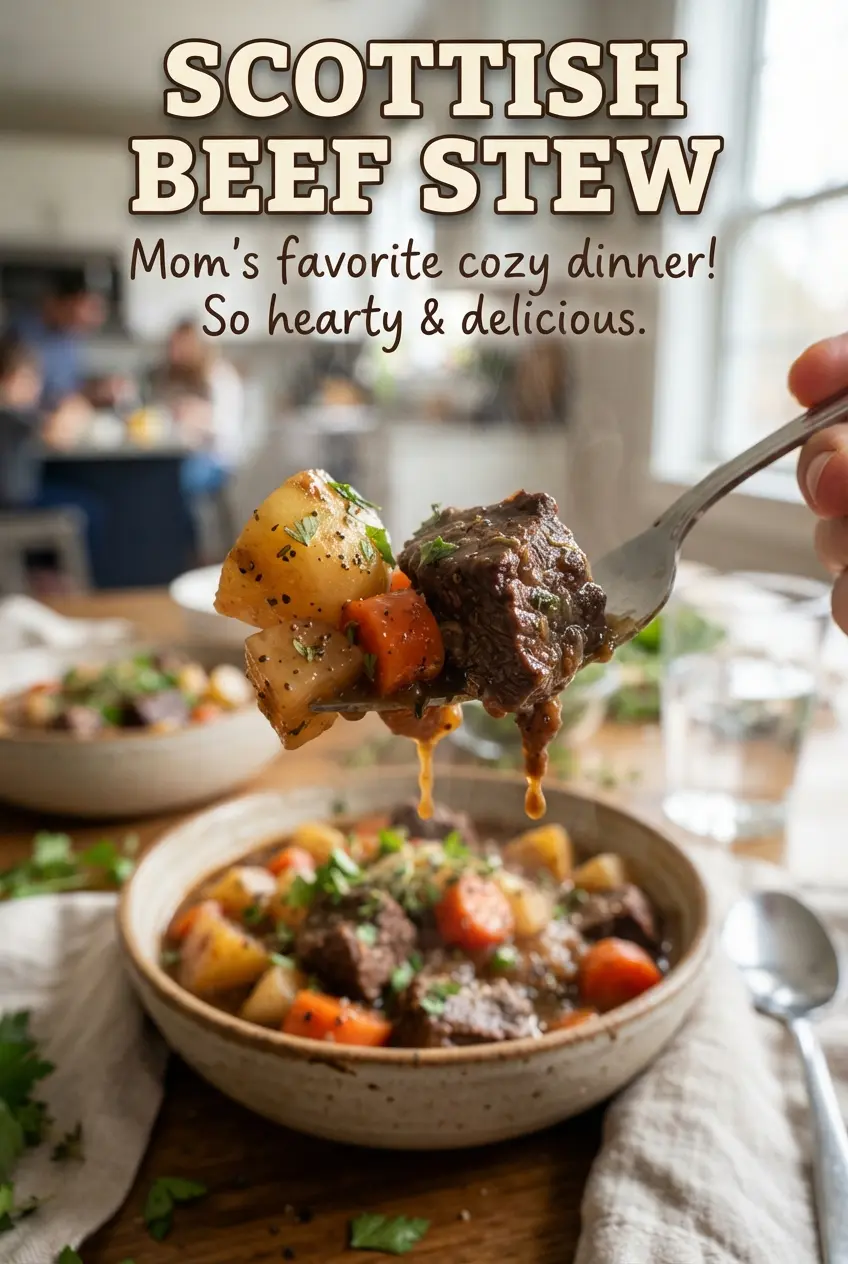
Scottish Beef Stew
Ingredients
Equipment
Method
- Season the beef chuck cubes with salt and black pepper. Toss the beef with the all-purpose flour until lightly coated.
- Heat the butter and vegetable oil in a Dutch oven over medium-high heat, then brown the beef in batches until well browned on all sides. Keep the pieces in a single layer and work in batches to avoid steaming (about 4-6 minutes per batch), then transfer browned beef to a plate.
- Reduce heat to medium and add the onions and leeks to the same Dutch oven. Cook for 6 minutes, until softened and fragrant with lightly golden edges.
- Pour in the Scottish ale (or extra beef broth) and scrape the bottom of the pan to loosen the browned bits. Bring to a gentle simmer and let it bubble for 1-2 minutes.
- Add the beef broth, Worcestershire sauce, dried thyme, and the browned beef back to the Dutch oven. Bring the mixture to a simmer over medium-high heat, then reduce to low.
- Cover and simmer for 1 1/2 hours. Look for steady small bubbles and beef that starts to give when pressed with a spoon.
- Stir in the pearl barley, turnip (or swede), and carrots. Return to a simmer, then reduce to low so the pot stays gently bubbling.
- Cover and simmer for 45-60 minutes, until the barley is tender and the beef is soft. The gravy should thicken noticeably as the barley releases starch.
- Taste and season to your preference with more salt and black pepper if needed. Turn off the heat and top with fresh parsley for a bright finish.