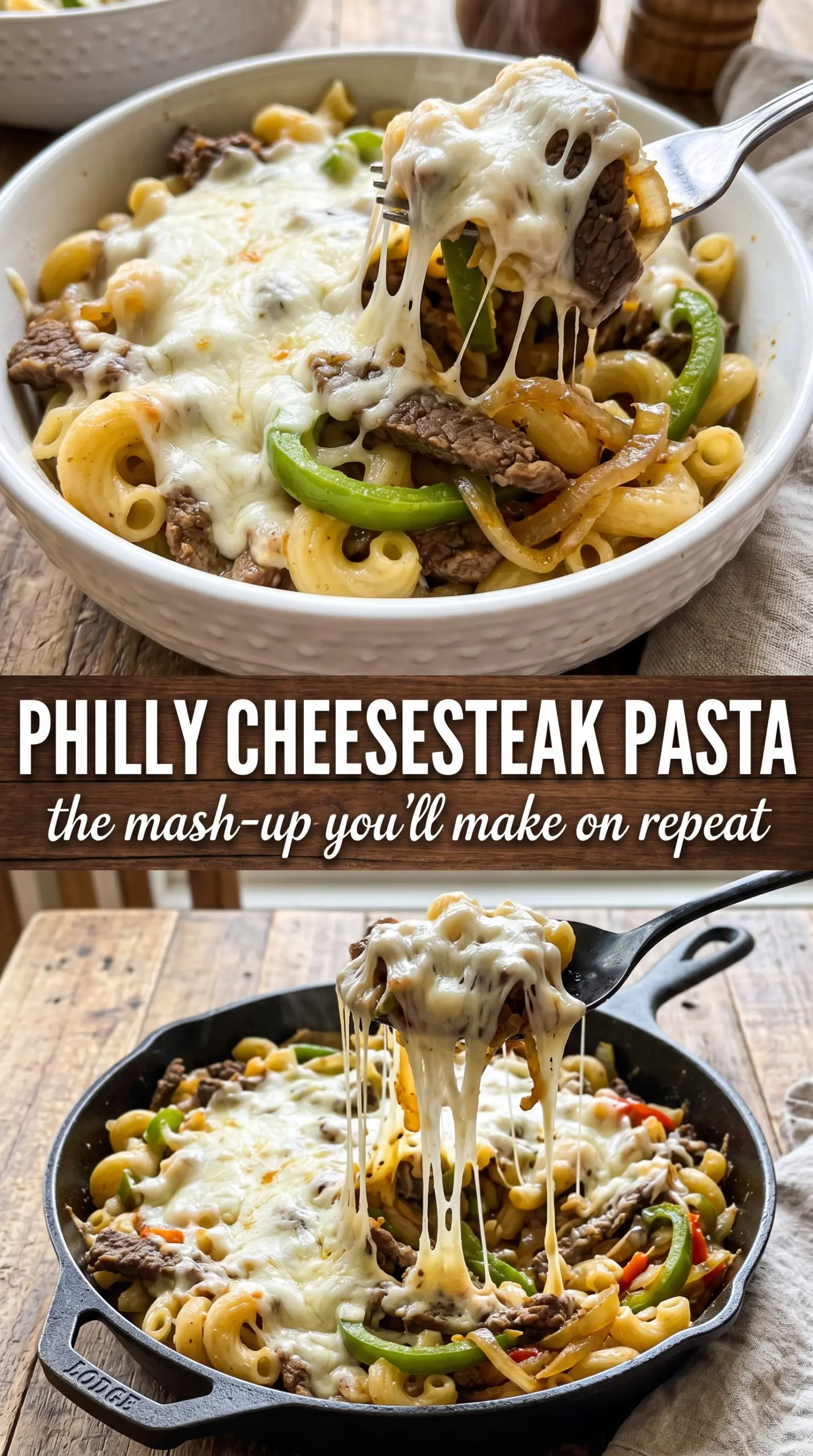
Philly cheesesteak pasta lands in that sweet spot between comfort food and straight-up weeknight payoff: tender steak, sweet onions, peppers, and mushrooms, all coated in a glossy provolone sauce that clings to every piece of penne. It eats like the sandwich you want, but with enough forkfuls of pasta to turn it into a full dinner without needing anything else on the plate.
What makes this version work is the order. The steak gets a fast, hard sear first so it stays juicy instead of simmering itself into toughness. Then the vegetables cook in the same pan until their edges pick up color, which gives the sauce a deeper, beefier base instead of tasting flat. The cream and broth reduce a little before the cheese goes in, so the sauce thickens instead of turning thin and milky.
Below, you’ll find the small details that keep the sauce smooth, the steak tender, and the pasta coated instead of soupy. There’s also a few smart swaps if you want to change the cheese, lighten it up, or make it work with what’s already in your kitchen.
The provolone sauce came together smooth and coated the pasta instead of pooling at the bottom. I used shaved steak, and it stayed tender even after tossing everything together.
Save this Philly cheesesteak pasta for the nights when you want shaved steak, peppers, and a creamy provolone sauce all in one pan.
The Trick Is Keeping the Steak Out of the Sauce Until the End
Most cheesesteak pasta goes wrong when the steak spends too long in the pan after it’s browned. Thin slices only need a fast sear, just enough to get color on the outside while the inside stays juicy. If you leave the steak in while the sauce simmers, it tightens up and starts tasting stringy instead of tender.
The vegetables matter for the same reason. Onions, peppers, and mushrooms need enough heat to soften and pick up some browning, but not so much that they collapse into a wet mess. That little bit of caramelization builds the savory base the sauce leans on. The pasta water at the end isn’t just a backup; it helps the sauce loosen and cling if the cheese tightens up too much.
What Each Ingredient Is Actually Doing in This Dish
- Shaved steak or thin sirloin — This is the backbone of the dish. Shaved steak cooks fast and stays tender, which is exactly what you want here. If you use sirloin, slice it as thin as you can against the grain so it doesn’t turn chewy.
- Provolone cheese — Provolone gives you that classic cheesesteak flavor and melts into a sauce that feels silky instead of heavy. Pre-shredded works in a pinch, but freshly shredded melts smoother because it doesn’t have the anti-caking starch that can make a sauce a little grainy.
- Beef broth and Worcestershire sauce — These build the meaty base underneath the cream. Worcestershire adds a little sharpness and depth, so the sauce tastes more like cheesesteak filling and less like plain cream pasta.
- Bell peppers, onion, and mushrooms — The peppers and onion bring sweetness, while the mushrooms add a savory note that makes the whole skillet taste fuller. Don’t rush them; that browning is part of what makes the sauce taste like it cooked longer than it did.
- Heavy cream — This gives the sauce body without breaking when the cheese goes in. Half-and-half can work, but the sauce will be thinner and you may need a little extra pasta water reduction to bring it back together.
- Penne or rigatoni — A tube shape grabs the sauce and catches bits of steak and vegetables. Long pasta works, but it won’t hold the filling in the same way.
Building the Skillet So the Sauce Stays Smooth
Boil the Pasta First and Keep a Little Water Back
Cook the pasta until just al dente, then reserve some of the cooking water before draining. That starchy water is useful insurance if the sauce tightens up after the cheese melts. If you skip it, you’ll end up trying to thin the sauce with plain water, and that washes out the flavor.
Sear the Steak in a Hot Pan, Then Get It Out of the Way
Season the steak with salt and pepper, then sear it in butter over high heat until it browns at the edges, usually just 2 to 3 minutes. You’re looking for color, not a long cook. Pull it out as soon as it’s done so it doesn’t overcook while the vegetables and sauce finish.
Cook the Vegetables Until They Stop Looking Watery
Add the onions, peppers, and mushrooms to the same pan and cook them over medium-high heat until they soften and pick up browned spots. The mushrooms need to release their moisture before they can brown, so don’t rush this stage. When the garlic and Worcestershire go in, the pan should smell deep and savory, not sharp or raw.
Reduce the Cream Before the Cheese Goes In
Pour in the beef broth and cream, then let the mixture simmer for a few minutes until it looks slightly thickened. This is the point people usually skip, and it’s why their cheese sauce turns thin. Once the provolone melts in, it should look glossy and coat the back of a spoon instead of running like soup.
Fold Everything Together at the End
Add the pasta and steak back to the skillet only after the sauce is smooth. Toss until every piece is coated, then use a splash of pasta water if the sauce starts to tighten. Serve it right away while the cheese is still silky and the steak stays tender.
How to Adapt It Without Losing the Cheesesteak Feel
Make It Gluten-Free With the Right Pasta
Use a sturdy gluten-free penne or rigatoni and cook it just until tender. Gluten-free pasta can break down fast, so stop a minute early and finish it in the sauce if needed. The sauce itself is naturally gluten-free as long as your broth and Worcestershire are certified safe.
Swap the Steak for Ground Beef
Ground beef makes this cheaper and a little more saucy, though you lose the sliced-steak texture that gives the dish its cheesesteak feel. Brown it fully and drain excess grease before adding the vegetables. This version is great when you want the same flavor profile with less slicing and prep.
Lighten It Up With Half-and-Half
Half-and-half will work, but the sauce won’t get quite as rich or thick. Let it simmer a little longer before adding the cheese, and use the pasta water carefully so you don’t over-thin it. The final dish will taste a touch lighter, not as plush.
Storage and Reheating
- Refrigerator: Store leftovers in an airtight container for up to 3 days. The sauce will thicken as it chills.
- Freezer: It freezes, but the cream sauce can separate a bit when thawed. If you plan to freeze it, undercook the pasta slightly and expect a softer texture after reheating.
- Reheating: Warm it gently on the stove or in the microwave with a splash of broth or milk. High heat is what turns the cheese sauce oily and makes the steak tough, so keep the heat low and stir often.
Answers to the Questions Worth Asking
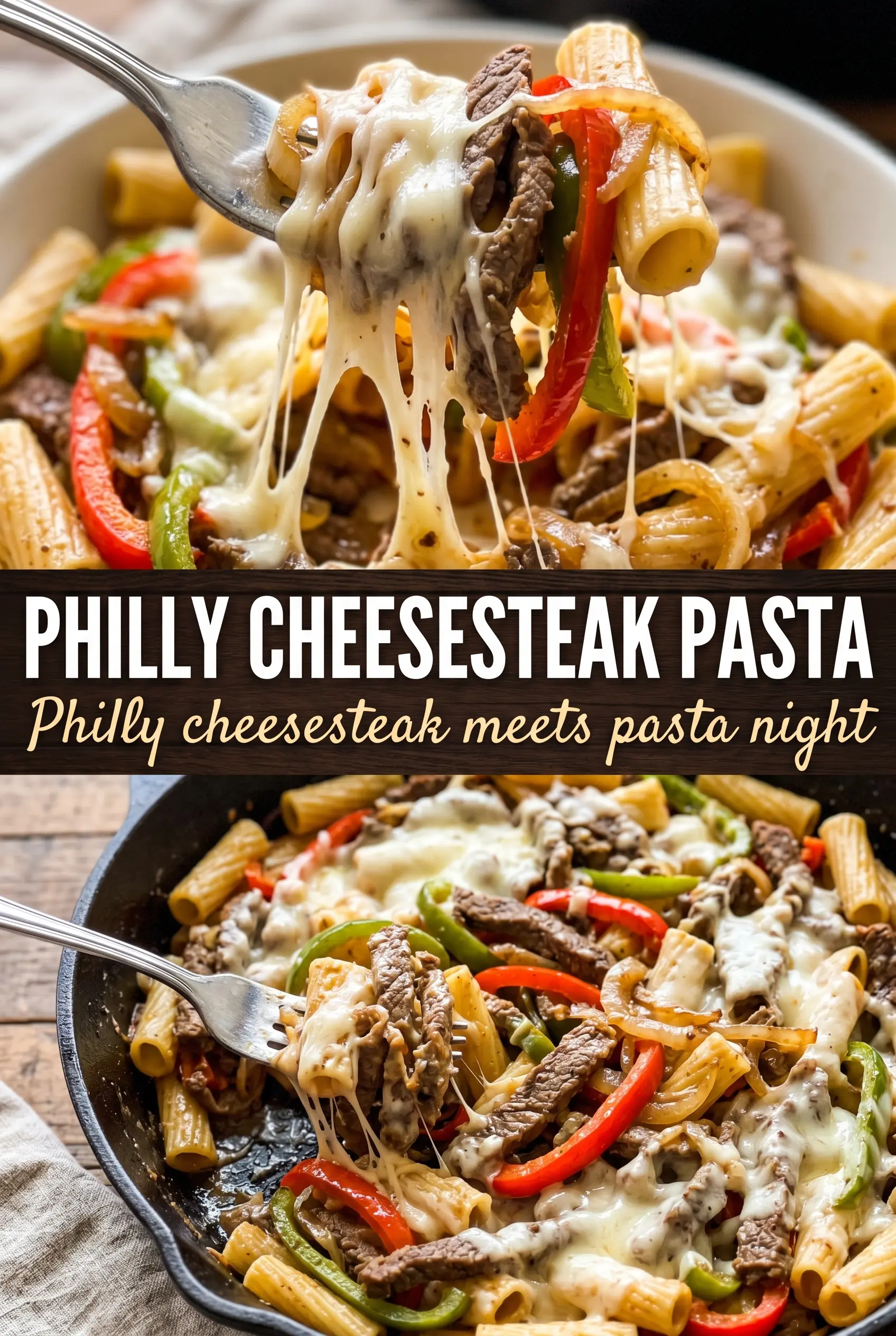
Philly Cheesesteak Pasta
Ingredients
Equipment
Method
- Bring a large pot of salted water to a boil and cook the penne or rigatoni until al dente, about 9–11 minutes. Reserve 1/2 cup pasta water, then drain the pasta and set aside.
- Season the shaved steak with salt and black pepper. Sear in a hot skillet with 1 tablespoon butter for 2–3 minutes until browned, then set aside.
- Melt the remaining butter in the same skillet and cook the sliced onion, bell peppers, and mushrooms over medium-high heat for 6–8 minutes until caramelized. Add the minced garlic and Worcestershire and stir for 30–60 seconds.
- Pour in the beef broth and heavy cream, bring to a simmer, and cook for 3–4 minutes until slightly reduced. Stir to keep the sauce smooth.
- Reduce heat to low and stir in the shredded provolone until melted and smooth. Toss in the pasta and set-aside steak, adding reserved pasta water as needed to loosen.
- Serve immediately with extra provolone melted on top for a visibly cheesy finish. Add a final pinch of salt and black pepper to taste.