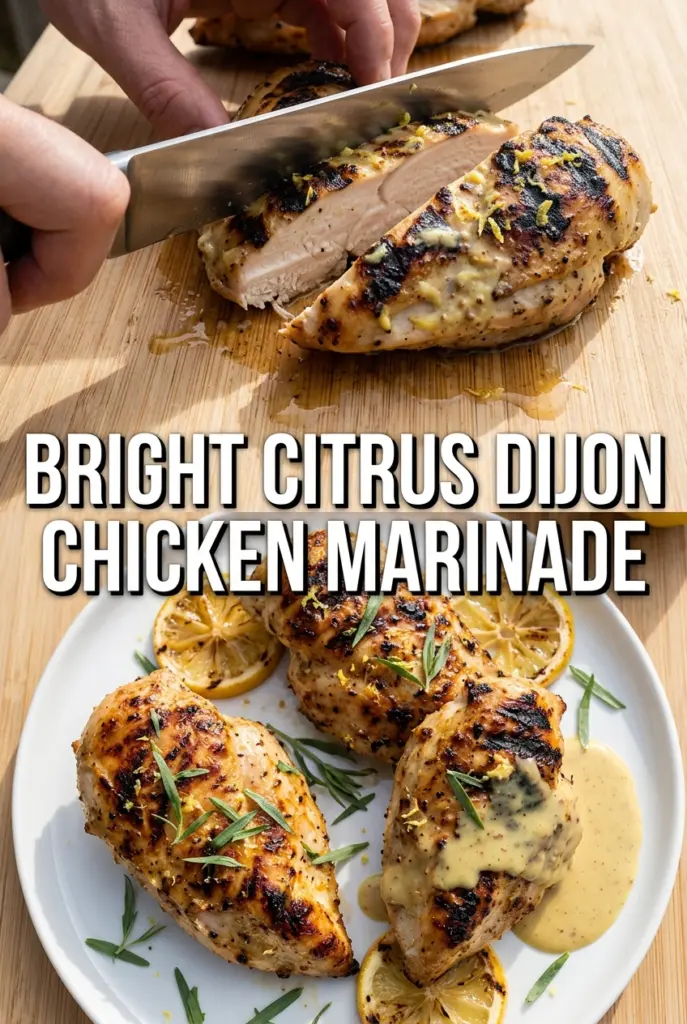
Juicy grilled chicken gets a brighter, sharper edge when Dijon and citrus work together in the marinade. The mustard brings body and a little bite, while orange and lemon keep the flavor lively instead of heavy. On the grill, the honey helps the surface turn golden without tipping into sticky-sweet, so you get charred edges, tender meat, and a pan-free main dish that still feels a little special.
The trick here is balance. Dijon helps emulsify the marinade, which means the oil, juice, and seasonings stay blended long enough to coat the chicken evenly. Citrus adds flavor fast, but it can also turn chicken stringy if you leave it too long, so the marinating window matters. A couple of hours is enough for flavor on most cuts, and the grill finish keeps the outside browned while the inside stays juicy.
Below, I’ve included the small details that make this marinade work on the grill instead of just in the bowl: how long to marinate, why the garlic goes in raw, and what to change if you’re using breasts, thighs, or drumsticks.
The chicken came off the grill with a great golden color, and the Dijon-citrus marinade kept it juicy all the way through. I usually lose flavor on grilled chicken breasts, but this had a bright tang and the honey gave the edges just enough caramelization.
Love the bright citrus-Dijon crust on this grilled chicken? Save it to Pinterest for easy dinners that taste fresh, tangy, and a little elegant.
The Marinade Ratio That Keeps Chicken Bright, Not Bitter
Most citrus marinades fail one of two ways: they taste flat because the acid is too timid, or they turn harsh because the lemon or orange gets pushed too hard. This version stays balanced because Dijon gives the marinade structure and honey rounds out the edges. You’re not just seasoning the chicken; you’re building a coating that clings long enough to do its job.
The other mistake is marinating too long. Citrus can start to tighten the surface of chicken if it sits for many hours, especially on thinner cuts. Two to eight hours is the useful range here, with the shorter end working best for breasts and the longer end better for thighs or drumsticks. That window gives you flavor without sacrificing texture.
What Each Ingredient Is Actually Doing In This Marinade
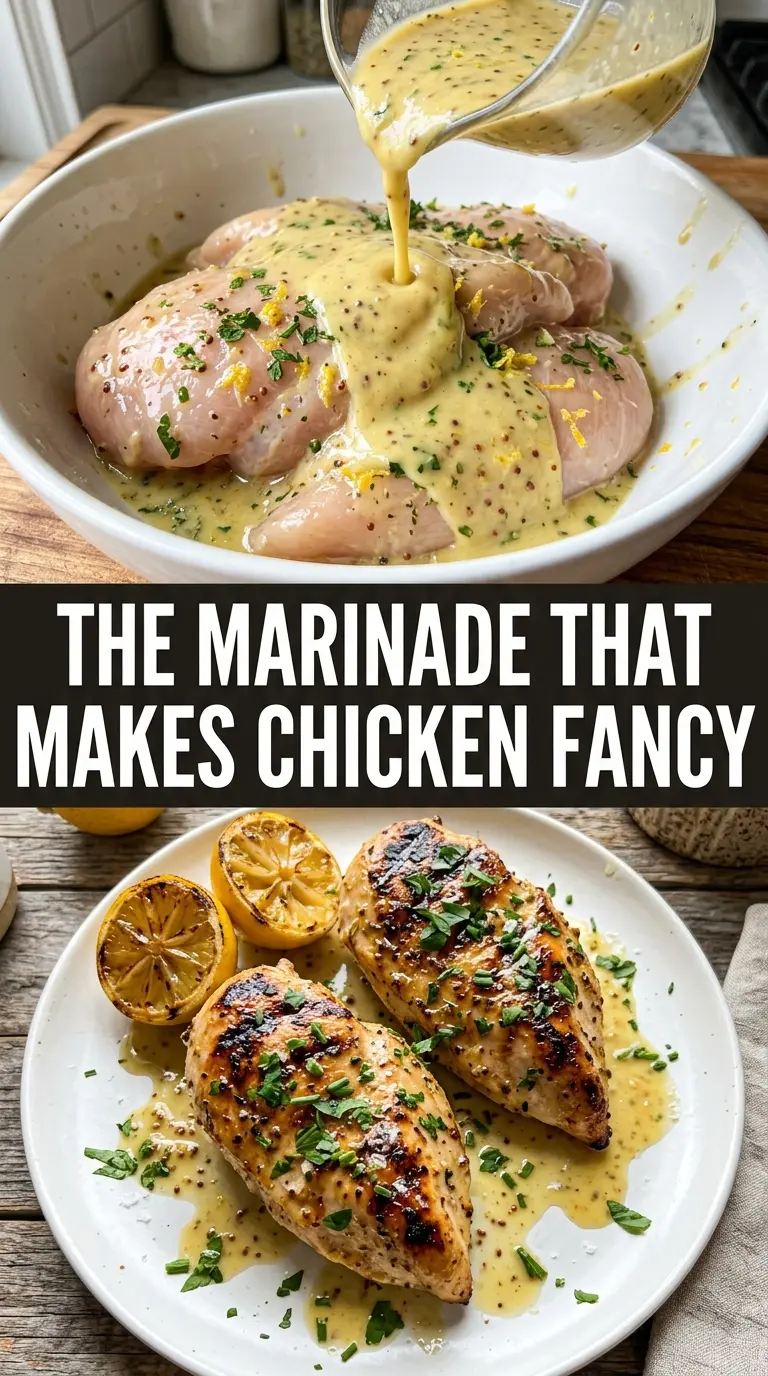
- Dijon mustard — This is the backbone of the marinade. It adds sharpness, but it also helps the oil and citrus stay blended so the chicken gets coated evenly instead of sitting in separate layers.
- Orange juice and lemon juice — Orange brings sweetness and aroma, while lemon keeps the flavor clean and lively. You can use bottled juice in a pinch, but fresh juice makes the marinade taste noticeably brighter.
- Olive oil — Oil carries the flavors and helps the chicken brown on the grill. A standard extra-virgin olive oil works fine; save the fancy bottle for finishing, because the grill will mute the subtle notes anyway.
- Honey — Just enough to soften the acidity and help the surface caramelize. Leave it out and the marinade tastes sharper, but not in a good way.
- Garlic and thyme — Garlic gives the marinade depth, and dried thyme reinforces the French-American feel without overpowering the citrus. Fresh thyme works too; use a little more because dried herbs concentrate as they hydrate.
- Chicken cut — Any cut works, but the timing changes. Breasts need the shorter end of the marinating window so they stay tender, while thighs and drumsticks can handle more time and a little more grill char.
How to Marinate, Grill, and Rest the Chicken Without Drying It Out
Whisk the marinade until it looks creamy
Start by whisking the oil, mustard, juices, garlic, honey, thyme, salt, and pepper until the mixture turns thick and glossy. If the Dijon is clumped or the oil sits on top, keep whisking for another few seconds; that smooth, emulsified look is what helps the flavor stick to the chicken. A separated marinade still tastes fine, but it won’t coat as evenly, and you lose some of the benefit right up front.
Let the chicken soak, but don’t overdo it
Place the chicken in a zip-top bag and pour the marinade over it, pressing out the air so the pieces sit in close contact with the liquid. Turn the bag once or twice while it chills so the chicken picks up flavor on all sides. If you leave it much past eight hours, the citrus starts to work against the texture, especially on boneless breasts.
Grill over medium-high heat for color and juiciness
Preheat the grill before the chicken goes on. You want a hot grate so the outside sears and the honey in the marinade can brown instead of steaming. Grill until the internal temperature reaches 165°F, but judge doneness by the cut too: thin breasts cook fast, while thighs can take a little longer and benefit from a bit of extra char on the outside.
Rest before slicing
Pull the chicken off the grill and let it rest for five minutes. That short pause keeps the juices from running out the second you cut into it. If your chicken looks perfect on the grill but turns dry on the board, the missing rest time is usually the reason.
How to Adapt This for Different Cuts and Dietary Needs
Chicken breasts instead of thighs
Breasts cook faster and dry out more easily, so use the shorter marinating window and start checking temperature early. Pull them the moment they hit 165°F. The result is leaner and a little less forgiving, but the citrus-Dijon flavor still comes through cleanly.
Gluten-free version
This recipe is naturally gluten-free as long as your Dijon mustard is certified gluten-free. That small label check matters because some mustards use additives or vinegar sources that vary by brand.
Dairy-free and weeknight-friendly prep
There’s no dairy here, so the main adjustment is timing. Mix the marinade in the morning, add the chicken when you get home, and dinner can still hit the grill in a couple of hours with full flavor.
No grill, no problem
A grill pan or heavy skillet works if the weather won’t cooperate. You won’t get quite the same smoky edge, but you’ll still get good browning if the pan is hot before the chicken goes in.
Storage and Reheating
- Refrigerator: Store cooked chicken in an airtight container for up to 4 days. The citrus flavor stays bright, though the grilled exterior softens a bit.
- Freezer: It freezes well for up to 2 months. Wrap tightly and thaw overnight in the refrigerator so the texture stays as close to fresh as possible.
- Reheating: Reheat gently in a covered skillet over low heat or in a 300°F oven until warmed through. High heat dries out the leaner cuts fast, so avoid blasting it in the microwave unless you don’t mind losing some juiciness.
Answers to the Questions Worth Asking
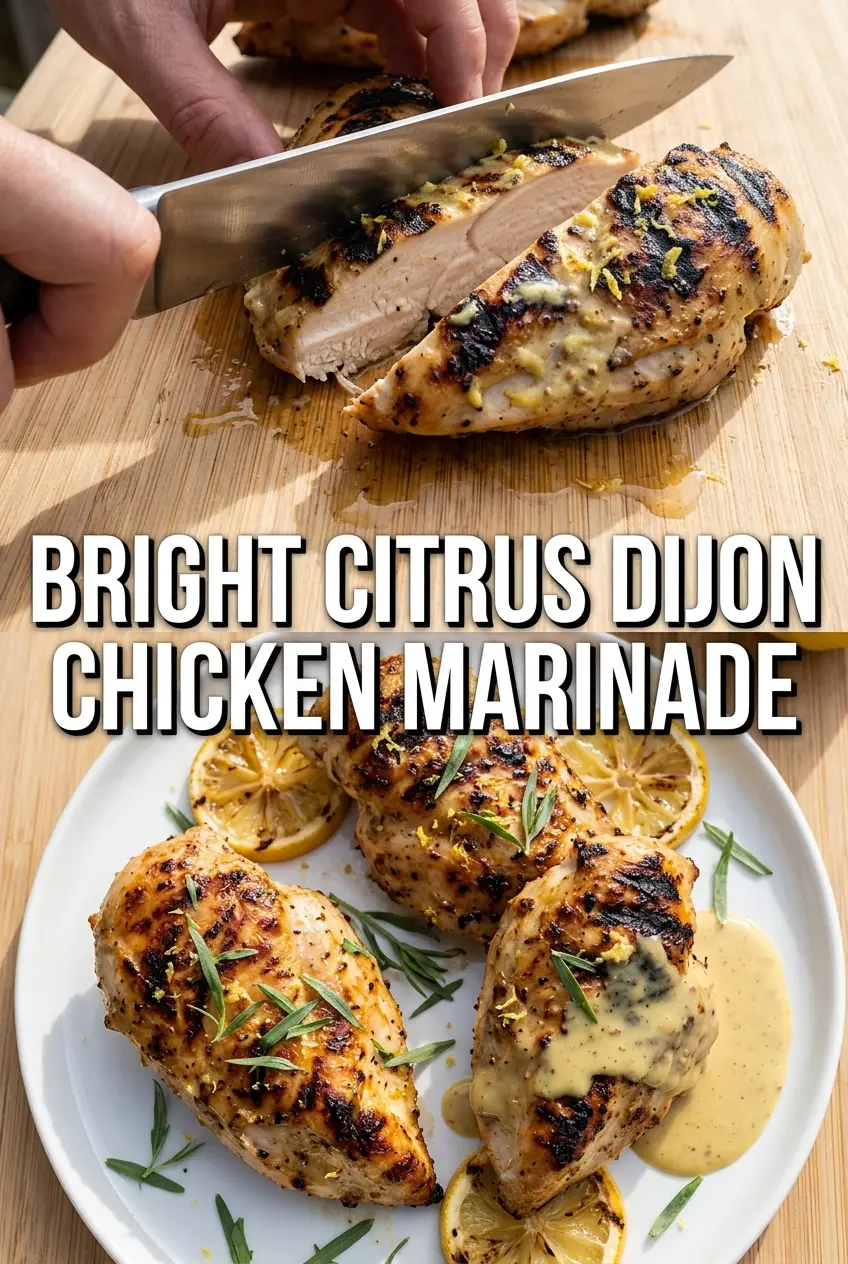
Citrus Dijon Grilled Chicken Marinade
Ingredients
Equipment
Method
- Whisk olive oil, Dijon mustard, orange juice, lemon juice, garlic, honey, dried thyme, salt, and pepper until smooth and evenly combined, with a glossy golden-brown look.
- Place chicken in a large zip-top bag and pour the marinade over it so the pieces are coated.
- Refrigerate the bag for 2-8 hours, flipping once halfway if you can, until the chicken looks more deeply colored and lightly glossy.
- Preheat the grill to medium-high heat until the grates are hot, about ready to sizzle when a drop of marinade hits.
- Grill chicken until the internal temperature reaches 165°F, timing varies by cut, and turn as needed for golden grill marks.
- Let the chicken rest for 5 minutes after grilling, tenting loosely if possible, so the juices settle and the surface stays moist.