
Silky pasta in a glossy garlic cream sauce is the kind of dinner that disappears fast and leaves the pot scraped clean. The noodles cook right in the broth and cream, so they absorb flavor instead of getting drained and rinsed, and the parmesan melts into the sauce instead of sitting on top in clumps. What you get is a bowl of pasta that tastes like it took far more effort than it did.
The trick here is keeping the heat gentle once the dairy goes in. Garlic can turn bitter in seconds if it browns too far, and cream can separate if the sauce boils hard, so this version stays in the sweet spot: fragrant garlic, a slow simmer, and frequent stirring while the pasta releases starch into the liquid. That starch is what gives the sauce its body without needing flour.
Below, I’ve included the timing cues that matter most, plus the small ingredient swaps that still keep the sauce silky. If you’ve ever ended up with pasta that was done before the sauce was, this method fixes that problem.
The sauce thickened up beautifully and the pasta came out perfectly coated, not soupy at all. I followed the timing exactly and my husband went back for seconds before I even sat down.
Love a glossy garlic cream sauce? Save this one pot creamy garlic pasta for the nights when you want silky noodles, melted parmesan, and one pan to wash.
The Part That Keeps the Sauce Creamy Instead of Clumpy
One-pot pasta can go wrong in two ways: the noodles stick before they soften, or the sauce turns thin and watery because the liquid never reduces enough. This version avoids both by keeping the pasta moving through a shallow simmer and using enough starch-rich liquid for the sauce to build naturally as the noodles cook. You’re not waiting for a separate sauce to thicken; you’re letting the pasta do that work for you.
The other failure point is heat. If the pot is at a rolling boil when the cream and parmesan go in, the dairy can split or the sauce can tighten up into a grainy mess. Gentle bubbles are enough. The liquid should look active but calm, and the sauce should coat the spoon by the end of the cook time instead of running off like soup.
- Linguine or spaghetti — Long noodles work best because they nest into the pot and cook evenly in the reduced liquid. Short pasta can work, but it changes the texture and you may need a touch more broth.
- Heavy cream — This is what keeps the sauce stable. Half-and-half will work in a pinch, but it won’t stay as lush, and you’ll need to be extra careful with heat.
- Parmesan — Freshly grated parmesan melts smoothly. Pre-shredded cheese often has anti-caking agents that can leave the sauce slightly sandy.
- Broth — Chicken broth gives the deepest savory backbone, but vegetable broth keeps the pasta vegetarian. Use low-sodium broth if you want more control over the final salt level.
What Each Ingredient Is Actually Doing in This Creamy Pasta
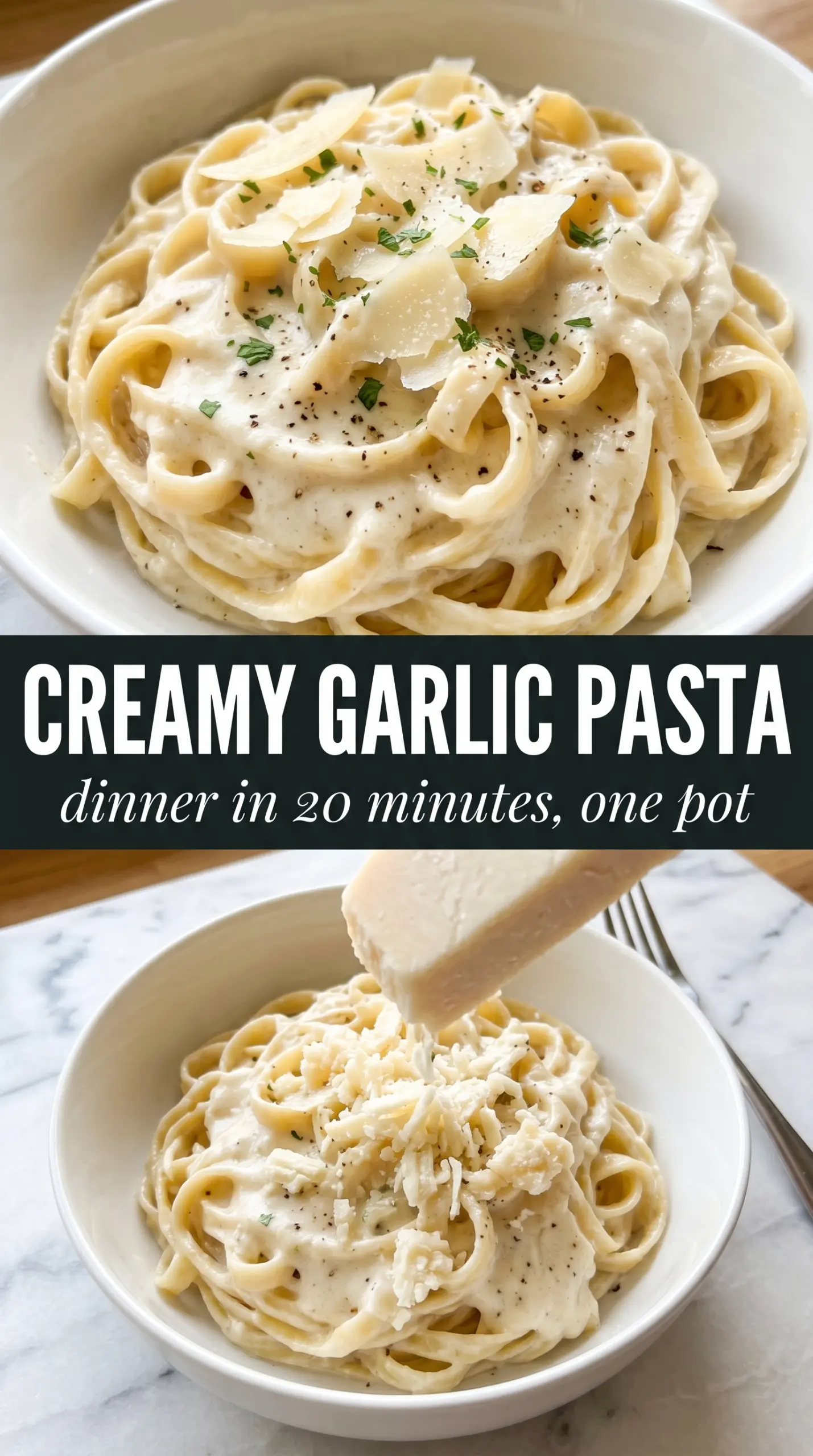
- Pasta (the foundation) — Cook to al dente so it doesn’t turn mushy in the sauce. Reserve pasta water for sauce adjustment.
- Garlic (the aromatic base) — Cook until fragrant but not brown. Minced garlic dissolves into the sauce; sliced stays distinct.
- Butter (the richness and emulsifier) — This carries the garlic flavor and helps the cream sauce coat the pasta. Start with plenty.
- Cream (the sauce base) — Heavy cream creates a luxurious sauce. Don’t let it boil hard or it can break and separate.
- Cheese (the binding and salt) — Parmesan melts into the sauce and adds umami. Add it off heat so it doesn’t get grainy.
- Pasta water (the secret ingredient) — Starchy water helps the sauce cling to the noodles. Start with a little and add more if needed.
- Salt and pepper (proper seasoning) — Season boldly in the sauce; the pasta will dilute it slightly. Taste and adjust before serving.
- Final toss (the emulsification) — Toss gently so the pasta stays al dente and every noodle gets coated. If too thick, loosen with more pasta water.
Cooking the Pasta in the Sauce Without Breaking It
Blooming the Garlic
Melt the butter over medium heat, then add the garlic and stir for 1 to 2 minutes until it smells sweet and turns just barely golden at the edges. If it browns deeply, the whole dish picks up a bitter edge, and that carries straight through the cream. Keep the garlic moving in the butter so it softens instead of scorching on the bottom of the pot.
Letting the Liquid Do the Thickening
Pour in the broth and cream, then bring the pot to a gentle boil before adding the pasta. Once the noodles go in, stir often and keep the heat at a steady simmer so they don’t weld themselves together. As the pasta cooks, the liquid should slowly turn opaque and creamy; if it still looks thin at 10 minutes, keep going and stir more often so the starch can spread through the sauce.
Finishing With Parmesan
When the pasta is al dente and the sauce has reduced, pull the pot slightly off the heat before stirring in the parmesan and Italian seasoning. Cheese melts cleaner when the heat isn’t too aggressive, and that’s the difference between a silky sauce and one that turns stringy or grainy. Taste at the end and salt with intention, because parmesan and broth both bring salt of their own.
How to Make It Work With What’s in Your Kitchen
Vegetarian Version With Full Flavor
Use vegetable broth instead of chicken broth and keep the rest of the recipe the same. The parmesan still brings enough savory depth to make the sauce taste rich, so you won’t lose anything important as long as the broth is good-tasting.
Lighter Creamy Pasta
You can swap in half-and-half for the heavy cream, but the sauce will be a little looser and less rich. Let it reduce an extra minute or two at the end, and keep the heat gentle so it doesn’t separate.
Gluten-Free Pasta
Use a sturdy gluten-free spaghetti and check it a minute early, because some brands break down faster in one-pot cooking. If the noodles absorb the liquid too quickly, add a splash more broth and keep stirring until the sauce turns glossy again.
Leftover Pasta That Still Eats Well
This pasta thickens as it sits, which is normal. Store it in an airtight container in the refrigerator for up to 3 days, then reheat it gently with a splash of broth or cream to loosen the sauce before stirring in extra parmesan.
Answers to the Questions Worth Asking
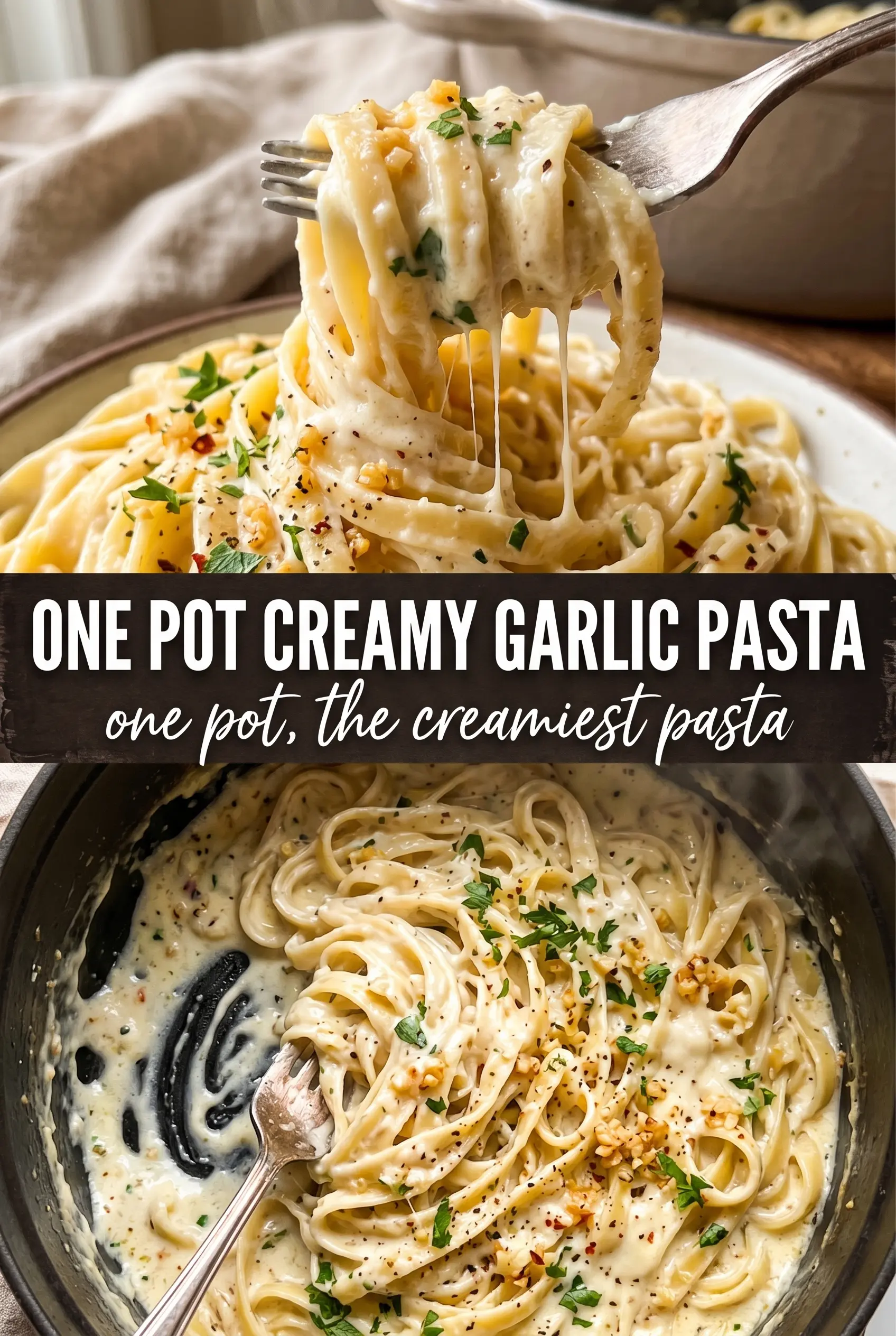
One Pot Creamy Garlic Pasta
Ingredients
Equipment
Method
- Melt the butter in a large pot over medium heat, then add the minced garlic and sauté for 1–2 minutes until fragrant and just golden, stirring to prevent browning.
- Add the broth and heavy cream to the pot and bring to a gentle boil, keeping the heat steady so it doesn’t scorch or split.
- Add the uncooked linguine and cook for 10–12 minutes, stirring frequently, until al dente and the liquid has reduced into a creamy sauce that coats the noodles.
- Stir in the grated parmesan and Italian seasoning until fully melted and the sauce turns silky and glossy, with no grainy cheese bits.
- Season generously with salt and cracked black pepper to balance the cream and make the garlic flavor pop.
- Serve immediately topped with fresh basil leaves and extra parmesan.