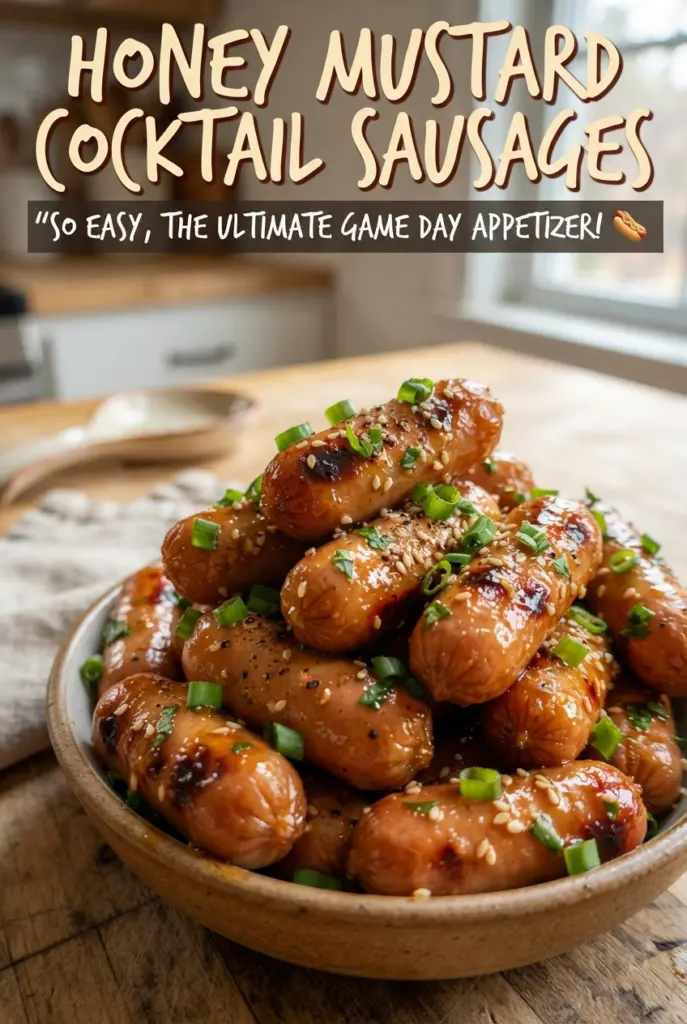
Sticky honey mustard cocktail sausages are the kind of appetizer that disappears before you’ve set the serving plate down. The glaze clings to every sausage, turning glossy and dark around the edges while the inside stays juicy and snappy. One bite gets you sweet honey, sharp mustard, a little garlic, and that savory finish from soy sauce, all in a bite-sized package that’s easy to spear with a toothpick.
What makes this version work is the balance. Whole grain mustard brings texture and a gentler heat, while Dijon sharpens the glaze so it doesn’t taste flat or overly sweet. The sausages brown first, which gives the sauce something deeper to grab onto, and the final simmer tightens everything into a sticky coating instead of a thin syrup. A small knob of butter rounds out the glaze and helps it shine.
Below, I’ve included the small details that matter most, from keeping the glaze from turning grainy to the easiest way to adapt these for a party tray or slow cooker.
The glaze thickened right on time and coated every sausage instead of pooling in the pan. I brought these to a game night and the toothpicks were gone in minutes.
Sticky honey mustard cocktail sausages are the party appetizer to keep handy when you need a fast skillet recipe with a glossy glaze and no fuss.
The Glaze Won’t Stay Thin for Long — That’s the Point
The mistake most people make with cocktail sausages is treating the sauce like a pour-over instead of a glaze. Honey thickens fast once it hits heat, and mustard alone can taste harsh if it never gets time to mellow. Here, the sausages brown first, then the sauce simmers in the same pan so the glaze picks up those savory browned bits and tightens into something sticky instead of watery.
- Brown the sausages first. That step builds flavor and gives the glaze a surface to cling to. If you rush straight to the sauce, you miss the deeper, roasted note that keeps the dish from tasting one-dimensional.
- Use both mustards. Whole grain mustard adds texture and a softer bite, while Dijon sharpens the finish. One without the other works, but the sauce loses either body or brightness.
- Simmer until it coats a spoon. If the glaze still looks loose in the pan, it will slide off the sausages on the tray. You want it to leave a shiny trail when stirred, not run like dressing.
What Each Ingredient Is Actually Doing in the Pan

- Cocktail sausages — These are already fully cooked, so the goal is browning and heating through, not cooking from scratch. Any smoked cocktail sausage or mini kielbasa will work, but a leaner sausage may not look quite as glossy because it gives off less fat.
- Honey — This is the backbone of the glaze, and it’s what gives the sauce that lacquered finish. There’s no real substitute that behaves the same way, though maple syrup will work in a pinch and gives a darker, less floral result.
- Whole grain mustard and Dijon mustard — The whole grain mustard brings speckled texture and mild heat, while Dijon cuts through the sweetness and keeps the sauce from tasting heavy. If you only have one, use it, but the glaze will lose either the rustic texture or the sharp edge.
- Soy sauce — A small amount makes the glaze taste complete by adding salt and depth. Tamari works well if you need a gluten-free version.
- Butter and garlic — Butter helps the glaze look rich and keeps the garlic from tasting sharp. The garlic only needs 30 seconds; if it browns, it turns bitter fast and that bitterness will carry through the whole sauce.
- Sesame seeds and chives — These are garnish, but they matter because they break up the glossy surface and add a little nuttiness and freshness. Don’t skip them if you want the final platter to look finished.
How to Build the Sauce So It Stays Glossy and Sticky
Getting the Sausages Browned
Melt the butter over medium heat and add the sausages in a single layer if your skillet has room. Let them sit long enough to pick up real color before stirring, because pale sausages give you a pale glaze. You’re looking for browned spots and a little sizzling sound, not a gentle steam bath. If the pan looks crowded, work in two batches so they can sear instead of just warming through.
Waking Up the Garlic
Add the garlic after the sausages have browned and cook it just until fragrant, about 30 seconds. It should smell warm and savory, not sharp or burnt. Garlic cooks fast in butter, and once it darkens, the bitterness will hang around in the final sauce. Pull the pan off the heat for a few seconds if needed before adding the next ingredients.
Reducing the Glaze
Whisk the honey, both mustards, and soy sauce together before pouring them in. Once the sauce hits the pan, stir often and keep the simmer gentle so the honey thickens without scorching on the bottom. In 8 to 10 minutes, the sauce should look shiny, cling to the sausages, and leave a clean path for a second or two when you drag a spoon through it. If it still seems thin, give it another minute; if it starts to look too tight, add a teaspoon of water and stir it through.
Finishing for the Platter
Turn the sausages onto a serving dish while they’re still hot and glossy, then scatter on sesame seeds and chives. The glaze firms up fast as it cools, which is good for serving with toothpicks but not ideal if you leave them sitting in the skillet too long. Serve warm, not piping hot, so the coating stays sticky instead of slipping off when people pick them up.
How to Adapt These for a Bigger Crowd or a Different Pantry
Make Them in a Slow Cooker
Brown the sausages first in a skillet, then move everything to a slow cooker and cook on low until the glaze thickens and the sausages are hot through. This works well for parties, but the sauce won’t caramelize the same way it does in a pan, so you’ll get a softer, less lacquered finish.
Gluten-Free Version
Use tamari instead of soy sauce and check that your cocktail sausages are gluten-free. The glaze stays sticky and balanced, and you won’t lose any of the savory depth.
Less Sweet, More Sharp
Cut the honey back slightly and add another teaspoon of Dijon if you want a tangier glaze. That version tastes a little less candy-like and works especially well if you’re serving the sausages alongside other rich appetizers.
Storage and Reheating
- Refrigerator: Store leftovers in an airtight container for up to 4 days. The glaze will thicken as it chills, which is normal.
- Freezer: These freeze well for up to 2 months, though the glaze may look a little looser after thawing. Freeze in a flat container or zip-top bag, then thaw overnight in the refrigerator.
- Reheating: Warm gently in a skillet over low heat with a splash of water to loosen the glaze. Microwaving on high can make the sauce split or turn sticky in uneven patches before the sausages are hot in the center.
Answers to the Questions Worth Asking
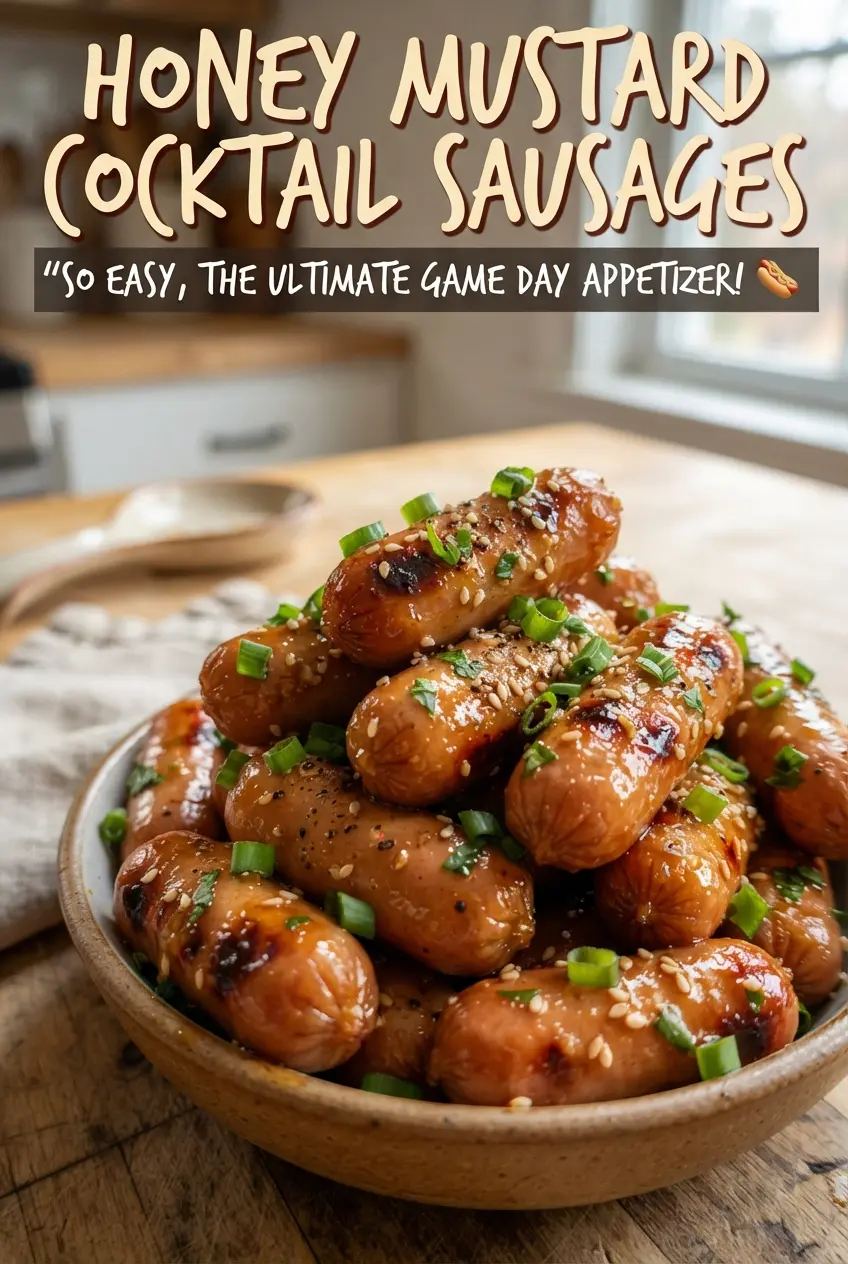
Honey Mustard Cocktail Sausages
Ingredients
Equipment
Method
- Melt butter in a large skillet over medium heat, then add the cocktail sausages and brown for 5-6 minutes, turning as needed until browned.
- Add the minced garlic and cook for 30 seconds until fragrant, scraping up any browned bits from the pan.
- Whisk honey, whole grain mustard, Dijon mustard, and soy sauce, then pour the mixture over the sausages.
- Simmer for 8-10 minutes over medium heat, stirring often, until the glaze is thick and sticky and clings to the sausages.
- Sprinkle sesame seeds and chopped chives over the glazed sausages while hot so they stick to the surface.
- Serve warm with toothpicks, ensuring each sausage has a visible coating of honey mustard glaze.


