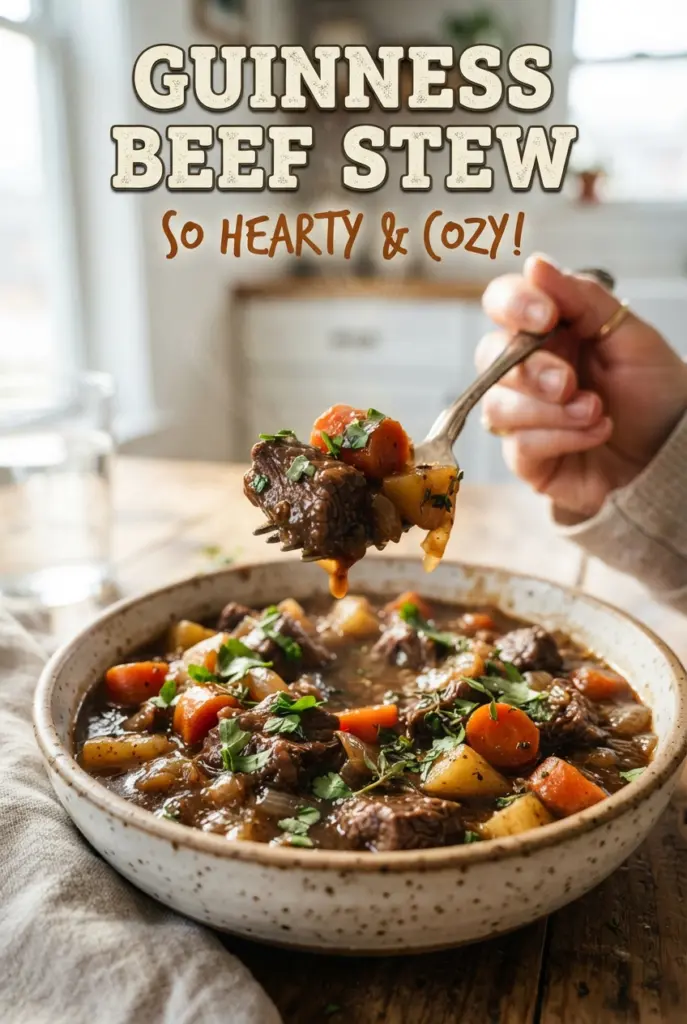
Guinness beef stew earns its place in the rotation because the broth turns deep, dark, and glossy while the beef cooks until it gives at the touch of a spoon. The stout doesn’t make the stew taste like a pint; it rounds the edges, deepens the meatiness, and leaves you with a rich gravy that clings to potatoes and carrots instead of running thin on the plate.
The trick is building flavor in layers. Browning the beef in batches gives you the base, then the tomato paste cooks long enough to lose its raw edge before the Guinness goes in and loosens all the browned bits from the pan. That combination, plus a long gentle simmer, is what gives this stew its body without needing a heavy hand with thickeners.
Below you’ll find the timing that keeps the vegetables intact, the best way to keep the stew from tasting flat, and a few swaps that still give you a proper Irish-style bowl at the end.
The stew turned out rich and silky, and the beef was fall-apart tender after the full simmer. I liked that the Guinness mellowed into the gravy instead of tasting bitter, and the potatoes held their shape perfectly.
Save this Guinness beef stew for the kind of night when you want a dark, rich gravy and beef that cooks until spoon-tender.
The Browning Step That Keeps the Stew Deep, Not Gray
The biggest mistake with beef stew is crowding the pan and steaming the meat instead of browning it. Browning in batches builds the savory backbone of the stew, and those crusty bits left behind are not scrapings to ignore; they’re the flavor that turns the broth from thin to layered. If the pan looks dry between batches, that’s fine. A little patience here pays off later.
The other thing that matters is keeping the simmer gentle. A hard boil tightens the beef and can make the broth look greasy or harsh. You want barely bubbling liquid that moves lazily around the edges, which gives the chuck time to break down without falling apart into shreds before the vegetables even go in.
What Each Ingredient Is Actually Doing In This Bowl
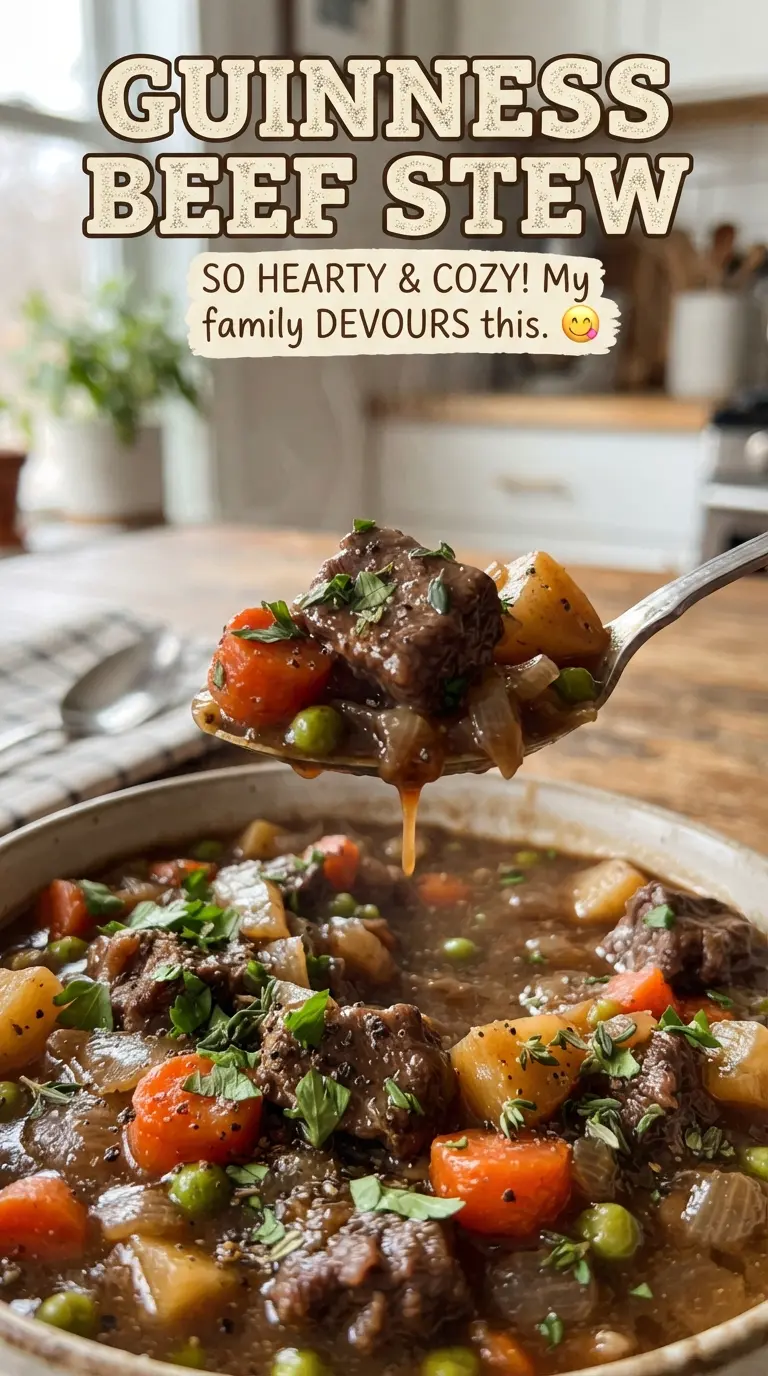
- Beef chuck — This cut has enough fat and connective tissue to turn tender during a long simmer. Lean stew meat dries out faster and won’t give you the same silky texture in the broth.
- Guinness stout — It adds depth and a slight roasted bitterness that balances the sweetness of the carrots and parsnips. Use the full bottle; it cooks down into the sauce, and the flavor mellows as it simmers.
- Tomato paste — A short cook in the pan takes away the raw tomato edge and concentrates the stew base. Don’t skip the minute of cooking here, because that small step keeps the finished gravy from tasting flat.
- Parsnips and potatoes — Parsnips bring a sweet, earthy note that works beautifully with stout, while potatoes make the stew feel complete. Cut both into large chunks so they hold their shape during the final simmer.
- Flour — Tossing the beef in flour helps the browned bits cling to the meat and lightly thickens the broth as it cooks. If you need a gluten-free version, use a cup-for-cup gluten-free flour blend and brown the beef the same way.
Building the Stew So the Beef Stays Tender
Season and Sear in Batches
Coat the beef with salt, pepper, and flour, then brown it in hot oil in small batches. You want a deep crust on the outside and a mostly dry surface on the meat before it comes out of the pan. If the pieces are packed too tightly, they’ll turn pale and gray instead of developing the roasted flavor that carries the whole stew.
Cook the Onion Base Until It Turns Sweet
Let the onions cook until softened and lightly golden, then add the garlic and tomato paste for a short, focused cook. The onions should smell sweet, not sharp, and the tomato paste should darken a shade. If the garlic goes in too early, it can burn before the onions finish, which leaves the stew tasting bitter.
Deglaze With Guinness and Start the Simmer
Pour in the Guinness and scrape the bottom of the pot until the browned bits dissolve into the liquid. Add the broth, Worcestershire, brown sugar, thyme, and bay leaves, then return the beef and bring everything to a gentle simmer. Keep the heat low enough that only small bubbles break the surface; aggressive boiling is what makes chuck turn stringy before it turns tender.
Add the Vegetables Late Enough to Keep Them Intact
Carrots, parsnips, and potatoes go in after the beef has already had time to soften. That late addition keeps them from turning mushy and soaking up too much liquid before the stew is done. When they’re ready, a knife slides through the potatoes with no resistance and the carrots still hold their shape instead of collapsing into the broth.
How to Adapt This Stew for Different Tables and Leftovers
Gluten-Free Version
Swap the all-purpose flour for a gluten-free flour blend or a light dusting of cornstarch, then brown the beef the same way. The stew will still thicken nicely, though cornstarch gives a slightly glossier finish than flour.
A Milder Stout Flavor
Use a darker beef broth in place of half the Guinness if you want less roast bitterness. You lose a little of the signature stout edge, but the stew still tastes rich and deeply savory.
Make It Ahead
This stew tastes even better the next day after the flavors settle. Cook it fully, cool it quickly, and refrigerate it overnight; the broth will thicken and the beef will stay tender once it reheats.
Storage and Reheating
- Refrigerator: Store for up to 4 days. The broth thickens as it chills, which is normal.
- Freezer: It freezes well for up to 3 months. Cool it completely first, then freeze in airtight containers with a little headspace.
- Reheating: Reheat slowly on the stove over low heat, adding a splash of broth or water if needed. Don’t rush it with high heat or the beef can tighten and the potatoes can break apart.
Answers to the Questions Worth Asking
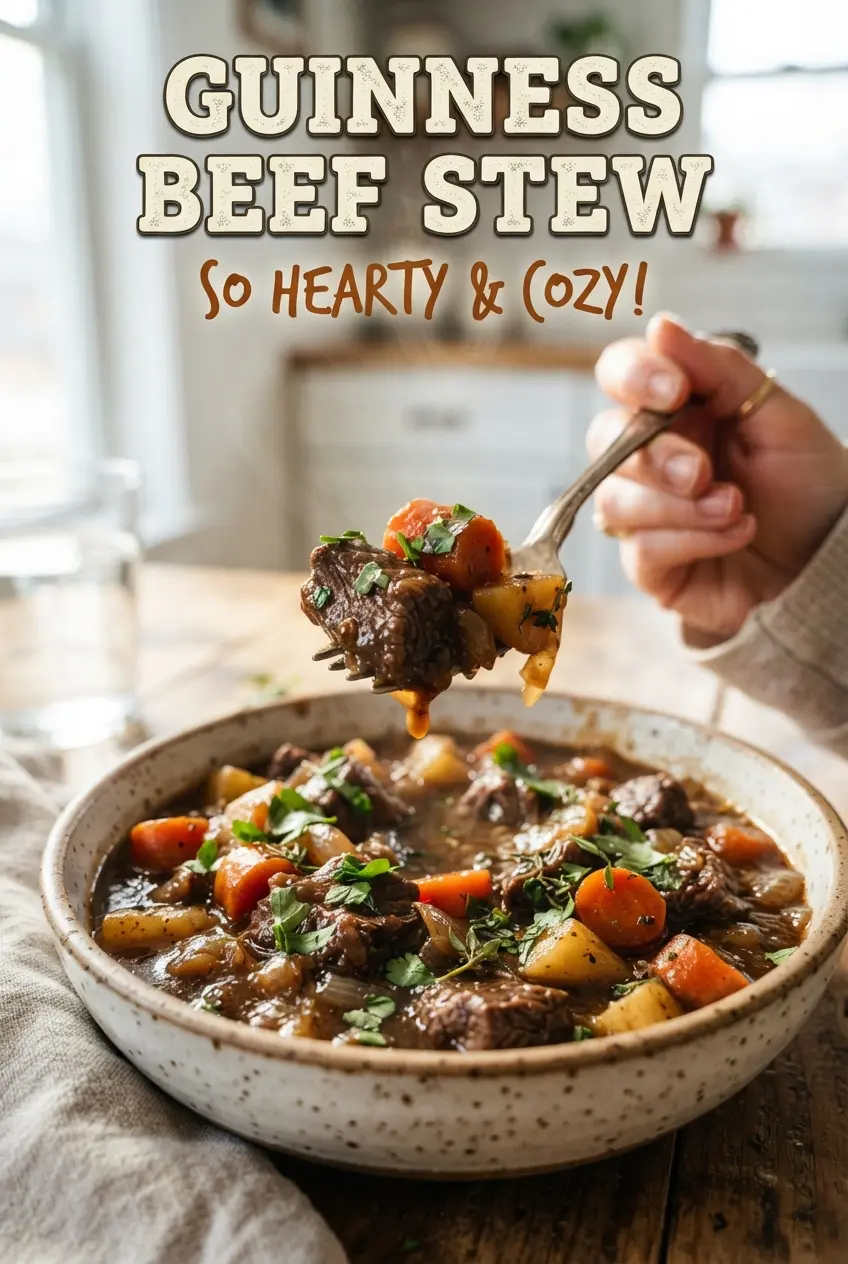
Guinness Beef Stew
Ingredients
Equipment
Method
- Season the beef chuck with salt and black pepper, then toss with all-purpose flour so each cube looks lightly coated.
- Heat the vegetable oil in a Dutch oven over medium-high heat until shimmering, then brown the beef in batches, cooking to deep golden edges before transferring to a plate.
- Add the onions to the hot pot and cook for 5 minutes until softened, then stir in the garlic and tomato paste for 1 minute.
- Pour in the Guinness stout and scrape the bottom of the Dutch oven to lift the browned bits, then stir until the mixture looks smooth.
- Add the beef broth, Worcestershire sauce, brown sugar, dried thyme, and bay leaves, then bring to a gentle simmer.
- Return the browned beef to the pot, cover, and simmer gently at 200°F for 2 hours, keeping small bubbles around the edges.
- Add carrots, parsnips, and potatoes, then simmer for 45–60 minutes until the vegetables are tender when pierced.
- Remove the bay leaves and sprinkle with fresh parsley right before serving for a fresh green finish.