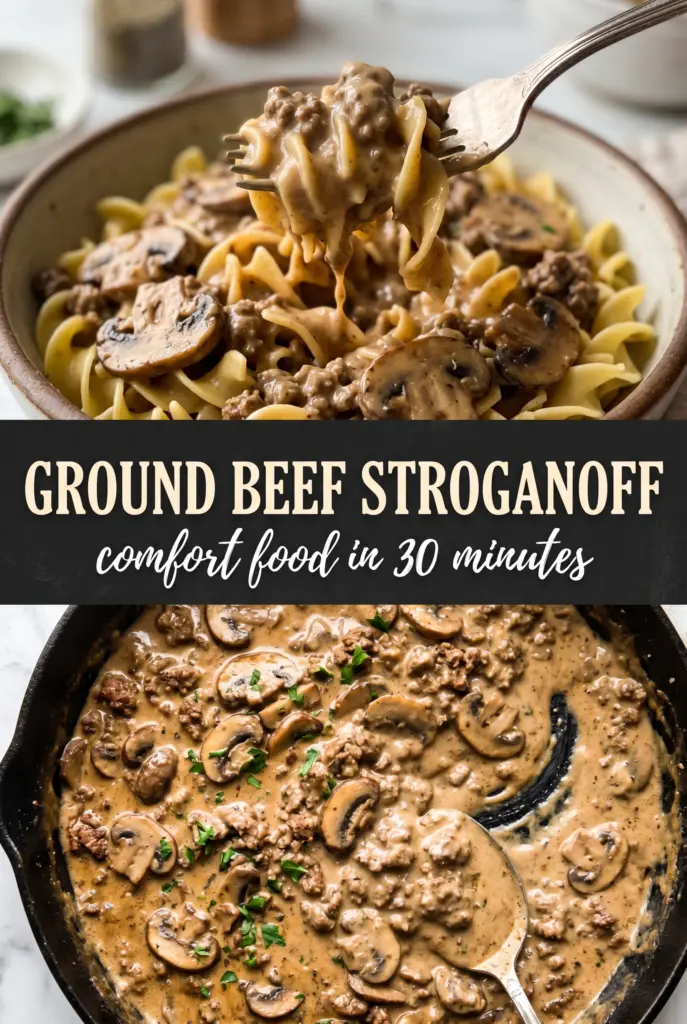
Wide egg noodles coated in a creamy mushroom sauce and loaded with seasoned ground beef is the kind of dinner that disappears fast. This version lands in that sweet spot between comforting and practical: it tastes like it simmered all afternoon, but it comes together in one skillet in about half an hour. The sauce clings to every noodle, the mushrooms stay savory instead of soggy, and the sour cream gives the whole pan that classic stroganoff tang without turning it heavy.
What makes this work is the order. The beef gets browned first so the skillet builds up those deep browned bits, then the onions and mushrooms cook in the same pan and pick up all that flavor. Flour thickens the broth before the sour cream goes in, which keeps the sauce smooth instead of thin or grainy. The Dijon and Worcestershire don’t stand out as separate flavors; they just make the sauce taste fuller and more finished.
Below, I’ve included the small details that keep the sauce creamy, plus a few smart swaps if you need to stretch the recipe or work around what’s in your fridge.
The sauce thickened up perfectly and stayed creamy after I stirred in the sour cream off the heat. My husband went back for seconds and asked if I could put this on the regular dinner rotation.
Save this ground beef stroganoff for the nights when you want creamy noodles, savory mushrooms, and one skillet on the stove.
The Part That Keeps the Sauce Creamy Instead of Grainy
Ground beef stroganoff can go wrong in one of two places: the sauce breaks, or it turns dull and thin. Both problems usually come from heat. Sour cream does not like a hard simmer, and flour needs a short cook in the fat before liquid goes in or it can taste pasty. The fix is simple. Build the base over heat, thicken the broth, then take the pan off the burner before stirring in the sour cream.
The other thing worth paying attention to is the mushrooms. If you crowd them or rush them, they steam and stay pale. Give them time in the pan after the onions soften and let them lose their water before the broth goes in. That’s where the deep savory flavor comes from.
- Browned beef — Don’t just cook it until it turns gray. Let it pick up real color, because those browned bits are the backbone of the sauce.
- Flour — It thickens the broth enough to coat the noodles. Cook it for a minute so the sauce doesn’t taste raw.
- Sour cream — Full-fat gives the smoothest finish. Low-fat is more likely to split, especially if the pan is still too hot.
- Mushrooms — Cremini or button both work. Cremini bring a deeper flavor, but the key is slicing them evenly so they cook at the same pace.
What Each Ingredient Is Actually Doing in the Pan
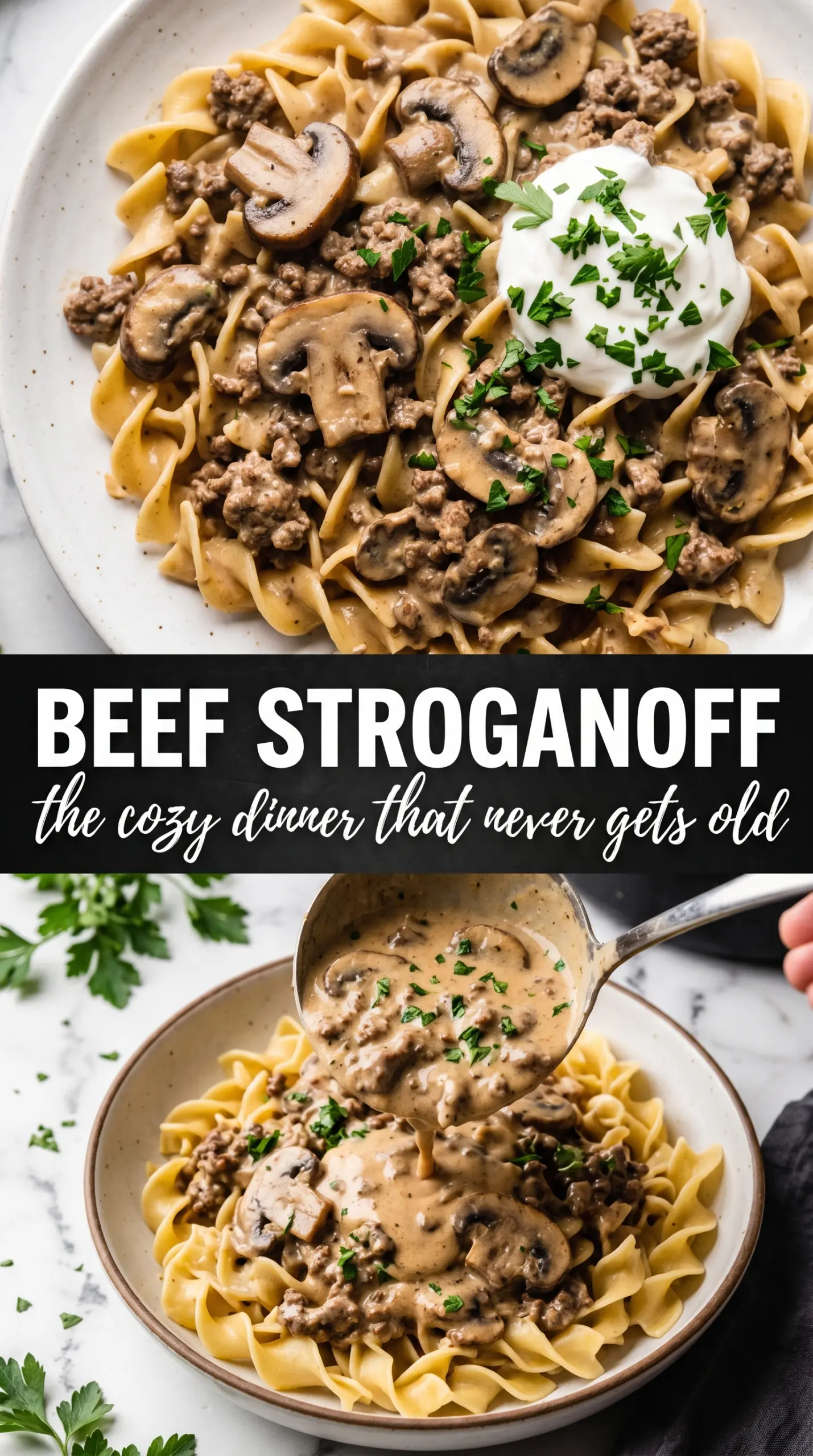
- Ground beef — This is the savory base. An 85/15 blend gives enough flavor without leaving the sauce greasy, and you can drain excess fat if your pan looks slick.
- Onion and garlic — Onion builds sweetness, garlic adds sharpness at the end of the sauté so it doesn’t burn. If garlic goes in too early, it turns bitter fast.
- Mushrooms — They bring that classic stroganoff depth. Fresh is worth using here; canned mushrooms go soft and don’t give the same texture.
- Beef broth, Worcestershire, and Dijon — Broth loosens the pan drippings, Worcestershire adds bass notes, and Dijon gives the sauce a quiet tang. The mustard won’t make it taste mustardy; it just wakes everything up.
- Egg noodles — Wide noodles hold the sauce best. If you use a thinner noodle, it can get lost in the cream sauce instead of carrying it.
- Sour cream — Stir it in off the heat. That one move keeps the sauce glossy and smooth instead of curdled.
Building the Sauce in the Right Order
Getting the Beef Properly Browned
Start with a hot skillet and let the ground beef sit long enough to brown before you stir too often. You want some caramelization, not just cooked-through meat. If there’s a lot of fat in the pan after browning, drain most of it off so the sauce doesn’t taste oily. Those browned bits stuck to the pan are part of the flavor, so don’t scrub them away.
Softening the Vegetables Without Losing the Pan
Add the onion and mushrooms next and cook them until the onion is soft and the mushrooms have released their liquid. The pan should go from crowded and wet to glossy and concentrated. Garlic goes in at the end of this stage for just a minute; any longer and it starts to scorch. If the pan looks dry, a splash of broth can keep the vegetables moving.
Thickening Before the Dairy Goes In
Sprinkle the flour over the meat mixture and stir until everything looks coated. Cook it for a minute so the raw flour taste disappears, then pour in the broth slowly while scraping the bottom of the skillet. The sauce should turn smooth and a little loose at first, then thicken as it simmers. If it looks lumpy, keep whisking or pressing the flour bits against the pan with a spoon before it sets.
Finishing Off Heat
Once the sauce has thickened, take the pan off the burner before adding the sour cream. Stir until the sauce turns creamy and even, then toss in the noodles. If you add the sour cream over direct heat, especially at a boil, it can separate and look grainy. Finish with salt, black pepper, and parsley right before serving so the flavor stays bright.
How to Adapt This for a Smaller Pantry or a Different Diet
Make it gluten-free
Swap the flour for a gluten-free all-purpose blend or a cornstarch slurry. Cornstarch thickens a little more sharply, so use less than you would flour and add it near the end of simmering, not at the beginning.
Use ground turkey or ground chicken
This works well, but you’ll lose some of the deep beefy flavor. Add a little extra Worcestershire and don’t skip the mushroom browning, because that’s what gives lighter meat more backbone.
Go dairy-free
Use an unsweetened dairy-free sour cream alternative, but expect a slightly lighter tang and a softer finish. Add it off the heat just like the regular version, since plant-based substitutes can also split if the pan is too hot.
Stretch it for more servings
Add an extra handful of mushrooms and serve it over a full pound of noodles. The sauce will feel a little lighter, so hold back a few noodles until you see how coated the pan looks.
Storage and Reheating
- Refrigerator: Keeps for 3 to 4 days. The sauce thickens as it chills, so expect it to look denser the next day.
- Freezer: Not my first choice. Dairy sauces can turn grainy after thawing, and the noodles soften too much.
- Reheating: Warm gently on the stove over low heat with a splash of broth or water. High heat is the fastest way to break the sauce and make the sour cream separate.
Answers to the Questions Worth Asking
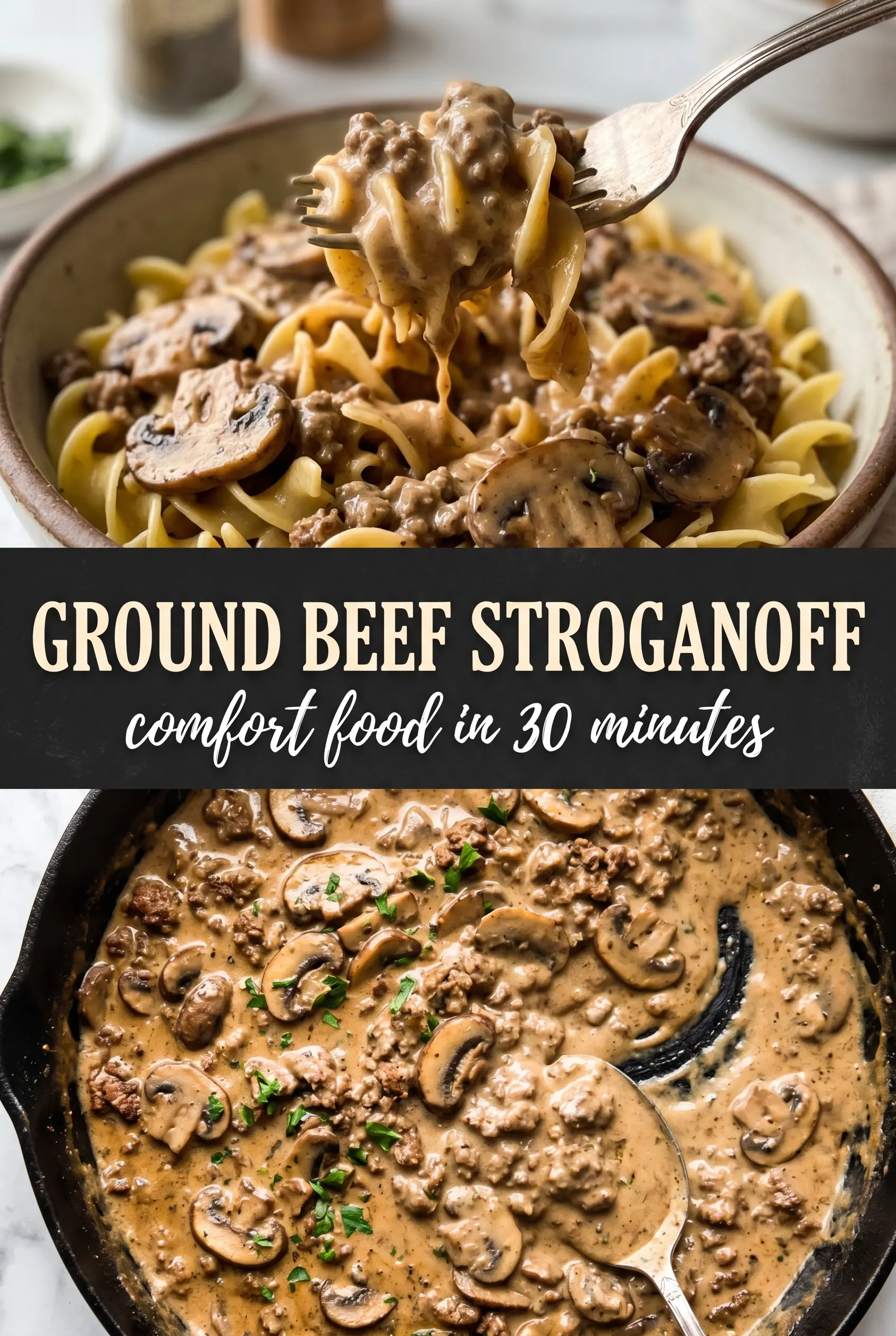
Ground Beef Stroganoff
Ingredients
Equipment
Method
- Brown the ground beef in a large cast iron skillet over medium-high heat, breaking it apart as it cooks, then drain excess fat.
- Add the diced onion and sliced mushrooms and cook for 5 minutes until softened, then add the minced garlic and cook for 1 more minute.
- Sprinkle the flour over the meat mixture and stir to coat, cooking for 1 minute.
- Pour in the beef broth and Worcestershire sauce, stirring to deglaze the pan, then stir in the Dijon mustard.
- Simmer for 8–10 minutes until the sauce thickens, then remove from heat and stir in the sour cream.
- Toss the thick sauce with the cooked wide egg noodles, then season with salt and black pepper to taste.
- Serve immediately topped with fresh parsley.