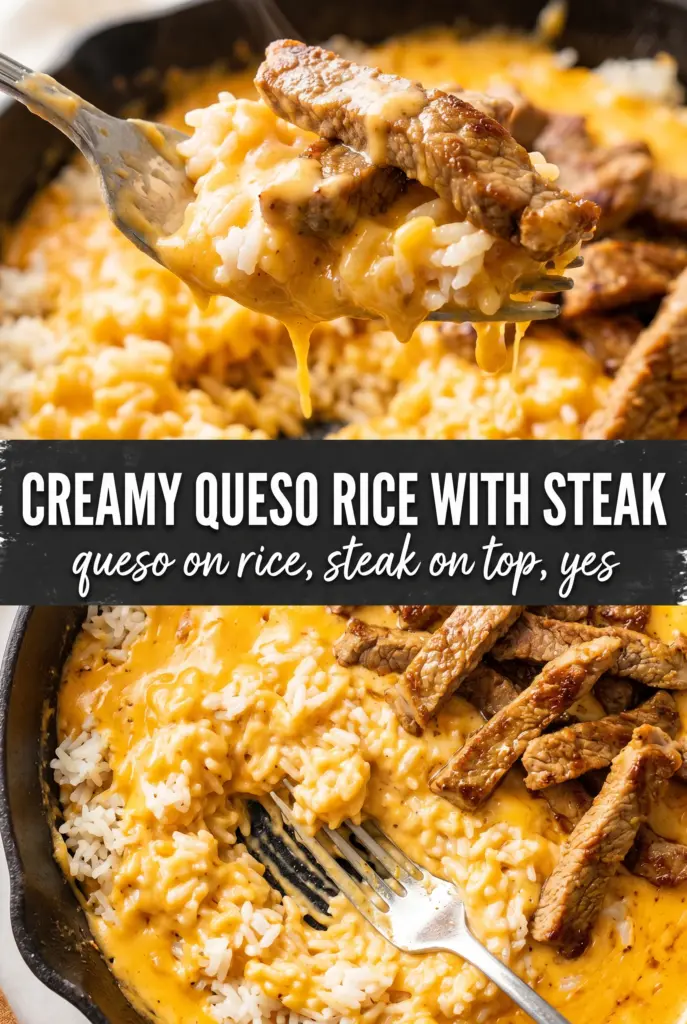
Creamy queso rice with steak strips hits that sweet spot between comfort food and a proper dinner bowl: glossy, cheesy rice underneath, deeply browned steak on top, and enough freshness from pico de gallo to keep every bite lively. The rice doesn’t sit there as a plain base. It drinks in the queso and turns velvety, almost spoonable, which is exactly what makes this bowl worth making again.
What makes this version work is the order of the cooking. The steak gets seared hard and fast so it stays juicy, while the queso is built gently so it stays smooth instead of grainy. Using a processed melting cheese like Velveeta might sound blunt, but it’s what gives the sauce that dependable, silky texture that coats rice instead of breaking into clumps. The Rotel adds just enough heat and acidity to keep the sauce from tasting flat.
Below, you’ll find the little details that matter most: how to get the steak browned without overcooking it, why the queso needs low, steady heat, and the best way to keep the rice creamy when it hits the bowl.
The queso coated the rice without turning gluey, and the steak stayed tender with a good crust even after sitting on top. I used a spoon to get every last bit of sauce from the skillet.
Save this queso rice bowl for the nights when you want seared steak, creamy rice, and a fast Tex-Mex dinner in one skillet.
Why the Steak Needs a Hard Sear Before It Ever Hits the Bowl
This bowl lives or dies on the steak. Thin strips cook fast, which is great, but they also go from browned to overdone in a flash. A hot cast iron skillet gives you the browned edges you want before the inside loses its juices, and that quick sear adds the savory note that keeps the rice from tasting one-dimensional.
Don’t crowd the pan. If the steak slices touch too much, they’ll steam and gray out instead of browning. Work in a single layer, let the first side sit for a moment, then turn them once. You’re looking for color on the outside and just-cooked tenderness inside. The steak will finish resting while you build the queso, so pulling it a little early is the right move.
What the Queso Is Doing That Plain Cheese Won’t
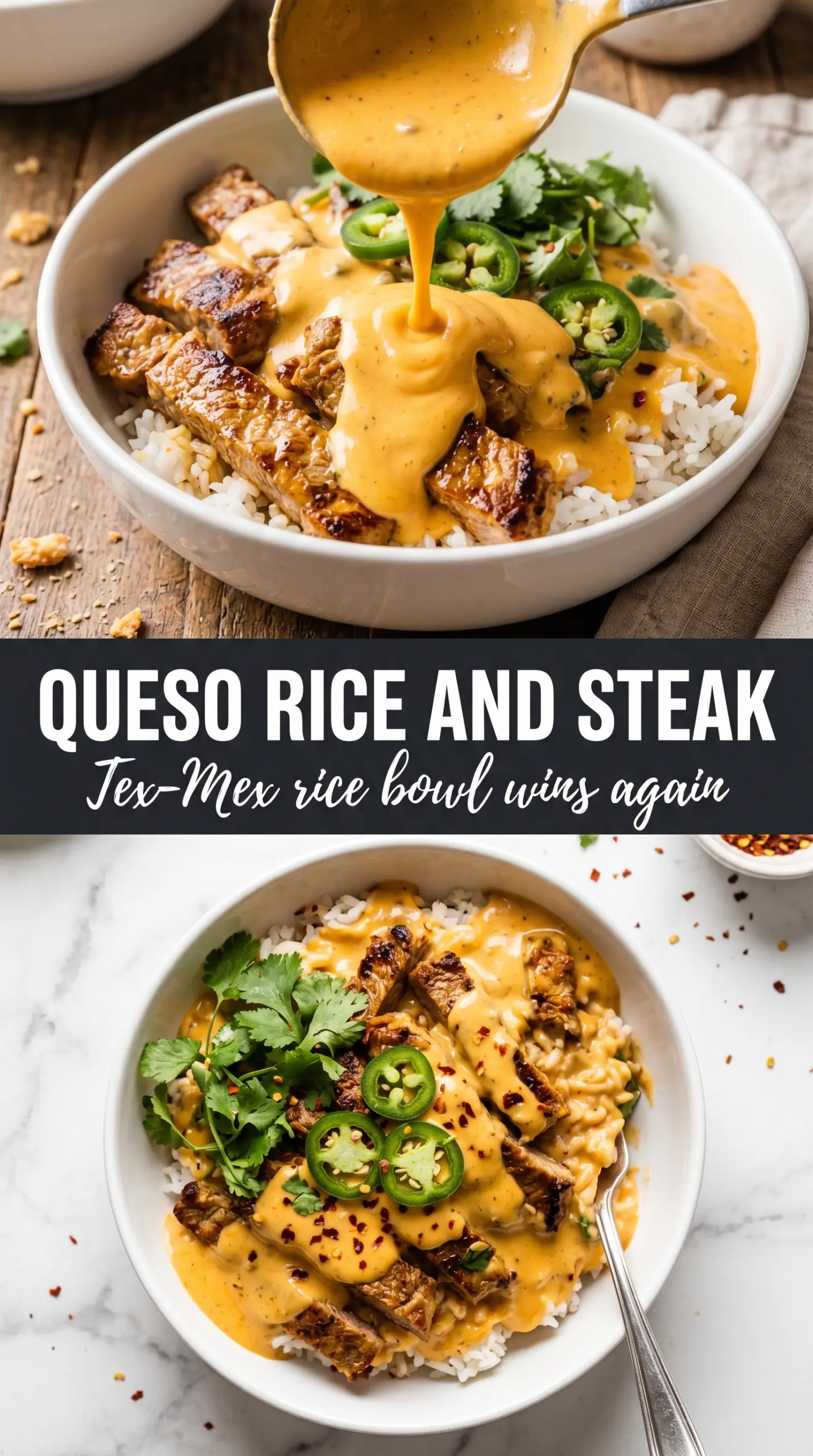
The queso is the heart of the dish, and the ingredients each earn their place. Velveeta melts into a smooth sauce that clings to rice without turning stringy or grainy. Whole milk loosens the cheese just enough to make it pourable, then the butter and garlic give it a richer, rounder base than cheese alone can manage.
- Velveeta or processed cheese — This is the ingredient that keeps the sauce stable. If you swap in shredded cheddar, it can work, but you’ll need low heat and constant stirring, and the sauce will be thicker and less silky.
- Rotel tomatoes with green chiles — This brings acidity, salt, and a little heat. Drain it only lightly; that bit of tomato liquid helps the sauce stay fluid.
- Whole milk — Lower-fat milk works, but the sauce won’t taste as lush. Keep it at a gentle simmer, not a boil, or the dairy can separate at the edges.
- Cooked long-grain white rice — Long-grain rice stays a little more distinct under the sauce. Freshly cooked rice is fine, but day-old rice soaks up the queso without getting mushy as fast.
Building the Bowl Without Breaking the Sauce
Season and Sear the Steak
Toss the steak strips with cumin, chili powder, salt, and pepper until every piece is coated. Heat the olive oil until it shimmers, then lay the steak in the skillet and leave it alone long enough to pick up color. If you move it too early, it sticks and tears instead of searing cleanly. Pull it once it’s browned and cooked to your liking, then set it aside so it doesn’t dry out in the hot pan.
Start the Queso Gently
Melt the butter over medium heat and cook the garlic just until fragrant. You want the garlic softened, not browned, because browned garlic turns bitter fast in a cheese sauce. Add the milk and bring it to a gentle simmer before the cheese goes in. If the milk is boiling hard, the sauce is harder to control.
Melt Until Smooth, Not Boiling
Add the cubed cheese and Rotel, then stir steadily until the sauce turns completely smooth. Keep the heat low enough that the cheese melts gradually. If the sauce starts to look oily or grainy, it’s getting too hot; take it off the burner and stir until it comes back together. The finished queso should look glossy and thick enough to coat the back of a spoon.
Coat the Rice and Finish Fast
Add the cooked rice to the queso and fold it through until every grain is coated. The rice should look creamy, not soupy, so add the sauce gradually if you want tighter control. Spoon it into bowls right away, then top with steak, pico de gallo, cilantro, and jalapeños. The fresh toppings matter here because they cut through the richness and keep each bite bright.
How to Make This Queso Rice Fit Your Table
Make it spicier
Use hot Rotel or add chopped jalapeños to the queso while it simmers. That gives the whole bowl heat instead of relying only on the garnish, and the spice melts into the cheese instead of sitting on top.
Swap the steak for chicken or shrimp
Chicken breast or shrimp both work with the same seasoning, but they need shorter cook times. Shrimp gives you a lighter bowl, while chicken makes it a little more filling and mild. Either way, pull the protein as soon as it’s cooked through so it doesn’t toughen in the heat.
Make it gluten-free
This bowl is naturally gluten-free as written, but check the processed cheese and Rotel label if you’re cooking for someone with a strict gluten issue. That’s the only place a hidden ingredient usually sneaks in.
Storage and Reheating
- Refrigerator: Store the rice and steak in an airtight container for up to 3 days. The rice will thicken as it chills, so expect it to look firmer the next day.
- Freezer: The steak freezes well, but the queso rice is less dependable because dairy sauces can turn a little grainy after thawing. If you do freeze it, expect a softer texture when reheated.
- Reheating: Reheat gently on the stove or in the microwave with a splash of milk to loosen the rice back up. High heat dries the steak and tightens the sauce, so warm it slowly and stir once or twice.
Answers to the Questions Worth Asking
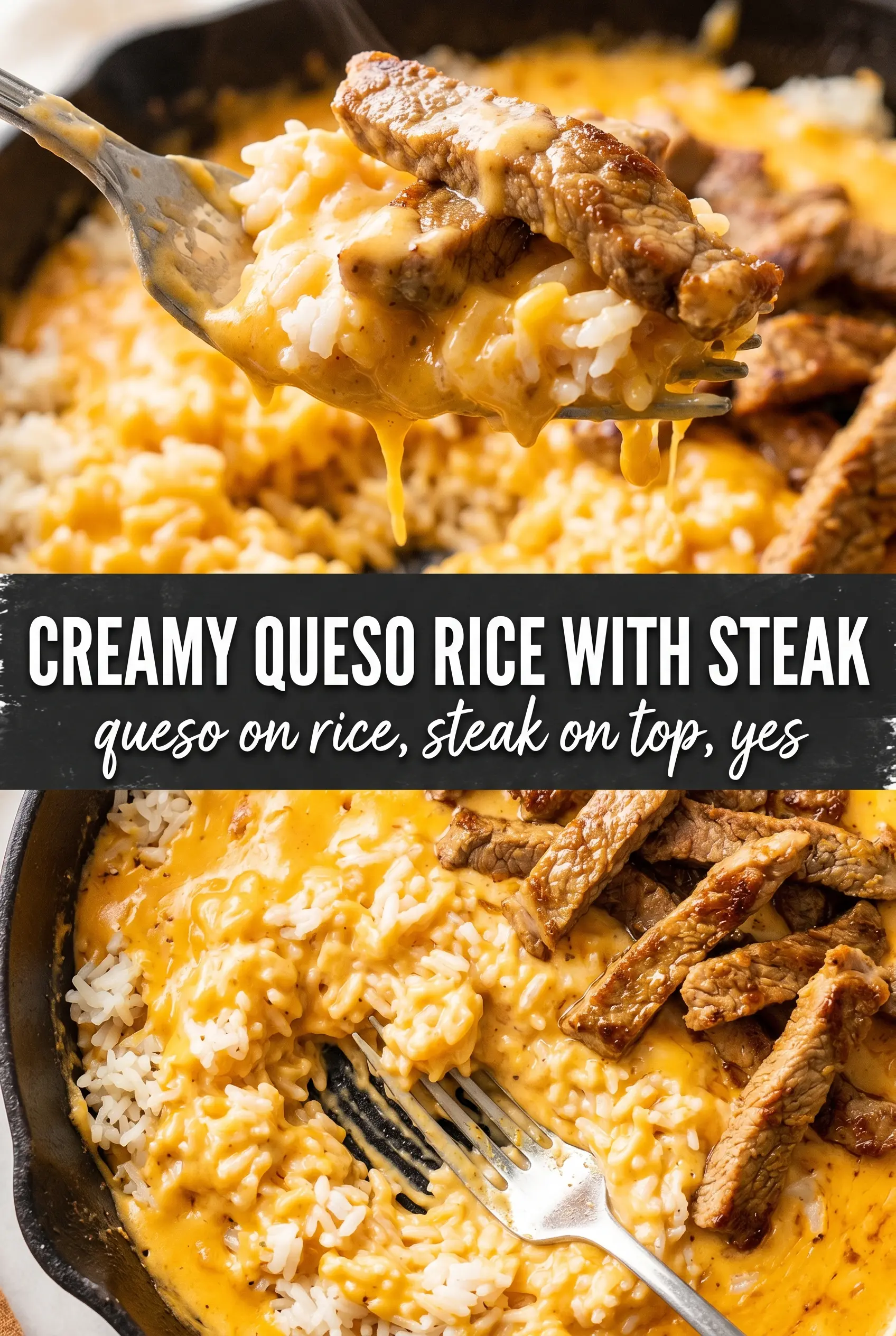
Creamy Queso Rice with Steak Strips
Ingredients
Equipment
Method
- Season the steak strips with cumin, chili powder, salt, and black pepper until evenly coated. Visual cue: spices should cling to the surface of the meat.
- Heat olive oil in a cast iron skillet over high heat and sear the steak strips for 2–3 minutes until browned and cooked to desired doneness, then set aside. Visual cue: you should see grill-like browning and sear marks.
- Melt butter in a saucepan over medium heat, then add minced garlic and cook for 1 minute. Visual cue: the garlic should smell fragrant without turning dark.
- Add whole milk and bring it to a gentle simmer over medium heat. Visual cue: small bubbles should form around the edges, not a rolling boil.
- Add cubed Velveeta and Rotel, stirring constantly until fully melted and smooth. Visual cue: the sauce should look glossy and uniform with no cheese lumps.
- Toss the cooked long-grain white rice with the queso sauce until evenly coated and creamy. Visual cue: the rice should take on a golden, cheesy sheen.
- Divide queso rice into bowls and top with the seared steak strips, pico de gallo, cilantro, and jalapeños. Visual cue: steak should sit on top and the toppings should look fresh and bright.