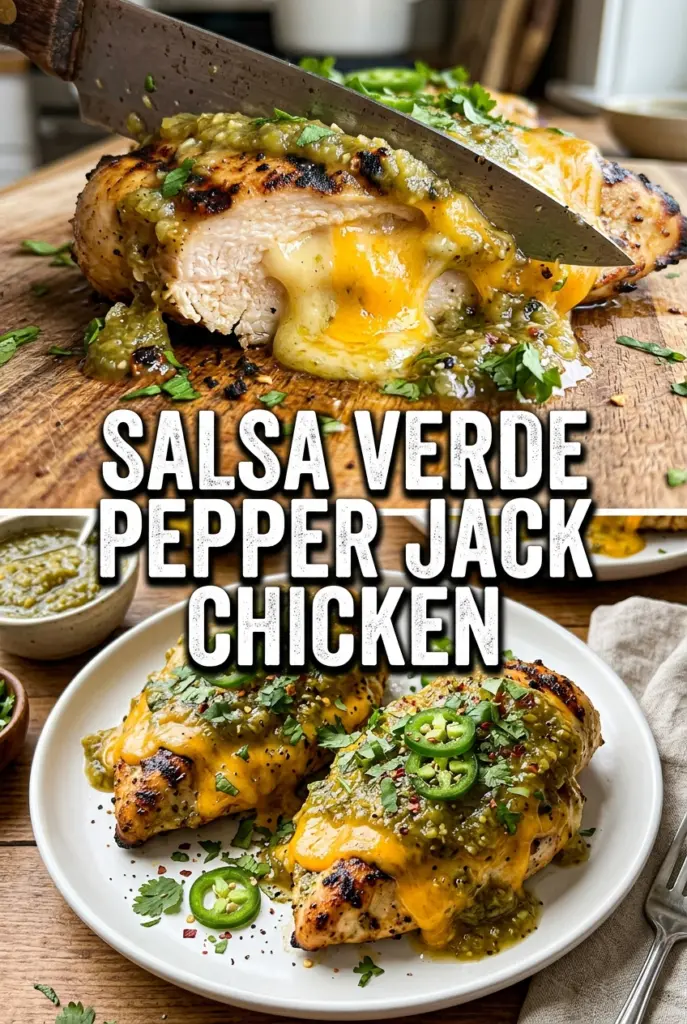
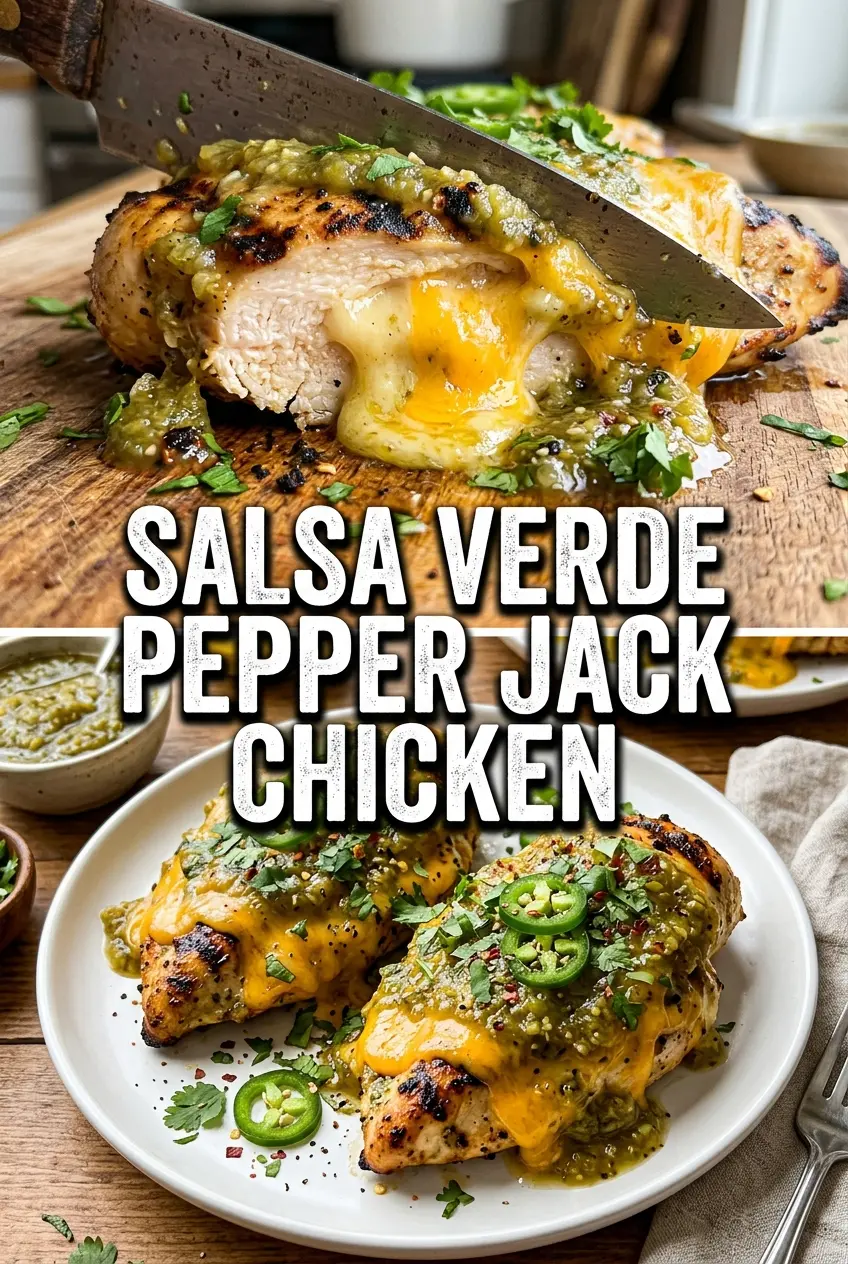
Grilled salsa verde pepper jack chicken lands on the plate with smoky char, juicy meat, and a melted cheese cap that turns every bite into a little bit of heat and tang. The salsa verde keeps the chicken from tasting flat, while the pepper jack brings enough richness to round out the sharp green sauce without burying it. It’s the kind of dinner that tastes like you put in more effort than you did, which is exactly why it earns a repeat spot.
The trick is in the marinade and the final minutes on the grill. A little olive oil helps carry the garlic and cumin across the chicken, and the salsa verde adds acidity that softens the surface just enough to help the seasoning cling. Grill the chicken until it’s nearly done before adding the cheese; if you rush that part, the cheese melts before the chicken has enough color. Letting it rest after marinating also makes a difference, because even 30 minutes gives the salt time to penetrate instead of just sitting on the surface.
Below, I’ve included the detail that matters most with grilled chicken: how to keep the breasts juicy without undercooking them. There’s also a few practical swaps and reheating notes for the nights when you want the same bold flavor from leftovers.
The chicken stayed juicy on the grill and the pepper jack melted into the salsa verde instead of sliding right off. I used the full 30-minute marinade and the flavor went all the way through the meat.
Save this grilled salsa verde pepper jack chicken for the nights when you want smoky char, melted cheese, and a fast marinaded dinner that still feels special.
The Part Most Grilled Chicken Gets Wrong
The biggest mistake with grilled chicken breasts is chasing grill marks before the meat has had time to cook through. That usually leaves you with dark stripes outside and dry meat inside, or cheese that melts into a puddle before the chicken is ready to serve. Here, the chicken goes on the grill first and gets pulled only when it’s nearly done, which gives you enough heat for color and enough control to finish with melted pepper jack without overcooking the center.
Salsa verde changes the game because it brings acidity, salt, and green chile flavor in one move. But it also means you don’t need a heavy marinade or a long list of spices. If you overcrowd the grill or cook over flare-ups, the sauce can scorch before the chicken cooks evenly, so keep the heat at medium-high and give each breast enough space.
What Each Ingredient Is Actually Doing Here

- Chicken breasts — Large breasts work best here because they can take the heat of the grill and still stay juicy if you don’t overcook them. If yours are uneven, pound them lightly to an even thickness so the thinner end doesn’t dry out before the thicker part finishes.
- Salsa verde — This is the backbone of the dish, not just a topping. A jarred version is fine, but pick one with a bright, tangy flavor; overly sweet salsa verde dulls the whole dish. Half goes into the marinade and the rest finishes the chicken, so the flavor stays layered.
- Pepper jack cheese — It melts smoothly and adds a little heat without needing extra spices. Pre-shredded works, but freshly shredded melts cleaner and more evenly because it doesn’t have the anti-caking coating that can make cheese clump.
- Olive oil — It helps the garlic and cumin coat the chicken and keeps the marinade from tasting sharp. You don’t need much; its job is to carry flavor and help prevent sticking, not to dominate.
- Garlic and cumin — These deepen the salsa verde so the chicken tastes seasoned all the way through, not just sauced at the end. Fresh garlic matters here because its punch stands up to the grill better than powder.
Getting the Grill Timing and Cheese Melt Right
Building the Marinade
Stir half the salsa verde with the olive oil, minced garlic, cumin, salt, and pepper until it looks loose and spoonable. The oil helps the garlic and spice spread evenly instead of clumping in one spot on the chicken. Coat the chicken well and let it sit for at least 30 minutes so the surface seasons and the meat starts to relax. If you marinate much longer than 2 hours, the acid can start to make the texture a little soft on the outside.
Getting the Grill Marks Without Drying the Meat
Preheat the grill to medium-high and oil the grates if needed. Lay the chicken down and leave it alone for 6 to 7 minutes so it can build color and release naturally; if it sticks, it’s not ready to flip yet. Turn it once and cook the other side until the chicken is almost done in the center. The most common mistake here is moving the chicken too often, which keeps it from searing and encourages it to dry out.
Melting the Cheese Under the Lid
Spoon the remaining salsa verde over each breast, then mound on the pepper jack and close the lid for 2 to 3 minutes. The lid traps heat so the cheese melts before the chicken overcooks, and the salsa warms just enough to taste fresh instead of raw. Pull the chicken when it reaches 165°F at the thickest part. If the cheese is melting but the chicken still feels spongy, give it another minute with the lid closed rather than cranking the heat.
Finishing With the Bright Stuff
Let the chicken rest for a few minutes before serving so the juices settle back into the meat. Finish with cilantro and a squeeze of lime, which cuts through the richness of the cheese and wakes up the salsa verde. That last hit of acid is what keeps the dish from feeling heavy, even though it’s topped with melted cheese.
How to Adapt This for the Night You Need a Different Version
Dairy-Free Version
Skip the pepper jack and finish the chicken with extra salsa verde, cilantro, and lime. You’ll lose the creamy melt on top, but the dish stays bright and bold, and the grilled chicken still carries plenty of flavor from the marinade.
Mild Version for Sensitive Heat
Use Monterey Jack instead of pepper jack and choose a mild salsa verde. You keep the creamy, tangy finish but drop the peppery heat, which is a good move if you’re serving kids or anyone who wants the green sauce without the kick.
Thighs Instead of Breasts
Boneless, skinless chicken thighs work well if you want a juicier, more forgiving cut. They’ll need a little more time on the grill, but they’re less likely to dry out, and the richer meat stands up nicely to the salsa verde and cheese.
Storage and Reheating
- Refrigerator: Store leftovers for up to 3 days. The cheese will firm up, but the flavor stays good.
- Freezer: It freezes, but the texture of the melted cheese changes after thawing. Freeze the cooked chicken without the fresh cilantro and add fresh salsa verde after reheating if you want the best result.
- Reheating: Warm it covered in a 325°F oven until heated through, or use the microwave in short bursts at medium power. High heat dries out the chicken fast and can make the cheese oily.
Answers to the Questions Worth Asking
Grilled Salsa Verde Pepper Jack Chicken
Ingredients
Equipment
Method
- Stir 1/2 cup salsa verde with olive oil, garlic, cumin, salt, and pepper until evenly combined.
- Coat the chicken breasts with the marinade and refrigerate for 30 minutes to 2 hours.
- Preheat the grill to medium-high heat.
- Grill the chicken for 6-7 minutes per side until nearly cooked through.
- Top each breast with the remaining salsa verde and pepper jack cheese.
- Close the grill lid for 2-3 minutes until the cheese melts and the chicken reaches 165°F.
- Serve immediately, garnished with fresh cilantro and lime wedges.