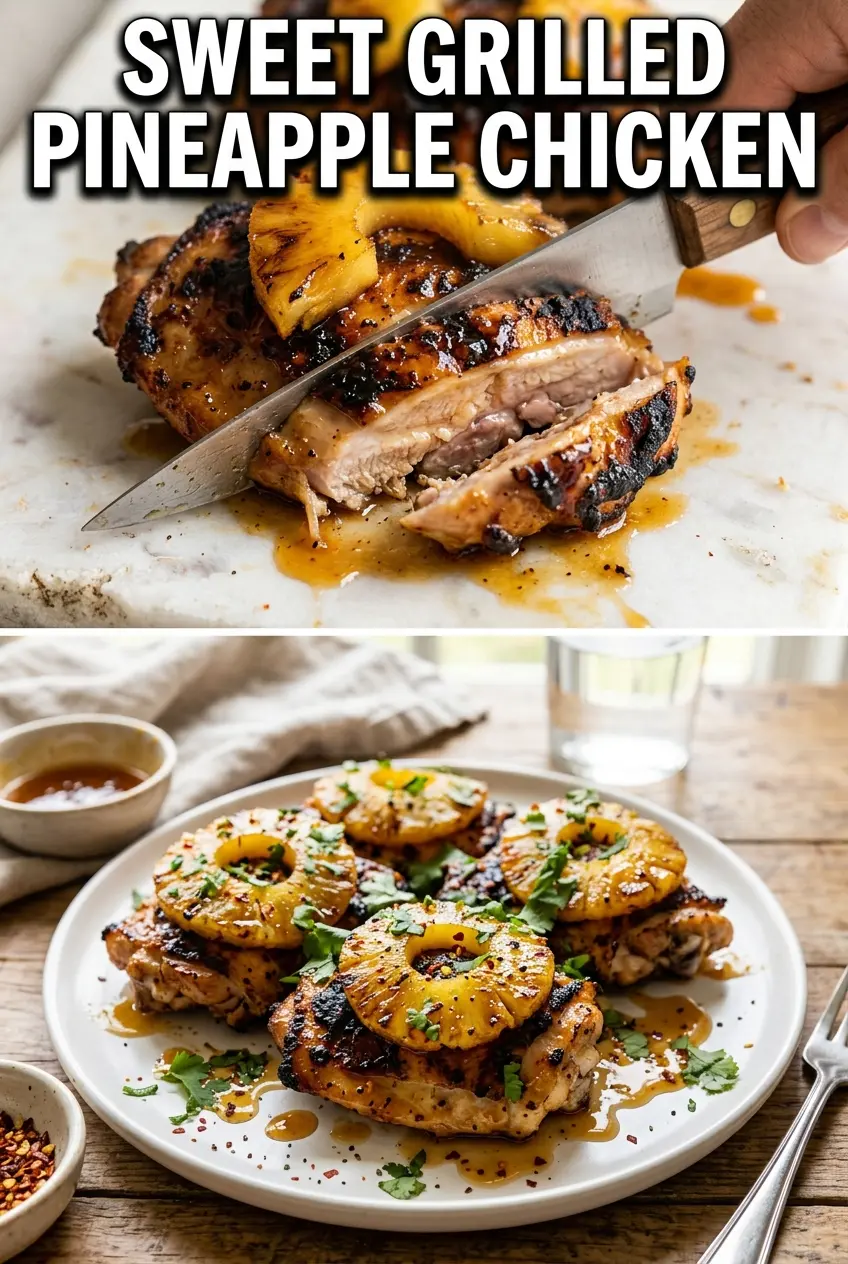
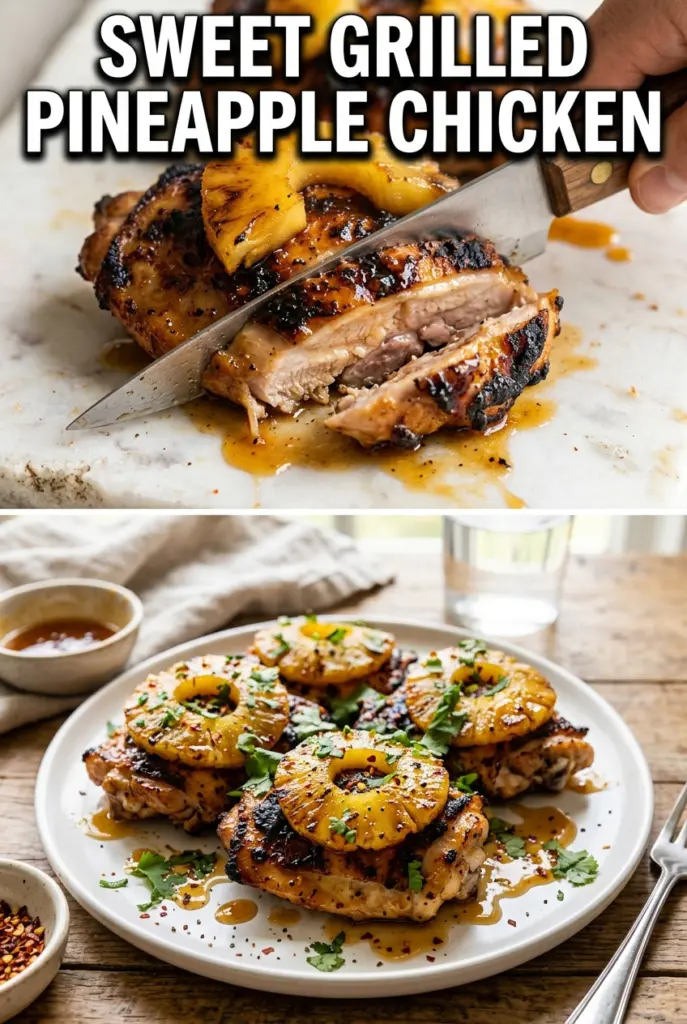
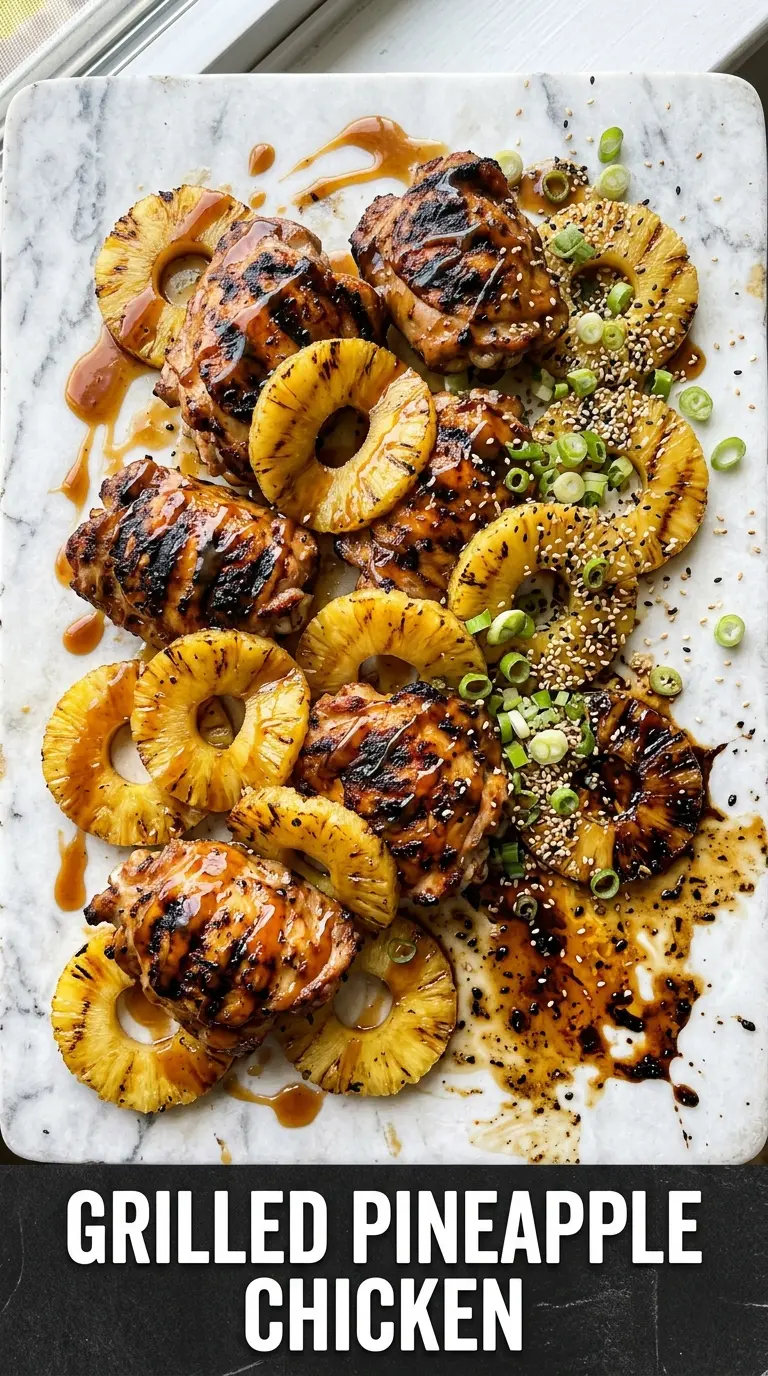
Grilled pineapple chicken lands on the plate with the kind of balance that keeps it in regular dinner rotation: juicy chicken, sticky caramelized edges, and pineapple that turns sweet and smoky over the fire. The fruit doesn’t just sit on top as garnish. It brings brightness that cuts through the soy and brown sugar, and the grill gives everything that deep, slightly charred finish that makes each bite taste complete.
The part that matters most is the marinade. Pineapple juice, soy sauce, garlic, ginger, and brown sugar work together fast, but there’s a limit to how long the chicken should sit in it. Too long and the fruit acid starts working against the texture instead of for it, so a short marinate keeps the meat tender without going stringy. Reserving a little marinade before it touches the raw chicken also gives you a clean finishing glaze without any guesswork.
Below, I’ve included the timing that keeps the chicken juicy, the moment when the pineapple should hit the grill, and a few swaps that still keep the dish tasting like itself.
The chicken stayed juicy and the pineapple caramelized beautifully on the grill. I used the reserved marinade at the end and it gave everything that glossy finish without turning soggy.
Grilled pineapple chicken with caramelized fruit and smoky grill marks deserves a spot on your Pinterest board.
The Marinade Window That Keeps Pineapple Chicken Tender, Not Mushy
Pineapple juice brings flavor and tenderness, but it also works fast. That’s the trap with this dish. Leave chicken in pineapple marinade too long and the surface can go soft in a way that never quite recovers on the grill. A short marinate gives you the sweet-savory flavor without losing the clean bite of properly grilled chicken.
The other thing people miss is the reserved marinade. Once raw chicken has touched the bowl, that liquid is off-limits unless it gets cooked separately, so reserving a portion first gives you a safe way to brush on extra flavor at the end. The glaze on the finished chicken should look glossy and cling to the meat, not run off in a thin puddle.
What the Garlic, Ginger, and Pineapple Juice Are Actually Doing
- Pineapple juice — This is the backbone of the marinade. Fresh juice has the brightest flavor, but bottled works fine here. Keep the marinating time short because the natural enzymes and acidity are what tenderize the chicken, and too much time makes the texture go mushy.
- Soy sauce — This brings salt and depth in one move. Use regular soy sauce for the cleanest balance; low-sodium works if you’re watching salt, but don’t cut it too far or the chicken tastes flat once it hits the grill.
- Brown sugar — This helps the pineapple caramelize and gives the finished glaze a sticky sheen. Honey can work in a pinch, but brown sugar gives a rounder flavor that fits the grilled fruit better.
- Fresh ginger and garlic — These keep the marinade from tasting one-note sweet. Fresh is worth it here because both ingredients need to stand up to the grill. Powdered versions won’t give the same sharp, aromatic finish.
- Fresh pineapple rings — Use ripe but still firm pineapple so the slices hold together on the grates. If the fruit is too soft, it can collapse before it gets those good charred edges.
Building the Grill Marks Before the Sauce Turns Sticky
Mixing the Marinade
Whisk the pineapple juice, soy sauce, brown sugar, olive oil, garlic, and ginger until the sugar dissolves and the liquid looks uniform. If the sugar is still grainy at the bottom, it’ll settle instead of coating the chicken evenly. Pull out a quarter cup before the raw chicken goes in so you have a clean glaze for the end.
Marinating the Chicken
Put the chicken in the marinade and let it sit for 30 minutes to 2 hours. Thirty minutes gives enough flavor for a quick dinner, while two hours pushes it deeper without softening the meat too much. Anything much longer starts working against the texture, especially if your pineapple juice is very acidic.
Grilling the Chicken
Preheat the grill to medium-high and season the chicken lightly with salt and pepper before it goes on. Cook for 6 to 7 minutes per side, depending on thickness, and only turn it once if you can help it. The chicken is done when the juices run clear and the center hits 165°F, not when the outside merely looks browned.
Caramelizing the Pineapple
Add the pineapple rings during the last 5 minutes of cooking, letting them grill for 2 to 3 minutes per side. You want visible char marks and edges that soften just enough to bend without falling apart. If the grill is too hot, the sugars will burn before the fruit develops that deep caramel flavor, so pull them early if the color gets dark fast.
Finishing the Plate
Brush the cooked chicken with the reserved marinade, then top with the grilled pineapple and finish with cilantro and lime. The lime wakes everything up at the end and keeps the sweetness from taking over. Serve it right away while the chicken is still juicy and the pineapple is warm and glossy.
How to Tweak Grilled Pineapple Chicken Without Losing the Point
Dairy-Free and Naturally Gluten-Free
This recipe already lands in both categories as written, as long as your soy sauce is gluten-free if needed. Use tamari in place of soy sauce for a cleaner gluten-free swap that keeps the same savory depth.
Bone-In Chicken Thighs Instead of Breasts
Thighs bring more richness and stay juicy even if the grill runs a little hot, but they need a longer cook time. Use the same marinade and grill them until they reach 165°F in the thickest part, expecting a deeper browned exterior and a slightly more savory result.
No Grill, Use a Hot Grill Pan
A grill pan gives you the same charred look and a close version of the smoky finish, especially if you let it get properly hot before the chicken goes on. Work in batches so the pieces sear instead of steam, and don’t move them around until they release cleanly from the pan.
Storage and Reheating
- Refrigerator: Store leftovers in an airtight container for up to 3 days. The pineapple softens a bit, but the flavor holds up well.
- Freezer: The chicken freezes well for up to 2 months, though the pineapple texture gets much softer after thawing. Freeze in portions and thaw overnight in the refrigerator.
- Reheating: Reheat gently in a covered skillet over low heat or in a 300°F oven until warmed through. High heat dries out the chicken fast and can make the glaze stick and burn before the inside is hot.