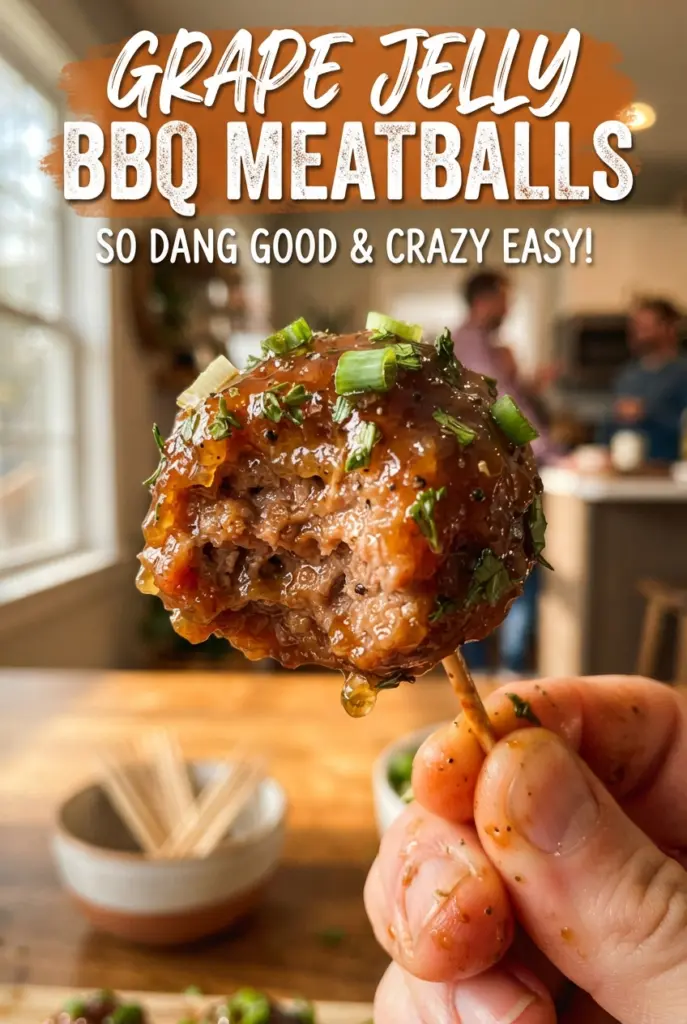
Grape Jelly BBQ Meatballs hit that sweet-savory sweet spot that disappears fast at parties. The sauce turns glossy and sticky in the slow cooker, clinging to every meatball instead of pooling thinly at the bottom. You get a crowd-pleasing appetizer with almost no hands-on work, and the finished bites are tender, saucy, and easy to serve with toothpicks.
The key is starting with frozen fully cooked meatballs and letting them heat slowly in the sauce instead of browning them first. That keeps the texture soft and steady while the grape jelly melts into the barbecue sauce and rounds out the tang. A little Worcestershire adds depth, and garlic powder keeps the sauce from tasting one-note. Stir once halfway through so the coating stays even and nothing catches around the edges.
Below, I’ve included the little timing and storage details that make a tray of meatballs go from good to gone in minutes. If you’re serving these for a game day spread or keeping them warm for a party, the tips here will save you from a sauce that turns thin or a batch that cools too fast.
The sauce got glossy right on schedule, and the meatballs stayed tender even after I kept them on warm for two hours. My guests kept coming back for “just one more” with toothpicks.
Sticky, glossy Grape Jelly BBQ Meatballs that stay perfect in the slow cooker for parties and potlucks
The Trick to Keeping the Sauce Thick, Not Watery
The sauce stays thick because the frozen meatballs go straight into the slow cooker without thawing. As they heat, they release a little moisture, but the grape jelly and barbecue sauce have enough body to hold onto it. If you start with thawed meatballs or add extra liquid, the sauce can turn loose and slide off instead of coating each piece.
The other thing that matters is heat control. Low heat gives the jelly time to melt smoothly into the barbecue sauce, while high heat works in a shorter window but needs closer attention. Stirring halfway through helps keep the sauce from setting around the outer edge before the center is hot.
- Frozen fully cooked meatballs — These are the right shortcut here because they hold their shape and stay tender. Fresh raw meatballs need a different cook time and can leave the sauce greasy.
- BBQ sauce — Use one you already like eating. Since it makes up most of the sauce, a harsh or overly smoky bottle will dominate the whole dish.
- Grape jelly — This is what gives the sauce that classic sticky sweetness and glossy finish. There isn’t a direct substitute that behaves the same way, but apricot preserves work if you want a fruitier, less old-school flavor.
- Worcestershire sauce — A small amount sharpens the sweetness and gives the sauce depth. Don’t skip it unless you have to; the sauce tastes flatter without it.
What Each Ingredient Is Actually Doing in the Slow Cooker
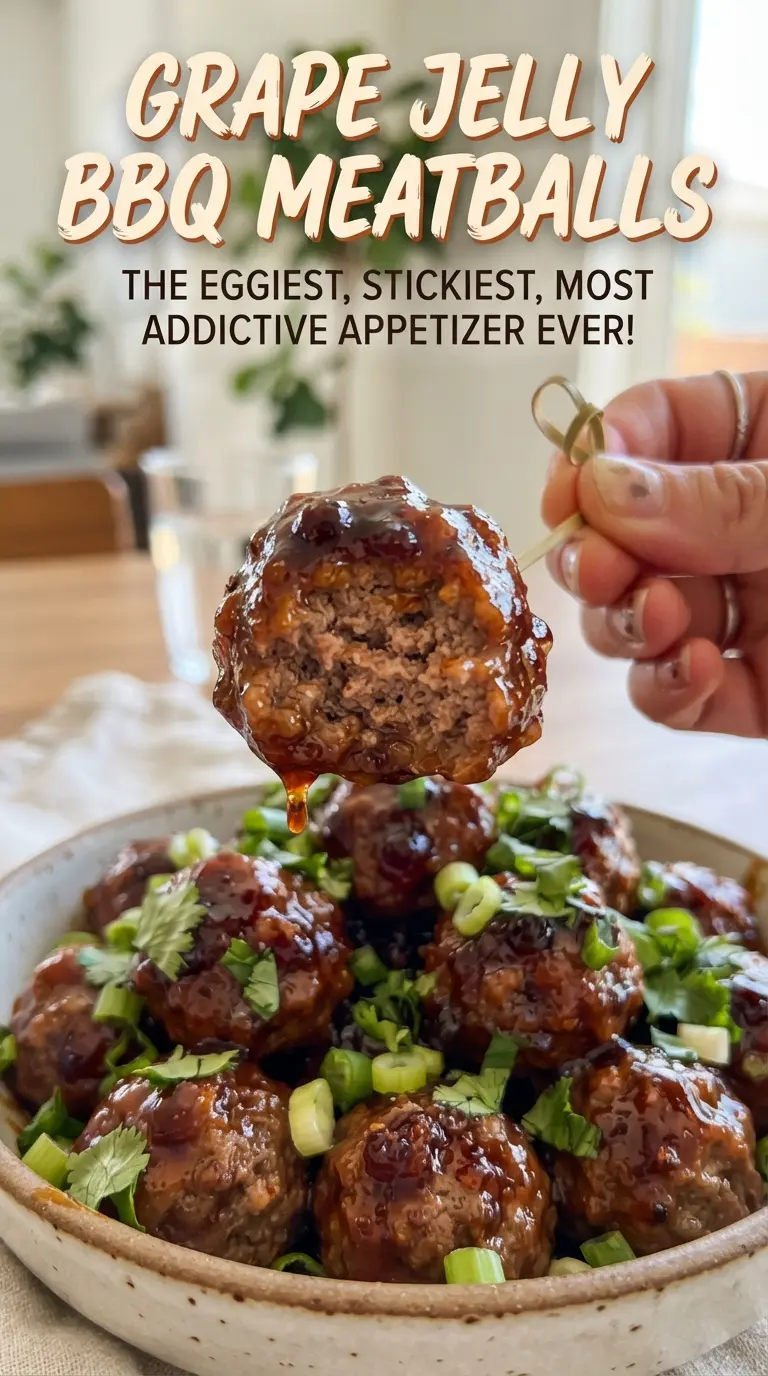
- Frozen fully cooked meatballs — They’re already seasoned and set, which means they soak up sauce without falling apart. If you use homemade meatballs, bake them first so they keep their shape in the slow cooker.
- BBQ sauce — This brings smoke, tang, and body. A thinner sauce still works, but a thick one gives you a clingier finish on the meatballs.
- Grape jelly — It melts down into the barbecue sauce and gives the classic sweet glaze people expect from this recipe. Apricot preserves are the most useful swap if you want a similar texture with a brighter fruit note.
- Worcestershire sauce — It cuts the sweetness and makes the sauce taste more layered. If you’re out, a splash of soy sauce plus a tiny bit of vinegar gets you close, though the flavor won’t be identical.
- Garlic powder — It rounds out the sauce without adding chunks or changing the texture. Fresh garlic is sharper and more likely to burn during long cooking, so powder is the better choice here.
Building the Sauce and Heating the Meatballs Without Breaking Either
Whisk the sauce first
Combine the barbecue sauce, grape jelly, Worcestershire sauce, and garlic powder directly in the slow cooker and whisk until the jelly is mostly dissolved. A few streaks are fine at this stage, but you don’t want thick clumps sitting at the bottom. That first mix sets up the whole batch, because uneven jelly means uneven sweetness later.
Add the meatballs and coat them well
Pour in the frozen meatballs and stir until every piece is coated. The sauce will look thin at first because the meatballs are cold, and that’s normal. Give them a good turn so the sauce can move around the cooker instead of trapping plain spots underneath.
Cook low and stir once halfway through
Cover and cook on LOW for 3 to 4 hours or HIGH for about 2 hours, stirring once halfway through. The sauce should turn shiny and thick enough to cling to the back of a spoon, and the meatballs should be hot all the way through. If the sauce looks loose near the end, leave the lid off for the last 10 to 15 minutes so some steam can escape.
Finish with parsley and keep them warm
Give the meatballs one last stir, then garnish with chopped parsley for a fresh finish that cuts through the sweetness. Switch the slow cooker to WARM for serving so the sauce stays glossy instead of tightening up around the edges. Toothpicks make the whole dish easier to manage, especially once the sauce starts getting sticky.
Three Practical Ways to Adjust These Meatballs
Use apricot preserves instead of grape jelly
Apricot preserves give the sauce a lighter, fruitier sweetness and a little more brightness. The texture stays close to the original, but the flavor reads less nostalgic and a bit more balanced, especially if your barbecue sauce runs sweet already.
Make it gluten-free
Use gluten-free meatballs and check your barbecue sauce and Worcestershire label carefully, since both can hide gluten depending on the brand. The method doesn’t change at all, and the sauce still turns out sticky and party-ready.
Turn them into a spicier appetizer
Add 1 to 2 teaspoons of hot sauce or a pinch of red pepper flakes with the sauce ingredients. That heat works best against the sweetness of the jelly and gives the meatballs a little edge without changing the texture.
Storage and Reheating
- Refrigerator: Store in an airtight container for up to 4 days. The sauce will thicken as it chills.
- Freezer: These freeze well for up to 2 months. Cool completely, pack with some sauce in a freezer-safe container, and thaw overnight in the fridge before reheating.
- Reheating: Warm gently on the stove or in the slow cooker with a splash of water if needed. High heat can make the sauce overly sticky before the meatballs are heated through.
Answers to the Questions Worth Asking
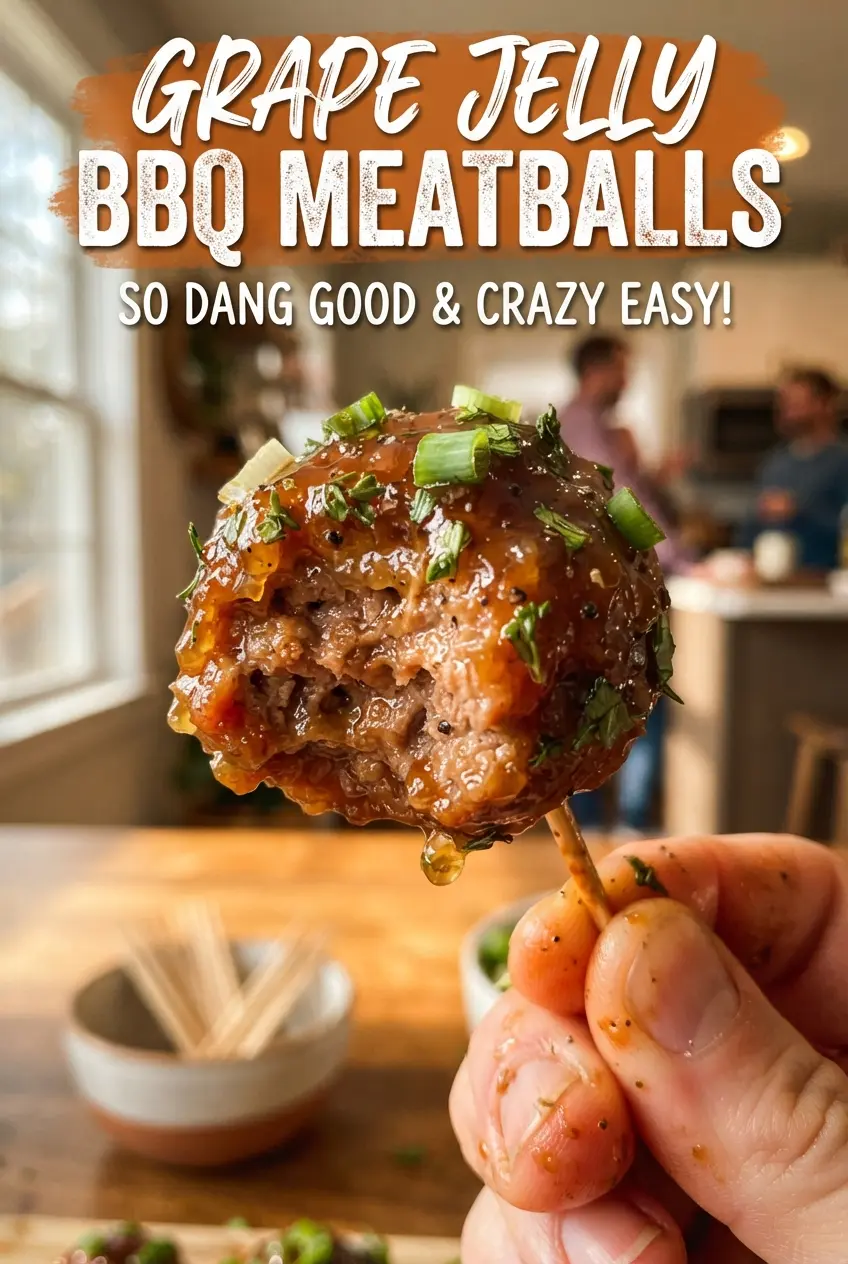
Grape Jelly BBQ Meatballs
Ingredients
Equipment
Method
- Add BBQ sauce, grape jelly, Worcestershire sauce, and garlic powder to a slow cooker and whisk until smooth and evenly combined. Stop whisking when no jelly streaks remain, and the mixture looks uniform.
- Add the frozen fully cooked meatballs to the slow cooker and stir to coat them in the sauce. Keep stirring until most meatballs are visibly glazed on the surface.
- Cover and cook on LOW for 3-4 hours. Check partway through and stir once halfway so the sauce coats evenly.
- Alternatively, cover and cook on HIGH for 2 hours. Stir once halfway through to prevent hot spots and help the glaze cling evenly.
- When finished, stir until the sauce looks glossy and the meatballs are heated through. The glaze should look thicker and cling more noticeably to the meatballs.
- Garnish with chopped fresh parsley just before serving for a bright finish. Keep the slow cooker on WARM so the sauce stays bubbling and glossy.
- Serve the grape jelly BBQ meatballs warm with toothpicks. The lifted meatball should show sticky sauce dripping back into the pot.


