
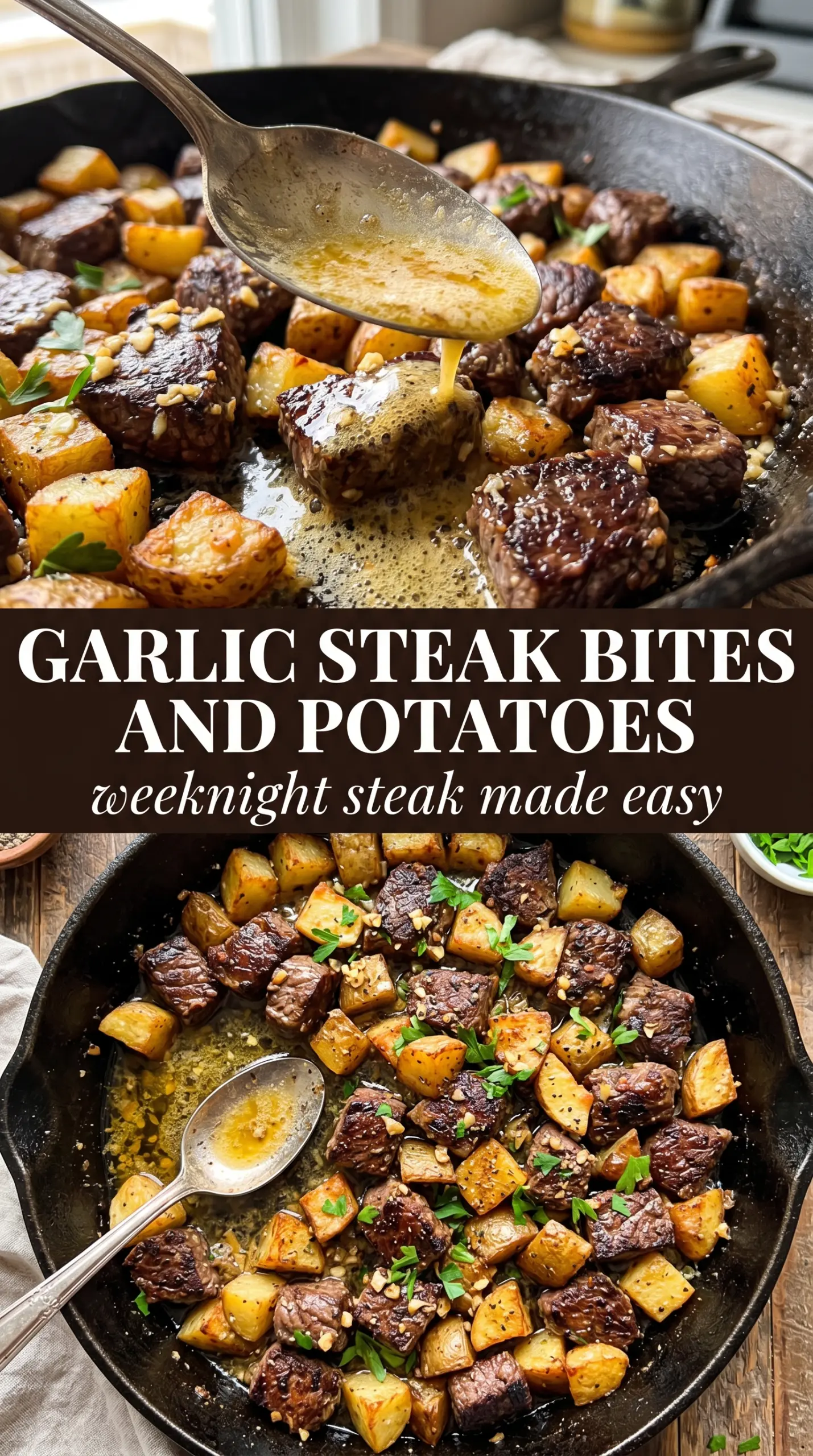
Crispy golden potatoes and deeply seared steak bites are the kind of dinner that disappears fast because every bite gives you a little of everything: crust, tenderness, and that last spoonful of garlic herb butter clinging to the edges. The potatoes pick up the steak drippings, the steak stays juicy because it’s cooked hot and fast, and the whole skillet lands with the kind of browned flavor that tastes like you spent a lot longer at the stove than you did.
What makes this version work is the order. The potatoes get a head start so they can turn creamy inside before they go into the hot skillet for color, and the steak is seared in batches so it browns instead of steaming. The garlic, rosemary, and thyme go in at the end with the butter, which keeps the garlic sweet and fragrant instead of bitter and keeps the herbs from tasting muddy.
Below, I’ve included the detail that matters most for keeping the steak tender, plus a few variations for changing the cut, making it dairy-free, or stretching the pan into leftovers that still reheat well.
The potatoes came out crisp on the outside and fluffy inside, and the steak stayed tender because I didn’t crowd the pan. The garlic butter at the end pulled everything together without tasting burnt.
Save these garlic steak bites and potatoes for a cast iron dinner with crispy edges, juicy steak, and garlic herb butter in every bite.
The Trick That Keeps the Steak Tender and the Potatoes Crisp
The mistake that ruins this kind of skillet dinner is trying to cook everything at the same pace. Potatoes need time to soften and build a crust; steak needs high heat and a short window so it browns before the center runs past medium-rare. If both go in together, the potatoes stay pale or the steak ends up gray and tough.
Boiling the potatoes first changes the whole texture. Their centers are already almost done before they hit the pan, so the skillet only has to focus on the outside. The steak gets the opposite treatment: dry surface, hot pan, batches if needed, then out before it overcooks. That’s how you get a real sear instead of puddles of juice in the skillet.
- Sirloin steak — Sirloin is tender enough for quick cooking and stays juicy when it’s cut into even cubes. You can use ribeye or strip steak for a richer result, but don’t switch to a tough braising cut here and expect the same tenderness.
- Baby potatoes — Small potatoes hold their shape after boiling and sear into crisp, golden edges fast. Cut them evenly so they finish at the same time; uneven pieces lead to some potatoes breaking down while others stay firm.
- Butter — This is the finishing layer, not the cooking fat for the sear. If you add it too early, it can burn before the steak browns. Hold it for the garlic-herb stage so it coats everything instead of scorching.
- Fresh garlic, rosemary, and thyme — Fresh herbs matter here because they perfume the butter in the last minute. Dried herbs can work in a pinch, but use less and expect a flatter finish; fresh garlic also needs only a brief cook so it stays sweet, not sharp.
What Each Ingredient Is Actually Doing in This Skillet Dish
- Protein (meat, chicken, or sausage) — Cut into uniform pieces so everything cooks evenly. Pat dry before cooking so it browns instead of steams.
- Oil or butter (the cooking medium) — High-heat oil is essential for proper browning. Don’t skimp or the protein won’t develop flavor.
- Vegetables (cut by size) — Smaller pieces cook faster; larger ones cook slower. Add by cooking time so everything finishes together.
- Aromatics (garlic, onion, peppers) — Cook with oil first to bloom flavors. They become the foundation of the dish.
- Seasonings (salt, pepper, spices) — Build flavor as you cook. Taste and adjust before serving.
- Sauce or liquid (broth, soy sauce, or cream) — This brings everything together and keeps it moist. Balance richness with acid.
- Cheese (optional, added at the end) — This creates a luxurious finish. Add right before serving so it melts without cooking off.
- Fresh garnish (herbs, green onion, lemon) — These add color and fresh flavor. Add at the very end.
Getting Every Piece Brown Before the Garlic Goes In
Parboiling the Potatoes
Start the potatoes in salted water and cook them until they’re just barely fork-tender. You want the center to give a little, not collapse. If you boil them until fully soft, they’ll fall apart in the skillet and you’ll lose the crisp edges that make this dish worth making.
Searing the Potatoes
Drain the potatoes well before they hit the hot oil. Any extra water will spit in the pan and delay browning, which means soft surfaces instead of crisp ones. Let them sit undisturbed long enough to form a crust before turning them. If you move them too soon, they’ll tear and stick.
Browning the Steak Bites
Pat the steak dry and season it generously right before it goes into the skillet. Add it in batches so the pan stays hot enough to sear each piece instead of steaming the whole pile. Two minutes per side is plenty for 1-inch cubes in a hot cast iron skillet; pull them as soon as the outside is deeply browned.
Finishing With Garlic Herb Butter
Lower the heat before adding the butter, garlic, rosemary, and thyme. Garlic burns fast, and burnt garlic tastes harsh no matter how good the steak is. Baste the steak bites in the butter for about a minute, then return the potatoes and toss until everything is glossy and coated. Serve it right away while the potatoes still have crunch and the butter is pooling in the bottom of the skillet.
How to Change This Skillet Without Losing the Good Parts
Dairy-Free Version
Swap the butter for a good dairy-free butter or use extra oil plus a splash of beef broth at the end. You’ll lose a little richness, but the garlic and herbs still coat the steak and potatoes nicely. Keep the finish brief so the broth doesn’t evaporate completely before it helps loosen the browned bits.
Using a Different Cut of Steak
Ribeye gives you more marbling and a richer skillet, while strip steak stays a little leaner but still cooks beautifully. If you use flank or skirt steak, cut it against the grain into smaller pieces and shorten the sear time. Those cuts can go from tender to chewy fast if they stay in the pan too long.
Making It With Herbs You Already Have
If you don’t have rosemary and thyme, use one or the other instead of trying to replace them with a big mix of dried seasonings. Rosemary gives the skillet a piney, savory edge; thyme keeps it earthier and softer. Dried herbs work, but crush them between your fingers before they go in so they wake up in the butter.
Storage and Reheating
- Refrigerator: Store in an airtight container for up to 3 days. The potatoes soften a bit, but the flavor holds.
- Freezer: Freezing isn’t ideal because the potatoes turn grainy and the steak can overcook when reheated. If you must freeze it, cool it fast and reheat gently from thawed.
- Reheating: Warm leftovers in a skillet over medium-low heat with a small knob of butter or splash of oil. Microwaving works in a pinch, but it takes the crust off the potatoes and pushes the steak past tender.
Answers to the Questions Worth Asking

Garlic Steak Bites and Potatoes
Ingredients
Equipment
Method
- Boil halved baby potatoes in salted water for 8 minutes until just barely fork-tender, then drain.
- Set the drained potatoes aside while you heat the skillet.
- Heat 2 tablespoons vegetable oil in a large cast iron skillet over high heat.
- Add the potatoes and sear until golden and crispy on each side, seasoning with salt and pepper as they cook, then remove.
- Season sirloin steak cubes generously with salt and cracked black pepper.
- Add the remaining vegetable oil to the skillet and sear steak bites in batches for 2 minutes per side until deeply browned.
- Reduce heat to medium, add butter, minced garlic, chopped rosemary, and thyme leaves.
- Cook for 1 minute, basting the steak bites with the butter as it melts and turns fragrant.
- Return the potatoes to the skillet and toss everything together until coated in the garlic herb butter.
- Garnish with fresh parsley and serve immediately.