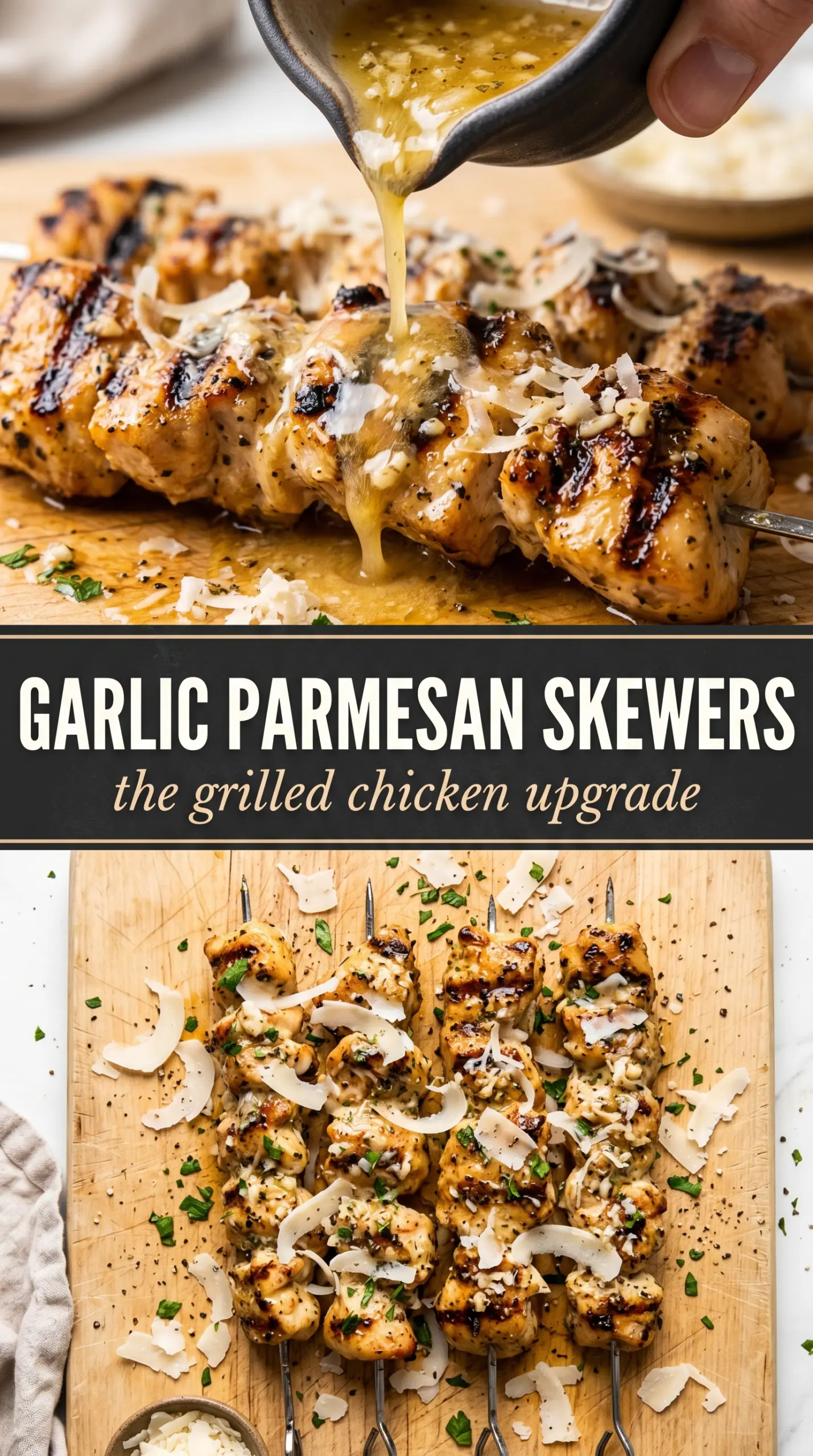
Garlic Parmesan Chicken Skewers come off the grill with crisp, charred edges, juicy centers, and a glossy finish of warm garlic butter that clings to every cube. The parmesan doesn’t just sit on top here; it melts into the butter and turns into a salty, savory coating that sticks to the chicken instead of sliding off the skewer.
What makes this version work is the order of the steps. The chicken gets a short marinade first, which seasons the meat all the way through and helps the surface brown fast on the grill. Then the garlic parmesan butter goes on after cooking, while the skewers are still hot enough to soften the cheese into a rich coating without letting it burn.
Below you’ll find the trick that keeps the chicken from drying out, plus the small details that make the parmesan finish taste restaurant-level instead of clumpy or greasy.
The chicken stayed juicy and the parmesan butter formed this savory crust on the outside instead of running right off. I cooked them on a grill pan and they were done in about 12 minutes, which was perfect for a fast dinner.
Save these garlic parmesan chicken skewers for the nights when you want charred edges, juicy chicken, and a buttery parmesan finish.
The Marinate Time That Keeps the Chicken Juicy on the Grill
The biggest mistake with chicken skewers is rushing past the marinate. That short rest does two jobs at once: it seasons the outside of the chicken and gives the oil time to carry the garlic and spices across the surface, which helps the pieces brown instead of drying out. You don’t need hours here. Thirty minutes is enough to improve the texture without turning the meat soft or hammy.
The other thing that matters is size. Cut the chicken into even 1.5-inch cubes so every piece reaches doneness at the same time. If the cubes are too small, they dry out before the edges char. If they’re uneven, you’ll end up with a mix of overcooked and undercooked pieces on the same skewer.
What the Garlic Butter and Fresh Parmesan Are Actually Doing
- Chicken breast — Breast meat gives you a clean, lean base that picks up the garlic parmesan coating fast. Thighs also work if you want more richness, but they’ll need a couple extra minutes on the grill and won’t have the same firm skewer texture.
- Olive oil — This helps the spices cling and keeps the exterior from sticking to the grill pan. Don’t skip it; dry chicken takes longer to brown and loses more moisture before the surface firms up.
- Fresh garlic — Fresh minced garlic gives the skewers their sharp, savory edge. Garlic powder won’t burn the same way, but it also won’t give you that warm bite in the marinade or the butter.
- Parmesan cheese — Freshly grated parmesan melts into the butter in a way pre-shredded cheese can’t. The shelf-stable kind usually has anti-caking agents, which can make the sauce grainy instead of glossy.
- Butter — Melted butter carries the parmesan and garlic across the hot chicken and gives the skewers that shiny finish. Use real butter here; margarine doesn’t coat the same way and tastes flat once it hits the grill heat.
- Parsley — Fresh parsley brightens the finished skewers and keeps the butter from tasting heavy. Dried parsley won’t give you the same clean finish at the end.
Building the Skewers So They Char Instead of Steam
Coating the Chicken Evenly
Toss the chicken until every piece looks lightly coated, not drenched. The oil should leave the seasoning stuck to the surface without pooling in the bottom of the bowl. If you see lots of liquid, the chicken will slide around on the skewer and steam instead of browning.
Threading With Small Gaps
Leave a little space between each cube when you build the skewers. That gap lets the heat move around the chicken and helps you get those browned edges on more than one side. Crowded pieces trap moisture, and trapped moisture is what gives you pale, soft chicken instead of grilled skewers with bite.
Grilling to the Right Color
Cook over medium-high heat until the outside picks up deep grill marks and the pieces release more easily from the pan. Turn them only after the first side has had time to sear, or you’ll tear the crust before it sets. The chicken is done when the centers are opaque and the juices run clear, usually around 5 to 6 minutes per side depending on the thickness of the cubes.
Finishing With the Butter While It’s Hot
Brush on the garlic parmesan butter the second the skewers come off the heat. The residual heat softens the cheese and helps it cling to the chicken instead of melting into the pan. If the skewers sit too long before saucing, the butter slides off and you lose the part that makes these taste finished.
Three Ways to Make These Skewers Fit Your Table
Dairy-Free Version
Use olive oil or a dairy-free butter alternative for the finish, and swap the parmesan for a dairy-free parmesan-style topping if you have one you trust. You’ll lose a little of the classic salty melt, but the garlic and herbs still carry the dish well.
Low-Carb Serving Idea
Serve the skewers over cauliflower rice, salad greens, or grilled zucchini instead of bread or pasta. The chicken is already rich from the butter and parmesan, so a simple, crisp base keeps the plate balanced.
Chicken Thigh Swap
Boneless skinless thighs give you a juicier bite and a little more forgiveness on the grill. They take a touch longer to cook and won’t look quite as lean and neat on the skewer, but they hold up beautifully if you want richer flavor.
Storage and Reheating
- Refrigerator: Store leftovers in an airtight container for up to 3 days. The parmesan butter will firm up, but the chicken stays flavorful.
- Freezer: Freeze the cooked chicken pieces off the skewers for up to 2 months. The butter coating won’t stay as glossy after thawing, but the flavor holds up well.
- Reheating: Warm gently in a covered skillet over low heat or in a 300°F oven until just heated through. High heat dries out the chicken fast and can make the parmesan butter separate.
Answers to the Questions Worth Asking

Garlic Parmesan Chicken Skewers
Ingredients
Equipment
Method
- In a bowl, combine olive oil, minced garlic, Italian seasoning, smoked paprika, salt, and black pepper. Add the chicken cubes and toss until fully coated.
- Cover and marinate the chicken for at least 30 minutes in the refrigerator. The chicken should look glossy and seasoned as it rests.
- Thread the marinated chicken onto skewers, leaving a small gap between each piece. Arrange the skewers so the cubes sit with spacing for even charring.
- Preheat a grill or grill pan to medium-high. Cook the skewers for 5–6 minutes per side until cooked through and charred, with golden grill marks and browned edges.
- Mix melted butter with minced garlic, parmesan cheese, and chopped parsley to make the finishing sauce. Stir until the cheese is evenly distributed.
- Brush warm skewers generously with garlic parmesan butter immediately after removing from the grill. Let the butter glisten and settle so a parmesan sheen forms across the top.
- Serve the skewers with extra parmesan and fresh parsley on top. The charred edges should contrast with the glossy parmesan-butter coating.