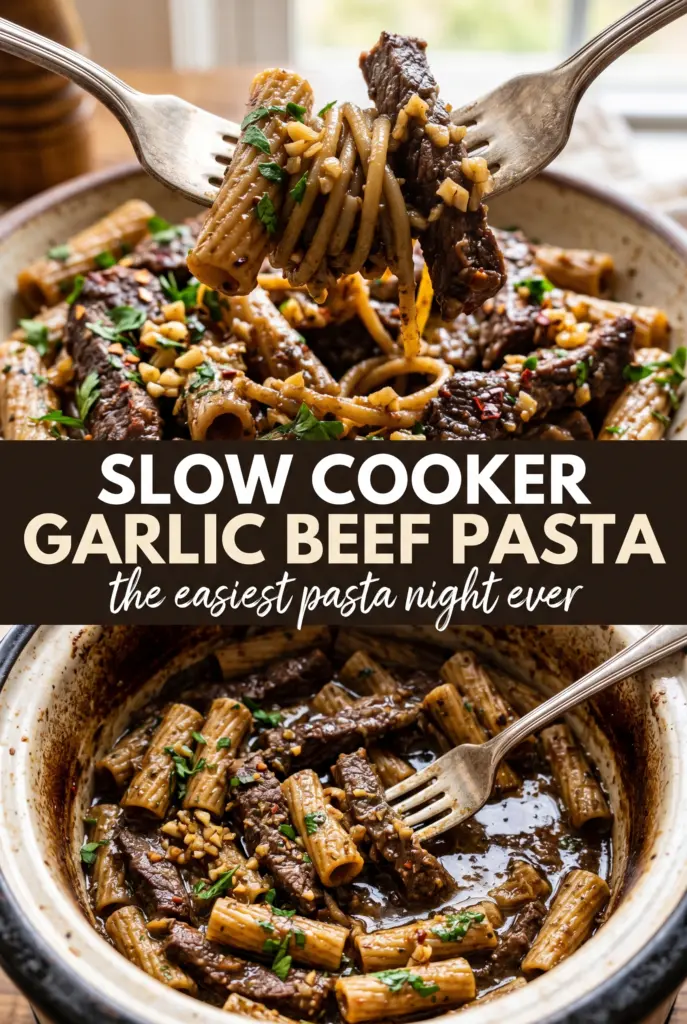
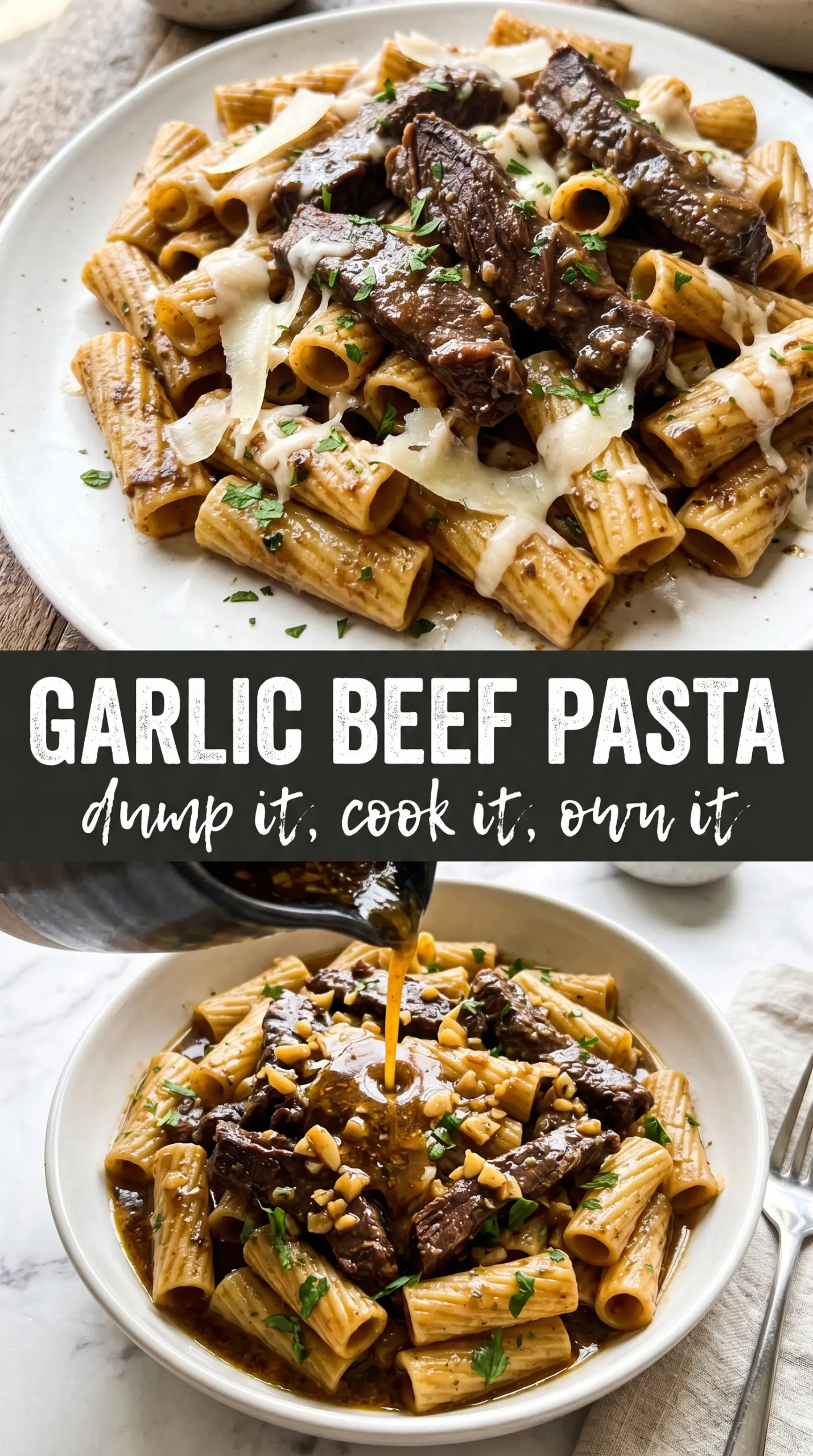
Garlic beef pasta is at its best when the sauce tastes like it cooked all afternoon and the pasta still holds its shape when it hits the bowl. This slow cooker version gives you that deep tomato-and-beef comfort without babysitting a pot on the stove, and the garlic comes through in a way that feels savory, not sharp. The result is hearty, glossy, and built for seconds.
The trick is starting with browned beef and letting the sauce cook on its own long enough for the tomatoes, garlic, and herbs to lose their separate edges and turn into one rich pot of sauce. Tomato paste adds body, a little sugar smooths out the acidity, and the pasta gets added at the end so it stays pleasantly firm instead of soaking up all the sauce and turning soft. That final timing matters more than anything else here.
Below you’ll find the small details that keep this recipe from tasting flat or watery, plus the best way to handle leftovers so the pasta doesn’t go mushy by day two.
The sauce thickened up beautifully in the slow cooker, and adding the pasta at the end kept the rigatoni from getting mushy. My husband went back for a second bowl before I even sat down.
Save this slow cooker garlic beef pasta for the night when you want rich tomato sauce, tender beef, and almost no stovetop work.
The Part Most Slow Cooker Pasta Gets Wrong: The Noodles
The biggest mistake with slow cooker pasta is letting the noodles sit in the sauce for hours. They don’t just soften; they swell, lose their bite, and can turn the whole dish thick and gluey. Cooking the pasta separately keeps the sauce rich and the texture clean, which is what makes this taste like dinner instead of leftovers that got away from you.
Browned beef matters here too. Raw ground beef can cook in the slow cooker, but it leaves you with a looser texture and a greasier sauce. Browning first builds flavor and gives you a better base, and draining the excess fat keeps the tomato sauce from tasting heavy.
- Ground beef — Use an 85/15 or similar blend if you can. Leaner beef works, but it won’t give you quite as much savory depth, so the tomato paste and herbs matter even more.
- Crushed tomatoes and diced tomatoes — The crushed tomatoes build the sauce, while the diced tomatoes leave little bursts of texture. If you only have one type, use all crushed for a smoother sauce or all diced for a chunkier one.
- Tomato paste — This is the quiet ingredient that makes the sauce taste cooked, not canned. A small amount adds body and concentrates the tomato flavor without turning the sauce sweet or thick like paste.
- Rigatoni or penne — Choose a sturdy tube pasta that can hold the sauce in its ridges and center. Long pasta gets slippery here, and delicate shapes break down faster once the hot sauce hits them.
What Each Ingredient Is Actually Doing in This Slow Cooker Beef
- Beef (chuck roast, short ribs, or ground beef) — Tougher cuts break down beautifully in slow cooking. The connective tissue becomes gelatin, enriching the broth.
- Liquid (beef broth, wine, or sauce) — This becomes both the cooking medium and the final sauce. Choose quality broth for better flavor.
- Onions (the aromatic base) — Slice thick so they stay distinct while melting into the sauce. They become sweet and mellow during cooking.
- Garlic (the depth flavor) — Minced garlic cooks into the broth; sliced stays more distinct. Use generously for deep flavor.
- Vegetables (carrots, potatoes, peppers) — Layer them by cooking time. Hard vegetables first, softer ones later so everything finishes together.
- Seasonings (salt, pepper, Worcestershire, spices) — Build flavor as you layer. Taste midway and adjust because flavors concentrate during cooking.
- Tomato paste or sauce (optional richness) — This adds body and depth. Cook for hours so it becomes part of the sauce rather than a separate element.
- Low heat for 8 hours (the transformation) — Long, slow cooking turns tough cuts into fork-tender meat. This is what makes cheap cuts taste expensive.
How the Sauce Turns Rich Instead of Watery
Starting With the Beef Base
Once the beef is browned and drained, move it straight into the slow cooker with the tomatoes, broth, garlic, onion, tomato paste, herbs, seasoning, and sugar. Stir well so the tomato paste gets fully dispersed; if it stays in little clumps, those pockets can taste harsh and the sauce won’t thicken evenly. The slow cooker should have enough liquid to simmer gently, not so much that the sauce looks like soup at the start.
Letting Time Do the Work
Cook on low for 6 to 7 hours or high for 3 to 4 hours until the sauce is deeply red and the onion has disappeared into the background. If the lid gets lifted too often, moisture escapes unevenly and you lose some of the slow-cooked concentration you’re after. The sauce should look glossy and slightly reduced, with the beef fully tender and the garlic mellowed into the tomato base.
Adding the Pasta at the End
Cook the rigatoni or penne separately until just shy of al dente, then stir it into the sauce right before serving. That timing keeps the pasta from drinking up too much liquid while it sits, which is the main reason slow cooker pasta turns heavy. If the sauce seems a little tight after the pasta goes in, loosen it with a splash of reserved pasta water or a bit of broth and stir until everything is coated.
Use Italian sausage instead of some of the beef
Swap out half the ground beef for mild or hot Italian sausage if you want a punchier, more seasoned sauce. The sausage adds fennel and extra fat, so the flavor gets a little bolder and the finished dish tastes closer to a meat sauce from a neighborhood red-sauce place.
Make it dairy-free
The sauce is already dairy-free as written, so the only change is the garnish. Skip the Parmesan or use a dairy-free alternative with a strong savory note; the pasta still tastes complete because the sauce carries the weight of the dish.
Gluten-free pasta works, but keep an eye on timing
Use a sturdy gluten-free rigatoni or penne and cook it separately just until tender. Gluten-free pasta softens faster once it hits hot sauce, so stir it in at the last minute and serve right away for the best texture.
Add vegetables without losing the sauce
Finely diced carrots, mushrooms, or bell pepper can go in with the onions. Keep the pieces small so they melt into the sauce instead of turning the pasta into a chunky casserole, and add them early enough that they soften fully during the long cook.
Storage and Reheating
- Refrigerator: Store leftovers in an airtight container for up to 4 days. The pasta keeps soaking up sauce, so expect it to get a little softer by day two.
- Freezer: Freeze the sauce and beef without the pasta for up to 3 months. Pasta freezes poorly in sauce, so cook a fresh batch when you’re ready to serve.
- Reheating: Warm the sauce gently on the stove or in the microwave with a splash of broth or water. If it looks thick, loosen it before heating fully so the pasta doesn’t dry out on the edges.
Questions I Get Asked About This Recipe
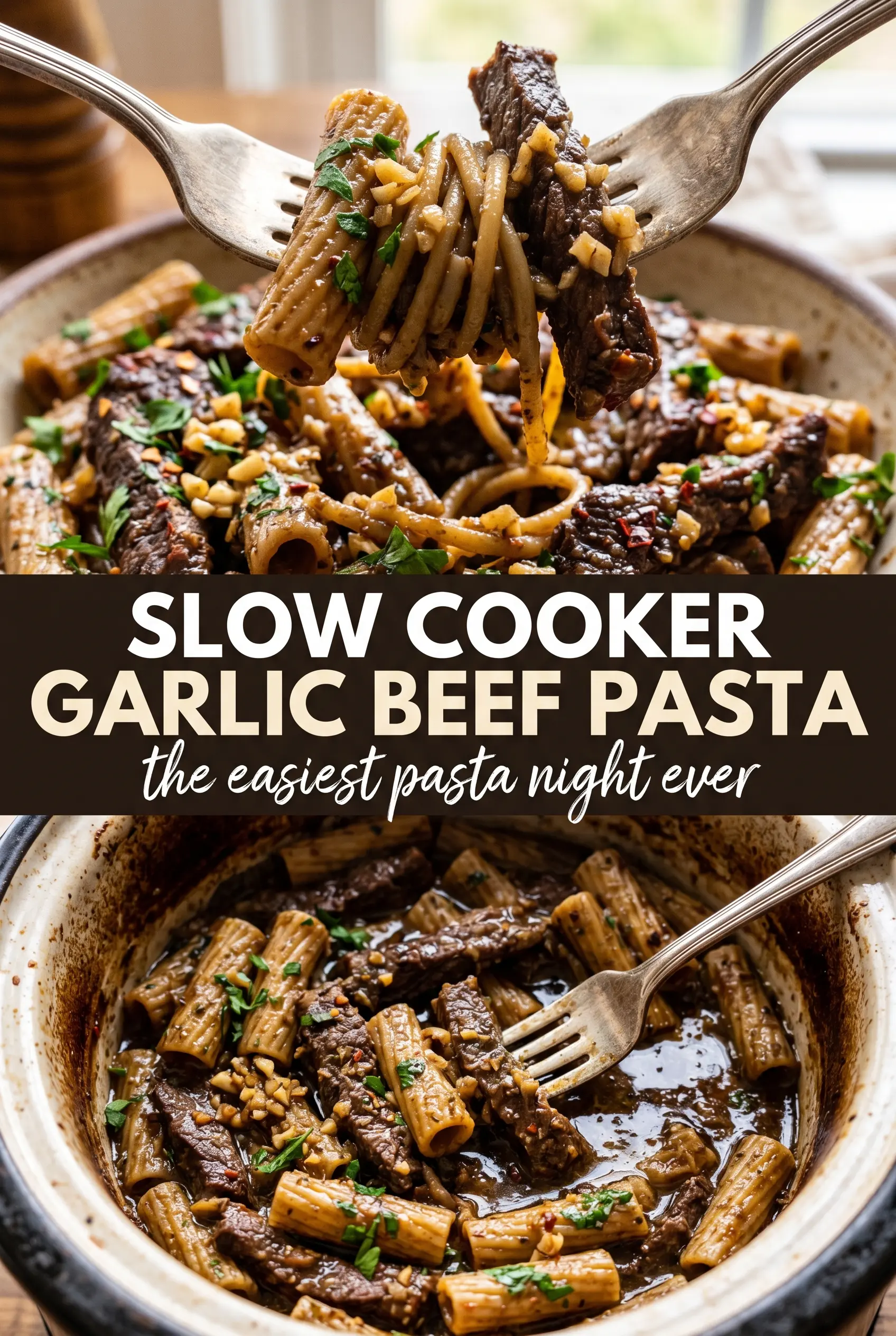
Easy Slow Cooker Garlic Beef Pasta
Ingredients
Equipment
Method
- Heat a cast iron skillet over medium-high and brown the ground beef until no longer pink, then drain excess fat.
- Transfer the browned beef to the Dutch oven (slow cooker) so it’s ready for the sauce.
- Add crushed tomatoes, diced tomatoes, beef broth, garlic, onion, tomato paste, dried basil, dried oregano, garlic powder, red pepper flakes, salt, black pepper, and sugar to the slow cooker.
- Stir to combine all ingredients until evenly mixed.
- Cook on low for 6–7 hours (or high for 3–4 hours) until the sauce is deeply flavorful and slightly thickened, with visible bubbling around the edges as a cue.
- Stir in the cooked rigatoni or penne just before serving and toss until coated in the sauce.
- Serve in bowls garnished with fresh basil and freshly grated Parmesan, with the toppings visible on top.