Soft peppers, jammy onions, and sausage that turns tender instead of dry are what make crockpot sausage and peppers worth keeping in the regular dinner rotation. The slow cooker does the heavy lifting here, but the real payoff is the way the tomatoes, garlic, and Italian herbs melt into the pan juices and coat every bite.
This version works because the vegetables go in raw and cook down with the sausage instead of being pre-cooked to death on the stove. The crushed tomatoes keep everything moist without turning it soupy, and the seasoning lands on top so the sausage and peppers pick it up gradually as they cook. That balance matters. Too much liquid makes this dish taste flat, while too little leaves the peppers stringy and the sausage a little harsh.
Below, I’ll show you the one layering choice that keeps the peppers from disappearing into mush, plus a few ways to serve it that make leftovers just as useful as the first night.
I sliced the sausages at the end like you suggested, and the peppers held their shape instead of turning to mush. The sauce was perfect on the rolls and my husband went back for seconds before I even sat down.
Save this crockpot sausage and peppers recipe for an easy slow cooker dinner with tender sausage, sweet peppers, and sandwich-shop flavor.
The Part That Keeps the Peppers Tender Instead of Watery
The common mistake with slow cooker sausage and peppers is treating it like a stew and drowning it in liquid. The sausage and vegetables release enough moisture on their own, and the crushed tomatoes are there to season and tie everything together, not to turn the whole pot into sauce. When the pot stays too wet, the peppers lose their shape and the sausage tastes boiled instead of rich.
Laying the sausages in first and tucking the peppers and onions around them helps the vegetables soften in the heat without vanishing. You’ll still get that full slow-cooked softness, but the strips stay recognizable and the onions turn silky instead of collapsing into paste. If you’ve ever pulled a slow cooker meal that looked gray and tired, it usually needed less liquid and a little more structure from the start.
- Italian sausage links — Use sweet, hot, or a mix depending on how much heat you want. Links hold their shape better than loose sausage in the slow cooker, and they slice cleanly after cooking.
- Bell peppers — A mix of red, green, and yellow gives you sweetness, brightness, and a little bite. Fresh peppers matter here because they soften slowly and bring texture, not just color.
- Crushed tomatoes — This is the only wet ingredient you really need. Tomato sauce works in a pinch, but crushed tomatoes give you a thicker, more rustic finish that clings to the sausage instead of running off the rolls.
- Provolone — Optional, but it melts into the hot sausage and peppers beautifully. If you’re serving over pasta, you can skip it; if you’re building sandwiches, it adds that classic deli-shop finish.
What Each Ingredient Is Actually Doing in This Slow Cooker Recipe
- Protein (meat, beans, or both) — Slow cooking breaks down tough cuts beautifully. This is where inexpensive cuts become delicious.
- Liquid (broth, sauce, or water) — This is the cooking medium and becomes part of the final dish. Proper ratio is essential.
- Vegetables (variety, cut by size) — Layer them by cooking time so everything finishes together. Hard vegetables first, soft last.
- Aromatics (onion, garlic, herbs) — These mellow and sweeten during long cooking. Mince finely for even distribution.
- Seasonings (salt, spices, Worcestershire) — Build flavor as you layer ingredients. Taste midway and adjust as needed.
- Thickening agent (if needed) — Cornstarch or flour thickens liquid at the end. Add in the last hour so it cooks through.
- Acid (lemon, vinegar, wine) — This brightens flavors that slow cooking can dull. Add near the end to preserve freshness.
- Low heat for 6-8 hours (the secret) — Gentle, long cooking transforms tough ingredients into tender, delicious meals. Patience pays off.
Building the Slow Cooker in the Right Order
Start With the Sausage
Place the sausage links directly in the slow cooker so they sit in the heat and season the rest of the dish as they cook. Don’t brown them first unless you want an extra layer of flavor and don’t mind the extra pan; this recipe is designed to work without that step. The links should stay intact during cooking, then slice easily once they’re fully tender and cooked through.
Layer the Peppers and Onions Around the Meat
Add the sliced peppers, onions, and garlic over and around the sausage so they soften in the rising heat instead of sitting under a pool of liquid. The goal is tender, glossy vegetables, not a pot full of melted vegetables. If your peppers look stacked too tightly, give them a quick toss with your hands so the seasoning and tomatoes can reach every layer.
Let the Tomatoes and Seasonings Coat, Not Drown
Pour the crushed tomatoes over the top, then sprinkle on the seasoning so it disperses as the dish cooks. You’re looking for a light coating across everything, not a thick sauce that buries the vegetables. If you stir before cooking, the sausage can shift too much and the peppers tend to break down faster than you want.
Finish by Stirring, Slicing, and Serving Hot
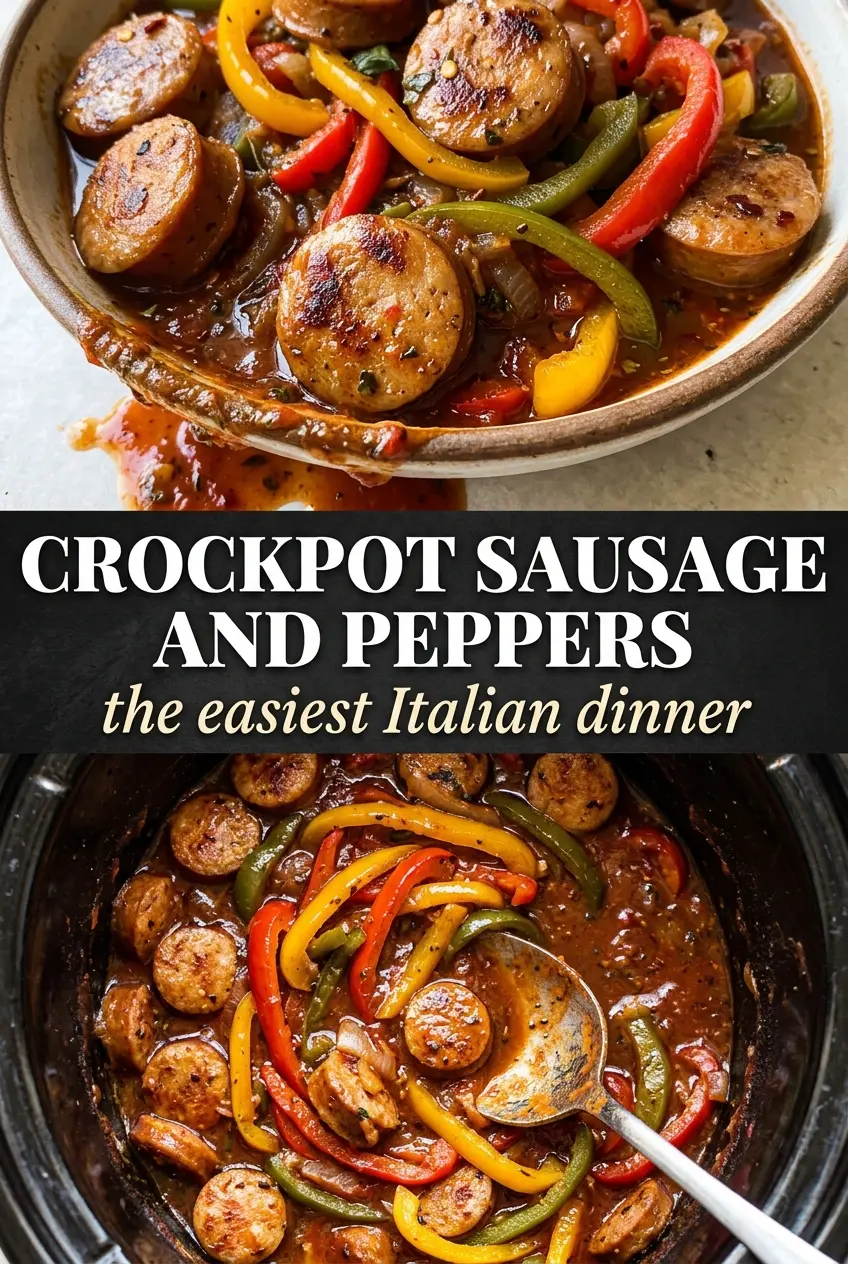
Cook until the sausages are fully cooked and the peppers are very tender, then slice the sausages if you want shorter pieces for sandwiches or pasta. Stir everything together at the end so the tomatoes, peppers, and sausage juices mingle without overworking the vegetables. If it seems a touch loose, let it sit uncovered for 10 minutes before serving; that resting time thickens the juices naturally.
How to Adapt This for Sandwiches, Pasta, and Heat Lovers
For hoagie-style sandwiches
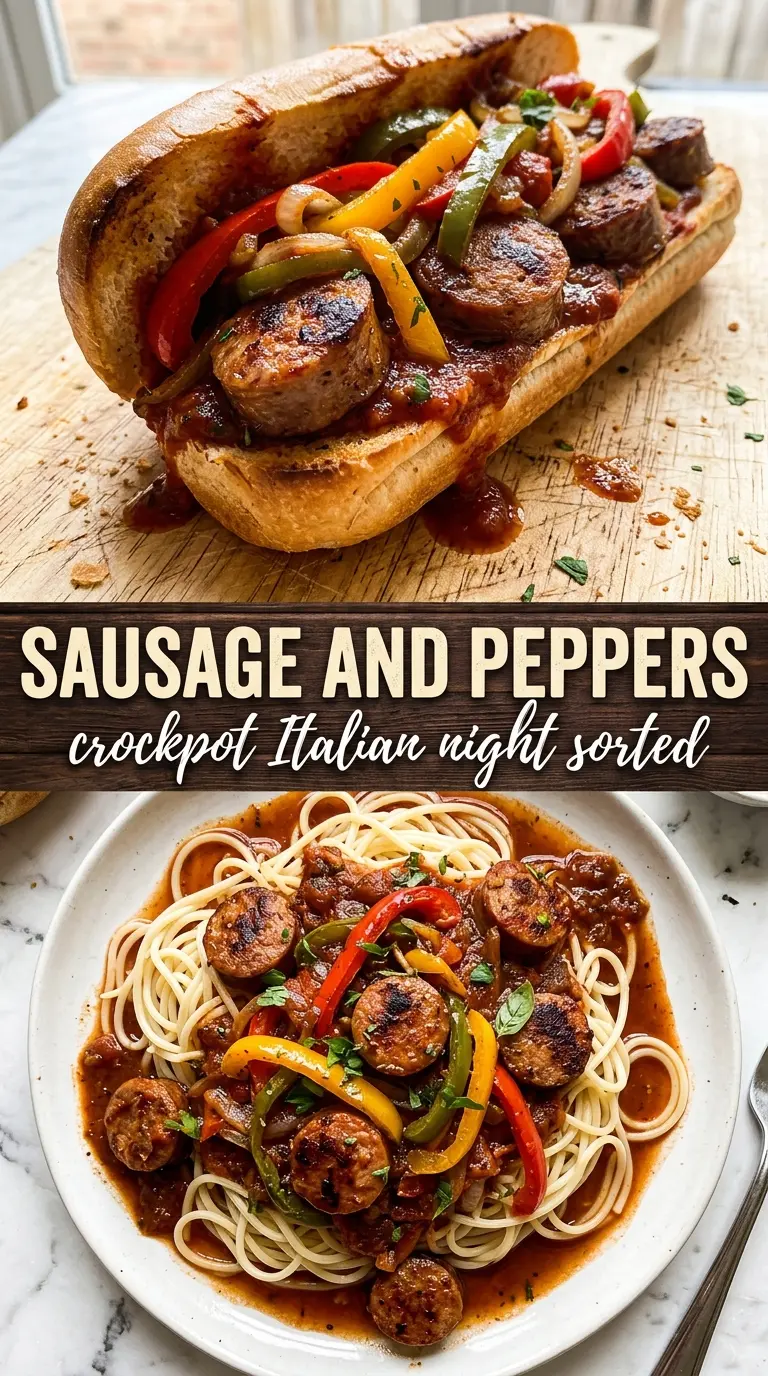
Slice the sausages before serving and let the peppers spoon over the top with just enough juices to soak the roll. Provolone melts best when it goes on the bread first or gets tucked over the hot filling, and that keeps the sandwich from falling apart under the weight of the vegetables.
For pasta night
Serve the sausage and peppers over cooked pasta with a small spoonful of the tomato juices. That turns the dish into a saucier meal without needing extra ingredients, but don’t add a full jar of sauce or it will stop tasting like sausage and peppers and start tasting like plain red pasta.
For a spicier version
Use hot Italian sausage and keep the red pepper flakes in place. If you want even more heat, add extra flakes at the end instead of early in the cook, because slow cooking can mute spice and leave you with heat that feels flat instead of sharp.
Gluten-free serving option
Skip the hoagie rolls and serve the mixture over rice, mashed potatoes, polenta, or gluten-free pasta. The dish itself is naturally gluten-free if you use sausage with a clean label, so the swap is all about the base you choose for soaking up the juices.
Storage and Reheating
- Refrigerator: Store in an airtight container for up to 4 days. The peppers soften a bit more as they sit, but the flavor deepens.
- Freezer: It freezes well for up to 2 months, especially if you freeze it without the rolls. Thaw overnight in the fridge so the sausage reheats evenly.
- Reheating: Warm it gently on the stove over medium-low heat or in the microwave in short bursts. The biggest mistake is blasting it on high heat, which makes the sausage rubbery and turns the peppers watery.
Answers to the Questions Worth Asking
Crockpot Sausage and Peppers
Ingredients
Equipment
Method
- Place the Italian sausage links in the slow cooker.
- Add the sliced bell peppers, onions, and minced garlic around and over the sausages.
- Pour the crushed tomatoes over everything in an even layer.
- Sprinkle Italian seasoning, dried basil, garlic powder, salt, black pepper, and red pepper flakes over the top.
- Cook on low for 5–6 hours until the sausages are fully cooked and the peppers are very tender.
- Alternatively, cook on high for 2.5–3 hours until the sausages are fully cooked and the peppers are very tender.
- Slice the sausages if desired and stir everything together to coat in the tomato mixture.
- Serve the sausage and peppers on hoagie rolls topped with provolone or over cooked pasta.