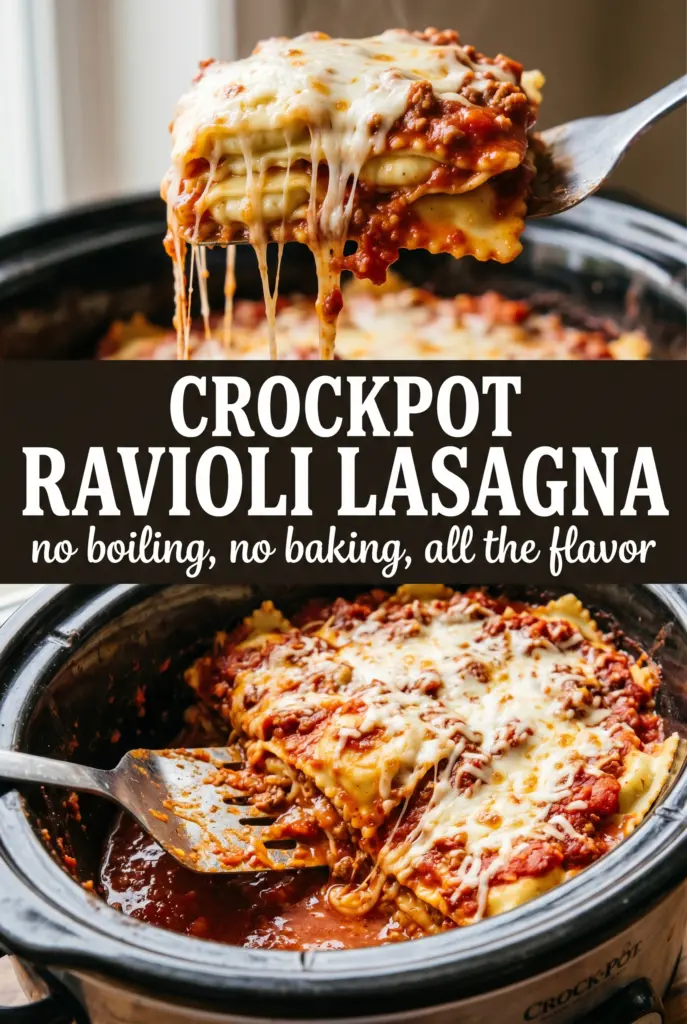
Layered ravioli, rich meat sauce, and a blanket of melted cheese turn this slow cooker dinner into something that eats like lasagna without the usual assembly work. The ravioli stands in for both pasta and filling, which gives you tender layers in every bite instead of a pan of noodles that slide apart on the plate. It’s the kind of meal that comes out bubbling at the edges, slices into thick spoonfuls, and gets scraped clean without much convincing.
The trick is starting with a thin layer of sauce under the ravioli so the pasta doesn’t stick and can soften evenly. Frozen ravioli works especially well because it holds its shape during the long cook, and the ricotta gets tucked between layers instead of stirred into the sauce, so you keep those creamy pockets intact. A little drained diced tomato keeps the sauce from tasting flat and gives the filling some texture without making the whole dish watery.
Below you’ll find the layering order that keeps the slow cooker from turning mushy, plus a few swaps that make this work with sausage, beef, or a lighter meatless version.
The ravioli held up beautifully and the cheese browned right on top without turning greasy. I used Italian sausage and the whole slow cooker smelled like a restaurant by hour three.
Save this Crockpot Ravioli Lasagna for a bubbling, cheesy slow cooker dinner that layers up like lasagna with half the work.
The Layering Trick That Keeps Ravioli from Turning Mushy
The biggest mistake with slow cooker pasta is treating it like a stovetop bake. Ravioli cooks faster than dried noodles, and if it sits in too much sauce from the start, the edges go soft before the center has a chance to finish. A thin base layer of meat sauce protects the bottom, keeps the ravioli from sticking, and creates enough moisture for the pasta to cook without drowning it.
The other thing that matters is how you stack it. Keep the ravioli in a single layer as much as possible, then tuck the ricotta and shredded cheeses between layers instead of dumping them all on top at once. That gives you the lasagna feel in every scoop and prevents the filling from melting into one heavy, greasy layer.
- Frozen cheese ravioli — Frozen ravioli is the safest choice because it holds its shape in the slow cooker. Fresh ravioli works too, but it finishes faster and can overcook if your sauce is very hot going in.
- Ricotta — This is what gives each bite that classic lasagna creaminess. Whole-milk ricotta holds up best; part-skim works, but it can bake up a little drier.
- Mozzarella and Parmesan — Mozzarella brings the melt, and Parmesan sharpens the whole dish so it doesn’t taste flat. Pre-shredded mozzarella is fine here, though freshly shredded melts a touch smoother.
- Drained diced tomatoes — These keep the sauce from tasting one-note and add texture without thinning it out. Drain them well or the slow cooker can end up with a looser bottom layer.
Building the Sauce and Cheese So the Slow Cooker Does the Work
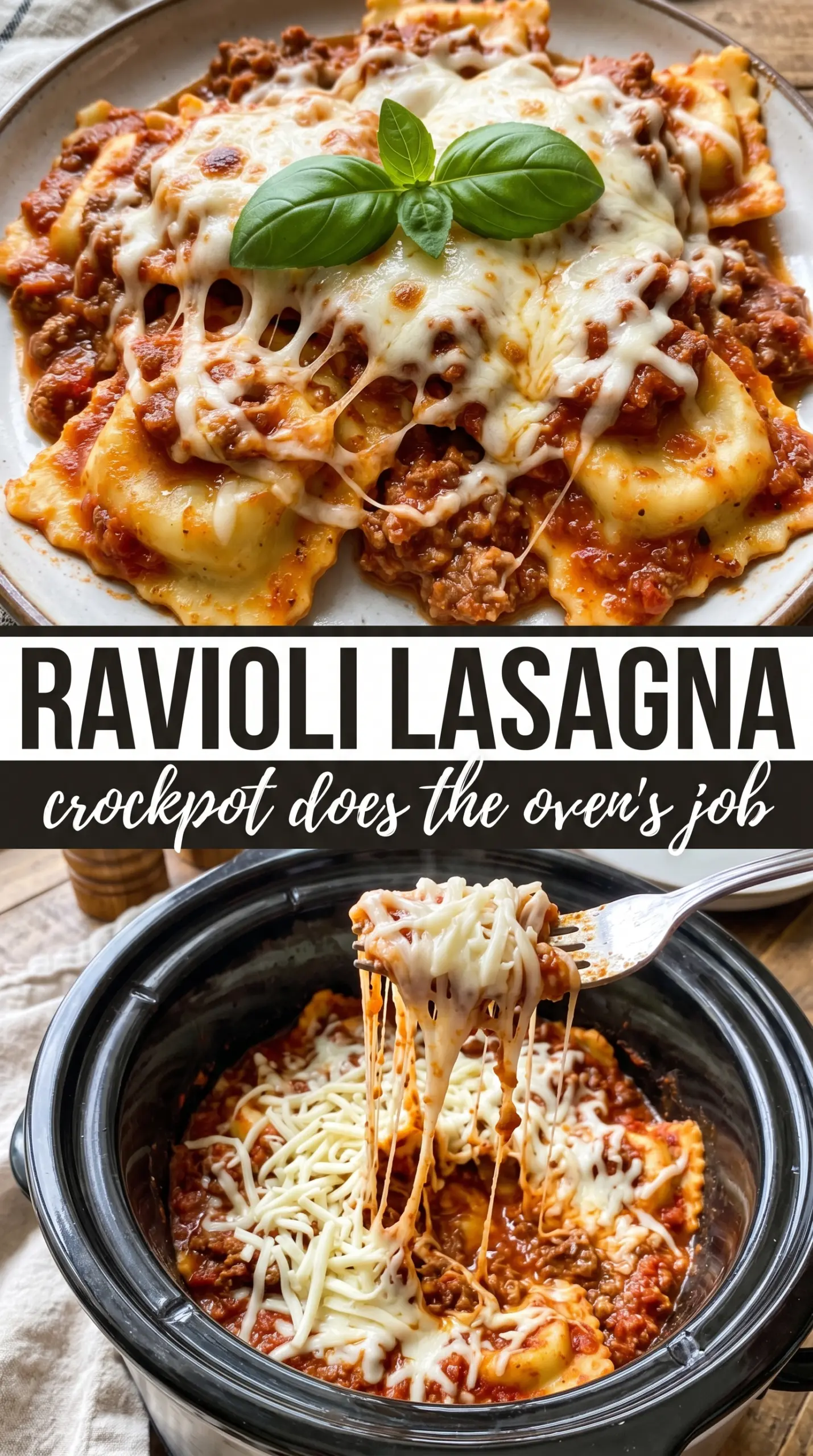
- Ground beef or Italian sausage — Brown it first and drain off the fat. That step keeps the sauce rich instead of greasy and gives you the savory base that makes this taste like lasagna instead of plain tomato soup.
- Marinara sauce — Use a jarred sauce you’d actually eat on pasta. Since the slow cooker softens flavors a bit, a decent sauce matters more than it might in a quicker recipe.
- Seasonings — Italian seasoning, garlic powder, onion powder, salt, and pepper are doing the heavy lifting here. They boost the sauce without making you chop extra aromatics, and they also help the ricotta and ravioli taste seasoned all the way through.
- Basil for garnish — Add it at the end, not during cooking. Fresh basil loses its brightness fast, and a handful on top makes the finished dish taste fresher and look better.
The Slow Cook Time That Gets You Tender Layers, Not a Casserole Mess
Starting with the Meat Sauce
Mix the browned meat with marinara, tomatoes, and seasonings before anything goes into the slow cooker. That sauce should be spoonable and thick enough to coat the back of a spoon, not watery. If it looks loose, simmer it in a pan for a few minutes first; a thin sauce is the main reason the ravioli can turn soft before the cheese has a chance to set.
Building the Layers
Spoon in a thin layer of sauce, add ravioli, then dot on ricotta and sprinkle mozzarella and Parmesan. Repeat until the ingredients are used up, ending with a thick cheese cap. Pressing the ravioli down lightly helps them sit in the sauce, but don’t bury them in extra liquid or the top layer will lose its structure.
Cooking Until the Center Is Hot and the Cheese Is Bubbling
Cook on low for 4 to 5 hours or high for 2 to 2.5 hours. The dish is ready when the ravioli are tender, the sauce is bubbling around the edges, and the cheese on top has melted into one glossy layer. If your slow cooker runs hot, start checking early; overcooking turns the ravioli soft and the cheese oily.
Resting Before You Serve
Let it sit for 10 minutes before scooping. That short rest lets the layers settle so you get a clean serving instead of a lava-like spill across the plate. It also gives the ricotta a chance to firm up just enough to stay in distinct pockets.
How to Adapt This When You Want a Different Kind of Lasagna Night
Use Italian sausage for a bolder, richer finish
Swap the ground beef for mild or hot Italian sausage and keep the rest the same. Sausage brings more seasoning and a little extra fat, which makes the sauce taste deeper, but you’ll want to drain it well so the final dish doesn’t feel heavy.
Make it meatless without losing the lasagna feel
Leave out the meat and use a chunky marinara or add sautéed mushrooms and spinach to the sauce. You’ll lose some of the savory depth from the beef, so taste the sauce before layering and bump up the seasoning if needed.
Go gluten-free with the right ravioli
Use a certified gluten-free ravioli and check the marinara label for hidden wheat-based thickeners. Gluten-free pasta can soften faster, so lean toward the shorter end of the cook time and start checking for tenderness early.
Storage and Reheating
- Refrigerator: Store leftovers in an airtight container for up to 4 days. The ravioli will soften a little as it sits, but the flavor gets even better the next day.
- Freezer: It freezes fairly well in portions for up to 2 months. Cool it completely first, then wrap tightly or use freezer-safe containers; the cheese texture won’t be quite as creamy after thawing, but it still reheats well.
- Reheating: Reheat covered in the oven at 350°F until hot or warm individual portions in the microwave with a splash of sauce or water. The biggest mistake is blasting it uncovered, which dries out the cheese and makes the pasta tough at the edges.
Answers to the Questions Worth Asking
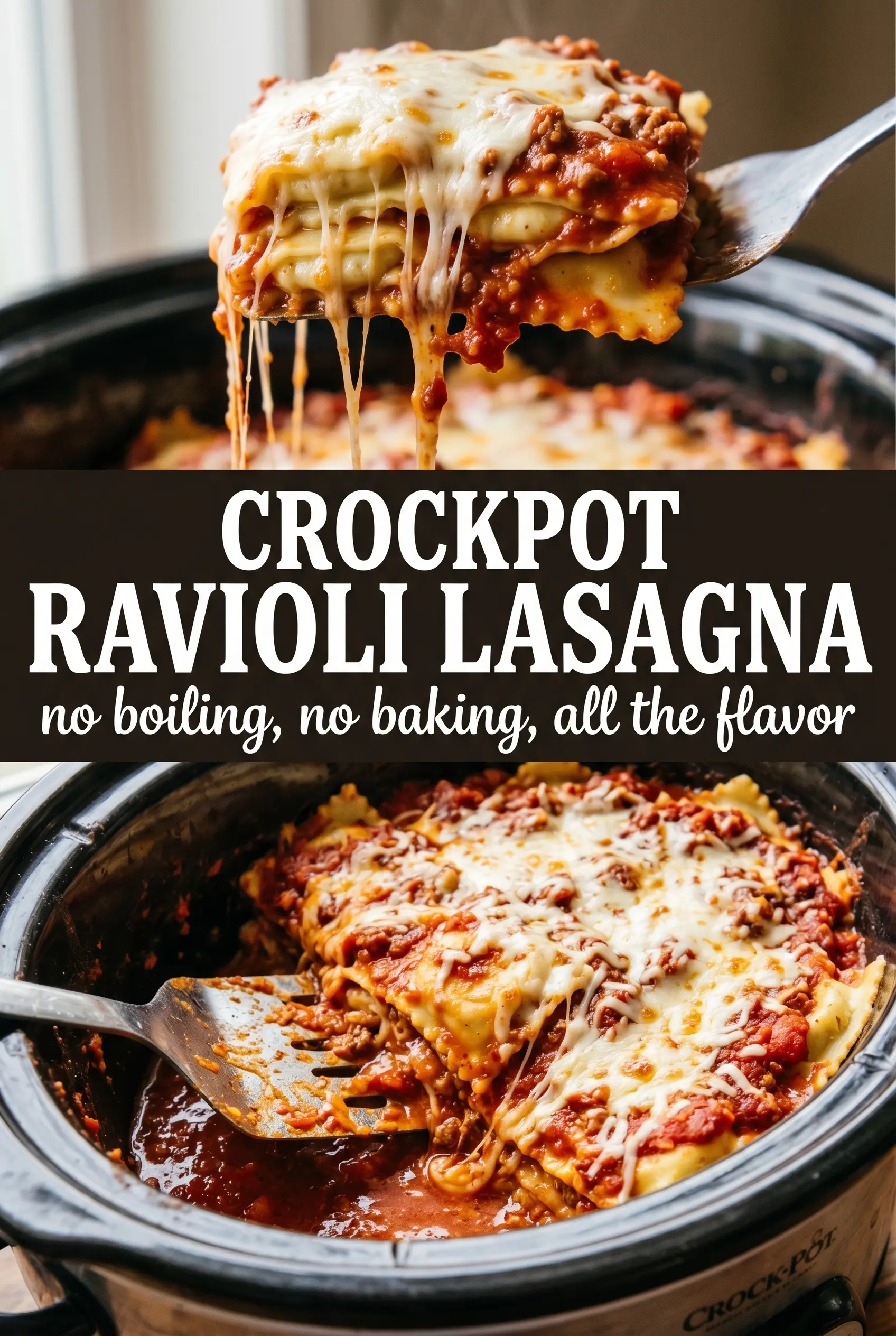
Crockpot Ravioli Lasagna
Ingredients
Equipment
Method
- Brown the ground beef (or Italian sausage), then drain off excess grease and return it to the pan.
- Mix the browned meat with marinara sauce, diced tomatoes, Italian seasoning, garlic powder, onion powder, salt, and black pepper until evenly coated.
- Spread a thin layer of the meat sauce in the bottom of the slow cooker to coat the surface.
- Add a single layer of frozen ravioli on top of the sauce, leaving them in an even layer.
- Dollop ricotta cheese over the ravioli, then sprinkle with mozzarella and Parmesan so the top is well covered.
- Repeat layers of meat sauce, ravioli, ricotta, and cheese until all ingredients are used, finishing with a generous layer of cheese on top.
- Cook on low for 4–5 hours (or until ravioli are cooked through and the cheese is melted and bubbling), with the lid kept closed for best results.
- Let the lasagna rest for 10 minutes before serving to help the layers set, then garnish with fresh basil.