Lacquered crockpot Asian meatballs are the kind of appetizer people hover over before the rest of the food even hits the table. The sauce turns glossy and sticky as it cooks, clinging to every meatball instead of pooling at the bottom of the slow cooker, and that balance of hoisin, soy, honey, and rice vinegar gives you sweet, salty, tangy, and just enough heat in one bite.
The trick here is starting with fully cooked frozen meatballs and letting the sauce do the work. Hoisin brings body, soy sauce brings salt and depth, and a little honey helps the glaze tighten up without tasting sugary. Sesame oil and fresh ginger matter more than they look on the ingredient list; they give the whole dish that takeout-style aroma that makes people assume you spent more time on it than you did.
Below, I’ve included the little things that keep the sauce from thinning out or clumping, plus a few smart swaps if you want to tweak the heat or make the dish gluten-free. The slow cooker handles the heavy lifting, but a couple of small details make the difference between decent meatballs and the tray that disappears first.
The sauce thickened up perfectly and coated every meatball instead of turning watery. I served them with toothpicks and the platter was empty before I finished setting out the rest of the appetizers.
Want glossy crockpot Asian meatballs with sticky hoisin sauce and sesame ginger flavor? Save this one for your next appetizer spread.
The Sauce Needs the Slow Cooker, Not the Stove
The biggest mistake with meatball appetizers is rushing the glaze on the stove and then pouring a thin sauce over the top. In the slow cooker, the meatballs release just enough moisture to loosen everything at first, then the sauce reduces gradually as it heats, which is how you end up with that clingy coating instead of a watery puddle.
Frozen fully cooked meatballs are the right choice here because they hold their shape and stay tender after hours in sauce. If you start with raw meatballs, you’d need to manage their texture and doneness separately, and that’s a different recipe entirely. Stirring once an hour keeps the glaze moving around the pot so the bottom doesn’t scorch and the top doesn’t dry out.
What Each Ingredient Is Doing in the Glaze

- Frozen fully cooked meatballs — These save the recipe. They’re sturdy enough for the slow cooker and absorb the sauce without falling apart. Use beef, turkey, or a blend; just avoid anything tiny and delicate.
- Hoisin sauce — This is the backbone of the glaze. It brings sweetness, umami, and thickness all at once, and there isn’t a substitute that gives the same sticky finish. If you must swap, use barbecue sauce only as a last resort, and expect a different flavor.
- Soy sauce — It keeps the hoisin from tasting flat and balances the honey. Low-sodium works fine if that’s what you keep on hand, especially since frozen meatballs can be salty already.
- Honey — This helps the sauce glaze instead of staying loose. Maple syrup will work in a pinch, but it reads a little different and less cleanly with the sesame and ginger.
- Rice vinegar — The acid keeps the sauce from feeling heavy. Don’t skip it; even a small amount sharpens the whole dish and keeps the sweetness in check.
- Fresh garlic and ginger — These give the sauce its freshest flavor. Ground ginger works if needed, but fresh ginger tastes brighter and less dusty, especially after a long slow-cooker cook.
- Sesame oil — Use a small amount, but use the real thing. It adds the toasted aroma that makes the dish taste finished.
- Red pepper flakes — Just enough to wake up the glaze without turning it into a spicy appetizer. Add more if you want heat, but start light because the flavor concentrates as the sauce thickens.
How to Get the Meatballs Glossy, Not Watery
Build the Sauce Before It Goes In
Whisk the hoisin, soy sauce, honey, rice vinegar, garlic, sesame oil, ginger, and red pepper flakes together until the honey disappears into the liquid. If you pour in honey separately, it tends to sink and stick in one spot before the slow cooker gets a chance to mix it evenly. A smooth sauce at the start means a smooth glaze at the end.
Coat the Meatballs Early
Put the frozen meatballs in the slow cooker first, then pour the sauce over them and stir until every piece is slicked with glaze. That first coating matters because the sauce needs to contact the meatballs directly, not sit in layers on top. If the meatballs are piled too high, give them a stir once they soften a bit so the bottom layer doesn’t stay pale while the top gets all the sauce.
Cook Until the Sauce Clings
On low, these usually need 3 to 4 hours; on high, about 1.5 to 2 hours. You’re looking for meatballs that are heated all the way through and sauce that looks darker, shinier, and thicker around the edges. If the sauce still seems thin at the end, crack the lid for the last 10 to 15 minutes so steam can escape and the glaze can tighten.
Finish with Fresh Garnish
Move the meatballs to a platter and spoon extra sauce over the top. Sesame seeds and sliced green onions aren’t just decoration here; they add crunch and a fresh bite that keeps the dish from feeling one-note. Serve them warm, while the glaze is still glossy and the edges are just starting to set.
How to Adapt These Crockpot Asian Meatballs Without Losing the Glaze
Make Them Gluten-Free
Use gluten-free meatballs and swap in tamari or gluten-free soy sauce. Hoisin sauce sometimes contains wheat, so check the label carefully; if you need a certified gluten-free version, that’s the ingredient worth hunting down first because it carries most of the dish’s flavor and texture.
Turn the Heat Up
Add more red pepper flakes or stir in a little chili garlic sauce with the glaze. Do it sparingly at first, because the heat concentrates as the sauce reduces. The goal is a warm finish that plays against the sweet hoisin, not a sauce that overwhelms the sesame and ginger.
Use Turkey Meatballs for a Lighter Appetizer
Turkey meatballs work well here because the sauce is bold enough to carry them. They can be a little less rich than beef, so the garnish matters even more; keep the sesame seeds and green onions, and don’t shorten the cook time because they still need to absorb the glaze.
Storage and Reheating
- Refrigerator: Store leftovers in an airtight container for up to 4 days. The sauce will thicken as it chills, which is normal.
- Freezer: These freeze well for up to 2 months. Freeze in sauce so the meatballs stay moist, then thaw overnight in the fridge before reheating.
- Reheating: Warm gently on the stovetop over low heat or in the microwave in short bursts, stirring between intervals. High heat can make the sauce separate and can toughen the meatballs, especially if they’re already fully cooked.
Answers to the Questions Worth Asking
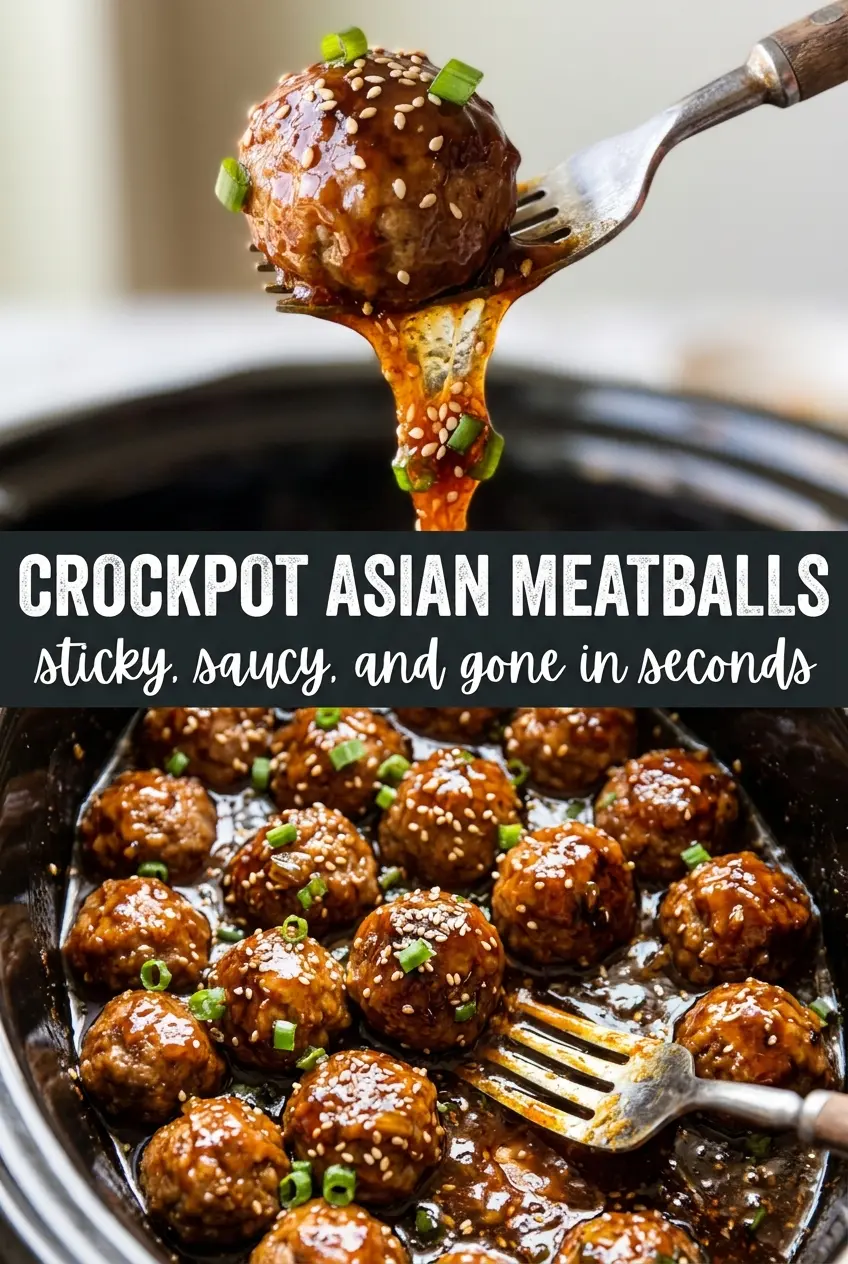
Crockpot Asian Meatballs
Ingredients
Equipment
Method
- Place the frozen fully cooked meatballs into the slow cooker in an even layer.
- Whisk hoisin sauce, soy sauce, honey, rice vinegar, garlic, sesame oil, ginger, and red pepper flakes until smooth.
- Pour the sauce mixture over the meatballs and stir gently to coat evenly.
- Cook on low for 3–4 hours until the meatballs are heated through and the sauce has thickened, or cook on high for 1.5–2 hours.
- Stir gently every hour during cooking to keep the coating even and glossy.
- Transfer the meatballs to a serving platter and garnish with sesame seeds and sliced green onions.