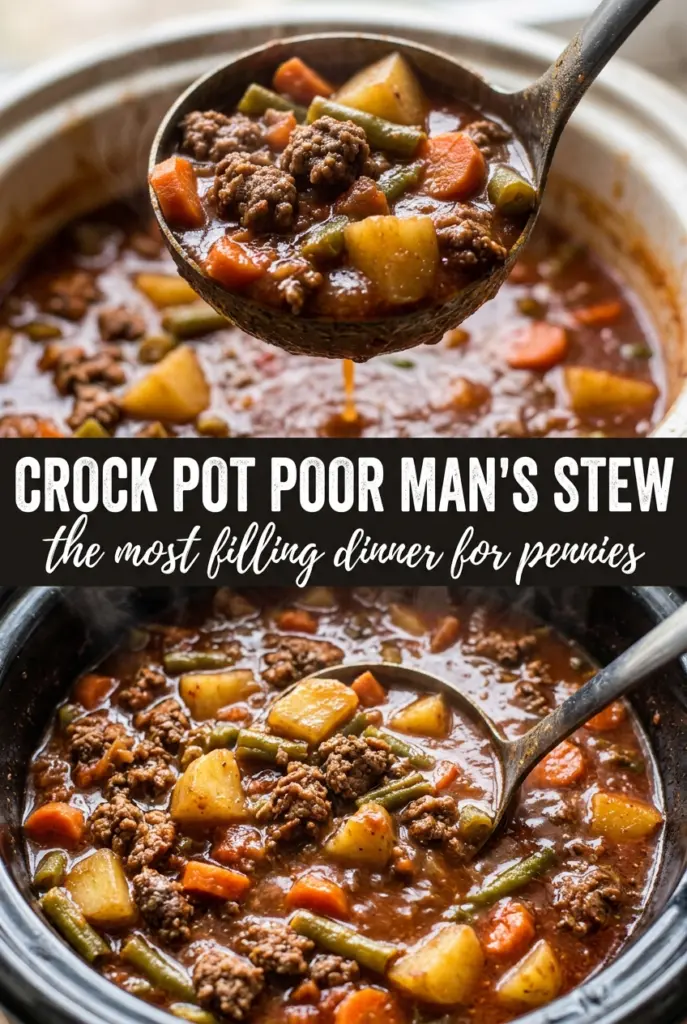
Hearty Crock Pot Poor Man’s Stew is the kind of dinner that settles in and tastes better the longer it cooks. The broth turns rich and savory, the potatoes go tender without falling apart, and the ground beef carries enough weight to make every spoonful feel complete. It’s the kind of bowl that doesn’t need much beside it, though a piece of crusty bread never hurts.
The trick here is building enough flavor before the slow cooker even starts. Browning the beef gives the stew a deeper, meatier base than raw meat ever could, and the onion soup mix plus Worcestershire sauce push the broth into that old-fashioned, beefy direction people expect from a good stew. The cornstarch goes in near the end, after the vegetables have softened, so the broth thickens without turning gluey.
Below, I’m walking through the parts that matter most: how to keep the vegetables from going mushy, what the broth should look like before you thicken it, and the swaps that still keep this stew honest and satisfying.
The beef stayed tender, the potatoes held their shape, and the broth thickened up exactly in the last half hour. I used the crusty bread to mop up every bit.
Save this Crock Pot Poor Man’s Stew for a slow-simmered beef dinner with tender vegetables and a thick, savory broth.
The Reason This Stew Gets Better Instead of Thicker Too Soon
Slow cooker stew goes wrong when the potatoes and carrots give up too early or the broth turns muddy before the beef has had a chance to season it. This version avoids both problems by starting with browned meat and adding the thickener only at the end, after the vegetables have had time to soften on their own. That keeps the texture layered instead of heavy.
There’s also enough moisture here to keep everything moving, but not so much that the stew tastes watery. The diced tomatoes add body and a little brightness, while the onion soup mix quietly does the background work that a long-simmered pot usually gets from hours on the stove.
- Browned ground beef — This is the base of the stew, and it needs that skillet time. Raw ground beef tossed straight into the slow cooker can work, but it won’t give you the same savory depth or the little browned bits that make the broth taste cooked, not just heated.
- Yukon Gold potatoes — These hold their shape better than russets and turn creamy at the edges instead of chalky. Cut them into even 1-inch cubes so they soften at the same pace as the carrots.
- Onion soup mix — This is where a lot of the old-school comfort flavor comes from. It brings onion, salt, and savory seasoning in one packet, and it’s worth using the packet here instead of trying to rebuild that blend from scratch.
- Cornstarch slurry — The cornstarch and cold water mixture thickens the broth cleanly if you add it during the last 30 minutes. If it goes in too early, the stew can tighten up before the vegetables are fully tender.
What Each Ingredient Is Actually Doing in This Slow Cooker Soup

- Broth or stock (the base) — Good broth is essential. Homemade is best, but quality store-bought works fine.
- Protein (meat, beans, or both) — This gives the soup substance and richness. Cook in the broth so flavors meld.
- Vegetables (variety is good) — Use a mix of sizes and types. They add nutrition, texture, and flavor.
- Aromatics (onion, garlic, celery) — These build the flavor base. Cook them down so they become part of the broth rather than separate pieces.
- Seasonings (salt, pepper, herbs) — Layer them as you build the soup. Taste frequently because flavors intensify during long cooking.
- Liquid (not just broth) — Water, juice, or wine can add to the mix. Balance is important so nothing overwhelms.
- Noodles or rice (optional substance) — Add these in the last 30-60 minutes so they don’t get mushy. They absorb liquid as they cook.
- Acid and fresh herbs (the finish) — Add at the end so they stay bright. These finish the soup and keep it from tasting one-dimensional.
Building the Broth After the Beef Is Browned
Getting the Beef Ready
Cook the ground beef over medium-high heat until it’s no longer pink and the edges have picked up some color. Drain off the excess fat so the stew stays rich instead of greasy. If you skip the browning or leave too much fat in the skillet, the broth can end up flat or slick on top.
Layering the Slow Cooker
Add the beef, potatoes, carrots, onion, celery, green beans, and tomatoes to the slow cooker before pouring in the broth. That order helps everything settle evenly, and the tomatoes don’t sit in one concentrated spot. Stir in the broth, soup mix, Worcestershire sauce, garlic powder, salt, and pepper until the seasonings are spread through the pot.
Cooking Until the Vegetables Yield
Cook on low for 7 to 8 hours or on high for 3 1/2 to 4 hours. The potatoes should be tender all the way through, and the carrots should give without crumbling apart. If the vegetables are still firm after the timer ends, they need more time, not more heat — pushing the temperature too hard is how you get tough edges and a cloudy broth.
Thickening at the End
Whisk the cornstarch and cold water together until smooth, then stir it into the stew during the last 30 minutes. Keep the slow cooker on high so the slurry activates and the broth turns glossy and spoonable. If the stew still looks thin at first, give it time; cornstarch needs heat and a little patience to finish its job.
What to Swap When You Need This Dinner to Fit Your Pantry
Make It Gluten-Free
Use a gluten-free onion soup mix and confirm your beef broth and Worcestershire sauce are gluten-free. The stew itself doesn’t rely on flour, so this swap is mostly about the seasoning packet and the sauce.
Add a Little More Vegetables
You can add corn, peas, or chopped green beans if you want a fuller vegetable mix, but keep the potato amount the same so the stew still feels like stew. Add delicate vegetables near the end so they don’t turn dull and overcooked.
Use Ground Turkey Instead of Beef
Ground turkey works, but the stew will taste lighter and less robust. If you go that route, keep the Worcestershire sauce and onion soup mix in place, and don’t skip browning, since turkey needs that extra flavor help.
Storage and Reheating
- Refrigerator: Store in an airtight container for up to 4 days. The broth thickens a little more as it chills.
- Freezer: This freezes well for up to 3 months. Cool it completely first, then freeze in portioned containers for easier reheating.
- Reheating: Warm it gently on the stove or in the microwave, stirring once or twice as it heats. If it looks too thick, add a splash of broth or water. Don’t boil it hard or the potatoes can break down and turn grainy.
Questions I Get Asked About This Recipe
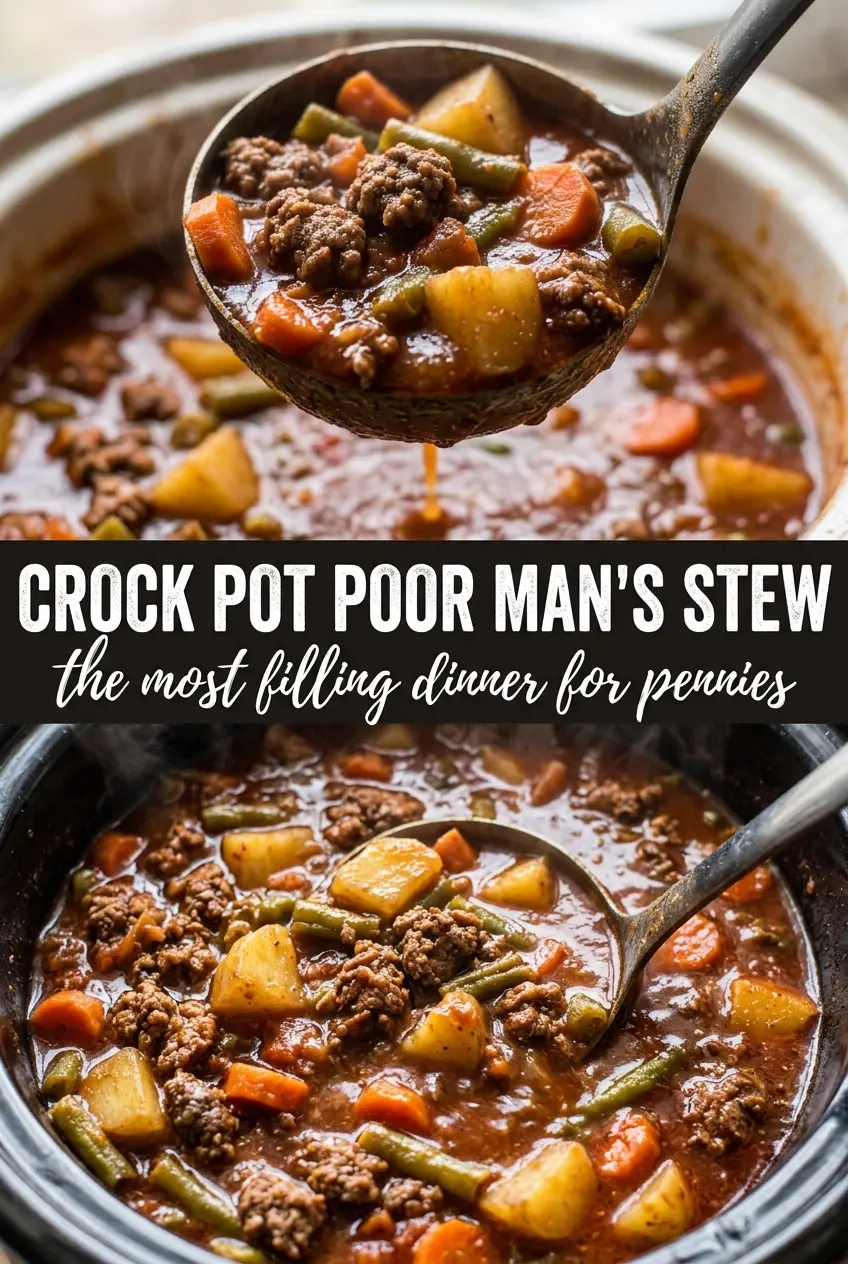
Crock Pot Poor Man's Stew
Ingredients
Equipment
Method
- Brown the ground beef in a skillet over medium-high heat until no longer pink, then drain excess fat. Keep cooking until the surface looks browned and the juices look mostly evaporated.
- Add the browned ground beef to the slow cooker along with the potatoes, carrots, onion, celery, green beans, and diced tomatoes. Spread the vegetables into an even layer so they cook uniformly.
- Pour the beef broth over everything in the slow cooker. Pour around the edges so the vegetables are covered with broth.
- Add the onion soup mix, Worcestershire sauce, garlic powder, salt, and black pepper and stir to combine. Stir until the seasoning is evenly distributed and the top looks speckled.
- Cook on low for 7–8 hours until the vegetables are tender, or cook on high for 3.5–4 hours until the same tenderness is reached. The stew should be bubbling gently and the potato cubes should yield when pressed.
- Whisk the cornstarch and cold water together until smooth, then stir the slurry into the stew during the last 30 minutes. The mixture should disappear into the broth without lumps.
- Cook on high until the broth thickens, then serve. The surface should look more cohesive and the liquid should cling to a spoon.
- Serve the poor man's stew with crusty bread or dinner rolls. Dish up while hot so the thickened broth stays velvety.