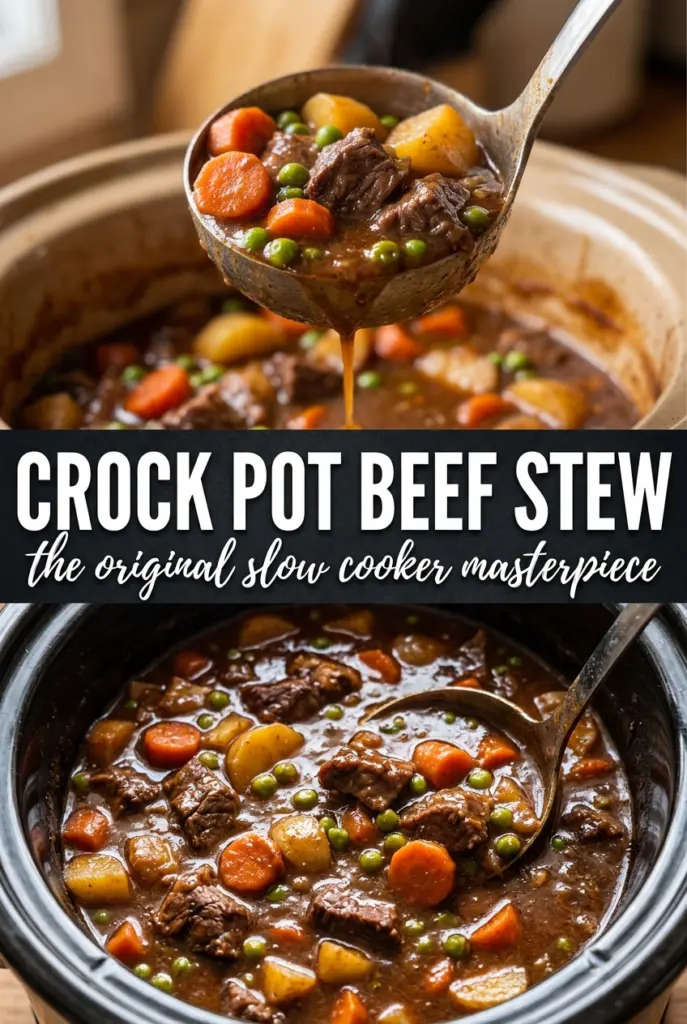
Deep, spoon-coating beef stew is one of the best reasons to keep a slow cooker on the counter. The beef turns tender without falling apart into shreds, the potatoes hold their shape, and the broth cooks down into something rich enough to cling to every carrot and bite of bread. This version leans savory and balanced, with tomatoes, Worcestershire, and soy sauce giving the broth more depth than a plain beef-and-potato stew ever gets on its own.
The key is building enough flavor in the liquid before it goes into the pot, then thickening it at the end instead of trying to start thick. Tomato paste gives the broth body, while the cornstarch slurry goes in only after the beef and vegetables are fully cooked. That last step keeps the stew glossy instead of cloudy and lets the vegetables stay intact instead of breaking down early.
Below, I’ll walk through the few details that matter most: how to keep the broth from tasting flat, why the potato cut matters, and how to thicken the stew without turning it gluey.
The beef was fall-apart tender after 8 hours on low, and the broth thickened up beautifully with the cornstarch at the end instead of getting pasty. My husband asked if I could put this in the rotation every week.
Save this Crock Pot Beef Stew for the nights when you want tender beef, thick gravy, and barely any hands-on work.
The Part That Keeps the Broth Rich Instead of Watery
Slow cooker stew can go flat fast if the seasoning only lives in the salt and pepper. The trick here is layering depth into the broth before it ever hits the pot: tomato paste, Worcestershire, soy sauce, thyme, rosemary, and a little smoked paprika all pull in different directions without making the stew taste like tomatoes or soy. What you get instead is a darker, rounder broth that tastes like it cooked all day, because it did.
The other thing that matters is restraint with the liquid. The vegetables and beef will release moisture as they cook, so the broth should look a little lean when it goes in. If it looks soupy at the start, it usually ends up thin at the end. The cornstarch slurry at the finish is what turns it into a proper stew instead of beef in broth.
What Each Ingredient Is Actually Doing in This Stew
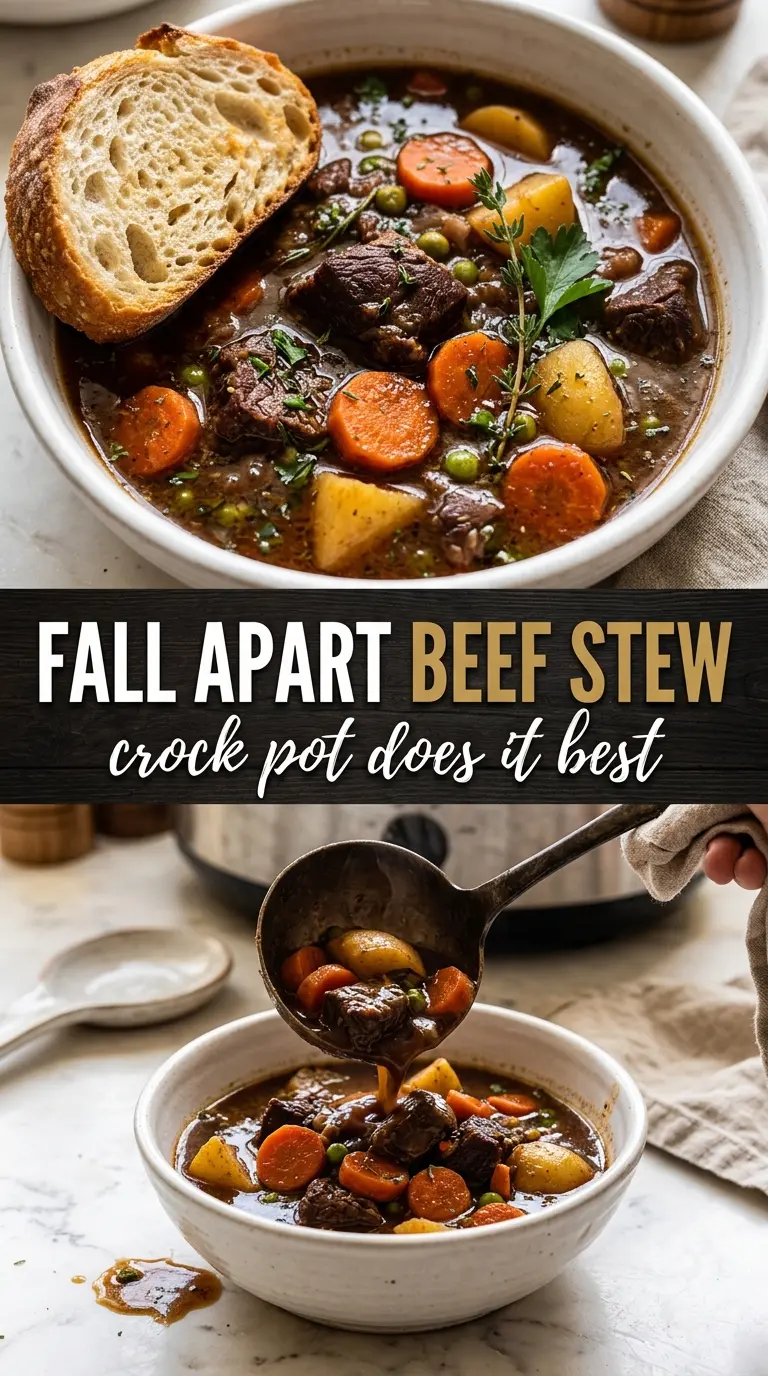
- Beef stew meat — Use chuck if you can find it. It has enough connective tissue to go tender over a long cook, while leaner cubes can turn dry and stringy. Cut pieces to a fairly even size so they finish at the same time.
- Yukon Gold potatoes — These hold their shape better than russets and give the stew a naturally creamy feel. Cut them into 1-inch chunks so they don’t collapse into the broth before the beef is done.
- Tomato paste and diced tomatoes — The paste deepens the color and gives the broth body, while the diced tomatoes add a little brightness. If you skip the paste, the stew tastes thinner and less developed.
- Worcestershire sauce and soy sauce — These are the backbone of the savory flavor. They don’t make the stew taste like either one; they just add the kind of saltiness and depth that plain broth can’t match.
- Cornstarch slurry — This is the cleanest way to thicken the stew at the end. Mix it with cold water first, or it will clump the second it hits the hot liquid.
How to Get Fall-Apart Beef Without Mushy Vegetables
Loading the Slow Cooker in the Right Order
Start with the beef, then add the vegetables and garlic, and pour the mixed broth over the top. You don’t need to brown the meat first for this recipe to work, but you do need to mix the liquid ingredients together before they go in so the tomato paste and seasonings distribute evenly. If you dump the paste straight into the pot, it tends to sit in one stubborn clump and never fully dissolve.
Cooking Until the Beef Gives Easily
Low for 8 to 10 hours gives the best texture, especially if your beef pieces are on the larger side. The beef should break apart with a fork, but the potatoes should still look like chunks, not mash. If you rush this on high and pull it early, the beef can still feel tight in the center even when the vegetables look done.
Thickening at the End Without a Gluey Finish
Whisk the cornstarch and cold water together until it looks smooth, then stir it into the hot stew and cook uncovered on high for 20 to 30 minutes. That short finish gives the broth time to thicken and lose the raw starch taste. If your stew still looks thin after that, let it go a little longer instead of adding more cornstarch right away, because the broth will thicken more as it cools.
Make It Dairy-Free and Gluten-Free
This recipe is naturally dairy-free, and it stays gluten-free if you use a certified gluten-free Worcestershire sauce and soy sauce or tamari. The texture doesn’t change, but the flavor stays just as deep. Cornstarch is the right thickener here because it gives the broth body without adding floury heaviness.
Swap the Potatoes for a Lower-Carb Stew
If you want fewer starches, replace the potatoes with extra celery, mushrooms, or turnips. Turnips hold up well in the slow cooker and give you a stew-like bite, though they taste a little earthier than potatoes. The broth still thickens the same way, but the finished bowl will feel lighter.
Use Red Wine for a Deeper Broth
Replace 1/2 cup of the beef broth with dry red wine if you want a richer, more braised flavor. It adds a little sharpness at first, but that cooks out and leaves the stew tasting fuller. Don’t use sweet wine here, or the broth turns muddled.
Make It Ahead for Better Flavor
This stew tastes even better the next day because the broth settles into the meat and vegetables overnight. Cook it fully, cool it, and refrigerate it before reheating. The starches tighten up a little in the fridge, so a splash of broth when reheating brings it back to the right consistency.
Storage and Reheating
- Refrigerator: Store for up to 4 days. The broth will thicken as it chills.
- Freezer: Freezes well for up to 3 months. Cool completely first and leave a little headspace if you’re using containers.
- Reheating: Reheat gently on the stove or in the microwave with a splash of broth or water. Don’t boil it hard, or the potatoes can break down and the beef can turn stringy.
Answers to the Questions Worth Asking
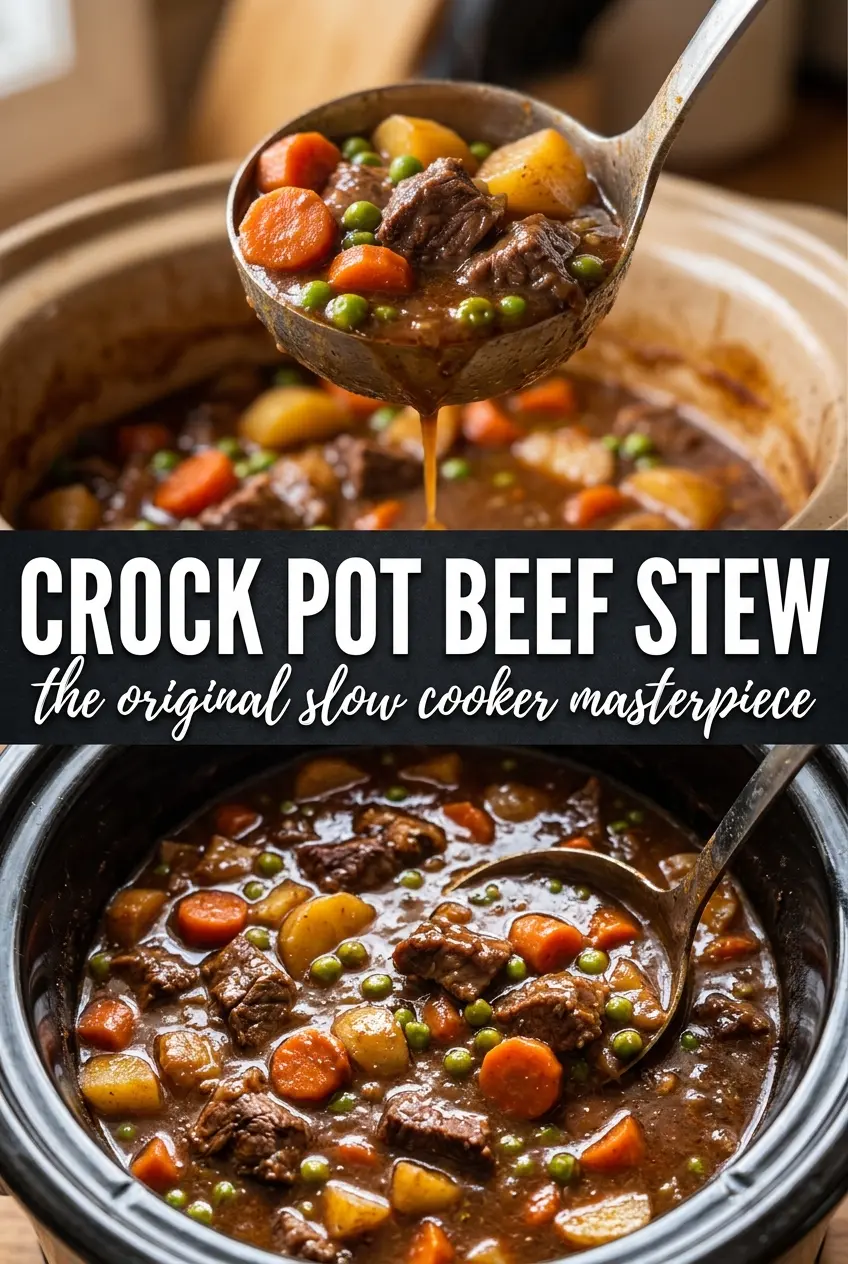
Crock Pot Beef Stew
Ingredients
Equipment
Method
- Place the beef stew meat into the slow cooker. Spread it into an even layer so it cooks uniformly.
- Add the potatoes, carrots, celery, onion, and garlic to the slow cooker. Nestle the vegetables around the beef for even seasoning coverage.
- Whisk together the beef broth, diced tomatoes, tomato paste, Worcestershire sauce, soy sauce, thyme, rosemary, garlic powder, smoked paprika, salt, and black pepper in a bowl until smooth. Aim for no visible tomato paste lumps.
- Pour the broth mixture over the beef and vegetables, then stir to combine. Make sure most of the meat is in contact with the liquid.
- Cook on low for 8–10 hours. The beef should be fall-apart tender and the vegetables should be soft when tested with a fork.
- If using high instead, cook for 4–5 hours. Keep cooking until the beef is fall-apart tender and the vegetables are fully softened.
- Whisk cornstarch and cold water together until smooth. The mixture should look like a thin slurry with no dry cornstarch pockets.
- Stir the cornstarch slurry into the stew. Scrape the bottom so the thickening agent disperses.
- Cook on high for 20–30 minutes until the broth thickens. Watch for a glossy, spoon-coating texture.
- Serve the stew in deep bowls and garnish with fresh parsley. Add crusty bread on the side for dipping.