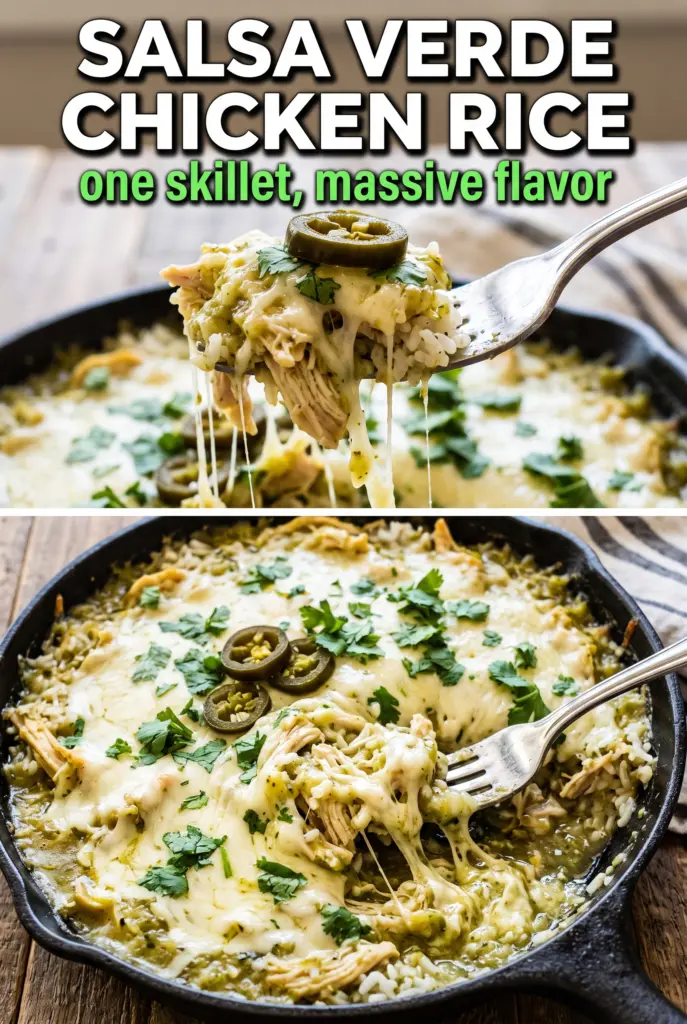
Golden chicken thighs tucked into tangy salsa verde rice make this skillet dinner feel like a full meal without turning the kitchen into a project. The rice cooks right in the same pan, soaking up chicken drippings, broth, and tomatillo brightness until every bite lands somewhere between comforting and lively. Melted Monterey Jack on top pulls the whole pan together with just enough richness to round out the sharp, green sauce.
What makes this version work is the order. The chicken gets a hard sear first, which leaves behind browned bits that season the rice from the start. Then the rice is toasted briefly before the liquid goes in, which helps keep the grains separate instead of soft and sticky. The beans and corn add body and sweetness, but the salsa verde is still the lead flavor, so you get a dish that tastes bright instead of heavy.
Below, you’ll find the exact moment to cover the skillet, why the chicken thighs stay tender even after the rice finishes, and a few smart swaps if you need to work with what’s in the pantry.
The rice came out fluffy, not mushy, and the salsa verde flavor stayed bright even after simmering. I loved that the chicken thighs stayed juicy while the cheese melted right into the top.
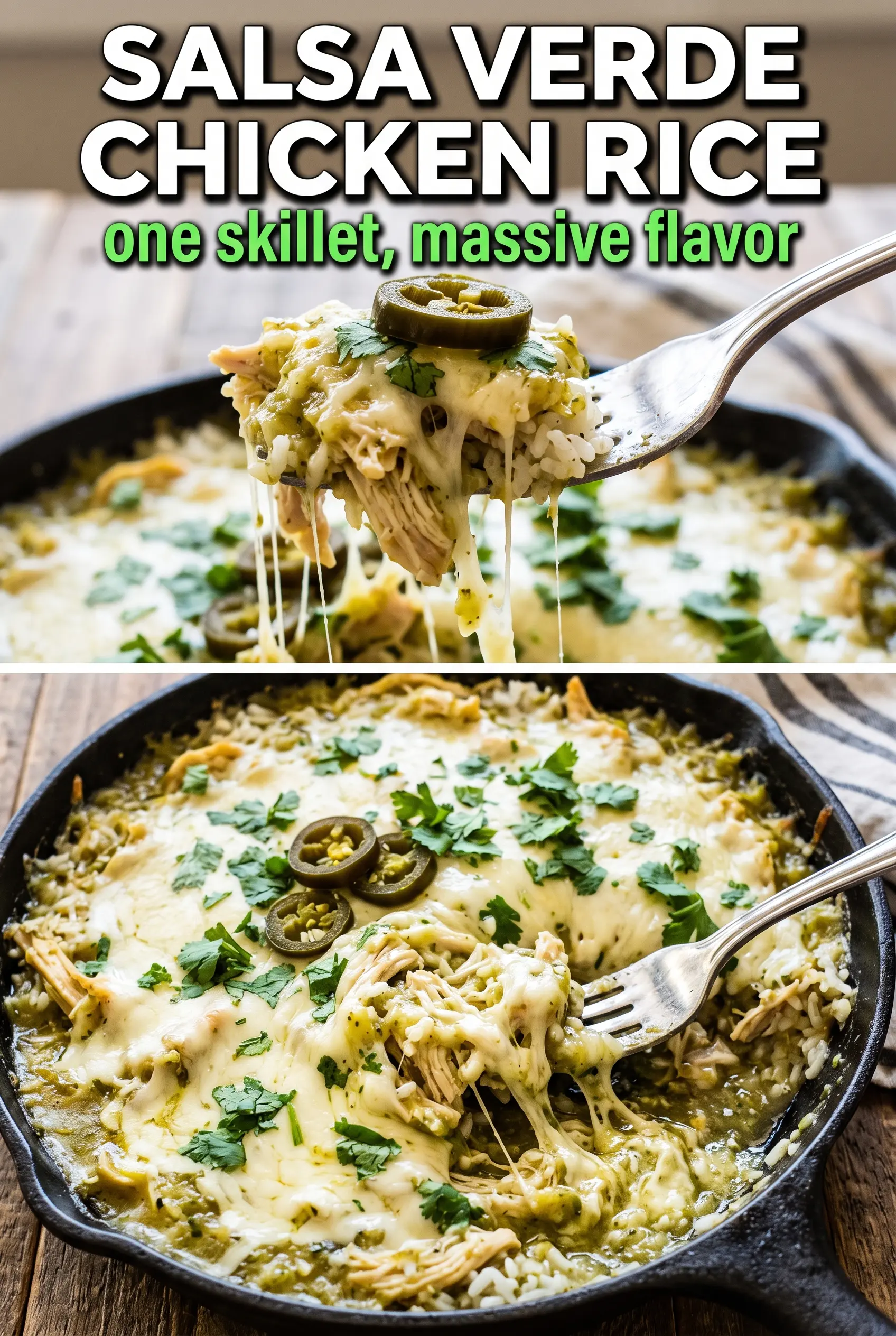
Pin this salsa verde chicken and rice skillet for a one-pan dinner with tender chicken, fluffy green rice, and melted Monterey Jack.
The Trick to Keeping the Rice Fluffy in a Saucy Skillet
The biggest mistake in a dish like this is treating the rice like soup. Salsa verde adds moisture, but the broth still needs to be measured carefully so the grains have enough liquid to cook without collapsing into a soft, pasty layer. Toasting the rice for a couple of minutes before adding the liquid gives the grains a little structure, and that extra step pays off in the final texture.
Coverage matters too. Once the skillet comes to a simmer, the lid goes on and the heat drops to low so the rice can absorb the liquid evenly. If it boils hard, the bottom can scorch before the top finishes, and if the lid is loose, the rice dries out before it turns tender. The result should be fluffy grains with a saucy coating, not wet rice swimming under the chicken.
What Each Ingredient Is Actually Doing in This Skillet
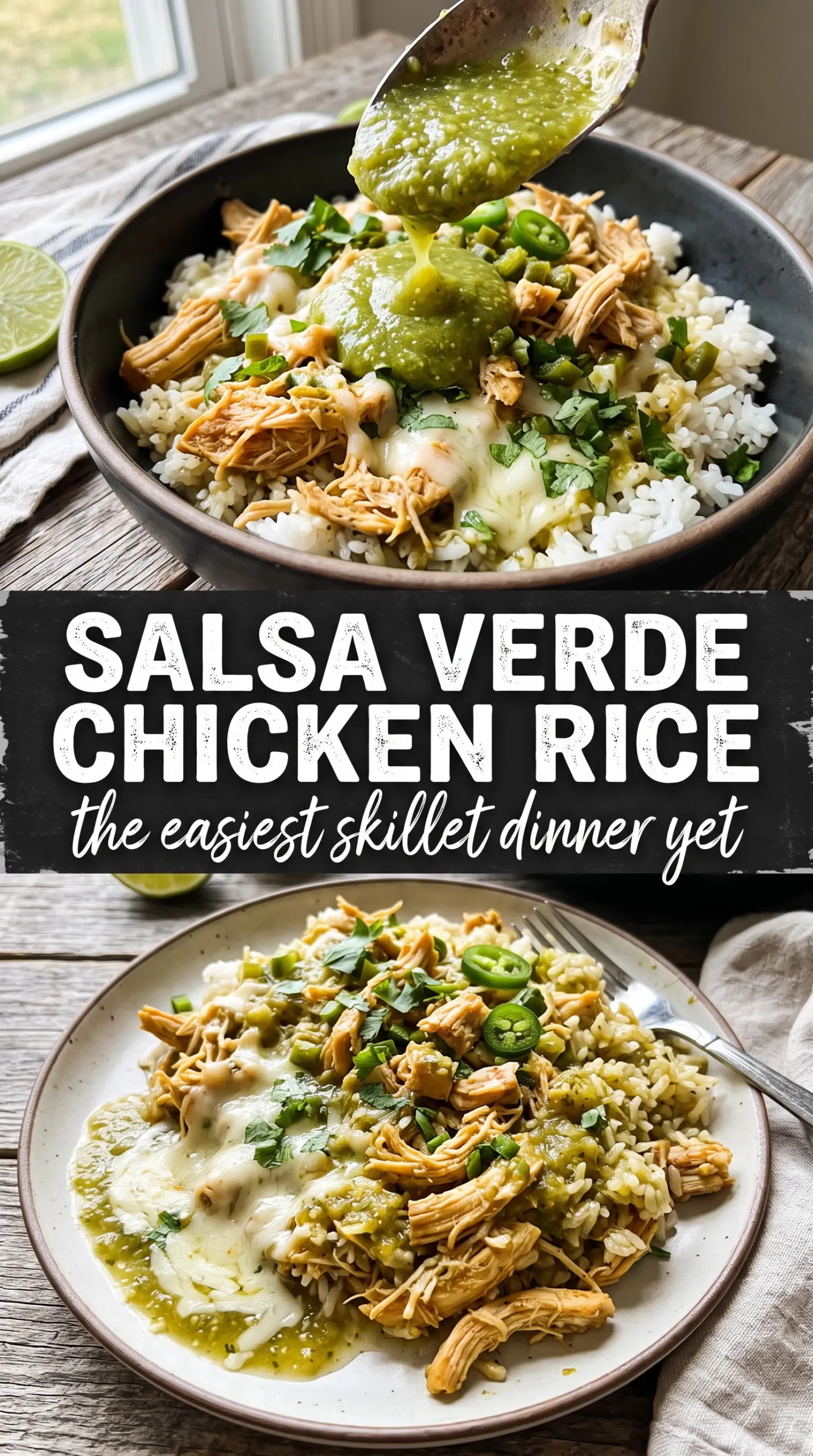
- Boneless chicken thighs — These stay juicy during the simmer and hold up better than chicken breasts. Breasts can work, but they dry out faster and need a shorter finish time, so thighs are the safer choice here.
- Long-grain white rice — This is the rice that stays separate and tender in a one-pan skillet. Short-grain rice turns softer and stickier, and brown rice needs more liquid and a longer cook, which throws off the timing.
- Salsa verde — Use a jarred salsa verde you actually like on its own, because it sets the flavor of the whole pan. A thin, watery salsa can make the rice bland, while a thicker one gives you a brighter, more concentrated sauce.
- White beans or pinto beans — These add body and make the skillet feel more complete without much extra effort. If you leave them out, the dish still works, but it won’t have the same hearty, spoonable texture.
- Monterey Jack — It melts smoothly and keeps the top creamy instead of greasy. Pepper Jack works if you want more heat, but pre-shredded cheese can be a little less silky because of the anti-caking coating.
Building the Skillet So Nothing Cooks Before Its Time
Searing the Chicken First
Heat the oil until it shimmers, then lay the seasoned thighs in without crowding the pan. You want a deep golden crust, not pale gray meat that leaks juice everywhere. If the chicken sticks at first, leave it alone for another minute; it will release once the crust forms. Pull it out when both sides are browned, even if it isn’t cooked through yet, because it finishes later in the rice.
Toasting the Rice and Deglazing the Pan
After the garlic smells fragrant, stir in the rice and let it toast until the edges look slightly translucent. That quick toast helps the grains keep their shape under the liquid. When the salsa verde and broth go in, scrape the bottom of the skillet hard enough to loosen the browned bits. Those bits season the rice, and if they stay stuck to the pan, they can scorch.
Finishing Under the Lid
Once the chicken is nestled back into the rice, bring everything to a simmer, then cover and turn the heat all the way down. The skillet should barely bubble. If it boils aggressively, the rice on the bottom can go mushy while the top stays underdone. When the rice is tender and the chicken reaches temperature, shut off the heat and let the cheese melt over the top with the lid back on for a couple of minutes.
How to Adapt This Chicken and Rice Skillet Without Losing the Point
Make it dairy-free
Skip the Monterey Jack or use a dairy-free melting cheese that actually softens under steam. The skillet still tastes complete because the salsa verde and chicken do most of the work, but you’ll lose the creamy top layer that makes each spoonful feel richer.
Swap the chicken thighs for chicken breasts
Use boneless breasts cut into large pieces and shorten the final simmer a bit so they don’t dry out. The dish will be leaner, but thighs give you more forgiveness and better flavor in a one-pot recipe like this.
Make it vegetarian
Leave out the chicken and use vegetable broth, then add an extra can of beans or some sautéed zucchini to keep the skillet hearty. You’ll still get the bright salsa verde rice, but the flavor will be lighter and less savory without the browned chicken drippings.
Storage and Reheating
- Refrigerator: Store leftovers in an airtight container for up to 4 days. The rice will firm up a little as it chills, but the flavor holds up well.
- Freezer: This freezes better than a lot of rice skillets. Cool it completely, portion it into freezer containers, and freeze for up to 2 months.
- Reheating: Reheat gently on the stove or in the microwave with a splash of broth or water. The common mistake is blasting it on high heat, which dries out the chicken and makes the rice tough before the center is warmed through.
Questions I Get Asked About This Recipe
Salsa Verde Chicken and Rice Skillet
Ingredients
Equipment
Method
- Season the boneless chicken thighs with cumin, chili powder, salt, and pepper.
- Heat olive oil in a large oven-safe cast iron skillet over high heat and sear chicken until golden, 4–5 minutes per side, then remove and set aside.
- Add minced garlic to the pan and cook for 30 seconds.
- Add long-grain white rice and toast for 2 minutes.
- Pour in salsa verde and chicken broth, stir to combine, then add white beans or pinto beans, drained and frozen corn, thawed.
- Nestle the seared boneless chicken thighs back into the rice, bring to a simmer, cover, and cook over low heat for 20 minutes until the rice is cooked and the chicken is done.
- Top with Monterey jack cheese, shredded and cover for 2 minutes until melted.
- Garnish with fresh cilantro and lime wedges for serving before serving.