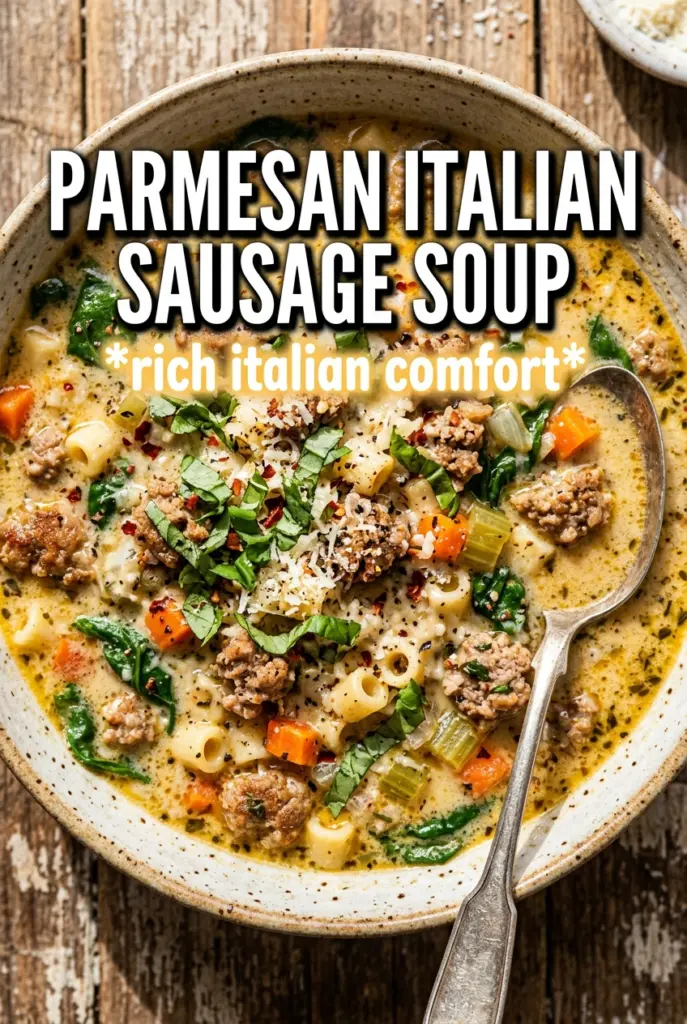
Creamy Parmesan Italian Sausage Soup lands in that sweet spot between cozy and substantial: a silky broth, savory sausage, tender pasta, and kale that softens just enough without disappearing. The parmesan melts into the cream instead of sitting on top of it, so every spoonful tastes rich all the way through, not just at the surface.
What makes this version work is the order. The sausage browns first, then the same pot gets used to build the base, which means the soup picks up all those browned bits instead of starting from scratch. The flour cooks for a minute or two before the broth goes in, and that small step keeps the broth from tasting raw or thin. The parmesan goes in off a lower heat so it melts smoothly instead of turning grainy.
Below, I’m walking through the parts that matter most: how to keep the cream broth from splitting, which pasta shape holds up best, and the easiest swaps if you want to make it lighter or gluten-free.
The broth turned out silky and the parmesan melted in without getting stringy. I used spicy sausage and the little hit of red pepper with the kale made the whole pot taste like something from a restaurant.
Save this creamy parmesan Italian sausage soup for the nights when you want a rich, one-pot dinner with a silky broth and tender pasta.
The Trick to Keeping the Parmesan Broth Smooth, Not Grainy
The biggest mistake in a soup like this is pushing the heat too high after the cream and parmesan go in. Parmesan needs gentle heat to melt into the broth; if the soup is boiling hard, it can turn a little sandy or separate at the edges. The other thing that helps here is the flour cooked in butter before any liquid gets added. That gives the soup body without needing a lot of heavy reduction later.
This also keeps the pasta from taking over. Ditalini or another small shape cooks in the broth itself, which thickens the soup a bit more as it goes. If you’ve ever had a creamy soup turn thin, then suddenly too thick after sitting, that’s usually from underbuilding the base before the pasta went in.
What Each Ingredient Is Actually Doing in This Soup

- Italian sausage — This is the main seasoning engine. Mild sausage gives you a round, savory base, while hot sausage adds more pepper and heat. If yours is very lean, keep an eye on the pot before adding butter; you may need every bit of that butter to carry the onions.
- Freshly grated parmesan — Fresh is worth it here. Pre-shredded parmesan often has anti-caking agents that make the soup a little grainy instead of smooth. Grate it fine so it melts fast and disappears into the broth.
- Heavy cream — This gives the soup its body and softens the saltiness of the sausage and cheese. Half-and-half can work in a pinch, but the soup will be thinner and slightly more likely to curdle if it gets too hot. Keep the simmer gentle either way.
- Kale — Kale stands up to the creamy broth and still gives you a little chew. Chop it small and remove the stems so it wilts evenly. Spinach works too, but it softens much faster and gives a looser texture.
- Ditalini or small pasta — Small pasta keeps every bite balanced. Bigger shapes can make the soup feel heavy and awkward to eat. If you want to make it gluten-free, use a sturdy gluten-free small pasta and cook it just until tender so it doesn’t go mushy as it sits.
Building the Soup in the Right Order
Browning the Sausage
Cook the sausage until it has deep brown spots and the fat renders out. That browning is where the strongest flavor starts, so don’t rush it by stirring constantly. If the pot looks crowded or the sausage is steaming instead of sizzling, give it a little more space or cook in batches. Drain off excess fat if needed, but leave enough behind to keep the onions from sticking.
Making the Cream Base
Use the same pot for the butter, onion, garlic, and flour. The onion should turn soft and translucent before the flour goes in, and the flour needs to cook for a minute or two so the soup doesn’t taste chalky. Add the broth gradually while whisking or stirring constantly, then pour in the cream and seasonings once the mixture is smooth. If you dump all the liquid in at once, the flour can clump and you’ll spend the next few minutes chasing little lumps around the pot.
Cooking the Pasta Without Overdoing It
Bring the soup to a gentle simmer before adding the pasta, then cook until it’s just shy of tender. Ditalini finishes fast, and it keeps cooking after the heat comes down, so pulling it a touch early keeps it from turning bloated. Stir often enough to keep the pasta from settling and sticking on the bottom. If the soup gets too thick before the pasta is done, add a splash of broth.
Finishing With Cheese and Greens
Lower the heat before the parmesan goes in, then stir until it melts into the broth. Add the kale and sausage after that so the cheese has a chance to blend smoothly first. The kale should wilt and stay bright green, not dark and soggy. Taste at the end and season with salt and pepper only after the parmesan is fully in, since the cheese already brings plenty of salt.
How to Tweak This Soup Without Losing the Texture
Make it gluten-free
Swap the flour for a gluten-free all-purpose blend or thicken the base with a cornstarch slurry near the end. Use gluten-free pasta and watch it closely, because many versions soften faster than wheat pasta and can turn mushy if the soup sits too long.
Make it a little lighter
Use half-and-half instead of heavy cream, but keep the heat low and expect a thinner broth. You can also cut the pasta down a little and add extra kale to keep the bowl hearty without making it as rich.
Make it spicy
Use hot Italian sausage and increase the red pepper flakes slightly. That gives you more heat without changing the structure of the soup, which is better than adding hot sauce at the end and thinning the creamy base.
Storage and Reheating
- Refrigerator: Store in an airtight container for up to 4 days. The pasta will keep absorbing broth, so the soup thickens a bit in the fridge.
- Freezer: It freezes, but the cream and pasta both change texture a little. For the best result, freeze the soup before adding the pasta, then cook fresh pasta when you reheat it.
- Reheating: Warm it slowly over low heat and add a splash of broth or water if it looks too thick. Don’t boil it hard, or the cream can separate and the pasta can break down.
Answers to the Questions Worth Asking
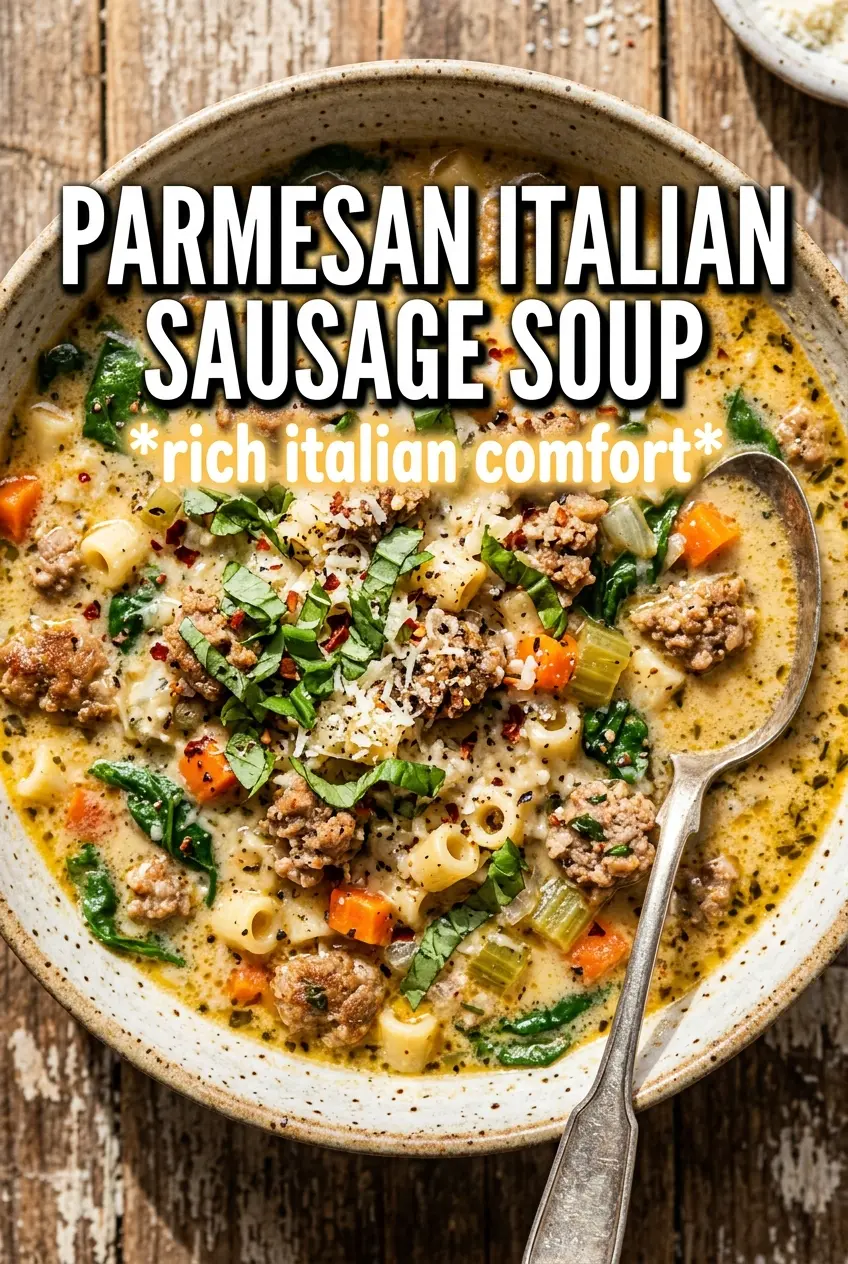
Creamy Parmesan Italian Sausage Soup
Ingredients
Equipment
Method
- Brown the Italian sausage in a large pot until cooked through, then drain excess fat and set the sausage aside.
- Keep the pot nearby so you can reuse it for the roux and broth without losing heat.
- Melt the butter in the same pot, then sauté the diced onion for 4 minutes until softened.
- Add the minced garlic and flour and cook for 1–2 minutes, stirring, until lightly thickened and fragrant.
- Gradually whisk in the chicken broth and heavy cream, then stir in the Italian seasoning and nutmeg until smooth.
- Bring the soup to a simmer, then add the ditalini and cook for 8–9 minutes, stirring occasionally, until tender.
- Reduce the heat to low and stir in 1 cup of the parmesan until fully melted and the broth turns creamy.
- Add the kale, sausage, and red pepper flakes and cook for 4–5 minutes until the kale wilts.
- Season with salt and pepper to taste, then top each bowl with the remaining parmesan.