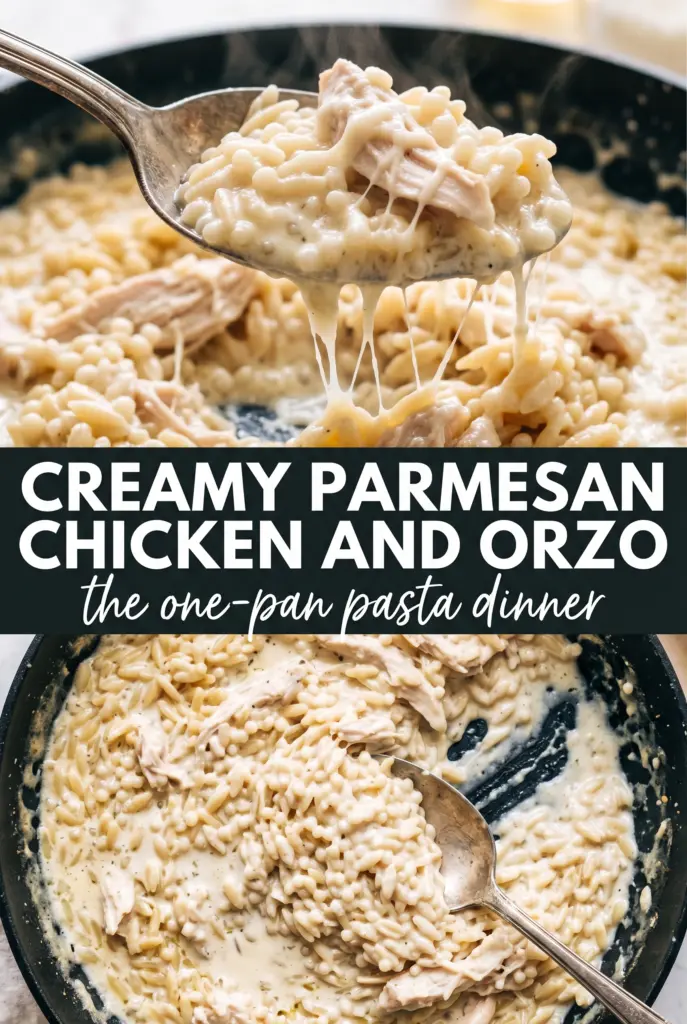
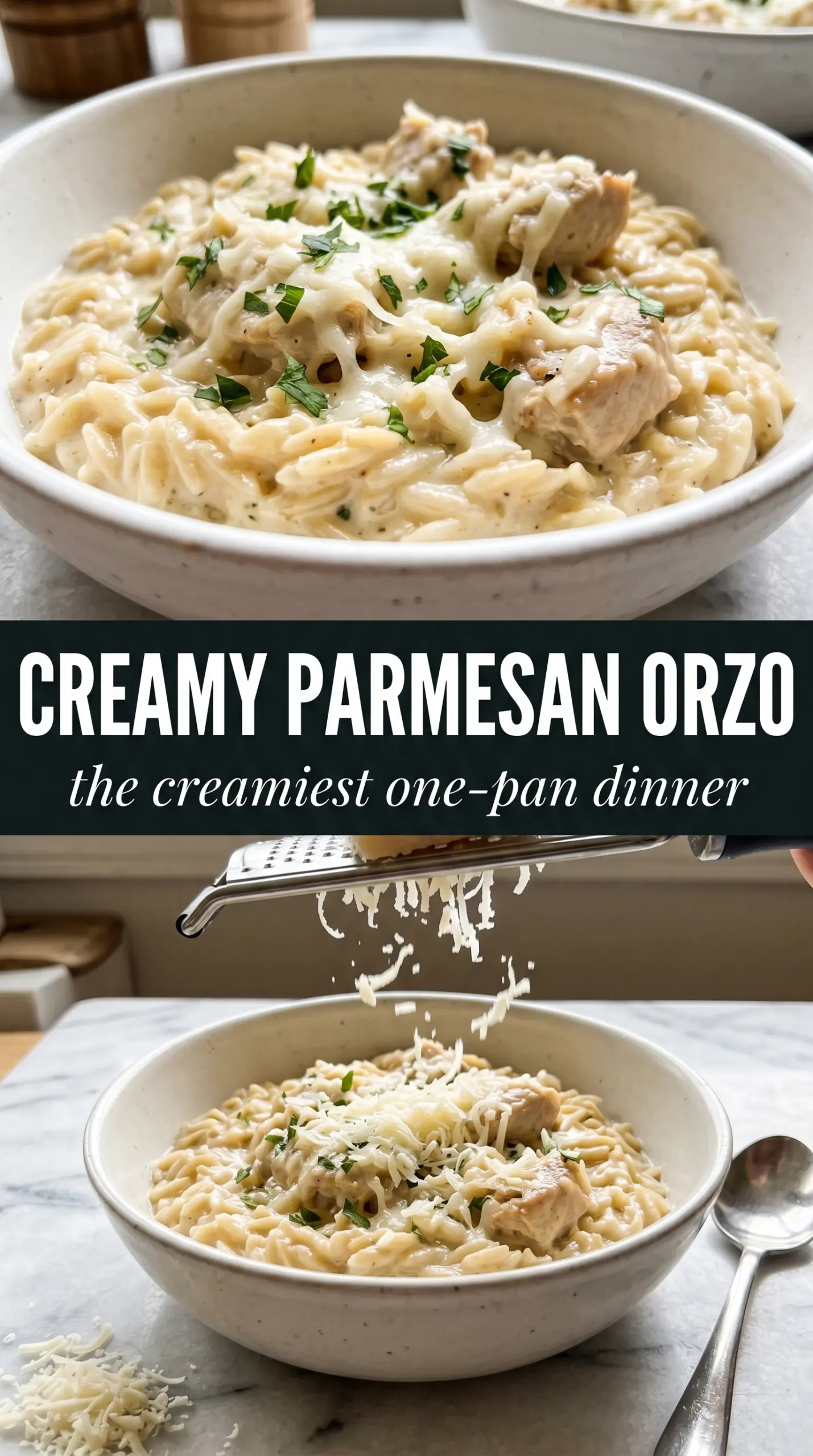
Golden chicken thighs over silky Parmesan orzo land on the plate looking like the kind of dinner that disappeared fast because every bite hits the right balance of creamy, savory, and bright. The orzo turns plush instead of gluey, the spinach folds into the sauce without taking over, and the sun-dried tomatoes give little bursts of tang that keep the dish from feeling heavy.
What makes this version work is the sequence. The chicken sears first, which leaves flavor in the pan, then the garlic and orzo toast briefly before the broth and cream go in. That quick toast gives the pasta a nuttier edge and helps it hold its shape while it cooks in the sauce instead of swimming in it.
Below, I’ve included the detail that matters most here: how to keep the sauce creamy from the start to the finish. There’s also a simple storage note and a few swaps that still keep the dish in the same cozy lane.
The sauce stayed silky and the orzo was perfectly tender after 12 minutes. I loved that the chicken went back in at the end and didn’t dry out, and the sun-dried tomatoes kept every bite interesting.
Save this creamy Parmesan chicken and orzo for the nights when you want one pan, tender chicken, and a sauce that clings to every spoonful.
The Part That Keeps the Orzo Creamy Instead of Sticky
Orzo is small enough to go from perfectly tender to swollen and pasty in a short window, which is why this dish works best when the liquid is managed closely. The broth and cream go in together, but the pan stays uncovered so the sauce can reduce while the pasta cooks. That reduction is what gives you a creamy finish without having to drown the orzo in extra dairy at the end.
The other piece that matters is the stir. Orzo settles and sticks along the bottom of the pan faster than larger pasta, especially once the cream thickens. Stir often enough to keep the pasta moving, but not so aggressively that you break it down. If the pan looks dry before the pasta is tender, add a splash of broth; if it still looks loose near the end, keep simmering uncovered for another minute or two.
What Each Ingredient Is Actually Doing in This Chicken Dish
- Chicken (bone-in or boneless, skin-on or skinless) — Each cut has different cooking times and flavor profiles. Let thighs reach 165°F; breasts dry out if overcooked past that.
- Sauce or braising liquid (the moisture keeper) — This prevents the chicken from drying out and adds flavor. Don’t skip it even if the recipe seems moist.
- Aromatics (garlic, onion, herbs) — These add depth and complexity. Cook them with fat so they soften and sweeten instead of staying sharp.
- Cream or butter (optional richness) — These make the dish luxurious. Add to the sauce off the boil so it stays smooth instead of breaking.
- Cheese (if using) — This adds umami and richness. Mix into the sauce or sprinkle on top; either works depending on the dish.
- Acid (lemon, vinegar, wine, or tomato) — This prevents heavy sauces from tasting flat. Add at the end so the brightness doesn’t cook off.
- Proper temperature (165°F is perfect) — Use a thermometer to avoid guessing. Pull slightly early if the chicken will rest or finish in residual heat.
- Resting time (at least 5 minutes) — This lets juices redistribute so the meat stays moist when you cut into it instead of running dry.
What Each Ingredient Is Actually Doing in This Dish
- Boneless skinless chicken thighs — Thighs stay juicy through the final 2 minutes of simmering, which makes them a better fit here than chicken breast. Breasts can work, but they dry out faster and lose some of the richness that balances the cream sauce.
- Orzo — This pasta is the backbone of the dish because it thickens the sauce as it cooks. Don’t swap in a larger pasta shape unless you also adjust the liquid and cook time; the whole texture changes.
- Heavy cream — Cream gives the sauce its body and keeps it from tasting thin after the Parmesan goes in. Half-and-half can work in a pinch, but the sauce will be lighter and a little less stable.
- Parmesan cheese — Freshly grated Parmesan melts smoothly and seasons the sauce at the same time. Pre-grated cheese can turn grainy because of the anti-caking agents, so grate it yourself if you want the sauce to stay silky.
- Sun-dried tomatoes — These add acid and chew, which keeps the dish from reading flat or overly rich. Oil-packed tomatoes are great here; just drain them well before slicing.
- Baby spinach — Spinach folds in at the end and disappears into the sauce without watering it down. Kale can substitute, but it needs a few extra minutes and a little more liquid to soften.
Building the Sauce Without Losing the Texture
Searing the Chicken First
Season the thighs well before they hit the pan, then let them sear undisturbed until the bottoms turn deep golden. If you move them too early, they’ll stick and pale instead of developing the crust that flavors the whole dish. Pull them off once they’re cooked through and set them aside; they’ll finish later in the sauce, so don’t chase perfect doneness here. The pan should still have browned bits left behind, because that’s what gives the orzo its savory base.
Toasting the Orzo in the Drippings
Cook the garlic just until fragrant, about 30 seconds, then add the orzo and stir it through the oil and drippings. That brief toast gives the pasta a nuttier edge and helps it hold its shape while it simmers. If the garlic browns, it will turn bitter fast, so keep the heat steady and move straight into the liquid once the orzo smells toasty. This is the point where the dish starts building body.
Simmering to the Right Finish
Once the broth and cream go in, bring the pan to a gentle simmer, not a hard boil. A hard boil can make the cream look separated and can push the orzo past tender before the sauce thickens. Stir often, especially around the edges and bottom of the pan, until the pasta is soft with a little bite and the sauce coats the spoon. If it looks a touch loose at the end, let it sit off the heat for a minute; the sauce tightens as it rests.
Finishing with Cheese, Greens, and Tomatoes
Stir in the Parmesan after the heat has come down a bit. If you add it over a fierce boil, it can turn grainy instead of melting smooth. The spinach wilts quickly, and the sun-dried tomatoes should go in at the same time so they warm through without losing their chew. Nestle the chicken back in last, just long enough to warm it through and let the juices settle into the orzo.
How to Adapt This for a Different Pantry or a Lighter Plate
Make It Gluten-Free
Use a gluten-free orzo-style pasta and watch the liquid closely, since some gluten-free versions soften faster or break down sooner. You may need a little less broth, added in stages, to keep the texture creamy instead of gummy.
Swap Chicken Thighs for Chicken Breast
Chicken breast works, but it needs a shorter sear and a gentler finish so it doesn’t dry out. Slice the breast in half horizontally if it’s thick, then return it to the pan only long enough to warm through at the end.
Make It Lighter Without Losing the Creamy Feel
Replace half the heavy cream with more broth and finish with a smaller amount of Parmesan. You’ll get a looser sauce, but the orzo will still feel rich because the pasta itself thickens the pan as it cooks.
Skip the Sun-Dried Tomatoes
If you leave them out, the dish becomes softer and more uniform in flavor. Add a small squeeze of lemon at the end to bring back the brightness that the tomatoes usually provide.
Storage and Reheating
- Refrigerator: Store for up to 3 days. The orzo will absorb more sauce as it sits, so expect a thicker texture the next day.
- Freezer: It freezes, but the cream sauce can turn a little grainy after thawing. If you freeze it, cool it completely first and reheat gently for the best chance of keeping the sauce together.
- Reheating: Warm it slowly on the stove or in the microwave with a splash of broth or cream. High heat is the mistake that turns the sauce tight and the chicken dry.
Answers to the Questions Worth Asking
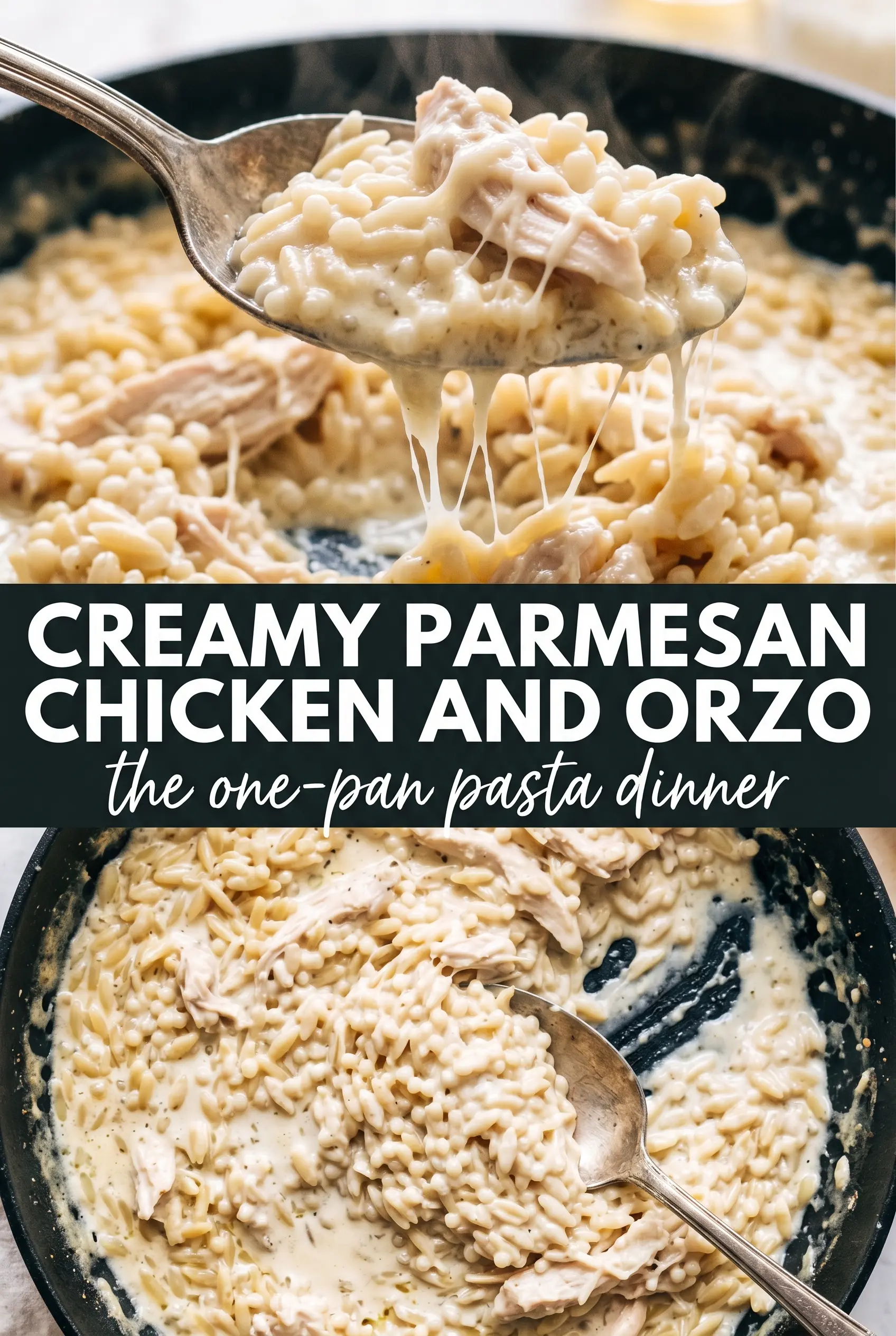
Creamy Parmesan Chicken and Orzo
Ingredients
Equipment
Method
- Season the boneless skinless chicken thighs with salt, pepper, garlic powder, Italian seasoning, and smoked paprika to taste. Heat olive oil in a large skillet over medium-high heat and sear the chicken for 4-5 minutes per side until golden and cooked through, then remove.
- In the same pan, cook the minced garlic over medium-high heat for 30 seconds until fragrant. Add the uncooked orzo and toast for 1 minute, stirring so the orzo gets lightly coated.
- Pour in the chicken broth and heavy cream, then bring to a simmer over medium-high heat. Cook uncovered for 10-12 minutes, stirring often, until the orzo is tender and the sauce is creamy.
- Stir in the grated Parmesan cheese, baby spinach, and sliced sun-dried tomatoes, then cook until the spinach wilts. Nestle the chicken thighs back into the orzo and heat through for 2 minutes.
- Garnish with fresh basil and serve immediately.