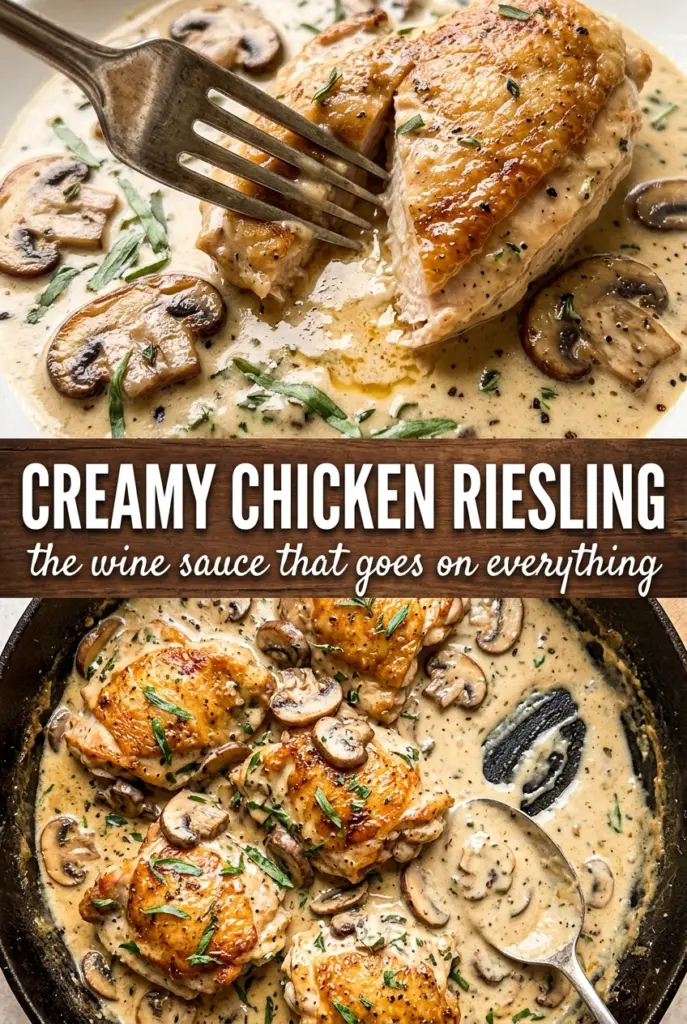
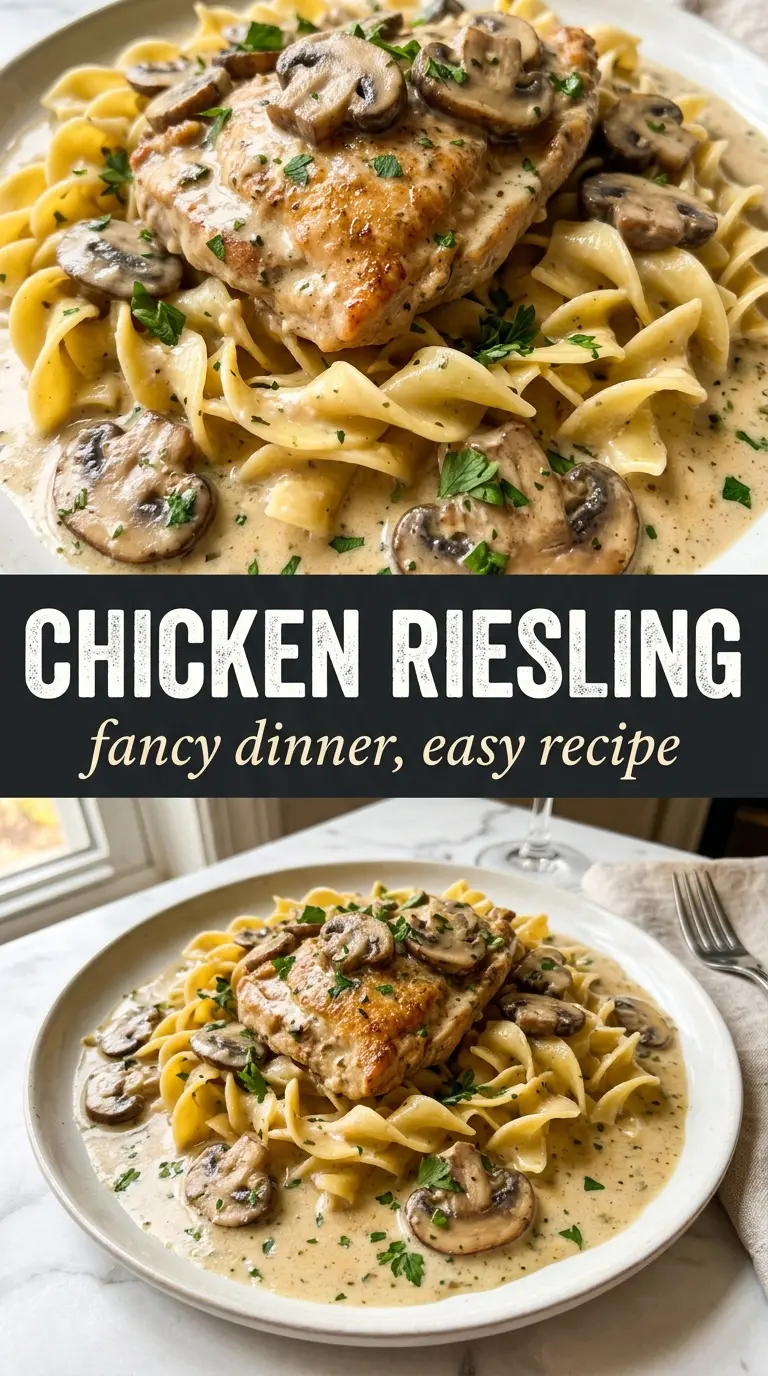
Golden chicken thighs in a pale Riesling cream sauce are the kind of dinner that gets quiet at the table in the best way. The skin stays crisp long enough to matter, the sauce turns silky without becoming heavy, and the mushrooms and shallots give it the kind of depth that makes the whole skillet taste like it took far more effort than it did.
The trick here is treating the wine like an ingredient that needs to be cooked down, not just poured in. Riesling brings fruit and acidity, but if you rush that reduction, the sauce can taste sharp instead of rounded. Let the wine lose its raw edge, then add the cream, broth, and Dijon so the pan builds into something balanced and spoonable.
Below you’ll find the searing cue I trust for crisp chicken skin, the small finish that makes the sauce gloss instead of look flat, and the substitutions I’d use when I want this dish a little lighter or a little more weeknight-friendly.
The sauce thickened beautifully and never broke, even after I let it simmer a few extra minutes while I finished the potatoes. The tarragon with the Riesling gave it a restaurant feel.
Save this Creamy Chicken Riesling for the nights when you want a silky wine sauce, crisp chicken skin, and a skillet dinner that feels special without extra fuss.
The Reason the Sauce Stays Silky Instead of Splitting
The biggest risk in a cream-and-wine skillet like this is adding heat too fast after the wine goes in. Riesling has enough acidity to make the sauce taste bright, but cream needs a gentler hand. If you boil it hard after the dairy is added, the sauce can go grainy or thin out around the edges before it has time to come together.
That’s why the sequence matters: sear the chicken first, soften the mushrooms and shallots in the fat left behind, then reduce the wine before the cream ever hits the pan. The Dijon helps steady the sauce and gives it a quiet backbone, while the butter at the end gives it that glossy finish you can see on the spoon.
- Chicken thighs — Bone-in, skin-on thighs stay juicy during the simmer and give you the best pan drippings. Breasts can work, but they cook faster and need a shorter simmer so they don’t turn dry.
- Riesling — Use a dry or off-dry bottle you’d actually drink. Cheap wine is fine here if it tastes clean; harsh wine stays harsh after reduction.
- Heavy cream — This is what gives the sauce body without curdling easily. Half-and-half will make a thinner sauce and needs lower heat the whole way through.
- Fresh tarragon — It makes the dish taste lifted and a little French in the best way. Dried tarragon works in a pinch, but use less because it reads more concentrated and slightly woodier.
- Dijon mustard — Don’t skip it. It won’t make the sauce taste mustardy; it just sharpens the cream and keeps the wine from tasting flat.
What Each Ingredient Is Actually Doing in This Chicken Dish
- Chicken (bone-in or boneless, skin-on or skinless) — Each cut has different cooking times and flavor profiles. Let thighs reach 165°F; breasts dry out if overcooked past that.
- Sauce or braising liquid (the moisture keeper) — This prevents the chicken from drying out and adds flavor. Don’t skip it even if the recipe seems moist.
- Aromatics (garlic, onion, herbs) — These add depth and complexity. Cook them with fat so they soften and sweeten instead of staying sharp.
- Cream or butter (optional richness) — These make the dish luxurious. Add to the sauce off the boil so it stays smooth instead of breaking.
- Cheese (if using) — This adds umami and richness. Mix into the sauce or sprinkle on top; either works depending on the dish.
- Acid (lemon, vinegar, wine, or tomato) — This prevents heavy sauces from tasting flat. Add at the end so the brightness doesn’t cook off.
- Proper temperature (165°F is perfect) — Use a thermometer to avoid guessing. Pull slightly early if the chicken will rest or finish in residual heat.
- Resting time (at least 5 minutes) — This lets juices redistribute so the meat stays moist when you cut into it instead of running dry.
Building the Skillet in the Right Order
Getting the Chicken Skin Deeply Golden
Season the thighs well, then lay them skin-side down in a hot skillet and leave them alone until the skin releases easily and turns a deep gold. If you move them too soon, the skin sticks and tears instead of crisping. You want rendered fat in the pan and a browned surface on the chicken, not pale spots that need more time later.
Softening the Shallots and Mushrooms
Once the chicken is out, the mushrooms and shallots go into the same pan so they can pick up every bit of flavor left behind. Cook them until the moisture from the mushrooms has cooked off and the edges turn golden. If the pan looks dry before they’re done, the heat is too high; lower it a little so the shallots sweeten instead of scorching.
Reducing the Wine Before the Cream Goes In
Pour in the Riesling and let it simmer until the sharp alcohol smell fades and the liquid looks slightly syrupy around the edges. That step matters because it concentrates the wine without making the final sauce taste boozy. Add the cream, broth, tarragon, and Dijon only after the wine has reduced, or the sauce can taste thin and unfocused.
Finishing the Sauce and Bringing It Together
Return the chicken skin-side up, cover the pan, and simmer until the thighs reach 165°F and the meat feels tender when pierced. Pull the chicken out again, swirl in the butter, and watch the sauce turn glossy in seconds. If it still looks loose, let it sit uncovered for a minute or two; it thickens as it rests.
How to Adapt This Creamy Chicken Riesling Without Losing the Good Part
Use chicken breasts instead of thighs
Boneless skinless breasts work, but they need less simmering and don’t give you the same rich drippings. Sear them lightly, then simmer just until they’re done so they stay juicy. The sauce still works, but the finished dish will be leaner and a little less luxurious.
Make it dairy-free
Use full-fat unsweetened coconut cream or a dairy-free cooking cream, then keep the heat low so it doesn’t separate. The sauce will lose some of its classic butter-and-cream finish, but the Riesling, mushrooms, and tarragon still carry the dish well. Skip the butter at the end and finish with a little extra olive oil instead.
Make it gluten-free
This recipe is naturally gluten-free as written, as long as your chicken broth and Dijon mustard are certified gluten-free. That’s the only place I’d double-check labels, since those are the ingredients most likely to hide a stray thickener.
Storage and Reheating
- Refrigerator: Store in an airtight container for up to 3 days. The sauce will thicken as it chills.
- Freezer: Not my first choice. Cream sauces can separate after thawing, and the mushrooms turn softer than I like.
- Reheating: Warm gently in a covered skillet over low heat with a splash of broth or water. Don’t boil it, or the sauce can split and the chicken can dry out before the center is hot.
Answers to the Questions Worth Asking
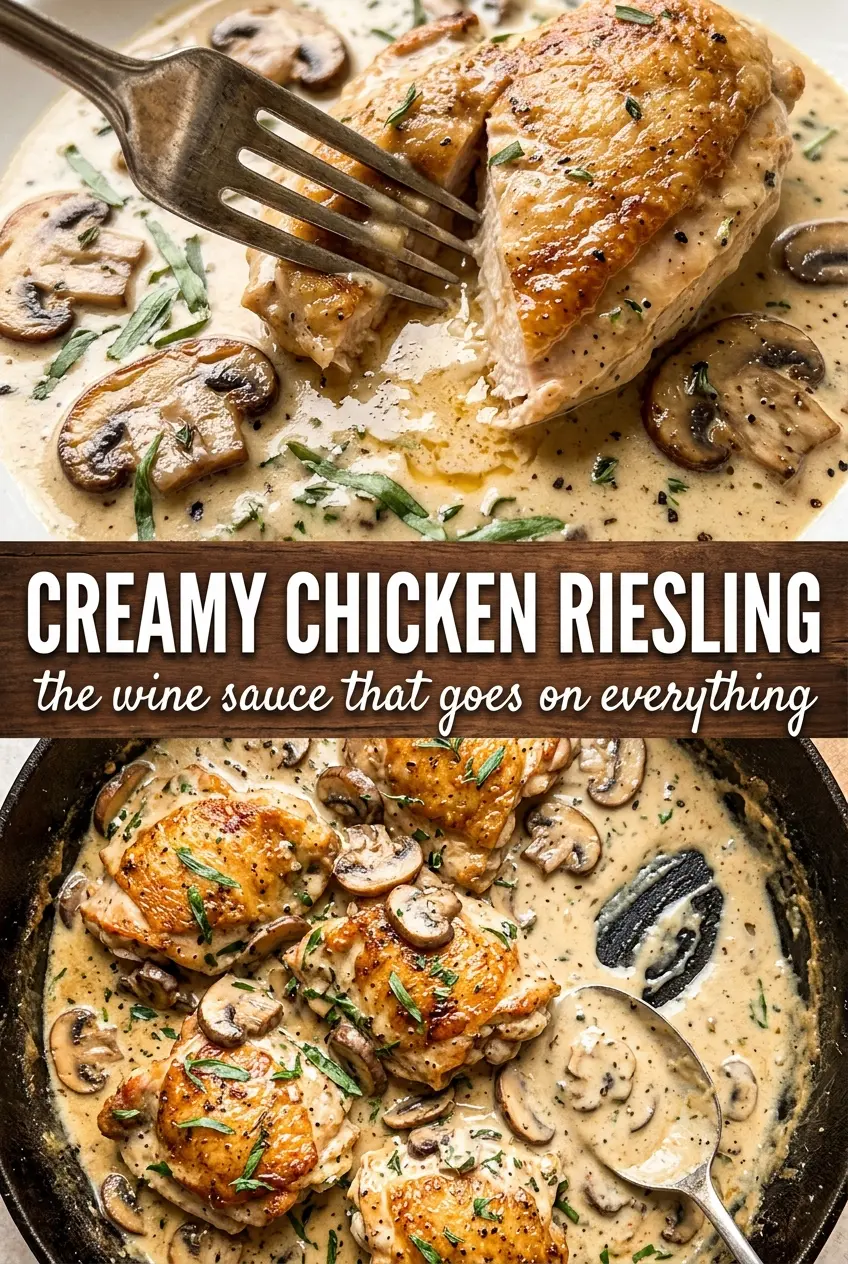
Creamy Chicken Riesling
Ingredients
Equipment
Method
- Season the chicken thighs with salt, pepper, and garlic powder to taste. Pat lightly so the seasoning adheres.
- Heat the olive oil in a large skillet over medium-high heat, then sear the chicken skin-side down for 7-8 minutes until deeply golden. Leave it undisturbed so the skin crisps.
- Flip the chicken and sear for 4 minutes more. Continue until the second side is browned.
- Remove the chicken from the skillet. Set it aside while you cook the aromatics.
- Cook the minced shallots and sliced mushrooms in the skillet for 5-6 minutes until golden. Stir occasionally until the mushrooms give up moisture and brown.
- Add the minced garlic and cook for 1 minute. Stir until fragrant without browning.
- Pour in the Riesling wine and let it cook for 3 minutes. Continue simmering so the alcohol smell cooks off.
- Add the heavy cream, chicken broth, tarragon, and Dijon mustard. Stir until the sauce looks smooth and pale golden.
- Return the chicken to the skillet skin-side up, nestling it into the sauce. Keep the thighs in a single layer as much as possible.
- Cover and simmer for 15-18 minutes until the chicken reaches an internal temperature of 165°F. The sauce should bubble gently and thicken slightly.
- Remove the chicken from the skillet. Keep it warm while you finish the sauce.
- Swirl the butter into the sauce until glossy. Stir just enough to emulsify into a silky sheen.
- Return the chicken to the sauce and garnish with fresh tarragon before serving. Spoon the pale golden sauce over the thighs and serve immediately.